How to Know You're in a Relationship With the Wrong Person
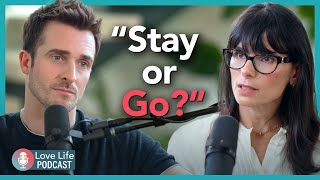
Gillian Tschirky, a relationship coach, discusses her new book about nine hard truths on love. She traces how her failed marriage and divorce led her to coaching, and explains how stonewalling, codependency, and limiting beliefs sabotage relationships. She offers strategies like setting boundaries and challenging false beliefs about self-worth.
Chapters
Before we get into today's episode of the Love Life Podcast, have you taken the opportunity to think about the question you'd like to ask me right now and been to Matthew AI to ask it? You can literally go to Matthew AI, hit call, and watch this. It's Matthew AI. How can I help? And you can ask Matthew AI a question just like that. Can I ask you a question, Matthew AI? Absolutely. Feel free to ask me anything. I'm here to help with whatever's on your mind. What's your question? Well, that's really good to know, isn't it? It's reassuring. So you can go and try it yourself. Make a call to me and ask anything you like at askmh.com. Go check it out now. If you haven't already, you can try it out for free. You can call it, you can text it. whatever's right for the situation you're in. Today, I have a very special episode with the wonderful Gillian Chirecki, a world renowned relationship coach, teacher, author and host of the podcast, Gillian on Love. Gillian has helped thousands over the last 20 years through her teachings, courses and writing to revolutionize their relationships with themselves so that they transform their romantic relationships. Gillian just released a brand new book called It Begins With youh: Nine Hard Truths About Love that Will Change youe Life. This was a really great conversation. We explore dating, we explore the choices we make, we explore the patterns that have plagued our past and how to shed those patterns in the present. And we talk about some of those hard truths about love that can change your life that she has written about in her book. Gillian is super insightful. I know she has so many people out there who love following her advice. So if you don't know about her, this will be a wonderful introduction to her. And if you do know Gillian already, this is the first time I've had the chance to interview her on the Love Life Podcast. So enjoy and I'll see you at the end of the episode. Welcome back, everybody, to the Love Life Podcast. I am here with my friend Gillian Tschirky. It's so fun to have you here in LA.
Oh my God, I'm so excited to be here. You have no idea.
When we did an interview for your podcast, It was back in, what, February?
Yeah, I think it was right before your book came out.
It was one of those early months of the year, which feels like a lifetime ago. And we did that online. So it's actually fun. It's always different meeting someone in person.
Absolutely. It's a whole different ball game.
I'm so happy you came out. I really appreciate it. I know that many of my audience will already know you. Maybe for those that don't know you, could you give us maybe a brief introduction to you and how you came to write this new book?
Yeah. So I sort of have always been in the mind-body relationship space. I taught yoga for many, many years, almost 20 years. And then I always sort of felt like I wanted to do something more, but I had no idea what that was. I thought about, like, do I want to go to school for psychology? And I'm like, no, I don't want to do that. But I didn't know what it was. So I ended up, many years ago, meeting the man who I would marry and then later divorce. And I was like, okay, I guess I'll get married and have some kids and have a baby on my hip as I'm telling people what to do with their bodies, making them sweat. But it didn't feel quite right, but I just didn't know. I didn't know I was always been such a late bloomer. And I always say that our relationship prior to getting married was about 90% great because we were very compatible in many ways and 10% extremely problematic. And then, you know, you could say, well, no relationship is perfect, which would be the truth. But that 10% was incredibly profound. But even though I thought that I was someone who had it all together. I was in my late 30s, I thought, you know, this is later in life that I'm meeting someone that must mean something, that I'm more mature. I've been doing lots of spiritual work, if you will, of myself and sort of self-study. But I also was raised in a family where my parents hated each other, basically. And even when my mom remarried and I loved my stepfather, I just never was modeled healthy self-esteem as a woman. when it came to relationships, because I think that we can have self-esteem that's healthy in other areas of our life, and then relationship is kind of where it rears its ugly head. I was never taught healthy communication. I just wasn't modeled it. And so I thought everything was going to be great, but when those 10% red flags, if you will, presented themselves, my only goal was to prevent any rupture in the relationship that would lead to its demise. And so even though I was someone who was actually very connected to her body because I'd been practicing, I was practicing yoga for so many years, I was very good at lying to myself and suppressing anything instead of being like, wow, wait a second, like that is not good. That's going to be a problem when we get married. And I didn't even talk about it with anyone because sometimes when you talk about it, It becomes more real, right? So I suppressed a lot of things and also because 90% was so great. So we got married and what happened? The 10% became the 90% and the 90% became the 10%.
How quickly did that?
Almost immediately. And part of that was, oh, God, I mean, the story is so it's mad, actually. You know, he wanted to have children right away. And even though I was 38, I had already known that I was very, very fertile because we had an accident earlier. There was a miscarriage. I already knew where I was gynecologically, reproductively. And I didn't want to right away. So we got a dog. And there was just We didn't have those really important conversations. And there was something that happened prior to us getting married, which was the real red flag, which is that there was one day and I had no idea what was happening. He just pulled away. He was totally shut down one evening and we were on our way to go to like this really cool event in New York City.
This was when you were engaged?
No, it was about two months prior to engagement because it was about six, seven months into our relationship and we moved very quick. We did everything that I tell people not to do now. And we moved very, very quickly. So when you move fast, six, seven months in, it can be very intense. And I was like, this is my person for sure. And I felt something in my body that was something that I felt in my body, my whole childhood around my father, because you never knew what mood he was going to be in because he had undiagnosed bipolar. So he had a very dark energy to him. And so I, and I'm very sensitive. So you have that combination and it's like kryptonite in a family. So I was very well trained in being able to walk on eggshells, even though I had some lovely relationships in the past. This was not every relationship I ever had. And I did that thing, what's wrong? What's wrong? Nothing, nothing, nothing. And clearly something's wrong. And so then I'm tense. And it was like we went to this event. He was like basically stonewalled me, the entire event, and it felt horrible. And then we went out for dinner afterwards, and it was awkward. It was like just subtle enough that if you were someone from the outside looking in, you may not even feel the tension, but it was awkward. And by the next day it was over. And what did I do? I said nothing. I said nothing. And that was sort of my fatal flaw in that moment and in the moments afterwards. And there were other things that happened.
And in your mind, so how quickly did he return to normal after that?
-Like the next day.
-He returned to normal the next day.
-I was relieved.
-You were relieved and you just went, I'm just gonna try and move on from that.
-Yes.
Yeah. Did you ever get a sense of what was going on that evening or what was going on with him? Or like, did it become more and more of a pattern of him turning in that way?
Yes. It very much became a pattern in the relationship. That's how he dealt with stuff. And I dealt with stuff without actually, I didn't deal with it either. But it was different for me. But I didn't deal with it either. There was no like, we need to sit down and talk about this. This is not okay. This is, this is unhealthy, this doesn't feel good to me, what's going on with you? Which is exactly what I would do today. And actually, I mean, to each their own, but my standard right now is if you cannot have a conversation with me about how you feel, you don't get a ticket into my heart, period, end of story. Like I'm very, very firm about that. You can struggle to convey yourself, you can struggle to express yourself. I may date men and a lot of men will have, you know, Not all men, but a lot of men will be not as accustomed, perhaps, to emote, but at least we can communicate about it. And you're not going to shut down. Like shutting down, it's just not going to fly.
Where do you sort of these days draw the line between, like, yeah, not the best communicator in the world and not great at expressing their emotions, but we can work with this. And, Just this isn't enough. Yeah. You know, either on the worse end of the spectrum, this is really toxic, but on the even the less insidious end of the spectrum, it's just not enough for me to be happy to be with someone who doesn't speak my language.
Yeah.
Where do you find the line between those two things? 'Cause it's very, sometimes we do say to ourselves, you know, well, they're nice and they're, they're a good person generally, and we have a good time.
And.
But there is this thing, and is this thing part of the 10 that is going to become, you know, the death crack in the relationship? Or is it the 10 I can make peace with because, you know, maybe I'm expecting too much from one person for them to be this as well.
Yeah, that's a very good question, I think. It depends, and I think there's a lot of context. One is, do they struggle to speak their truth? Do they struggle to emote? Is being very expressive about one's feelings sort of a foreign language to them? Because that's not something that was not the culture of their family to just be very expressive with their feelings. Or are they shutting down and stonewalling you at the first, because they have no way to sort of process what they're feeling, and then they don't communicate at all.
What does stonewalling look like for people out there who haven't heard that term before?
So there's a spectrum. So on the very extreme side of the spectrum, it's almost like a silent treatment. Like maybe you'll talk a little bit, but not much. But if you were to think of the metaphor of like the walls going up and made of stone, and there's no getting through to that person. And that can go on for hours and sometimes days and when it's really toxic for weeks. So there's no, you're trying to talk to them and they're not technically giving you the silent treatment because they'll talk to you, but they're so far removed and hidden behind that stone wall that you feel like you've been pushed out. and it's very painful. So in any event, it was a really terrible marriage in many ways and a lot of ups and downs. And towards the end, which I actually thought we were in a good place, my mom was diagnosed with cancer and she was dying. And we got pregnant again. I woke up one day and basically the bleeding, the miscarriage basically. And I wanted him to come with me to the gynecologist. He declined, he had a really busy job and didn't wanna do it. And then he decided not to come home that evening. And so, and my mom had just given me, so this is a very, I know this is a very tense, intense and heavy story, but I think it's important for me to say just for your listeners, this is not a story that in any way defines my life. Like I don't get sad talking about it. I'm very removed from it because this is a long time ago and I processed it. But you asked me to share a little bit about me. This, it's this that catapulted me into a different line of work and helping people in their relationships. And it's because I entered such a dark night of the soul and I was obsessed over this question, what makes a relationship work? And I was inundated with all these limiting beliefs, like, oh my God, I'm 40, I'm childless, this, like, My husband just left me. Who's gonna want me? And my mom's dying. It was just completely overwhelming. And there was, like, two things. How am I going to feel better again? And what am I missing? Like, why is this happening? I could not believe it. I became obsessed. And I decided, in my pursuit of trying to feel better and understand what happened, I learned so much and worked with the best of the best and studied and just started teaching people and working with people because we had gone to couples therapy and it was dreadful. We went to two different kinds and I thought, there has to be another way and I'm gonna learn how to help couples in a way that is completely not what's out there, at least in my experience of it.
What was going wrong with the couples therapy that you did?
Oh, like you talk, then you talk and let's just try to meet somewhere in the middle instead of get in my face or get in his face and tell us the truth, real tough love, and force us to take accountability and force us to take a look at our childhood and force us to look at our pattern and take sides and be loving but be really strong. And that when couples are in deep shit and they really need help, that's the kind of therapy they need, in my opinion. Not someone translating like what this means versus this means, and then you come out of there and you're like, what just happened? Nothing. No one was holding us accountable. And I realized that accountability is the single most important thing to making any relationship work. There's more things that you need to make a relationship work, as you know. But without accountability, without self-awareness, and being able to look at your part and to see how you're contributing in any way to the dynamic, even if you're contributing a tiny amount, as compared to the other person. And of course, it's more complicated if there's an abusive situation, of course, that goes without say. So yeah, so I decided. And so I worked with hundreds of couples, like close to the thousands. I was, you know, why I became insane, because also part of it was that was a way to channel my pain, right? So I did that while also teaching yoga. And then I was like, wow, you know, I am sort of like the poster child for changing your life after a traumatic breakup or divorce. Then I got really interested in helping people through heartbreak. And then I was like, wow, who you choose to spend your life with is the most important choice you will ever make in your life. So then I was like, I want to work with individuals. I also want to work with couples. And then just kind of moved a little bit towards individual work because working with couples not for the faint of heart, and it was very hard.
That feeling that you got back then when you felt like you were treading on eggshells, that very much got activated when you were in that relationship. Is that something you have been able to shake, or is that something you've had to make peace with?
I haven't yet been triggered in that way. You know, because I haven't been in a relationship with people who lay down the eggshells. So I'd have to be really triggered, I think. I don't really go typically into people-pleasing patterns.
But you used to?
Yeah. I don't know many people who don't, again, it's a spectrum, who don't, when they're pushed to the edge of their insecurity, don't have a tendency to please. It's not a terrible thing to want to please someone. It becomes problematic when you are lying to yourself or trying to keep the peace in a relationship versus maintain the love. And I think those are two different things. I do believe that everyone will has to confront their fear of not being enough. And when we're in a relationship, a romantic one in particular, that's when our fear of not being enough will kind of come up. And I think that that's what it means to be human. I think that what my pattern was, and again, for listeners to understand, sometimes you'll be in a relationship and none of that comes up. And I think part of that is because of who you're in a relationship with, and part of that is contextual. Where are you in your life? You know, what are, what are the other stressors that are going on in your life? What are the other pressures that are going on in your life? So I I really like to look at things sort of holistically and contextually. But I will say that my pattern would have been more codependent because one of the things that I had to learn how to do was to build a life for myself in which I was really able to meet most of my needs. I had to learn how to really stand on my own two feet in a way, emotionally, financially. I was raised very much, there was conflicting messages. I was raised by immigrant parents, so part of that messaging was, you need to work really hard. You have to have your 401K. You have to work in the corporate world. And by the way, marry a man who can take care of you. So it was like a little bit of both. And my journey was interesting because I did start off graduating college not knowing at all what I wanted to do. So I went the corporate route and like, felt like I was dying a slow death in doing that. It was so not me. And then I tried so many different things. And then I was like, I'm going to be a yoga teacher because this is my calling. And then always also searching, like, you know, I always had boyfriends, but it was like this lack of fulfillment being single. And I think that's very problematic. And it's particularly problematic for women because I think that women in general put a little bit too much stock in being, I want everyone to be in love and in a relationship. I'm totally, like, underneath all this, I'm a romantic. But at the same time, you have to find some level of fulfillment on your own, otherwise you're going to choose pretty poorly. And so that was my journey and taking accountability. And that's really what sparked me to write the book, which was just sort of to share this with people.
And how Did you, I want to come on to that because in the book you talk about the nine hard truths about love that will change your life. The book is called It Begins With youh. I'm excited to get into those. But when you came out of that relationship and kind of were attacked by those limiting beliefs about age and what else did you say when you were feeling fearful of when you first came out of that relationship?
Yeah, fearful of being alone. No one would want me, childless.
How, how did you deal with those limiting beliefs and how long did it take? And do they ever revisit? Like how? Yeah, because I work with so many people who are having those exact feelings where they stand right now, especially those that, well, not limited to, of course, but many who want children and they feel like I've either missed my window or I fill my window closing for my own biological children and I I am terrified of that. And now they feel like they're in a rush and they have to go and panic by a relationship. I'm wondering how you worked through these things.
Well, first I learned about beliefs and their role in the human psyche and in our lives and the power of them. And in my learning about beliefs, I learned about limiting beliefs and what really defines a limiting belief. And that even though a belief by definition is something that we are certain is true, that they are mostly adopted by something that we adopted from parents, from peers, from society, and that we can really change our beliefs if we want to. And so once I started to see that I was under some sort of hypnosis with my belief system, and then I started speaking to people who were like maybe single at my age, and like some I would speak to and they felt None of the things that I felt. And I thought, Hmm, isn't that interesting? And I would probe and be like, I wanted to know who raised them. I wanted to know why they were that way. You know, like, why would they, why would I meet a woman who is single, over 35 and single and divorced and loving life? What was that? And then it dawned on me that I don't have to be limited by these beliefs. Like I could just step into her shoes in some way and maybe learn a thing or two and to look at the world through her eyes. And so when I started to understand beliefs and I started to challenge them, and then I was also challenged by them because nothing could have been further from the truth. I was having fun. I got lots of attention. There was none of that. And it was very painful. Like I don't want to paint an unrealistic picture. Like this was a very painful time in my life. and when I started to understand more of the power of belief and limiting beliefs and how you can change your perspective and understanding that who you surround your with and influence, that was also very exciting to me. So I was walking around depressed and excited at the same time. You know, emotions are funny that way, but I was inspired and until the depression started to get smaller and smaller and smaller, and the inspiration got larger and larger and larger. So to anyone who's listening, you have to write down all those beliefs that you have that could potentially limit you. All men are this, all women are this. After 40, I'm this, after 30, I mean, some women are thinking after 25, which I think is really funny. Or I'm to this or I'm to that. All those beliefs. and you have to go through each of them and be like, is this really true? Or have you made some choices? Like, is it true that all men cheat? Or could it also be true that maybe you chose men who were broken in some way and chose to ignore that because of, you know, in many ways of no fault of your own, but still your responsibility?
Mm-.
You know, what do you associate love to? So when you start to understand how we're just walking around so programmed, and then you have to be diligent about challenging those beliefs and taking responsibility in all that, and then you start to do the work, maybe with the help of someone, to change your blueprint a little bit.
What would you say is the most common pattern that is hurting people. I know that there are many, but, yeah, is there one that in your coaching and observation you feel like is just number one for most common challenge that's tripping people up in who they're choosing, why they're choosing that person, their dating pattern.
Can we do dating, heartbreak and in relationships? Yes. Why don't we do that?
Yeah.
Okay, so for dating, The most common pattern is, let me play house with a stranger. I don't know you, but, and I don't even, I don't even want to communicate, but I'll get naked with you and spend the whole weekend with you and we can go to the farmer's market and pretend like we're boyfriend and girlfriend or girlfriend and girlfriend and boyfriend and boyfriend, like we're partners. And we're not gonna really talk about really anything. So I think that that's really, and I'm obviously, that's a very exaggerated thing, but yeah, not having important conversations about You know, okay, we're attracted to each other and I'm well aware of the fact that I want a long-term relationship, but I'm not actually going to have these difficult conversations.
I'll necessarily point out when anything's, when I see something I don't like.
Yeah.
Or when, yeah, when someone is inconsistent or whatever, I'll just keep playing house.
Gonna keep playing house.
Yeah.
I'll tie another thing into that because it's so hard to do one, as you know. This expectation, even if it's unconscious, and I do believe it's unconscious for most people, that there's someone, like there's a perfect person out there who's going to come into your life and make everything better. And whereas there might be a great person for you who's going to make your life a lot better, you're still going to have to deal with your problems. And you're going to really have to deal with them if you want the relationship to last. So, there's no, like, the one who's going to come in. Because we all, I think many of us grew up with this fantasy, even if it's unconscious, that someone is going to come into our lives and be so evolved and perfect that they're going to make up for the imperfections that we have. Almost like a parent.
Why do you think people slip into that, you know, dynamic of playing house? What's going on there?
A desperation to be in a relationship, which I have nothing but empathy and compassion for. I understand that. I think desperation gets a bad rap, but I think that if we're all honest with ourselves, most of us would say that there was some time in our life that we felt a little desperate, and that's okay. So the desperation to be in a family, to be in a relationship, it's compounded for certain women of a childbearing age. That's a very real thing, and you want to and You really want to build a family?
So there's a kind of impatience there.
Yes.
I'm happy to just rush into this as quickly as possible to feel like there's this rapid sense of progress in my love life.
Yes.
Even if it doesn't necessarily come with any kind of a commitment, even a commitment to exclusivity in some cases, or that this is going somewhere, or that you're even open to a relationship. Yeah. And then that comes with the reluctance to even ask those questions, right? Because you don't want to ruin this dynamic that's going on. You want to keep playing house.
You want to keep playing house, and what happens is that when two people are doing that, they're actually not in relationship or relating to each other. They're relating to the projection that they have of each other. They project the ideal. So they put them on a pedestal. And then another common thing that happens with this is, you know, a relationship makes a transition from the honeymoon phase, if you will, like when everything's exciting and there's lots of lust and into like the more committed stage of a relationship. And a lot of people struggle in that transition because they don't understand what it is to love because what it is to love is something that philosophers and poets and authors and and gurus have been theorizing on for centuries. And so it's something that we don't quite entirely understand. And then if you were raised in a family where love meant, you know, not what we like to think of it as meant, what it means, right?
So.
They think that that's love. And then things get real. You're like, oh, flaws are starting to come up. Conflicts are starting to come up. And then what we become is the fallen hero. We were once the hero or the heroine on the pedestal, and then the pedestal gets knocked off. We become the fallen hero. We see like reality, and some people can't handle that. And they don't have the tools. They're not equipped with the tools to handle what a relationship entails, which has very, very little, I mean, anyone can do the honeymoon phase. Anyone can do that. It's all feeling. It's all emotion. What comes after that is a skill. Yeah.
And a decision.
Right. And a choice. Yeah. And a choice.
Yeah.
Yeah.
You. I, I think this is exactly right. You need the ability to have a relationship, the competence to have a relationship, and then the decision to have one. I don't think you, you don't get to be a passenger in a relationship. You, you decide to be there. And as long as you're coasting on feelings, you're a passenger because you're just kind of going with the this natural flow, this natural, like, speed of everything's going well and this feels good, and I'm just along for the ride. And at some point, I often think of it like building a business. You, you, you can be excited about an idea you have, and you can even do, like, create a business plan and tell your friends that you're going to start this business, and you can start the business, and it might be fun initially to, you know, Design your website and you know like start your Instagram page and whatever but at some point that honeymoon period and usually starting a business that ends pretty quick.
Oh, yeah real quick.
At some point it's a decision to do this and that requires the decision and it requires now you've got to be capable which is a different thing.
Yes, and you may have to learn as you go along and maybe both of you are learning as you go along. I mean we we learn very much to love while in relationship But you're right, it begins with a choice, and it's that willingness, and it's that commitment. So yeah, I think that that, would you agree that those are like the prevailing patterns when it comes to dating? Is there something you want to add to that?
I think what you said about people jumping into playing house is I think that's extremely common. And where it's really dangerous is because you will then collide with people who want to play house but for different reasons. So you're playing house because you really want a relationship.
You want to build a house with this person.
Correct. But you're afraid to, you know, call it a house. You're afraid to say what's going on because you don't want to ruin it because you want to keep it going as long as possible so that hopefully one day it slips from the you know, idea of the thing into the real thing without anyone really realizing it. But now you're here. The other person is playing house because it feels fun to play house, but looking for someone who has no real needs or will never ask for anything because they have no intention of actually staying in that house. So they, they're like relying on you not speaking up. They're relying on you just playing house and not asking questions because then they can get the the girlfriend experience or they can get the boyfriend experience without ever having to do anything. So I think that's the real danger of that pattern is that you have two people playing house together but with completely different intentions.
100%. Yeah, that's very true.
Yeah.
And not communicating.
And not communicating. One is not communicating because they're scared and the other is not communicating because it suits them.
It suits them. Totally.
What you said you were going to have one for breakups. What's one for breakups or heartbreak?
Well, the most common pattern, again, this is just part of being human, but it's still, you think that you're gonna be alone forever, and this person is the be-all and end-all, especially if you were the one who was broken up with, that sort of rejection cuts really deep. And so the story that we tell ourselves is, There's no one else out there. And then the biggest lie that we tell ourselves is that I'm not lovable. And if there was a way that I could wave a magic wand when it comes to people who feel really heartbroken, it would be for them to just be able to say, Next. Next. Next to life. Whatever that is next. And not spend, I mean, you have to spend time processing and grieving, but it breaks my heart to see people spending years grieving because they again, are very stuck in a belief system and not moving forward in life.
What do you say to people who feel that the overwhelming evidence of their life is that they are not lovable, is that they are not attractive, that they, when they say next, they find themselves stuck straight back into another rejection. And in some cases, they may feel that to say next would just be to welcome a never-ending onslaught of being ignored, overlooked, ghosted, or in some cases, never being visible in the first place to the world, you know, feeling like I do not register as the typically attractive person. Or maybe I feel like literally I'm on the opposite end of the spectrum. I I'm not just unremarkable, I am truly invisible. I go on a dating app and I get no matches. No one responds to my messages. Or I truly feel like my life is just nonstop evidence of me being undesirable. What do you say to those people who feel like, well, my belief system feels very, very real to me because everything in my life has suggested it's true. But I do want to find love, but I feel like I can't keep putting myself up for this.
Yeah. So I think in a way we're talking about two different things. And one is the person who maybe gets the people, you know, gets the dates, but their experience in relationships, there's a lot of betrayal, there's a lot of hurt, and there's a lot of pain. And so they're like, But look, look at, look at, look, look. Like, I believe this because, you know, It's sometimes it's a slow process, but it's helping, and there's a, I talk about this a lot in the book, it's helping them sort of untangle their relationship history. Like I worked with someone and she was always with men who betrayed her, cheated on her. And so she really had a very firm belief that men only want one thing, you know, they just want sex. But when we kind of chipped away at it, 'cause she says, I wanna believe something different, but I keep experiencing this. And her emotional state, she was in a very low vibration emotional state. She had entered a state of learned helplessness, which is basically, for people who don't know, is you think your situation is pervasive and you think it's permanent. And so what happens is that when you enter learned helplessness, you go into a lot of unconscious thinking, which is why me and what's the point? Right? It's that what's the point? As you know, you can't change your life or improve your life from that emotional state. So a lot of times I'm helping them to kind of get out of that emotional state physically, because that's something that I did for so many years was helping people to change their physiology to kind of open up their minds to think of a new perspective. And then just sort of like look at the relationship history. It was like, okay, yes, I know that this is really true, but let's talk about the red flags that you ignored. Let's talk about the men that you choose. Like there's one girl, again, another girl who said, all men just want this, right? This is a highly intellectual looking girl. And when I was speaking to her, it was interesting 'cause I was at a dinner and one of our friends is a guy and he was like, that's actually not true. So that was that. It wasn't enough, but it was enough to just like, perk her ears, because it's important to hear that from a man if your belief is that all men cheat or all men just want one thing. But I could tell she had a lot of walls up, and she had a lot of walls up because she wants love. But if you have that belief, it's like you want love, but you're protected. It's like you have all this armor. That's very painful. That's the person who's stuck in their love life. But what was interesting was that she was going on dates with guys who were doing the most inappropriate, by anyone's standard, really inappropriate things. Clearly did not value her at all and just wanted her for one thing. But guess what? She gave them a second date. And I said, that's, where you are making the mistake. So essentially what you're doing is that you are rewarding this man for bad behavior. And so in essence, and she's a real intellectual, so I kind of played on that. In essence, you are partly responsible for perpetuating this kind of man in the world because you're rewarding them. You're giving them a second date, you're a catch, and you're giving them a second date. And that's That actually stunned her, and I thought that there was a breakthrough for the people who feel really invisible. You know, I've worked with people who really did need to work on certain things in themselves to become less invisible. Some of them had to find more meaning in life so that they brought a different energy. Some people had to start taking care of themselves more physically because they had sort of gone into that learned helplessness and started not taking care of themselves. And so it was perpetuating this core belief that they're not good enough. And that's not to say you have to be some stunner. You really don't. I mean, I know lots of stoners who are getting their hearts broken all over the place. But you do have to kind of believe in yourself and maybe make some changes to your life so that you become more visible. But then I would also say, you know, maybe that's a belief that we have to look at, you know?
Yeah, yeah. It's, and I think it gets harder for people as they get older because when people reach, you know, their late 50s, 60s, 70s, and they're like, I've wanted to find love all this time, and I still haven't found it. That idea of giving it more time, that idea of being patient, that idea of one day it will happen. It all starts to seem a little farcical. And I know so many people who end up living with this kind of chronic pain of, I really would love to meet someone, but this desire to meet someone causes me nothing but pain.
Yeah.
And so then they try and kill the desire because they're like, I just, it's easier not to want this, but then you end up burying a part of yourself that isn't really going anywhere, but you're kind of trying to amputate it.
Yeah.
So it's, it's a really, it's a really tough situation.
For sure. I would say, what are you doing about it? You know, are you giving people who you find interesting at least a couple of dates before you write them off and be, you know, are you, are you getting the ick right away? You know, if you're of older years, 60, 70, are you open to having some companionship and, and, and really just having a very good friend that you maybe hold hands with? You know, sometimes we do have to change our priorities in order to find love. And that's not settling. I don't believe in settling, but I do believe in re-prioritizing what's really important to you so that perhaps your mind opens a little bit more and you give certain people who maybe you wouldn't give in the past a chance. Not anyone who you're repulsed by, not anyone who doesn't share the same values as you, but please go on a few dates with the person with whom you find very interesting, with whom you feel good around, right? So, yeah, but yeah, it's difficult. This is not the easiest thing to do.
No, no, these are challenging questions. What for you is, you know, people will say things like this all the time. I met this person, they're nice, they're a good person, I enjoy being around them, or, you know, yeah, we're friends, but I just don't feel that way about them. What should I do? Do you think it's worth someone pursuing that situation, or do you think that it's going to be a very long life if they choose to enter into that relationship where they don't feel anything on that electric or chemistry-driven level?
No, I mean, I don't think you should settle for someone who you don't want to have sex with. I think that chemistry is important, but we also really have to define that. If you're someone who has always led with chemistry and you're looking for like the fireworks and the spark, you know, oftentimes those lead to very unhealthy relationships. And that chemistry can build with someone where there's a lot of.
You know.
There is some chemistry, but you feel really safe with them or you can really be yourself with them or you can have fun with them and a good laugh with them. So I think that it's when we're talking about chemistry, we're kind of talking about something kind of dangerous because chemistry can be very dangerous. Because once you have chemistry with someone, you know, you can just literally forget that actually what you're meant to uncover is a person's character and their values. And we get very drunk on that feeling.
If you like someone's character and their values, but you don't feel chemistry, how long do you advise people to give it before you give up?
Five dates.
Okay.
And see if it's actually gone up a notch. If it's gone up a notch, keep going. But if you're like, I really feel nothing in that way, it's a wrap.
Is there anything you think people can do in those five dates to practically try to engender that chemistry?
Yeah. Don't just sit at a bar with them. Go do something, meet each other's friends, go visit them at work. do something totally different so that you can see them in their element. Because if you don't, if you're not attracted to the person while you see them like totally comfortable in their skin and in their surroundings, you'll never feel hot for them. But you could very much because we're so multi-dimensional and attraction is really something like sexual attraction is something that we feel mostly when there's perspective, when we're seeing someone in their in their element, doing their thing when they do not particularly need us. That is something that Esther Perel talks about a lot, but it is also something that I have very much acknowledged in my own life and understand that. So, you have to see them in different surroundings. So, if you are not quite sure, do something different. Do not just go to dinner. Do not just get drinks. Do something fun where you see a little bit of their personality or you see them do something. I mean, we get attracted to like the weirdest things. It's like the way they pick up their glass and drink, you're like, all of a sudden, you're like, I don't know why I thought that was hot, but it was just kind of. It's so true. It's so true. And so we have to kind of create those conditions. And I do think that a person's circle is very important. I don't care how small it is, but the people that they have in it and how they manage those relationships says a lot about a person. And I do think that as we mature, Seeing someone like be a really good friend or seeing someone have these strong relationships, that becomes the turn on.
What would be a way to, how would you engineer that in those first five dates? Like what might you ask someone to do or how might you put yourselves in a situation where that would happen for anyone who's kind of in that one to five date range?
I would say let's go out with a group. Let's go out with friends. I want to meet your friends. And I know a lot of people, I think meeting, to me personally, meeting the family is not, it's not nothing, but it's not this huge deal that it is to certain people. And I want to take into account the certain cultures, that's a very big deal. But if it's within your culture to not have it be such a big deal, like, I don't know, like meet family members. Go bowling, do something totally different where you're interacting in a different way, where it's not just like this intense like one-on-one conversation.
Yeah, it's kind of in those situations, it's also how big you make it.
Yeah.
It's how intense you, the energy you give off in those situations.
Absolutely.
Which of the nine truths about love that will change your life that are in your book. It begins with you, which is out on January the 14th. Everyone should grab a copy. I have followed your work for a long time. I know my wife, Audrey, when I mentioned I was coming on your podcast earlier this year, and my wife saw your name on the list of podcasts I was doing, she was very excited.
Oh, that's so lovely.
But everyone go and grab a copy of this book. The Nine Hard Truths About Love that Will Change youe Life. The book is called It Begins With youh. What of these nine truths? What is the truth that you feel you need to hear the most?
Oh. I think that what I needed to hear the most back then is not what I need to hear the most now. I think the one that was like hardest for me to write and very personal was that you have to make peace with your parents.
Could you explain what you mean when you say that truth? Because I know that will be a very evocative, very provocative statement.
It's going to be very evocative. And people just need to know that there's so much nuance and texture to that chapter. So, one of the things that I, what I do write in the chapter is I've worked with people who were sexually molested as children and/or and/or severely abused otherwise. And I don't have any interest in them forgiving their parents at all. I don't even go there with them. My only work with them is for them to start to see themselves as heroes, not just as survivors. So there's that disclaimer. And you don't have to actually, to make peace with a parent, you don't even have to invite them back into your life. But I had a very complicated relationship with my father to the point where I was 21 years old, I decided to ghost him. I decided to no longer answer his calls and that went on for over 10 years, like 13 years or something like that. I mean, I was in so much pain and I grew up very afraid of my father, never lay a hand on me, but he was very manipulative and had very dark energy and I was very afraid of him. And I had no idea how to have boundaries with him and at 21 I still didn't. He just, when I was around him, I was just a big ball of tension and it was a mixture of fear and hatred. And so when I decided to not answer his call, I thought that I would actually be rid of him. But when you go into estrangement, you don't and you realize that like they just, he's just showing up like a ghost in my relationships, not all my relationships, but as I got a bit older, older, closer to the end of the estrangement, closer to this marriage that kind of woke me up, if you will, I realized that his ghost was there and that if I didn't deal with this, I did not want to be the woman with daddy issues. I just didn't want that.
Did you, and feel free, we can take this out if it's too personal, but did you reconnect At any point?
Oh yeah, no, this is not too personal. We can talk about it.
And how did you decide that it was a good thing to reconnect and not to stay disconnected?
Okay, so it's kind of a funny story. My older sister was getting married and he was going to be at the wedding. And that was the first time I was going to see him after many, many years was at the wedding. I was so nervous, I was sick. And meanwhile, he had tried so hard. Well, no. He didn't try so hard, but he did try hard over the years to reconnect.
So, were you over those years, I'm sorry to interrupt.
Yeah, please.
I'm just, were you heartbroken constantly at the idea of this person not being in your life, or were you able to just put it in a box somewhere? And not think about it.
I was put it in a box. I hated him. I clung to the story of hatred to help me justify and repress whatever deeper emotions were going on around that.
Because the hatred and anger is easier than hurt.
Than the hurt, correct. Yeah. And easier than facing the truth, which is that if I don't deal with this, I'm going to have a hard time in romantic relationships, even though I just knew I would.
But dealing with it, and I want to come on to the wedding.
Yeah, yeah, yeah.
But dealing with it, for you, did it have to mean reconnecting or could dealing with it have meant staying disconnected but dealing with your own feelings about that relationship?
For me, intuitively, it felt like reconnecting because as long as I was running away from the big bad wolf who really couldn't hurt me, than I actually was doing myself a disservice. So at my sister's wedding, so I'm not really a drinker. I've never really been into drugs or alcohol that much. I mean, I experimented when I was much younger, but it's never been my thing. Well, I got wasted at my sister's wedding. I drank a lot of wine because I was. That's how scared I was. And that's like. That's not a pattern of mine.
And were you. Scared in the sense that you felt like he would do something underhanded or mean or hurt you or were you scared just in the sense of it had become such a demon in your mind? If you could pinpoint, what was the fear?
More of the latter, you know, when you do the estrangement, you actually, it's like you make the monster bigger. You make it more awkward. You make it bigger. It's like anything that you don't deal with. actually becomes a bigger force in your life. And so I was just really awkward. It was like, oh my God, we're gonna see each other for the first time and what am I gonna say?
And that was after 10 years.
12 years. 13 years actually. Actually, yeah. So, for me, getting wasted is two glasses of wine. I'm a real lightweight. But I got a little tipsy just so I could relax my nerves. It was fine. He was very polite. It was very normal. And then I entertained some emails back and forth.
But when you saw him, was your heart racing and were you in a-- Yes.
But then once I got through it, then I felt much better. But leading up to it, literally leading up to that moment, I was a wreck. And there was no-- that to me was proof enough. that this was something I absolutely had to deal with. So I started to, like I had the self-awareness enough to know that that was not healthy for me. And I was able to arrive to that understanding at that age. And then I ended up getting married. And so we had like a full, a few arguments because I went to the other end of the spectrum, which is, I'm gonna stand up for myself. I'm not gonna take any of his BS. And my ego was super strong and I wasn't gonna let anything happen. And that felt good until it was after everything fell apart in my life. It wasn't lost on me that the parent who would continue living longer was the parent that I struggled with. And the one who I loved the most died first, right? So that irony, whatever you wanna call it, was not lost on me. But it was when I went through the divorce and the separation and getting into this sort of field that I'm in. And I really also, I worked with a lot of families too. Like I got really into that. I realized that I didn't, I was not any longer that's the little girl and that I didn't have to be afraid. And then I actually started to see his vulnerability. And I allowed myself to soften around my hatred because I realized I understood the power of beliefs, as we were talking about earlier, and the power of storytelling. And I kept on telling these stories and I was tired of it. And even though my relationship was never going to be wonderful with him, and I probably never good, but better. And it was from changing something inside of me. There was nothing that I could do to change him, although with age he did soften quite a bit and did become more humble. And when you start to see old age set in in your parents, it's like you start to look at them differently and feel their energy differently. But I changed. The only thing that changed was just the way that I was thinking about him. And again, I started to soften and I started to heal a lot before, thankfully, before he passed away. And not everything, but the thing is you can still heal your relationship with your parent after they've died. It doesn't stop just because they died. you can change the way you think of them. You can change how they live in your memory. And I started to realize that even though I can go down a whole laundry list of things that made him an absolutely like nightmare, right? There's also like, he was a psychiatrist. I am not a psychologist or psychiatrist, but I am in this field. He also wrote a book. He wrote a book that was about me, that was part of the problem. He wrote a very famous book back in the 80s called the Difficult Child, which was based on me. So that was part of our thing, which is in the book. He wrote a book, I'm writing a book. He worked with people and not couples, but like families and children. I was working with people. And so you start to recognize some of the good parts and some of the ways in which the apple doesn't fall too far from the tree. And it was in that softening, but in my examples in the book, it's not even making peace with a toxic parent. It's like some of it is, oh, I love my mom or I love my dad and I really don't want to disappoint them. And so I'm just going to like suppress a whole bunch of emotions and suppress who I really want to be in this world because I don't want to disappoint them. Part of making peace with the parent is letting them see who you really are, even if it's not who you believe that they have always wanted you to be. And maybe leaving some, opening your mind just enough to consider maybe that they have changed too since you were a child.
Do you, I know that in the beginning of this you caveated it with, you know, there are people who have been through very severe abuse and that lives in its own kind of category.
Yes.
Do you also see people with narcissistic parents as living in a kind of separate category? If you, you know, Dr. Ramani, a dear friend of mine, she's a, you know, very adamant that narcissists do not change.
Yes.
And that expecting them to is a false hope. I don't think she calls it a false hope. That's not language Romany would use, but she definitely suggests that it would be wrong of us to ever expect that they could change. Yes. Do you see those as examples where reconnecting with the parent may not give the kind of catharsis that for you, I know you said reconnecting with your parent, your father, it didn't give you this kind of full catharsis of like, and now everything's great by any stretch, but do you think there are cases whereby that reconnection would be ill-advised for people who are dealing with parents that are narcissistic in that way or have narcissistic personality disorder?
So my father was diagnosed by a psychiatrist with narcissistic personality disorder. My father is the poster child for narcissism or was. So there's sort of your answer. I think that you need boundaries and you need to understand who are you going to be as present day you in this relationship. In many ways, you call the shots now. You can take the leadership role in this relationship. you can decide what your boundaries and what your rules are. And narcissism does exist on a spectrum. And do narcissists ever change? No, but also there are narcissists who do feel love and they're not, not every narcissist is a sociopath, right? So they do feel emotions. and can feel sad as, and somehow my father managed to remarry and married until the day he died, and she's grieving because she loves him so much. Is she a co-dependent? Sure, but somehow it worked between the two of them. So I think that there's some nuance there, and I certainly don't want anyone to be around a parent where they feel like there's a danger. All I'm saying is how much of that is a story that lives inside of you, and what would happen if you showed up as the wisest person in the room, Could something potentially change?
Yeah. Is there anything, I know there are going to be so many people who want to grab your book by the end of this conversation. Is there anything that you feel people should know about the book or about either what to expect or the kind of person that will really benefit from this as they dig into it?
Yeah. So anyone who is struggling in their love life, whether they are single or they're just in terrible relationships, or even if they're in a marriage and they're going through a rough time or they're heartbroken, anyone who just kind of looks in the mirror or reflects on their life and think, I do not have any mastery over this area of my life, which is a lot of people. And they're sick and tired of it. They want it to be different. That's what this person is for. I really wrote it with the intention that it would just sort of be excuse the religious reference, I'm even Jewish, but almost like a Bible for someone, you know, and to just kind of be lost in the story of it all. And there's a lot of practical things in the book of things that you can start doing. So I'm all about action. It's like it can't just be all theory. It's like, this is what you can start doing today. And that, you know, this idea of it begins with you, it's not about blame, it's just about We have to be the change that we want to see in our love life. And that isn't an amazing discovery to discover that you are more powerful than you actually know, and that you can make some changes. And sometimes it's just like a two-millimeter shift, and everything can change for you. And the book will show you how.
That's amazing. People can find it. Is there a specific place that People should go to get the book.
Sure. It's, jillian@tarecki.com/book.
Jillian@Tarecki.Com/Book. We will put all of the details if you're watching this on YouTube. The details will be in the description. If you're listening to this on the podcast, they will be in the show notes. Go and order a copy. Jillian is one of those people out there, one of that handful of people who is talking the most sense on Well, at such scale, I mean, it's amazing the audience that you have built and where you are, and I know the pains of writing a book.
Oh, yes.
I don't envy the journey that you've been on, but I am also just so terrifically excited for this book to come out and for people to experience it. It's a joy talking to you.
Well, it's a joy talking to you as well. I have been such a fan of your work for a long time. I think you're extraordinary. So it's a pleasure to be here. Thank you.
Thank you. Thank you for being here. And thank you all for watching another or listening to another episode of Love Life, whether you're listening to this on the podcast or watching it on YouTube. Thank you so much for being here. We will see you next time. Don't forget to grab a copy of Jillian's book@jilliancherrico.com forward slash book. Book. See you next time. Thank you for listening. Let me know in the comments what you thought of this conversation with Gillian Charecki. Grab a copy of her book, It Begins With youh, Nine Hard Truths About Love that Will Change youe Life. And well, don't forget to ask Matthew AI a question while you're here. Go to askmh.com if you'd like to ask me a question about anything you've heard today. or anything that's come to mind for you that you feel like you need an immediate answer on, askmh.com is the link to go and do that. Thank you so much to Gillian for being here today. Thank you to you for listening and I will see you in the next episode of the Love Life Podcast.









