How to Love Yourself ft. Humble the Poet
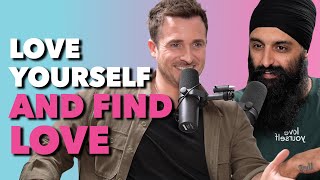
Humble the Poet discusses self-love and why people sabotage their own relationships. He argues that love is a verb, not a feeling, and that most people can't receive it because they can't accept compliments or they chase status instead of connection. Real self-love requires boundaries and vulnerability.
Chapters
Today we have a guest, a friend of mine, Humble, the poet, an author, an emcee, a spoken word artist, and an incredible thinker who has just written a book on love. And so I invited him along today to talk about self love healing, the patterns that we engage in in early dating that sabotage usually. And I think what you're going to find in listening to this conversation is not just really valuable insights on men and bridging the gap between men and women and understanding why men do the things they do. It's also going to be a really amazing insight into the patterns that keep us from finding real love. So I think the best word I can use to describe this conversation is healing. If you're single right now, I think you're going to come away from this conversation feeling better about being single right now and also feeling like you have more hope for the future in finding someone. So I present to you Humble the poet. Humble. What's up, man?
How you doing?
It's good to have you.
Yes.
This is the first time we've done anything together professionally. Right. I don't think we've done anything like this. We started our relationship in the freezing cold in Poland.
Yes.
On Wim Hof's retreat.
Yeah.
For four or five days. I can't even remember now.
And I had no idea who you were.
Yeah, yeah, we met there.
That's where we met. Yeah.
We did everything from jumping into frozen cold lakes together to sitting in ice for up to 10 minutes.
Yeah.
Climbing the most. The tallest mountain in Czech Republic.
Without clothes on.
Without clothes on.
Yeah.
It's hard.
Yeah. But it was definitely a great bonding experience. I learned that if you want to bond, suffer.
We had like 10. I think there were 10 or 11 of us. Right. Total.
Yeah.
All different walks of life. We had like award winning American footballer on the Steve Weatherford, super bowl champion. We had Jesse Itzler.
Yeah. We had Lewis Howes, Aubrey Marcus.
Then it was crazy group. Nick Simmons, the Olympic gold medalist.
Yeah.
It was like a crazy group of kind of superhumans from all different walks of life.
Yeah. Superhuman men that weren't afraid to be vulnerable.
Yeah. And that is interesting because that to me, when I came away and I made a video about male vulnerability after that trip, because it seemed to me that that was almost the most profound.
Part, 1000%, because the.
The ice, doing all of the extreme challenges, which I was terrified of at the time, that allowed us to all be in the same place. But then in the in between times was when we would sit on the Sofa and just talk. And I remember even Wim Hof the iceman said that he kind of got. He got vulnerable there in a way that he wasn't normally vulnerable.
Yeah, I remember because I don't know if you remember this part or if it applied to make a call, we had to leave the cabin and climb up a little hill a little bit higher to get good reception. So I remember being up on that hill making a call and then a car drive by and it's a whim. This is later in the evening. And he gets out and he gives me a hug and he says thank you. And I don't know what he's saying thank you for. And then I realized he was talking about like this creating an opportunity for him to be more vulnerable, him to have a deeper connection with his son off that trip as well. And I guess things were happening while I wasn't even there, kind of in the kitchen or during the meals. But yeah, it was definitely one of those situations where you first think that you're in a room full of, you know, hyper competitive, toxic alpha dudes, like locker room energy. But very quickly you realize these are a lot of self aware guys. There still was competitive energy. There still was. As I Learned later from Dr. Trish, when we went to Utah, she said, you guys weren't supposed to be in the ice past two minutes. She goes, you cavemen, I don't know why you stay in the ice for so long. She goes, it was only two minutes. It's only meant to be two minutes.
So you need to do in an ice bath. Yeah, two minutes. And then we're in there chanting at 10 minutes.
Yeah. She's like, you guys are just being cavemen. And I thought that was hilarious. I'm like, it's still a healthy version of. But it was competitive.
It was like a part of the bonding, right?
It definitely was.
And you know, the, the. It's interesting because Wim Hof is used to being on these big programs, much bigger than we did. He'd have a, I assume a couple of hundred people or 100 people on his program. And so he's kind of the guy that comes in and you know, people are very excited to see him. And he's really playing the leader in that environment. And he did for us too, in the sense that, you know, we all wanted guidance and we all needed his kind of moral support in those situations. But it felt like he even gave himself permission to not have to be the leader the whole time because you. Because it was all leaders. And you know, every single one of us is a leader in our department, in our field. But. But that was what was quite disarming about it is that you actually got a chance to, to shed all of that and just to be a person in this environment and go back to being a student and going back to being, you know, you're around impressive people. So none of us feel like. It's like none of us feel like we're the shit in that environment 1000%.
But everyone's still a self starter.
Yeah.
So I think the basics were there for us to like make things happen. But I think, yeah, feeding off each other's energy, benefiting from that and then, yeah, not only getting in the ice because someone else got in the ice, but being vulnerable because somebody else got vulnerable and somebody else shared that. And I think for me that was, you know, getting the invite to that. Not having a lot of context as to what it would be, just agreeing because it was a unique experience and then being so glad it happened, especially considering months later the world shut down. And I think that was. That primed me for kind of the unexpected and regulating my own resilience.
And you did the hideous thing of actually making use of that time and writing a book.
Yeah, that kept me afloat. Yeah. Writing an entire book.
Some of us ate cereal at 11 o' clock at night and you were writing a book. I'm so excited about this because it's. Speaking of being vulnerable, I read somewhere that you wrote this book which is called how to be Love. Are you saying it how to be love or how to be Loved?
So you inspired this title because I didn't know that. Yeah, you inspired the title because you told me to meet the audience where they're at. And I think one of the references you made was you can make a video about self love. The title of the video something a little bit more surface level, like why he won't text back. And I really thought about that and I was thinking about that, you know, catching myself even what was catching my eye. And I realized that, you know, the secret is to be love is to view love as a verb and, and an action and a service. But what we all want is to feel loved. We want to acquire love and realizing that there's no difference. So putting the D in parentheses is kind of like, you know, that's a spoiler alert. In order to feel love, you have to be love.
So you, you said. I read that you wrote this book on the back of a breakup. Yeah, can you dig into that? Because I feel like that, you know, that's meeting people where they are. Right. I mean, people tend to pick up a book like this, and people often tend to encounter my YouTube videos at a point of pain. They're going through something. Maybe they've been lonely for a while. Maybe. Maybe they just went through a bad breakup. Maybe they're scared that they're never going to meet someone. Can you take us back to that time when you'd gone through a breakup and it kind of inspired you, writing this book?
Yeah. So it actually, to be 1000% honest, it was the book that inspired the breakup. And what it was is I was in a relationship for a few years, and we had just got engaged, and there were. The engagement in itself was kind of a piece of duct tape to try to address the challenges in the relationship. So it's like, oh, let's go in deeper, because we're not good where we're at. So maybe that's the solution. And knowing on the inside that's not definitely not the solution. And then I committed to trying to have a deeper understanding of love and how to be a better partner, because I really. I didn't want to mess it up. And in the initial journey of trying to better understand love, I started to realize that I was in the wrong place. And even if I couldn't put it into words while I was having these feelings, that this wasn't the space I needed to be in. And it wasn't for a lack of love, and I wasn't with a person who wasn't good to me. I was in a position where I wasn't able to receive love. I hadn't addressed. All that has been kind of built up around me, kind of, you know, the same fortress I built to protect myself, you know, was now serving as a prison to keep everybody else out and keep me out as well. And I was realizing that you could shower me with love, and there was no love, no love could be received because I wasn't in a place for that, and that motivated the breakup. But then at that point, you know, I was still in the middle of researching this book and doing some of the early writings. That's when it became clear that I need to really figure this out. It couldn't be for nothing. So, you know, the journey of the book is I read it from the frame of this being the breakup because the vast majority of the writing and research happened all after the breakup. But it was very clear I didn't think I'd be writing a book specifically about self love predominantly. I thought this really would be a pragmatic, day to day kind of dating type book. And then I realized like, no, the reason I'm having so many problems isn't because simply I'm not a good partner. It's because I'm not in a position to realize love. And I started to realize very quickly that we view love as this kind of external thing that we earn or that we can acquire or we can get or we deserve or we're enough for when really love is something that you can only realize and experience. And the analogy I use is, you know, love being like a breeze. And the work isn't to find the breeze. The work is to open your cell. And I realized very quickly I was, my cell was not open. No matter how windy it was, my cell was not open. And the work I had to do for that required me to be alone. It didn't, you know, I couldn't do it. At the same time with all the family obligations, dealing with somebody who was, was, was a, is a great person, but at the same time on their own journey, refusing different type of help that they might have need for their own healing. And so I had to walk away from that situation. And then at that point, you're not, it's not a, you know, I'm not doing it with confidence. And I'm not saying, okay, this was the best decision of my life, let's move forward. It was. I need to make this worth it. I need to figure out how I got here. I need to figure out how I never get here again with people that.
Are out there dating right now or even people in relationships. What do you think are the telltale signs that someone is struggling to receive love? Because some people may not have that awareness. They may just say, I'm just really struggling to meet someone or I never feel what I want to feel, or it manifests in other ways. So in terms of almost diagnosing where people are, what do you think are the signs that someone is struggling to receive love? And that's the reason that that love isn't happening the way that they intended it to. Before you carry on with the video, if you haven't already, go over to yourdatingsolution.com when you get there, there's a tool that will ask you what your biggest dating challenge is right now and then it will recommend you the best. One of my solutions from the last 15 years that suits your particular challenge. It's fun to see what it Recommends go check it out yourdatingsolution.com.com and then come back and let's continue the video.
An easy, clear one is people's inability to accept a compliment. You know, receiving a compliment from somebody gets you flustered in a way, because so often as young children, we signal to ourselves that you have to earn love. You have to do something to earn it. And, well, as we get older, you know, authentic moments of love aren't things that we earn. So I think this inability to accept a compliment can give somebody a hint, even go ahead and compliment yourself. You know, you can go ahead, you know, think about the last time you were naked in the mirror and gave yourself a compliment. You know, not looking at your body critically. And try complimenting something that you don't normally compliment. There's going to be a weird feeling that in itself is an inability to receive love just because it's almost foreign.
It's funny, I just. Yesterday, I was awarded my blue belt in jiu jitsu.
Congratulations.
Thank you, man. It was a really special moment because I had worked towards it for some, you know, years now, and it happened to be a particularly busy class yesterday. So there were. I don't. There must have been. What were they, like, 30 or 40 people in the room? 40 people in the room. And I was the only person that was awarded a belt that day. And so they called my name at the end of class, and I had to go up and the professor, the coach, put the belt on me. And then you go around and you shake every single person's hand in the room. And they're all lined up, and you go along and you shake every single person's hand and look them in the eye. And. And this happens at the end of every session. But on this particular session, every single person whose hand I shook said congratulations. And it's funny because initially I noticed I was almost trying to move through people really quickly because I was like, oh, this is a lot of attention on me. I'm used to attention, but it's a different kind of attentive. You know, I'm used to. If I'm on stage and people are saying nice things about me or they're saying nice things in a video. I don't know. It feels different somehow. You know, I'm in those environments, I'm. I'm in the role of the leader.
Yeah.
But in this environment, I'm very much in the role of the student.
Yeah.
And there are people way better than me in that class, many of them. So to walk along and for everyone to say, like, individually, congratulations, man. Congratulations, man. Congratulations. I had to, in my head, I had to reset a quarter of the way through and tell myself, hey, like, enjoy this. You weren't like you, you did, you spent years doing this and you're now like trying to almost rush through these congratulations because there's some part of you that's like feeling a little uncomfortable in just accepting this praise and accepting that people are celebrating you right now. It's your birthday today. You know what I mean? Like, it's. And, and, and I reset. I had a little bit of self talk where I literally told myself in real time, like, hey, enjoy this. Like, actually, you know, everyone saying congratulations, try and really receive it. So, you know, even after all the work that I've done on myself over the years, I still had that moment where in that particular context I had to talk myself. I had to give myself a talk about just accepting the prize completely.
And I think especially with that, because it's, that's so, you know, almost. It was a process. You didn't win a sweepstakes, you know, you didn't get lucky. You know, you. There's a step by step guide to getting the belt.
Yeah.
And you know, and you had to, you couldn't skip any shades in that gradient and you slowly made your way there. And you know, it's def. You know, you worked your butt off to get it. So that should be one of the easier ones. And it is really interesting because it is starting to recognize what type of attention we can absorb and what type of attention we can't. As you said, you might be able to talk in front of 10,000 people, but maybe eight of your closest friends sitting watching you at the dinner table do a speech, it might be completely different. And I think these are the opportunities for us to become aware in that context. And I think accepting a compliment, I think is one of the easier ones to look at. Or even realizing how critical we are of ourselves. But also just our definition of love. I think oftentimes attention, affection, power, control, validation, adoration, all of these things kind of. I identify them as kind of fast food versions of love.
Interesting.
That don't have that nutritional value that actual love creates.
So can you repeat those? The ones that you feel like are fast food versions.
Yeah, I mean, you know, as I said, validation, power, control, success, adoration, attention, admiration, worship, you know, all of these kind of things that really feed the ego.
I was going to say that seems to me the common denominator in all of Those is. Is they're based in ego.
Yeah. And ego is the border that separates us from each other. You know, ego is that membrane that makes every drop think it's separate from the other drops in the ocean.
So how do you. Because in a way, our inability to receive love is. You can reduce it back to ego. Right. Because ego. Ego can go in two directions. Ego can be, I'm so great.
Yeah.
And therefore someone should love me. Ego can also be, I'm worthless and no one's going to love me. Right. It's still a form of ego is. I'm. I'm making it about. It's almost like I'm especially unlovable.
Yeah.
Is also a. An act of ego. I'm especially lovable and I'm especially unlovable. I find are both rooted in that same place. And you can flip between them very easily because the person who associates with being super hot is also terrified of the rejection of someone who doesn't think they're that hot.
Yeah.
So it can flip quickly.
I kind of define ego a lot more as the identifier, you know, the way you identify yourself separate from others. Because when you have these moments of authentic love with someone, that's when it ceases to be a you and them. It's kind of like you. You melt into each other. There's. There's not a you and me. There's a we. You know, whether it's you and a child or you and a romantic partner. And also going back to people's definition of love, like, I forgot who said it, but love is so vast, they can love those things deemed unlovable, you know, so, you know, going back to the ego, the ego is where we derive, you know, separateness and value. Because, you know, we. We think that we have to have value for love. I'm unlovable. I'm not. When love is. Is bigger than that. And. And there is no value to a person, a person can't be enough of a person. A person can't be worthy of love. Love. Love isn't measured in worthiness. Love isn't measured in enough. People aren't measured in worthiness or enoughness.
So what do you say to people who love the concept of that? You know, they find that extraordinarily beautiful. But the way that things practically play out in their life is that it feels like their worst fears are always being confirmed in the rejections they get in. You know, I. I want to feel like I'm not, you know, I'm bringing down the barrier between me and this person that I'm attracted to. But I very much my experiences are one of rejection. This person doesn't want me. This person doesn't, you know, call me or didn't, you know, rejected me when I asked for their number, or didn't call me after the day, or we slept together and they no longer wanted me. You know, we meet in an everyday world of dating, a lot of rejection. And in some cases we even hear the rejection as being tied to something that we feared made us not enough. And we go, oh my God, it is because I'm not pretty enough. It is because I'm not good looking enough. It is because, you know, in the case of guys, there are guys that every time they hear that height actually does matter to a lot of women, they feel their worst fear confirmed that I'm not enough because I'm not tall enough. So how do you marry? Well, I suppose if, if there is a intrinsic reality to what you're saying.
Yeah.
How does someone actually embody that in a world that can feel so full of constant rejection on the very things that I am actually worried make me not, not enough in the first place?
Yeah. So I'm not here to discount the feelings, the crappy feelings of rejection in any capacity. But you're not being rejected by love. You know, you're being rejected, you know, for a second date or for a first date or for some, some other validating factor. You're being rejected for something that's delicious, not really nutritious. And I would challenge people to go back and look at their current relationships in their life where they authentically feel love. Right. And that may not be a romantic relationship right now. It may be them and a nephew, them and a parent, them and a sibling, even them in an activity and what they said. And I want to challenge them to ask, is there anything that person, you know, is that person perfect? Is that person enough? You know, do you even look at them in terms of their enoughness or their perfectness? Do they have to qualify for your love? And the answer is no. Because the truth is everybody we love, we know all their imperfections. And the deeper we know them, the more in detail we can list out these imperfections. None of that disqualifies them from love.
Do you have, have you come across people and what do you say to them? If they say, I do have that kind of love and it's beautiful and it's one of the things I treasure the most in my life, I still feel a yearning for romantic love. And in the field of romantic love, in that domain, I feel like no one is giving me the kind of love that you're talking about, where they do accept my imperfections. And. And I'm really struggling because it seems as though no one's ready to love me like that.
Yeah. Again, I would challenge them to look at the current apparatus, you know, and I'm not lost on that idea. You know, I'm a heterosexual male, and I have, you know, what I find attractive, what I don't find attractive, and I have a list of qualities that may or may not actually be what I require in a partner, but it's what I think I require. And, you know, and that could cause me to have misconnections. And I think that can cause me to also connect with the wrong people. I've also had given exceptions to people who don't fit my list or certain things that I'm looking for, but because they had a symmetrical face, I let it pass. And then two weeks later, I'm suffering those consequences. So I think it's enough to take ownership over this idea that, hey, we barely understand ourselves, let alone can understand other people. I think that's the first thing to recognize. I think the second thing, too, is going back to our ability to receive love. You know, our relationship with other people is going to be heavily based on our relationship with ourselves, you know, and the sting of rejection. Yesterday, I was hanging out with a friend who was a real estate agent, and he's like, you know, and I was telling him, I go, I went through this process of writing this book, shedding as many layers of protection as I can to be as vulnerable as possible. Now I feel like that vulnerability is kicking me in the butt and biting me in the butt. Now that I'm out in the sales department, I'm reaching out to people, trying to get on podcasts, trying to get people to give the book a chance. And every rejection I get feels like it stings extra hard. This isn't even my first book, but it's just been so long since I've been in that. And he reminded me, goes, look, you know, rejection is your. Is your friend in this because it's their story, not yours. That's the first thing we have to always remember when someone says no to you. It's their story, it's not yours. You know, they can have all these qualities that they're looking for, and if you don't fit those qualities, it doesn't mean they know what they need either. I think that's important. And then also it's, that's, you know, that has always been the situation. You know, we, the humans that we are, we, we derive our understanding through our acceptance from other people. And that made so much sense when we lived in smaller communities in these villages of 100 people. And we needed them to like us, we needed them to accept us because our direct survival depended on it. And again, my parents grew up in a village like that, so I'm one generation removed from that mindset. Then we come to these cities full of millions of people and that mindset doesn't apply lie anymore because it is impossible to get everyone to like you. Also you don't like everybody. And I think very often we don't look at the type of rejections that we would provide people and how non personal it actually is. And somebody saying, for example, height matters, you know. And I watched a funny YouTube video recently where, you know, the girl was probably 5:1, the guy was probably 5:7, and you know, she said, you're too short. And he goes, how tall do I need to be? And he goes, I need you to be six three. He goes, why? She goes, because then I'll feel safe. He goes, safe from what? She goes, what if five guys come and attack me? He goes, you think somebody who's six three will be more successful than somebody five seven, fighting five guys? And she's like, well, maybe he'll know karate. And so now she's already, you know, it's already. He's already unpeeling the lack of logic in her situation as well. And he's like, well, maybe the five guys will know cry too, because you're not making sense with what you're asking for. And I think very often when we seek these external things, we haven't taken the time to figure out, is this what I want? Or this is what I told I want. Yeah, you know, I want, I need to have an attractive partner or I need to have somebody who makes a lot of money. But what we don't ask the question is what? Why? Why is that actually important? And going through the journey of self awareness, it's like, okay, let's say, well, how did that make you feel? Because at the end of the day, what we really need is to be around someone who makes us feel good about ourselves. And you know, we have this, you know, you mix that with the fact that many of us as children were given the signal, an incorrect signal that you have to earn love because we weren't able to realize that sometimes the adults who we, who we looked up to were having bad days unrelated to us. And we internalized that. So now we find ourselves attractive to people that we have to win over. And there's that famous quote. We adore those who ignore us and ignore those who adore us. And many of us are guilty of that because we have this broken idea that we have to earn love. And again, we live in a consumeristic society which needs us to feel like we're not enough as is so we can buy their stuff.
I love that point about people don't necessarily know what they need. And that idea alone can save us from a lot of the worst of the worst kind of conclusions of a rejection because we can realize then that we're not necessarily hearing from a trusted source. We're not hearing from someone who's got it even all figured out for themselves. And the decisions that this person is making right now may actually make them unhappy for a long, long time because they continue to go after the wrong things. So to me that almost leads into two thoughts, I guess. One is that we're always in a sense educating people on what's important by what we display as important. We can come across someone who might be a little shallow when we meet them, but if we are really connected to our worth in the non shallow sense and we're really believable, then we, in a way we become the best marketer of depth and, and someone around us can start to, to realize, oh wow, this is. This person really believes in their value in other ways and that then becomes very compelling.
Yeah.
And so we have a, we have this. The irony of self acceptance and self love is that when we really feel connected to the value of our deeper qualities and who we are as a human being and just our value as a human being, we then become much more convincing for certain people who can be perhaps educated on these things that are more important than the things they think are important. Now I suppose the paradox is that do we want to attract someone we have to convince, or do we want to meet someone who's also at a level of awareness in their life that they already have a real sense of what's important outside of the. What I could kind of overly simplistically say are the wrong things to base all these decisions on. If someone's saying, well, what I really want is to meet someone who is already in a place of maturity, that they've started to value the right stuff and therefore are going to value those things in me and don't need to be convinced. Do you think that there are ways? Because I actually saw someone write this the other day. They were like, matt, how do you attract a self aware person? And I'm curious as to whether you think that people who are out there trying to attract someone who's already at that level, are there things you can look out for or do you think that life is always going to be a little bit of both? Yes, you're trying to attract a self aware person, but you know, you also have to be responsible for marketing your value and the depth of you and that being an important thing.
Yeah, well, I mean, I think the simple answer is to attract a self aware person is to become a self aware person. Right. And I think that, you know, becoming, becoming what you want to attract, I think is super important. And also for anyone to describe such a impressive individual, that impressive for that impressive individual to get there. Self awareness is only developed through, through going through boatloads of crap. You know what I mean? That self aware individual will have to have dealt with endless rejection, endless pain and process that and dealt with that.
And, and, and, and, and in a way that the wrong thing's not working. Like that person has to have dealt with having gone down the path of what they think they want enough times and it didn't work.
Yeah.
That they're ready to try something. No.
Yeah. Like I've, you know, I recently went on a date with a woman who broke up with a billionaire because she spent her time thinking somebody with amazing wealth is something I need. And then she had to get in it to realize, oh, there's a downside to this as well.
Me and Audrey were watching the Crown.
Yeah.
This week.
Yeah.
And there's this great moment where Diana, Princess Diana is, she's, she's basically on a date with this doctor that she's met in a hospital. And she's. It's really funny because he, he leaves the, the date when she starts to become physical with him because. And she's like, why are you leaving? You know, and all of us are watching going, why are you leaving? And he says, I don't know what you see in me. Like I, I'm slightly overweight doctor with no time. And there's nothing, he essentially is saying, there's nothing special about me. Like why, why are you even on a date with me? And the thing that, the thing that made me and Audrey laugh is that she said, she said first she starts by saying like, I'm not who you think I am. I'M not. You know, I haven't got people that I'm close to. I feel stranded and lonely and out in the cold. And, you know, I'm just a normal person. Like, I'm not what you think I am. And then she says, I. I tried. I married a prince, and it didn't work out. I'm. Now I'm ready. I think the line she said is, I'm like, I'm ready to try a frog.
I was thinking that in my head.
And it cracked me up. We were laughing at it because we were like, she perhaps could have said it. I mean, I'm sure Diana didn't actually say in real life, I. I'm ready for a frog, because no one wants to be the frog.
Yeah. But I think a lot of good points on the projections.
You know, it cracked us up because it was like, I've tried. No, I've tried a prince. I've tried Prince Charming. I'm ready for you, the frog. But that's. It was an example of exactly what you're saying that this is. You know, sometimes when you explode that idea of what you think you want, and you realize, oh, happiness does not reside there, then it opens you up to trying something new. And I'm sure a lot of people listening to this will have perhaps in their lives, reached a point where they've tried the. The same thing so many times, and it's not worked that they have to now start to suspect.
Yeah.
What it is they're actually looking for.
Because they end up becoming a common denominator in all these field relationships.
Yeah.
You know, and then it has to be, if you do the same things, you're gonna get the same outcome. And I know for me, through therapy, what I ended up doing was reliving my entire love life, and the therapist making points of when my face lit up during telling these stories and when.
Did it light up?
You know, the first time someone said, the world needs to hear your voice. And that same person calling me years later, after we weren't even together, being like, what do you. I'm watching what you're putting on YouTube. You're putting some weird, goofy comedy, like, your work's important. What do you. Why are you trying to be an entertainer for? Like, get back on track, you know, somebody, you know, recognizing my value as a person.
So you felt the world seen by that.
Felt. Seen. Felt validated. I think what. What I realized with that was, you know, all of us have these moments where our confidence is. Isn't there, and we Want someone to. To help us. And I think so often, especially with the work I do and the work you do, people look to you to kind of instill some confidence in them, but you have your low days as well. And that was somebody like, without hesitation being like, no, like who you are and this path you're taking matters, even if you don't think that today. And they did it with a level of assertiveness and aggression that I needed to hear. So, you know, having someone that does that versus somebody playing, planting fear in my head if I have a big goal and they're like, oh, but what if that doesn't happen? Let's. Let's take a different route. So recognizing how important that is for me, you know, having memories of people pushing me to the edges of life, you know, in terms of experiences, understanding that I'm not looking for a happily ever after. I'm looking to continue an adventure, continually find new, unfamiliar situations, territories and experiences, and keep doing that. So. So that may not be somebody who's looking for a house in the suburbs and kind of an autopilot life after a certain amount of things. I'm an artist. I'm here to peel away layers and get deeper and more tormented in some capacities.
So you lit up when that person said that, because there was this sense that they saw you, that they saw how wonderful you are, and that there's something in you that is important for it to be out there. And that's a beautiful feeling when someone sees us in that way and we want to be around that energy. And so in seeing that, you lit up talking about that because it was like a connection to something that was much more important than the superficial in somebody else and gave you a sense of what you're actually looking for. The kind of teammate.
Yeah.
That you're actually looking for now. I don't know. And you don't need to. To say why. That's not someone that. As a result of that lighting up, you're now with. But.
Oh, she. She was. She was just ahead. She. She. She wanted. Her adventures were ahead of mine, and she left the country, she left the continent and started her adventures. It was like, we can't. We can't keep this up.
Got it.
So that. Yeah, that's all it was. She was way, way too ahead.
Because I'm. I'm. I guess there are people that will say, I know what's really important, but what I am attracted to is a problem because I have this sense of what's important, but I keep Getting attracted to these things that aren't good and they shouldn't be that important, but they seem to be because it's what I keep getting attracted to. I'm attracted to these hot, cold people who are indifferent to me and, you know, it's not necessary. They may not say they're attracted to the indifference, but I'm attracted to the fact that they're hot and they're cool and that there is something sexy about them. And it seems to always lead me to people who either don't want me or who don't treat me very well. Meanwhile, the people that seem to have these gorgeous qualities you're describing, a deep level, I think are amazing qualities, but I just. I don't feel compelled to be with them. What do you say to that? Does the book kind of allude to any of that?
Oh, yeah, completely. We. We, you know, we all. And even outside of romantic relations, we all choose what's familiar over what's healthy. And oftentimes, this cool, aloof individual, what it really is is the feeling that you have to earn something. And oftentimes, you know, that matches the flavor of what we had growing up. And we may have been in a household where there was a parent in whatever the primary parent was, where we felt that we had to constantly earn their love. And now we're finding ourselves doing the same thing where, you know, we find someone that matches that flavor.
I agree with that. Yeah, I absolutely agree with that. If I were trying to challenge it in the most brutal way.
Yeah.
I would say. And let me play the role of this person.
Yeah.
Humble. That's true. But hot is hot. Someone who's just physically. They look a certain way. I find that really sexy. And, you know, life is just. Life has this group of people that are super sexy that I'm always drawn to. And they can have lots and lots of people because they're super sexy.
Yeah.
And it's okay. Maybe there's something going on with my past in parenting and that's making me attracted to indifference because it's what I experienced as a child. And I feel like. But even if this person wasn't in, you know, even if I remove the indifference and control for that, I'm still just attracted to these super hot people that can have so many people that they're never really attracted to me or they don't give me the time of day. And, you know, we live in a world where just, if you're good looking, life is 100 times easier and you have lots of Options. And I find myself drawn to those people. But those people treat me as disposable because I kind of am to them. What do you say to that person?
Again, it's a look at your track record. You want to keep doing it. You would have, you know, you'd been happily ever after a long time ago if one of these ended up working out. Two, it's the next level on top of choosing qualities is asking how that quality make you feel. So what is it about somebody who does not show interest in you? What is, what is that feeling?
What if, what if I what? But what for the person who says, no, no, I'm not attracted to them not showing interest. I'm attracted to how good looking they are.
There's nothing wrong with being attracted to somebody who's good looking. And again.
Right.
But what if people with symmetrical faces aren't monolithic? Not every single person who is an extremely, you know, good looking individual treats people with indifference, you know.
Right.
And I think that in itself, you know, we're creating this archetype that isn't real.
Trying to get to what is this a hard truth that a lot of us have to accept that just there are people who aim too high in terms of looks and it always makes them unhappy because they're just always drawn to people that have this wealth of options and therefore are kind of, we are more likely to be disposable to those people. Do you think that's happening to a decent number of people? Like dating apps just show that people, a lot of people are going just for the best looking person in the room and that they're consistently kind of. There's 1% that's getting 99% of the messages.
Yeah.
Do you think it's incumbent on people to continue going for those kinds of people until they find one that turns around to meet them? Or do you think people themselves need to almost start with what they're hoping someone else will do? Which is to say I'm going to stop needing people to look a certain way for me to choose them. Because what, in a way, what I'm expecting is the exact same thing. I'm choosing based on looks. And then I'm frustrated that someone isn't choosing me based on that same quality. Do you think people need to almost start from a basis of saying I'm not going to value this as highly as I used to?
Well, well, they shouldn't. That's not, you know, if you, it depends on your goals. If your goal is to, you know, enjoy Somebody like a snack, then fine, get the most attractive snack you can have. You're trying to find something long term. How does somebody's looks play into a long term situation in any capacity? And I think that's something that, that is worth asking. And also use these apps as an example, even for yourself, even when you're not getting a lot of matches. Look at this idea of, you know, the analysis paralysis that comes from having too many options. Too many options in itself is a curse for anybody. And you know, any of these guys or girls who are getting this, this inundated with attention, they're existing in a world of fragmented relationships as well. And they're not building deep connection and they're not getting fulfillment out of this either, you know, and they could do it for how long? And they become addicted to the validation that comes from the new, conquer the new what have you. And at the end of the day, I mean, and I'm sure you, you know as well, we, we all know, especially us in this world, we all know of the one girl who said no to that guy that everybody thought can get any girl he wants. You know, it's, that's, that, that is a reality. There's this, there's endless levels to this. I've been in a room full of guys who are making $100,000 a month complaining about how they're losing girls to NBA players. And I'm sure those NBA players are complaining about how they're losing those girls to Leonardo DiCaprio or something, you know what I mean? Like this, this and these, these, these, these pyramids are endless.
Or complaining that they're only ever getting attention from a certain kind of person.
Certain kind of person. And, and, and recently too, you know, one of the first friends I made, I've only lived out here in LA for a year. One of the first friends I made out here is, is a female from West Philadelphia and genetically gorgeous. You know, she won a genetic lottery and she's completely gorgeous. And she moved out here and was, was creating art and then very quickly got into, you know, didn't have a lot of education, but got into the service industry in Beverly Hills and now making a gang of money and has a lot of celebrities reaching out and asking her. And she says she was frustrating being attractive. You know, she goes, it's always you, you're always second guessing yourself as to why someone is talking to you or what have you. The same way, maybe even a guy with a lot of money and people, people know he has a lot of money can make himself more attractive. And now he has to second guess why people are talking to him. As I said, I think we're thinking short term when we're talking about attractiveness. I'm not here to discount that you don't have to not be attracted to somebody before you date them. But I would also say, hey, give somebody. You know, one of the pieces of advice I was given was, okay, you can have your ranking. Give somebody who you consider a seven or a six. Give them three dates, see what happens. Because I think very often to these sparks that we're chasing, this initial attraction that fades no matter what. And there's stories of, you know, some of the most beautiful human beings, you know, still having to deal with infidelity from their partners. So, you know, attractiveness is not a sustainable model to, to do something. It could be initial attraction, but at the end of the day, it's going to take you a few times to get to know a person to see if they even connect with you, you on the stuff that actually matters. And all that work is done internally, you figuring out what actually matters to you. And even I've learned that too. I've known like the girls that find me attractive, you know, what I learned is, you know, as, as a guy with a big beard or, you know, what have you is like they. Depending on how they grew up. This is what a man looks like. And very, it's very few girls I know that would find me attractive and also find a guy like Justin Bieber attractive. They'd be like, oh, he looks like a boy. You know, I like my men looking like men. And then I'm sure girls that think he's super hot may not find me attractive. So you start to understand this idea of even attractiveness is not this universal term. Yeah, there is, you know, science behind having a symmetrical face and certain features and what have you. But at the end of the day, you know, I think there is an opportunity for each of us. You know, our presentation will always matter and how we carry ourselves and conduct ourselves, and we can all make ourselves more attractive in that capacity and stack other quality qualities to ourselves to make ourselves more attractive and viable in that capacity. But if you're like, okay, I only like dudes with this body fat percentage and this type of face and this type of hair, and he has to look like, boom, boom, boom, boom, boom, cool. But then, you know, you don't, you don't know who he is and what he's looking for and what he finds attractive. And what, what he wants out of this. And if everything's just based off your social media algorithm, then you're gonna have a very skewed understanding of life. Life.
And you're disqualifying so many people. Right? Because the idea that you're going to get everything you want in every other way alongside all of those boxes being ticked is, you know, it kind of, it's like playing top trumps. You're just, you're constantly trying to optimize.
And also it goes back to the same question. What about these qualities? Why do you want these qualities? There's a feeling attached to these qualities. You know, going, as I said, going back to that idea of wanting a tall man. What is it about a tall man that you want? You know, and is it safety? Now let's define safety for you. What actually is safety? Is it physical safety? Are we actually living in parts of the world where on a regular basis we feel physically unsafe? Is it financial safety? Now what's the definition of financial safety? Is it somebody whose parents gave them money and you'll feel safe knowing that the family gave them money, or is it that that guy, you know, that will constantly get himself out of a jam because he has impeccable work ethic, he's super ingenious when it comes to coming up with new ideas and, you know, no matter what, the bills will be paid and he'll have your back and he never asked for a handout. You know, these are the type of things that you can do. I have a friend right now where her whole definition is, I will only date guys who are self made. I will not date anybody who received anything from anybody. And again, like, that's a genetic lottery situation in itself too, because you're going to hold it against somebody who's one generation removed from success. But she's like, I need to know that they can do it. But at least she's a little bit more clear on it. I don't know if it's the most accurate thing that she should be doing. She's chasing a feeling of wanting to be around someone who's efficient with what they can do.
It's also chasing this wildly overly simplistic view of, of life. Right. You, you. The idea that someone is less than because they haven't done it all on their own is absurd. No. Firstly, no one's done it all on their own.
Nobody.
Everyone's had help of some kind.
Yes.
Whether it's a great mentor or someone put the right ideas in their head at an early age or someone. Or by the way, they just were born with the genetics that made them weirdly driven.
Yeah.
And it's nothing to do with their social conditioning. They've just got so something about the way their brain is built that makes them get after it in a different way. Like they did nothing to earn that. It looks like earning it on the surface, but they did nothing to earn that. And similarly you get rich kids who, who don't take the ball and run with it. And you get rich kids who do. Or you get rich kids who decide, hey, since money isn't a thing that I have to do to survive, I don't have to earn money to survive. They go out and do something incredibly creative.
Yeah.
And, and they exceeded. They excelled in a different way. Or they, or God forbid, they found peace without having to excel and having the insecurity of their parents thinking they need to do something in order to be worthy. So it's like a very. That's a good example of someone who has created this definition of worth and value that really reduces humans to this very simple thing. And by the way, how many people do we know that you know, they're self made? Quote, but the, what it comes with is the disease they can't stop. And they, they've been trying to prove something their whole lives and they're still trying to prove something. And that doesn't go away because they've not found peace.
Yeah.
Within themselves.
And it also creates the avoidant attachment style because now they are afraid of losing their autonomy because they think they're self made and the last thing they want to do is depend on anybody from anything including emotions.
Yeah.
But you know, and on top of that entire list, just being born in a part of the world where you could do something like that, where you were part of a economic situation that allowed that.
Yeah.
Because there's people being born in war torn parts of the world. Well, they won't have the opportunities to do any of this. So they can't be self made. And they're working significantly harder.
Yeah.
Than any of us entrepreneurs are. Yeah. But again it's, it's this thing and again we, you know, and I think for me, you know, it's, it goes back to the self awareness. So even when I think about, you know, and I, I have, I have a story in the book about the first time I dated a girl who everybody else made it clear that she was significantly out of my league in terms of attractiveness. And you know, the, and then once she Left and the relationship ended. What that did to my self worth. And the chapter is called what's in your wallet? And it's this idea that I identified myself through having this beautiful partner. And even then, even during having this, such a beautiful partner, not knowing how to deal with it. When people complimented your girlfriend for being beautiful, like your girlfriend's beautiful, am I supposed to say thank you? Like, you didn't compliment me. I didn't do anything in this. Like, what am I supposed, you know, am I supposed to say, I know, I don't, I don't know. And it's one of those situations where it was, you know, realizing that. So. And people actually saying like, yo, good job. Like, you know, you're making us guys look good, like getting a girl like that and you. It's all compliments that are creating the damage, not insults. And then she's gone. And all of a sudden I don't know who I am. And then deciding I needed to reshuffle my. My wallet and put stuff in there of value that people can't take away.
So it's such an interesting story because it happens to people in all different capacities. If you're ever, you know, Me and Audrey were an event recently, and someone recognized me at that event and they came over and then I said, this is my fiance, Audrey. And she was as excited to meet Audrey as she was to meet me. But she said the first words out of her mouth were, you must have done everything right to get him. And it was to her credit, to her credit, this person came up to Audrey after the event, and it was a. It was an event on in female empowerment. And a lot of really beautiful things were said that night about where value comes from.
Yeah.
And she came up to Audrey again at the end of the evening and she said, I just want to say that was not. That was wrong of me to say that because it has nothing to do. You know, that assumes that he's somehow the person of value in the equation and that you had to do everything right to get him. And I just, I caught myself thinking about it, and now I want to tell you I didn't. You know, that wasn't something that.
It was like an initial knee jerk reaction.
Yeah. And that happens in all sorts of different ways in different relationships. You don't have to be someone who's recognizable to be in a dynamic like that. Your. Her version of fame in that scenario with you was that she was really pretty. And so then your male friends said, well, you know, you're Lucky. You're lucky. And if people say you're lucky enough, if people start saying you're the fort. You're the lucky one, then it's really hard sometimes to. It's like a form of brainwashing.
Yeah.
Where some people keep saying to you, just so you know, you're the lucky one. Just so you know you're the lucky one. You're. And then you start thinking, well, so I guess I am the lucky one. And if I'm the lucky one, I should be terrified of losing this. Because.
Yes, this is.
I won the lottery here.
Yeah.
I won the lottery. Not. We together got really fortunate that we both met someone awesome in life. And isn't that amazing? It's. And I say that to Audrey all the time. I'm like, we. How lucky are we? How lucky are we that we met? You know, we. We may not have gone. That we met at an engagement party. I'm like, maybe one of us didn't go that night.
Yeah.
And we never met. And we. We both would have missed out on this incredible human being. Like, we're so lucky.
Yeah.
That's a different message. But when you are taught by other people, even if it's just your peers, that's the worst part is your friends in that situation who are saying that stuff. When you're continuously told you're the lucky one, you start to believe it. And then you start to be terrified of. Of losing this person, because now you feel like you're losing. The best part about you is this person.
Yes, exactly.
And I can't afford to lose them. And if I can't afford to lose them, then I'll do anything to keep them.
Which means. Which generally means losing myself.
Yes.
You know, if I don't want to be at war with them, then I probably have to be at war with myself. And I think that that is. It was kind of the awakening, because it's like, despite my efforts, as I told. It's the same one that left, you know, and that was her journey. It was not, you know, she left unless we tried to do long distance, and it didn't work. So it wasn't a rejection of me. And I think throughout the entire evening during the breakup, I never felt there was a rejection of me, but I did notice how much effort I was putting in to keep the relationship alive. And the interesting thing about that specific relationship was there was no chasing between either of us. You know, the big thing that stood out with her, she made everything easy. She made making a date easy. She Made hanging out easy. You know, there was an actual synergy between me and her based off our qualities of people. And, you know, the beauty of that is she's also. In the last chapter of the book. She. She's since gotten married and has two kids, and we had met up for dinner during the pandemic. And the last chapter of this book is called you don't know love. And it's her telling me saying, how. How could you write a book about love? You don't have kids. You know, and it's a beautiful kind of back and forth showing our dynamic, you know, because we still have really deep friendship. And, you know, my editor not wanting that story in the book because my editor felt attacked, saying, I'm sick and tired of parents telling me that I don't know love because I don't have kids. And I said, listen, I don't think she was trying to put me down. I think what she was saying is like, you're the guy who puts the words together, like, have some kids and explain this to me, because I'm just flooded with anxiety and love with these kids. And, you know, and she refers to having kids as a selfish decision. She's like, if you're selfish enough, have kids. And it's. It's just this beautiful idea of, you know, while telling people I wrote a book about love, them kind of looking at me like, how. What makes you qualified to write a book? You know, you're not a love guru.
And that's a very pervasive message in one way or another in the world we live in. That makes us more insecure. Is this idea that you don't know shit because you're not in a relationship. You don't know shit because you don't have kids. You. You don't know shit because you're not married.
Yeah.
And again, it reduces everything to a series of checkpoints before which you have no right to talk and is a very, very. You have to be really strong not to adopt that message. I mean, look, I heard Jordan Peterson say he doesn't think anyone can truly grow up until they have kids. And it's a bold statement to make, like the rest of the world who hasn't had kids.
Yeah.
It's impossible that they could have grown up. And his argument was that you. No one can ever truly be. No one can ever truly cease in being selfish unless they have kids. Because having kids is the first real time in your life where you're acting selflessly in service of somebody else, which is funny. Because it's in conflict with this, in contrast to what your friend said. But it's just my problem with that is not that he doesn't have a point about how unselfish it can be to love someone else and put them first. And the ultimate act of doing that, I'm sure for so many people comes when you have kids and it's not all about you anymore. But, but we also know so many situations where people have had to be unbelievably selfless in their lives in service of other people who have never had kids.
Yeah.
And, you know, and, and what about the people who can't have kids? They've got no shot at being selfless and not in, you know, and growing up. It's, it's these kind of reductions that make people feel less than.
Yeah.
For not having achieved a certain checkpoint in their life.
Yeah. It's like as a modern tribalism. And it's also, and again, like, I, you know, I think especially with Jordan Peterson, because all of his work revolves around chaos and order. I think, you know, for most people who aren't doing the work to figure out a purpose, you know, the moment you have a child, you have purpose and now get to it. And I think it's kind of this default way where, you know, you have a child. This entire project, this entire movement that you've created, it's your baby, and this requires so much sacrifice for you, you know, And I think that's the interesting thing where I do think humans have to exist with purpose and direction and what, you know, and a life bigger than themselves. And I see that, and I see the value of that. But that in children might be the simplest way that that can get accomplished. But, yeah, 1,000%, you know, and as I said, you know, with my ex saying it to me, she was, she was speaking about her frustrations and anxieties around where the world is headed, the environment and all of that. Watching the documentary gives her anxiety, anxiety. She can't sleep at night. And then her making peace with the idea, like, maybe my kids are only going to live to 25 and cool, that's fine. Maybe that's what it is because this planet won't be habitable. But I think from that capacity, yeah, it gets really interesting because we find validation in our little tribes.
You said something interesting earlier when we were first talking about, when we were talking offline about the ways that people compete in love. And one of the reasons we feel we need to compete is because, you know, someone else has got Something I don't. Someone else is attractive in a way that I'm not. And, and, you know, there's a. There's. Then a lot of people have the experience of almost. I had a woman not so long ago say to me, I'm dating a guy who I really like, but he's also seeing somebody else. How do I win the exclusivity race?
Yeah.
How do I beat this other woman to it in the race for exclusivity with this guy?
Yeah.
Speak just to that idea and, and the dangers of it that you said to me earlier.
Yeah. I think specifically for women, there. There isn't a way to compete where you win. You know, for her, for the, for the. For this one, this example you had, she's gonna have to reduce her boundaries. You know, that's. That's going to be the way that she's going to become more alluring to this guy and she's going to lose herself in the process. And that in itself is a dangerous game to play because, you know, the value historically with women is they're the selectors. They're the choosers. They're not the ones to be chosen. And that comes through their ability to say no. That comes through their boundaries. And healthy relationships. Healthy relationships exist within boundaries, and boundaries have to be communicated. So for her to force. Forfeit some of those to make her more appealing versus the other woman, that's not going to lead to a healthy relationship in any capacity.
So she's. She'll get. She may. May get a prize, but it's a poison chalice. It's not going to be what she wants. It's not.
Yeah. She's gonna lose herself by getting him.
Yeah.
And.
And then be in a relationship where the boundaries are all wrong.
The boundaries are all wrong.
And she's gonna have to reset all of those. And by the way, when she does. Does reset all of those, she might lose him anyway because he signed up for the relationship based on her having no boundaries, not on her having boundaries.
1000% or she may not reset them. And now live. Live in a world of dis. Ease where she's going to be constantly be medicating this lack of peace in her life. And, you know, there's a wonderful example of that in the second season of White Lotus for whoever's watching that, you know, a character who has had to make peace with being in a situation where the boundaries aren't honored, but the stakes are too high now. And now she's constantly trying to medicate that Lack of peace through different activities and substances and behaviors. And I think that's something that we have to really pay attention to because, you know, that will impact how we feel about ourselves. And then our quality of living will dramatically go down, even if things look good on the outside.
I love that you. I'm going to keep throwing a couple of ideas at you because there's some things you said that I think are just potent ideas and I want to make sure we kind of check them off. You said the, that self love. I think you'll tell me the exact phrase. But the idea of self love has to come with teeth.
Yeah.
Having teeth.
Yeah.
Can you explain that in the. Especially in the context of what we're talking about right now?
Boundaries. Loving yourself is showing your teeth. And I think very often we, I think a lot of the problems that we have is we choose being likable over love. We don't want to disappoint people. We don't want to say no. We, if somebody tries to have something at our expense, we don't stand up for ourselves. And we think being likable is more important than standing up for ourselves. Not realizing that not standing up for ourselves will put us in a place of resentment, which is a very dark place, which, you know, it's very difficult for love to exist in that space. So standing up for yourself, establishing boundaries, saying no, letting people know that you're not someone that can be walked on the same way, the exact same way. And it's funny, I was in a very short situation with somebody who got very aggressive very quickly. And a friend who was in a much worse relationship was telling me, and I was already signing up. I had cut the relationship off. But I use that as an analogy. I was like, would you want me to go back to that person? Because you're staying in your situation. Like, well, if that person ever comes back on a, punch them in their face. And it seems so much easier to stand up for somebody you care about. I'll stand up for my best friend. I'll stand up for my sister. I'll stand up for somebody else if somebody mistreats them. But I'll deal with it if somebody mistreats me. And self love is having that relationship with yourself.
How do people do that?
Know your boundaries. First of, build that self awareness of what your boundaries are, what you're okay with, what you're not okay with, and articulate them and communicate them.
But what if you're, you know, you know what you, you know, what you want Your boundaries to be.
Yeah.
But the thing that is supporting those boundaries ultimately is that I think that I am a person who's worthy of having those kinds of boundaries.
Yeah.
How do you suggest people? Because like you said, if it's my best friend, I stick up for them because I love them and I don't want them to come to harm.
Yeah.
So it's natural to stick up for them and go into tiger mode when it's my friend. When it's myself, I have theoretical boundaries that go out the window the moment I like someone, the moment I really want to hold on to them.
Yeah.
And those boundaries are nowhere to be seen when I start being pushed or mistreated. How does someone build that same relationship with themselves that underpins those boundaries so that they actually have weight instead of being paper thin?
I think that's a fantastic question. I think the first thing we have to divorce this worthiness concept that the worthiness isn't there. Your best friend doesn't have to constantly earn their worthiness for your love. Your. The, you know, the, the child in your life doesn't have to. Children do nothing to earn your love. They've, you know, your first interaction with them, you're already in love with them. There's no worthiness that's required there. And then also go back to, how did you develop this relationship with your friend? You know, you guys hung out. You guys, you know, the cornerstone to creating connection is vulnerability. You know, me, you and I are friends. I think if you and I met, and we were, we met on a five day trip to Hawaii, we would be high by friends. We would just be casual friends. We suffered together. We were vulnerable together. We both sat there an hour before going into the ice, sharing openly our fears about losing our fingers and our extremities. And I remember specifically you asking Wim saying, but what if I get frostbite? And Wim saying, your body will know what to do. And I remember looking at your face and being like, that's.
That's not an answer.
That's not an answer, old man. Like, what was that? And me being like, I agree, that wasn't an answer. But we, that's how we bonded through being vulnerable with each other. We need to be vulnerable with ourselves. You know, when we're vulnerable with ourselves, we'll build a deeper connection with who we are. I learned, you know, that through that journey of having the attractive girl. Why was that such a big deal? Because I also grew up, you know, in a part of the world where, where I'm not. I don't look like the majority. And I was always made to feel different. And in many cases I was made to feel ugly, whether it was overtly through racism or never seeing myself on television and being like, you're, you don't belong here. And then the moment somebody who everybody feels belongs here accepts me, you know, and, and even for her, it was an educational moment when we traveled together, you know, she had, she had, she was, she was, she was full bottle of shampoo in her checked luggage. Pretty. Okay. And I was, you know, and I.
Was in the luggage. What that should take on the plane.
Yeah. And you know. Yes. Yeah.
Like, that's what I'm such a funny way of saying.
What is a speeding ticket? Pretty. You know what I mean? And, you know, I thought the cop just wanted to have a conversation type situation. And I was randomly screened 100% of the time, you know, and it's in, it's. And again, like, that made me realize that you are not chasing attractive women because you're attracted to attractive women. You are tracing attractive women because they feel like a prop for you to make up for a childhood where half the people that said mean things to you were just kids being jerks. And they don't decide your value, but their voices have stayed in your head. And that's the important thing from understanding that and me having this conversation with myself, that's vulnerability. And me connecting with myself and understanding who I am. In the book, I mentioned two ways of doing that, irrespective of your religious beliefs. Pray. Because what prayer does is prayer is you're doing it by yourself. And you are the most honest with the things that you want, and you are the most honest for the things that you are grateful for. So it's not performative in any capacity because you're earnestly asking your God or your algorithm or what have you for what you want, and you're earnestly saying thank you. And it could be thank you for, you know, thanks for letting me catch that last yellow light so I made it on time, or, you know, thanks for making sure I had enough money in my bank account today to eat or whatever it is. And it allows you to understand what's important to you. And journaling, journaling with complete vulnerability. This is how we establish a better relationship with ourselves. And when we establish that relationship with ourselves and understand who we need. And again, the subtitle of this book is Going Easier on Yourself. That's the first thing in self love. You go easy on your Friends, you hold grace for them. You know, sometimes we make excuses for our friends, even when they're not at their best. But we don't do that for ourselves. We're so critical of ourselves because we keep hearing critical voices that came from those who raised us or what we see on social media or what we saw in media growing up. So, so I think establishing that relationship with yourself requires you to do it the same way you made relationships with anybody else. The challenge with a lot of this is a lot of these things happened to us when we were younger and we weren't paying attention. You know, we learned essential skills over years. We didn't learn them overnight. We didn't learn how to read overnight. It was adults putting us in repetition over years to get us to learn how to read a book. But now if we want to start a new skill, we don't. And going being vulnerable with ourselves and then prioritizing our self respect over our self esteem.
So there was a, there was a phrase you said to me earlier today which was, there's no such thing as mixed signals in the context of respecting ourselves. What did you mean by that?
There are no mixed signals. Mixed signals. Chapter in the book Mix. Take mixed signals as a no. Let it, let it, let it be that I mean dating and not dating. And again, I'm, I live in LA and I live in a world of you're supposed to poke everybody four times with an email if it's a work. But the truth is you don't. The truth is I didn't have to poke you for this. The truth is, you know that agent who said she'd read my script and had to poke her four times. I'll take that, I should take that as a no. You know, because I have been a full time artist paying my bills for a decade now and if I reverse engineer my entire career, career, very little of it came from continually having to poke somebody or somebody with mixed signals. You know, and the same thing in the dating world, especially when it comes to women, to men. Men don't do mixed signals. And I'm learning as somebody who's dating women, if they are they all my best experiences with women never involved mixed signals in any capacity.
It didn't feel complicated.
It didn't feel complicated. And I also, I respect that women have to feel comfortable and safe, but that still doesn't have to manifest itself in terms of mixed signals. It doesn't manifest itself in getting a text message every three days. It doesn't manifest itself in any of that capacity, especially in a culture where everyone's looking at their phone all the time. And I may only be guilty of it in the capacity of when I don't have an answer for someone. If somebody asked me a specific question, I don't have an answer. I may not reply immediately. But in terms of social stuff like that, I'm available to reply to a text message.
Do you have an opinion on a lot of women today saying that they're dating men and the men find them intimidating because of what they've achieved because of the position they're in in life, who they are, their job title, the money they earn. I'm curious both in terms of situations that you've seen out there, but also maybe even in your own life that you encounter. Do you have a take on this?
Yeah, I think I shared with you that story about a woman who wanted me to be her. Her side piece, her third in. In. In. In. In a relationship because she had ended up partnering with a. A gentleman primarily because he wouldn't get in her way of her personal and professional ambitions. And you know, the energy that he wasn't butting heads with her when she wanted to do larger than life things. But then apparently that wasn't the type of energy she required in the bedroom.
So he threatened by her, but he also, he was too far the other way where he.
I think he was very passive. I don't think he was comfortable in his own skin. I think he was just extremely passive to the point where even when she brought up this idea of having another guy in her life, I think he, he was cool with that as well. So I think, you know, I hesitate to use the word beta, but I think it was more along the lines of she tried to find somebody who the. The path of least resistance with this individual for her own personal side. And I think she started to realize that that wasn't translating when it came to type of energy she wanted in the bedroom.
So what about when women are coming across guys that are the opposite.
The opposite.
Which I think they're coming afraid that because she's earning this, because she's. That. That they're somehow threatened. Do you. What's your take on. You know, because a lot of women in those positions are saying it's a very common thing. They're coming across those guys a lot.
Yeah.
And it's a struggle.
Yeah, it definitely is. I think there's got to be grace for the fact that this is a new phenomenon. You know, the. It's late, but I'm glad it's here that the empowered woman, you know, making her money, chasing her passions, you know, building what she needs to build and what she wants to build. This isn't a phenomenon that was very common woman 50 years ago or 100 years ago. And for thousands of years there were roles and everybody played the roles. And now we're in a, a transition period. And the transition period is important, but it's got to be grace that there's going to be some discomfort in that transition period. And there are, you know, I don't have an issue in, in any capacity. I've never found a woman to be intimidating for, for making money or even more money than me. But at the same time I can understand that if, you know, I, I was fortunate enough to have life experiences that made me much more self aware and also have two very achieving, high achieving sisters. So if anything, that became the benchmark for me. So I wasn't looking for the opposite. I wasn't looking for someone I could take care of. I was looking for somebody with both their own income and their own opinions. But I can completely understand that many people, if in aggregate weren't raised that way, they're still raised with the traditional values. And we're going through this process right now of this time period where we're picking and choosing what parts of the old ways we like, what parts of the new ways we like. And I think that in itself is going to be a challenge. I think for women, they should just hold the course. I don't think they should in any way, shape or form make any type of compromises for that. Because the compromise is what will have to be for life. Like when you play a game, the only, the only reward for playing, for doing well at any game is that you get to keep playing it. So if your whole thing is, if you're gonna, if you're gonna dim your light so your man feels better, then you're gonna have to dim your light forever. And it's changing. I think a good example is this rapper Cordae he's dating and I can't remember her name, but she is the, the half Japanese tennis player, the one that got famous for unseating Serena Williams. And he brag raps about the fact that his woman has more money than him. He brag raps about how other rappers are, you know, not dating women who can't pay their bills. And you know, and I think Big Sean, at some point he was, you know, he was dating, when he was dating the cast member from Glee, the one who unfortunately passed away recently, he bragged her up about his, his girlfriend having more money than him too. You know, so I think, you know, the transition is there. And self aware men do exist. Are they going to be a lot in the pool? No. But I think for anybody who gets more specific with what they actually uniquely require, your pool will dramatically shrink. But here's the thing, like the divorce rates at 50%, you know, so why avoid that level of specificity? People are afraid of setting a name because they're scared if they hit it. And I think for us, you know, is realizing that, yeah, you know, if you are a successful woman and you make a gang of money and you're self aware and you're doing all this personal work and you're like, now there's less and less men that I connect with. Yeah, we're focusing on quality, not quantity. And, you know, other work needs to be done in that capacity. One of the things that I noticed, which may or may not be seen as controversial, is that the old culture of women being difficult to get and easy to keep needs to be reversed. And women need to be easier to get, easier to approach, easier to connect with, but harder to keep.
Been saying it for years. I couldn't agree more.
And that I think goes back. So it's like, oh, well, he's not attracted. Give him a chance, you know, and a chance is 3 dates. Give him 3 dates, see what happens. Then you can confidently say what have you, because you've given other people and you've ignored red flags and you've given them more than three dates. And then now you're, you're trapped in this loop of, of, of certain situations. And also, as I said, Grace, as I said, like, the whole premise of this book is about people going easier on themselves, but the only way we can go in when we go easier on ourselves, we go easier on other people. And, you know, the, the big. One of the big discoveries I, I got is the, you know, holding grace for myself when I was participating in the boy culture. Because what I realized, what that really was for me specifically, and, and I think a lot of guys can relate to this, is I was just spending so much time trying to win her over that I never took time to figure out if she was even good for me. And then by the time I did all the work to win her over and scale her fence and win her over, now she's into me and now I'm looking at her to figure out if she's a good Fit for me or not, in addition to the fact that I haven't even done much work to receive love myself. And then that's when you get this kind of mixed signal idea of like, he came so aggressively and so charming to win me over. And, and then the second he got me and I showed him that he has me, he pulled away. And it's because we have. And I have to remind myself regularly, you're not on a first date to win somebody over. You're on a first date to see if this person aligns with what matters to you. That work has to be done at home by yourself, with a journal way before you make the date. And you know, and then that could be reflective in a dating app profile, or that could be reflective having a conversation. And I know one thing I've said to women is I'm, you know, because I learned it the hard way, I will only date somebody who's actively in therapy. And I've had, you know, I've received paragraphs from women who, who have found that to be discriminatory. And I've, as I said, I've made the exception multiple times. And every single time it's bit me in the ass and it's, you know, again, you have to hold your, you have to hold your position, you know, and then maybe that'll change as I, as I move forward and start to realize that, you know, that might not be specific enough either. And you know, we, we have a common friend. I don't know, I should put his business out there so I won't say his name. But his, his journey was, we have to start couples therapy immediately. As soon as we decide we're dating, we're starting couples therapy. And I think, you know, he learned that through his journey of the different women that he's dated and realizing how important that is for him to not wait till something goes, goes wrong before they start doing the necessary work. So I think, and again, all of that work happens alone. And I think the healthier we are alone, the less likely we are to fall, you know, for a lot of the different traps that happen, especially in this dating world.
So if doing the work alone means learning how to love ourselves and practice self love, and out of that will kind of boundaries will come and those boundaries, when we then have them with other people will be underpinned by that level of self love and self confidence. What are. Because self love is something we hear over and over and over again. If you were to almost enlist fashion of like, practical, because I think this would be a really powerful way for us to finish this session if we could make self love super practical for people. Like, here's what it actually looks like. I think that would help people. So can we kind of one by one, from whatever you can conjure from memory, almost make that list? What can people who want to practice self love so that they have the relationship with themselves. That means they hold to their boundaries when they go into a relationship with. What can people do?
Yeah. So I think the first thing is if I can't say the word divorce, I'll say explore a world where enoughness and worthiness are not a factor when it comes to love. And I think this is important because sometimes, again, we have cultural ideas of looking for my better half. There's no, you are not a half a person. You are a complete person. And what I would say is, if you need a better analogy, you are a pillar. View yourself as a complete pillar. And what you're looking for now is another pillar that you and you two together can hold more up. And I think it's Khalil Gibran that says the more distance between the pillar, the more love that can flow through and the more you can hold up. So I think the first thing is abandoning this idea that you require somebody you know in order for you to feel complete. Nobody will make you feel complete. The challenges you have on on the inside will never be addressed on the outside. George Carlin famously said, it's like taping sandwiches to your body to address your hunger. You can't do it. That takes us to prioritizing self respect over self esteem. Self esteem is gaining value from the outside world. And we live in a society that does it super well. We count our likes, we count our followers, we have blue check marks, we read comments. All of these are self esteem. Self respect is how you feel about yourself and the work necessary for you to feel better about yourself. How to do that? One of my favorite pieces of advice I got from Steve Weatherford on honor your commitments, not your feelings. You say you're going to do something, do it. Okay, this is very important for ghost culture, but this is very important for life in general. You say you're going to be somewhere, be there. You say you're going to do something, do it. You make a promise. The biggest promises we break are always to ourselves. And then when we break promises, be easy on ourselves and figure out why. If I say if I've been waking up at noon every single day and I decide, okay, I'm going To wake up at 8am tomorrow, it's going to be a challenge. So instead say okay, instead of me breaking that promise and beating myself up over it. Set an intention. You know this. People are going to be hearing this in the new year. Don't make a New Year's resolution. Make a New Year's intention. Intentions are lifelong. They're not, I need to lose 10 pounds. And now you're saying I'm not worthy until I lose this ten pounds. Then you lose the ten pounds. And the euphoria of it isn't even there, even with you hitting this milestone. And Jiu Jitsu, the blue belt isn't the pot of gold at the end of the rainbow. The blue belt is a. It's a shade on the rainbow. And the rainbow is never ending. You know, you're only going to love Jiu Jitsu as long as you can continually learn new things. And this is just a stop on the intention of you becoming the best Jiu Jitsu artist that you can possibly be. So setting intentions, I think is really important. One of the greatest ways to do that is just pick hard things, pick challenging things, and do it. One of my favorite sayings is an easy day at the gym is not a good day. We live in a society, especially in North America, that sells us convenience. Convenience is an attack on our resilience. You and I both know this because the moment we sat in the ice, not wanting to sit on the ice, we learned very quickly that we are dramatically more resilient than we ever realized we ever were. And focusing on what we can do regularly to build up that resilience will put us in a dramatically better situation that we're in. So prioritizing that being our own best friend, asking ourselves, what would a perfect best friend do? And being that, take yourself out on dates, you know, what activities you enjoy doing. Take yourself to these activities. Again, you're going to be thinking, I had dinner with a friend in London. I was there last week. They got an allergic reaction three hours before, and their eye was swollen. It wasn't. It was noticeable, but it wasn't end of the world. They're not going to let you in the restaurant type situation. She put on sunglasses. So we're having dinner in a dark restaurant, her wearing sunglasses. And I'm like, you've become more noticeable because you're wearing sunglasses indoors. And she goes, I'm doing this to protect you. I'm like, protect me from what? She was. I don't want people to look at you, be like, why is he with this person with swollen eyes? And this is the upper. They're not gonna think I hit her. Like she, her upper eyelids were just extra swollen, so she just looked high, you know. And it was realizing how much we start to think about the rest, the rest of the world paying attention to us when they're not. And I said, see those people in the corner having Christmas dinner wearing the Santa hats? I think everyone, if anyone's looking at anybody in this restaurant, they see the Santa hats because they're bright red. Nobody's noticing us in the corner of this restaurant. And it doesn't matter. Even if they do and even if they do notice us, we don't know what they're looking at. So I think it's really important that we focus on our self respect. That means taking yourself to the movies. That means taking yourself to get your favorite meal. I have a friend right now who travels the world eating at Michelin star restaurants by themselves all over the world. And they plan these out and they have them all in their calendar. And that's how you build a deeper relationship with yourself. So often we are terrified of just spending time by ourselves. And either it's because we're dopamine addicts and we don't know how to, how to distract ourselves, or we don't enjoy our own company. Learn to enjoy your own company. And then somebody has to earn the right to take that, to take some of that. The most important thing we have in this world is our time. You know, the same way I don't want people forfeiting their boundaries for some attention and affection or status. The same way you don't want to forfeit your time because that's the most valuable thing you have for anything else. So self love is that. Also understand that a lot of things, you know, these ideas that we have that we don't feel like we're good enough, we don't feel like we're enough, we think perfection is required for some weird reason. They're not true. In, in the book I make a reference to, you know, there's a YouTube video that shows a four minute YouTube video of Beyonce falling off stage. And the challenge is watch the video, see if you love her any less. You know, her imperfections will not make you, will not disqualify her from her, from your love if you already love her. Understand, we live in a society, the context of everything matters. We live in a society that needs us to buy shit. We have to buy shit to keep things afloat. So the way they make us buy shit is by telling us, you're not enough as you are. So buy some shit. You need to own three pairs of shoes. You need to wear this makeup. You need to wear this filter. You need to do all of these things because you're not good enough as you are. But the truth is, there is no enoughness when it comes to you. So recognize that these ideas are being fed to us. Not only that, when we romanticize ideas of relationships, they're being fed to us by media. Because the healthiest relationships would not make for good tv. They would not make for good film. You know, the health. The most entertaining relationships are going to be with people with opposite attachment styles playing a cat and mouse game and being super toxic. And that's why we watch them. That's why we watch these realities.
It's so funny, isn't it, when you. When you have a clear sense of what a healthy relationship looks like to you. It's really. It can ruin a lot of movies.
Yeah. Yeah.
Because you watch things and you go, this is stupid.
Yeah.
This is really. At this. This version of love is kind of pathetic. It just. And sometimes the older the movie is, the more silly it looks because you're just like, oh, my God, you know, like movies from the 90s or the 2000s. There's just some really daft movies out there. There was this. I remember watching Serendipity and just going, what on earth is this movie about? You know, the female lead in it says they meet each other and they have this great connection. And I think she's the one who says, I'm just going to walk away because if we're really supposed to be together, fate will bring us back together and then we'll know. And it's like, what are you talking about?
Yeah.
It's really hard to meet someone you feel an instant connection with. Explore that.
Yeah.
Honor that.
Yeah.
Don't get in a taxi and leave hoping that at some point in New York you'll bump into each other again. And then that will tell you that it was something real. Like, it's. The more you have a clear sense of, A, how valuable, you know, things are and. And B, what healthy love looks like. The more of these things just start.
To look absurd, and I think it's also the big one too, is the feeling. Again, if you go back to your authentic relationships of love, the feeling is peace. It's not pleasure. It's not even excitement. It's peace.
I know Audrey will be nodding along when you say that. Because I know that's a. Audrey has said that for a lot since the beginning of our relationship. She's just like, peace is the goal.
And it should be. And the interesting thing about using that sentence, peace is the goal is nothing is acquired for peace. Things are removed because the piece is like, at the bottom and you're just taking away all the junk, you know, so you don't have to do or be anything for peace. You just have to get rid of all the extra mess and noise. And I think that's really important because, again, because we are informed by media and we're also informed by the people who raised us. And if they had a very up, you know, they had a roller coaster ride of a relationship, we think that's what it needs. Needs to be. We think the validation of having a jealous boyfriend means he loves me. No, the validation of being at peace. And also being at peace isn't simply a quelling of anxiety. You know, like, he finally replied to my text message. I'm no longer anxious. I'm at peace like that. You know, that that is not the peace that we're chasing because that's so temporary.
You're only as good as the next.
You're only as good as the next. You should be at. Constantly at peace. And you know the beauty of the book Attached, which. Which explores attachment styles and a lot of details. One line I love about it so much is, we're not saying we don't believe in soulmates. We're saying you probably passed up on your soulmate because you thought they were boring. And I make. I have two sisters, and my. My middle sister has been with her husband since they got married in 2003. I think they've been together since 99 or 2000. And people don't believe me when I say this, but if you meet them, you'll see it. They've never fought, ever. And I'm not saying they haven't disagreed. I've watched them disagree. I think they're both so aware of themselves. And then again, she practices stoicism. So I think her emotional keel is very. Is very unique. But I watched them talk about where to live, like where to buy a house. And she goes, you know, I thought about it. I don't care. She goes, you pick. Pick the neighborhood, pick the place. I really, I thought about it. I actually don't care where we live. You know, go ahead. And it's like they didn't have a reception for their wedding. They saved a gang of money, didn't throw a big party when they got married, paid off their mortgage in 10 years, and it's just this. Could I make a TV show about them? Hell, no. You know, they do cute things. You know, he. She likes taking photos, and then he takes those photos and hires a painter to paint them and then put them up in the house. Like, they do cute things, but they're not this.
It's not serious. You can't get a series out of that.
They're not.
You can't get a whole season.
Yeah, they're not Bobby and Whitney. They're not Ross. But they're very healthy. And, you know, they got two kids. And it's, it's, you know, there's. They know what they like, they know what they don't. They have. And they have boundaries within their family and they have boundaries without. And they have unique things. But I think there's that, you know, a good piece of advice, too, is have love role models. And, you know, and, you know, you know, the famous what would Jesus do? Like, I think about them when I think about really, like, what would they do in this situation? How would they handle this?
I think that's. I think I've always, you know, believed in that idea of find. Yeah, find those. Find those people that do it differently than you have in your most toxic moments or your worst moments and look at what are they doing differently? How do they think differently? How do they treat each other differently? What are their beliefs like, really model that. I love it. I have a book everyone should read before you go and read attached and that is how to be Loved. I can't remember if you said. Are you saying when you go out there and talk about it, are you saying it's called how to be love or how to be loved as your first. First.
I'm saying how to be loved.
How to be loved.
Just. Just for Google search purposes.
So go out and grab a copy of how to be Loved.
And if you, if you open up the opening cover, you know, I give it all away right there.
More than showing you how to be loved, I want to show you how to be love.
Yeah.
Well, I think this whole chat has been an amazing introduction to the book. It's by my dear friend, Humble the poet, one of my favorite people that's. That's come into my life in the last couple of years. And I treasure our friendship and what an unbelievable pleasure it is to be grateful for that. On top of our friendship, we actually get to connect like this and have a conversation in front of Another person.
Another fantastic example. I keep telling my friends who first move out to the city, stop networking. Just make friends. And one day, if work lines up, work lines up. We, you know, we ran into each other at Jay's and I mentioned this and you said you should come on the podcast. It's like, stuff lines up, it lines up.
And even Audrey got something out of this friendship because you have a dog.
Yes.
Called Boogie. And now who's sitting right beside me, sort of sleeping next to Audrey. And that dog has become Audrey's best friend. So we now dog sit for you anytime you're out of town.
Boogie likes Audrey more than me, for sure.
Well, 100% more than me. I mean, I literally. You just came over and Audrey was in a meeting in the next room and Boogie was crying at Audrey's door because she could hear Audrey's voice. So, yeah, she's got us both beat on that one. But it's been such a pleasure, man. And you know, everyone go out and grab a copy of how to Be Loved. It's a beautiful book. Not only is it full of really profound concepts, but practical concepts that can help you with not only finding love, but loving yourself. It also is really readable. There's lots of pull out quotes, there's lots of highlights on the key things. So you can either sit with this book cover to cover and read it that way, or you can dip in and just pick the fruit and take some of the really valuable things.
I like the fruit. I say you can open it to any page and you'll find something with value. I like that. Dip and pick the fruit.
It's yours.
Maybe it just sounds good with your accent. And the moment I say it, people can be like, what? But yeah, it was written like that on purpose. And I think, and the last thing I want to mention about the book is I book in just three sections. You know, what is love? Love for self and love for others. But I book into each section with love stories. I think it's important that, that we read those love stories because they're all non conventional love stories. And most of those love stories aren't happy endings for me, but they're still beautiful examples of love. And one of the ones I want to just talk about very, very quickly was me complaining to a female who wasn't making time for me, making me wait a week for us to get on a call or a hangout or what have you. And out of frustration, I'm like, don't you ever get lonely? And she said, I do get lonely. And I'm like, then you're going to miss hanging out with me. And she goes, but when I get lonely, I just dance. And I thought about it. She goes, I dance, I connect with myself, I connect with my body and that helps me address my loneliness. And I just instantly stopped. I'm like, maybe I should dance some more and leave you alone. And that story is called Lonely Dances and really trying to find true love stories to talk about. And. And that was a love story not between me and her, but between her discovering that her movements and reacquainting herself with her body was a beautiful way to practice self love.
That gave me goosebumps. I love that.
And yeah, so I have various love stories in here that are not conventional and they're challenging the challenging what we see on tv and I think that's important.
Thank you, man. Appreciate you being here.
Thank you so much for having me, man.
Wait a minute. Before you go, what are you about to click on right now? I'll tell you the one that's come up on mine. Wasps in figs. Figs have tiny dead wasps inside them. Now is that changing your life? I know it's not changing mine, but I have something that will change your life. If you go to your dating solution.com you can put in your name, select the dating challenge that most applies to your life right now and this tool will recommend one of my solutions that best fits your needs where you are in your love life right now. Check it out@yourdatingsolution.com it.









