How to Make Them CHASE YOU Without Playing Games
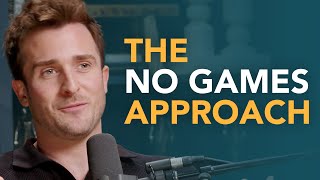
Matthew Hussey and Radhi argue you can't control love but you can shape your dating culture by modeling the behaviors you want: sending voice notes, setting communication standards, expressing intentionality. When someone doesn't match your standards, that's your signal to reassess.
Questions this video answers
May 20 (live event).
Available until May 30.
lovelifereplay.com
11 years.
How to Make Them CHASE YOU Without Playing Games.
Chapters
But I can't stress this enough. We, in our love lives today, everyone is really, really good at, and rightly so. I'm not. This is what they're talking about is real. But we're really good at complaining about what dating is like today and how hard it is. And it is like it. It is hard. Finding love is hard. It is the Wild West. There is so much bad behavior.
There's so many ways to just.
God, there's just so many ways for it to be bad. And unfortunately for us, our love life is an area we can influence, but we. We can't control it to the level of precision that we can other areas of our lives. If we want to lose weight, we can eat better and we can work out and our body will change. May not get to our perfect weight, but it will change reliably. In your love life, you can go on a date every day for the next year and still not find love. Or you can find love and six months later that person cheats on you and leaves you and you're back to square one. It's a maddening area in many ways, because we deeply want to find love. It is one of the most human of desires, is to find love. And it panics us at first. It frustrates us and it makes us angry. But at some point, for many people, it panics them because they're worried I'm never going to meet any. We can't just decide, I'm going to find love in the next three months and make it happen. But what we have to start taking ownership of and where we have to start taking our power back is that you can go into your dating life from a place of leadership. And so many people, I think, go in with a state of following. Like, what's the level right now of people's effort? What's the level of men's chivalry? What's the level of whether people pick up the phone or not instead of relentlessly texting? What's the level of communication between dates? Or the. What I can expect from someone in terms of assurances that we're just seeing each other? Like, there's all this rhetoric about where things are and people don't try anymore, no one wants to commit, and so on. But if you're not careful, you can get into a really passive state about all of that. Mitch Albom said, if you don't like the culture, you have to be brave enough to create your own.
I love that.
And by the way, that's what we do in business. Right. That's what you've done in your business is that you've created a culture that you love that is right for you. And that's what you, you know, in the most positive way, infect your team with is that beautiful culture and that amazing way that you see the world and the way that you do things. And it's makes your organization unlike any other in the world. It's got your thumbprint on it. That's the beauty in a way of starting a business is that you get to do it your way. And our love life can be the same. We can decide what's the culture that I want to have? Instead of commenting on culture, what's the culture I want to create in my love life? If someone, you know, if I'm sick of this whole constant texting thing, well, why don't I be the one to leave someone a voice note today? Like, why? If someone's just, just sent me the 50th text, why don't I send them back? When they ask me, how am I doing today? Why not, like, just say, maybe it's too scary to call them, but maybe I just leave a voice note and say, hey, how you doing? I thought I'd, you know, I thought I'd leave you a voice note. I'm out with my sister right now. We're in ikea. We're trying to find furniture for this thing. I'll send you a picture because I am dreading getting home and having to actually make this. Tell me about your day, like, how you doing? Blah, blah. Like, you know, you can inject a different level of energy and enthusiasm or sexiness or flirtatiousness or whatever. It may be a little laugh here that's endearing. You can do all of that in a voice note in a way that when someone listens to it now, it's not just another text on their phone. You're like, attacking a different sense.
Yeah.
And that will increase the level of intimacy, even just by 1%, 2%. And that might just make you, like, that's leadership. Because you're not just. We spend so much time mirroring people. Like, I'm going to mirror how someone else is get what someone else is giving me and this, this person I'm seeing. But we have to start modeling more. Like, don't get me wrong, if you model behavior that you want to see by being the one who picks up the phone first or leaves the voice note and then they, they don't meet you there, then you can Say, okay, I'm going to start to mirror their lack of investment. I'm going to start to back off. But you can't just be in a state of mirroring all the time.
Like such a good point.
It works on every level, man. I was, I was at my coffee shop this morning and there's a guy there that really like we always have like a really nice like three minute conversation. And this morning, like it never goes further than that. But this morning as he was going to the coffee bar, he said, can I get you a coffee? Now like I remember in that moment I thought that was like a little moment of like vulnerability and leadership that was like had the potential to upgrade the relationship, you know, I mean like this is just another guy in a coffee shop. But it was like, oh, we might hear. You offered me a coffee. I say yes. And now like our relationship is one where you got me a coffee.
Yeah.
And now we might sit for 10 minutes on. That's how things move. But they can't move if you're in this like fearful, protectionist want to get hurt. I don't want to give more than the other person. I don't want to. That's not a good standard to have. A great standard to have is lead and model the kind of culture you want to see. And if someone doesn't meet you there, that's where the standard comes in. Yes, that's where you, of course the standard is modeling. But the, the counter standard, if they don't meet you there, is to say this isn't someone I'm going to continue modeling that kind of investment for because they're not meeting me there.
Brief interruption to the video. So many of have not yet watched my brand new live event, Dating Made simple. That happened on the 20th of May. We had thousands of people there live. The comments have been incredible. So many people have said to me that this has changed the way that they have gone about dating already. It has fundamentally shifted how they're seeing the process of finding love. It is still available until May 30th. Until that point you will be able to watch it, but then it will be gone. So please go watch the replay now while it's available. You can watch it@lovelifereplay.com I will see you over there. And now back to the video.
Yeah, that is. Oh man, that is so well put and I'm so glad that you made that so clear because I couldn't agree with you more. I feel like we're limiting ourselves so much and we're actually creating what you just ended on there. It's a really powerful point. We're actually creating a culture that even if this relationship lasts, it will be set at the wrong level. So the culture of that relationship now is we sometimes text, we rarely call, and now even if the relationship lasts and we do like each other a little bit, it's never going to change from that. So you're way better off setting the standard and the culture from day one and seeing if it develops and grows. And I find what most people do, and I think we've all experienced this is for three to six months we try not disrupt the culture and then six months later we're like, no, no, no. But I always wanted this and I thought we were going to get there. And the person's like, no, no, no. But this is what we are. And I remember that Radhi, who's the only person I've ever been with since I left the monastery, like, it was like she was the person that I was fully clear with about who I was, what my expectations were, where we were, and thankfully she was that back too. And we had some really hard conversations early on about some big things that were important to her, not important to me. Important to me, not important to her. And what I loved was talked about those things and how, how we kind of navigated those things. And it's not that we're perfect and we don't have issues. We have so many challenges. You know, we've been together for 11 years now. There's so many things that have come up over the years that have given us different challenges. But the difference is we set a culture of how to deal with difficult things early on. And I think what I hear time and time again, and I know you hear this probably 10x the amount I hear this, it all comes down to the fact that we want people to like us so bad that we're willing to act unlike ourselves in order for them to like us. Because if they can like a version of us, then that's good enough for us. And so if the version is, I never bother you, I never text, I never call you, we will be that person for you because that makes you like me. We all love to be referred to as that person who's like, oh, yeah, they're low maintenance and we love that label. We're like, yeah, yeah, I'm low maintenance inside. We're like, yeah, I mean, I've got way more needs than this. But guess what? I've set the culture of being low Maintenance. Now a year later, they're like, wait a minute, you were low maintenance a year ago, why are you high maintenance?
Yeah, and there's two problems with that. One is that it can actually make it so that someone can't even really read us or our intentions. It's a bit like when someone is like, wants to be cool and indifferent. Well, if there's a story I tell in the book of a friend of mine who was dating someone and then went on a trip and he didn't really reach out to her on that trip, and by the time he got home after a few days, she said to him on the phone, it. The fact that you were away and you didn't really speak to me made me feel funny. Like, it made me feel like you may have been sharing your bed with someone else and they hadn't been on. Like, this isn't two people who had been dating for six months. They'd been on a couple of dates. But that was the moment when he said to me, I think I like this person. Because there was an intentionality to it. She didn't go, I'm being high maintenance by saying this. She just communicated what she was feeling. And by doing that, instead of being cool, indifferent girl, like, chill, I'm chill. Like, I don't care that you didn't text me while you're away. She went, no, no, no, no. It made me feel funny because it would. The subtext is it would hurt me to know, like, maybe we haven't known each other that long, but it would still make me feel something. To know that you'd shared your bed with someone else while you were away, that's a very powerful thing to do. Because if he's seeing multiple people in that moment, all of them playing cool, indifferent, whatever, he now sees someone who is actually telegraphing the kind of person she is that she's a three dimensional person with real feelings and that she wants something more. She is not the kind of person.
Yeah.
To date if you don't want something more. And by the way, even the first time someone gets like just a little bit jealous of something can be a moment of intentionality in a relationship. Because you. The moment you see someone's a little bit like, they convey a little bit of. Even if it's playful jealousy. Oh, I don't like that. Made me feel funny. You're not allowed to text that. But whatever. You can go. You almost can make you like that person more because you can go, oh, that's like. It's almost like You've telegraphed that we've gone to an. A new level where jealousy is even possible. Yeah, because at the beginning, jealousy wasn't even possible. Now it is. You must like, like me. I think I like you too. You know, it's like there's a. We're so afraid of. Of saying these things that actually telegraph intentionality, which is a really, really powerful thing.
Yeah, but we. But it all comes down back to the root of we're so scared because we're scared that that person will leave. And often they will, because their friends saying to them, oh, yeah, man, they're psycho. Oh, they're obsessive. Leave. Right. And so we don't want these extreme labels. And I think often. So we're scared of looking unattractive. We're scared of being unwanted. We're scared of being rejected. Right. That's the reason we don't say any of this, because we're like, if I say that, they're going to think I'm psycho, crazy, obsessed, and I don't want to come across that way. And so I won't say anything until one year on which, by the way, they're going to think the same exact thing when it's a full surprise. So I want to talk to you about that. And then the other idea that I see a lot of that people get stuck on is when they say something, they say it as a demand or a command, where it's like, well, I expect you to do this. And that's where I think it's unhealthy because I like someone being honest with me. But I also don't want that to be my progress report because I may have a really good thing to say back. And so if I'm going to say back, if someone was like, if someone said that to me, like, you didn't contact me, I'll be like, yeah, you know what? When I travel, I actually really struggle to stay in touch with anyone because I'm really trying to be present. I'm really trying to immerse. But now that I know that's a value for you, next time I go away, let's talk about how often we can both keep in touch realistically. Because I'm also not going to promise I'm going to call you every single day, even if I'm really excited about you, because I'm also going to set my standard back. And I think often people don't want to hear that either. They want to hear someone say, oh, of course I understand everything you're saying, and I'm going to call you every day when I go away again. And so one side is you're scared of getting fully rejected, and the other side is you're scared of not getting exactly what you want. And I don't think both those expectations are useful because you might get rejected and you're never going to get exactly what you want in an authentic way.
No. And I think that's why we. If we're the one who wants something, we have to zoom out enough to look at whether this person and what they bring to our life and what this relationship is like, holistically is enough for us. Because we may say, I want this person to call me every day, but that may genuinely not be their style. Right. It's. They're not someone who enjoys sitting on the phone as much as you do.
Yeah.
They might pick up the phone and call you every couple of days, but in the meantime, they will text you. Or you have to. It's like you have to zoom out and go, how much of this relationship, not these moments, whether they call or not, how much of this relationship correct meets my needs? You know, what. What are the fundamental things? Well, I need to feel safe with someone. Like, I need to feel like they actually want me and that I'm not kind of investing under a misapprehension about what this is. I need to know at a certain point that regardless of our differences, we're giving this a go and we're exclusive. Right. So that might be one thing. Another thing is I need to feel like whether it's on the exact platform I might have hoped, I need to feel like I get enough communication, you know, holistically in this relationship to feel like I'm actually connected to this person. You know, if someone very rarely travels and then they go away and you don't hear from them a lot when they travel, that may not be a big deal. If they're on the road half the year and then they're not really connecting with you while they're traveling, that's going to have a much bigger impact on your life. It doesn't make them wrong, but it might not be enough for you.
Yeah.
And that's where we have to start getting really honest with ourselves. We get so caught up in who's right and wrong, and we don't spend enough time just asking, is it right for me? Is it. Is this. Does this person work well with me? Are we compatible? And compatibility is everything. You know, you can't. I talk about four levels of importance in any relationship or any person, any dynamic you have with a person. The first one is admiration. That's just you admiring someone. It doesn't mean very much. They may not even know you exist. The second one is mutual attraction. That's when you actually know you like each other. The third one is commitment. That's when you don't just like each other, but you're actually saying yes to the relationship. And the fourth one is compatibility, because actually love isn't all you need. You need two people who actually work well together. You know, is. It's not, is this person, you know, am I good at handling them and are they good at handling me? Like, that's a pretty. I think that's a pretty good barometer of a relationship. We.
I came to this a great one.
Yeah. Because you're going to come with your stuff. This nonsense of, like, we have to come to a relationship fully healed. Who does?
No one.
Who. Like, it's an. It's a. It's this idea that gets talked about that no one actually does. No one comes to ever. I'm going to make myself whole and healed and everything before a relationship. Good luck. And by the way, half the people who say that stuff who have been married 10 years, they weren't that way when they met their partner.
Totally.
So we find imperfect people, you know that we are damaged vessels that somehow still work. And that's beautiful. And we're trying to find another damaged vessel that we go, oh, I understand the. I understand the fabric of their challenges and what they struggle with, or at least it makes. Makes sense to me when I hear it. And, you know, I have compassion for it and I have empathy for it, and I have affection for it, even, and vice versa. And so now when we go through our inevitable things, we're just good at handling each other. So it's. When we. When we have a standard, we may not end up exactly where we want to be, but the ultimate standard of holistically, are you getting what you need from this relationship? That's a really important question that not enough people ask. And as a result, they suffer in unhappy relationships. Thank you so much for watching, everyone.
Don't forget to leave me a comment. I love reading them. And before you go, go watch the replay of my event, Dating Made simple before it disappears on. On May 30th. You can watch it at lovelifereplay.com go watch it now before you forget. I promise you, no matter how hard you're finding. Finding love right now, this is gonna make it simple again. I'll see you there. Lovelifereplay.com.









