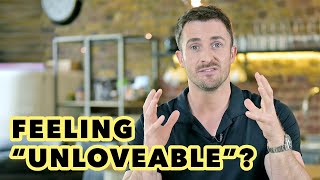
In this motivational monologue, Matthew AI expands on his previous video about relationship readiness, emphasizing that simply not being lonely does not equal being ready for a partnership. He explores the common “not good enough” feeling that makes people think their best isn’t sufficient and their worst is too much for a partner. Matthew argues that the right partner should elevate our best and soothe, not eradicate, our worst, and that we must learn to express vulnerability in a constructive way. He introduces a two‑part communication framework: first, openly acknowledge a struggle (e.g., “I sometimes feel jealous”), then follow with an empowered statement of effort (“I’m working on it”). This approach, he says, makes vulnerability attractive and builds connection. He explains why early exposure of flaws (day 3) can cause abandonment, whereas later exposure (day 300) benefits from accumulated context and empathy. The talk then shifts to self‑acceptance, describing it as the foundation for self‑compassion, self‑love, and empowerment, and clarifies that acceptance does not preclude growth. Matthew links this inner work to “core confidence,” which he calls a master key to a fulfilling life. Throughout, he intersperses personal anecdotes and invites viewers to join his three‑day virtual retreat in September, where specialists will help participants apply these concepts to improve confidence, well‑being, and relationships.
Questions this video answers
September 24–26 (year stated as 'this year' in the video).
mhvirtualretreat.com (spoken in-video as "It's@mhvirtualretreat.com").
Chapters
So last week we did a video on how to tell if we are ready for a relationship. Being ready to not be lonely anymore is not the same thing as being ready for a relationship. And one of the things that you highlighted in the comments from that video that you really loved was that line that the right person will elevate our best and soothe our worst. I sometimes think the right person is the person who elevates our best and soothes our worst. They're not going to eradicate our worst. And, and it's not their job to take it away, but they don't agitate our worst. And of course we in turn, when we become the right person, the person who's ready for a real relationship will elevate somebody else's best and soothe their worst. But what about when we feel like our best won't be good enough for somebody else and our worst will be too much for somebody else? This is that particular feeling of being unlovable that often prevents us from finding a relationship, really revealing ourselves, and connecting. Guys, before you carry on with this video, I just wanted to say to you, if you haven't booked a spot for my virtual retreat yet in September, please take the time to at least go and see if it could be right for you. I have specialists who are waiting to talk to you on the phone and they can answer any questions you have about it. But if you want to graduate from just watching me on YouTube to being part of an immersive coaching program with me for your confidence in your well being over three days in September, go check it out. It's@mhvirtualretreat.com all right, back to the video. Because we're so deathly afraid that what we really are, when somebody gets to know us, our bad habits, our worst tendencies, our worst anxieties, insecurities, neurosis, that that will all be too much. It will scare someone away. Do you ever feel like that about yourself? I know that in my life I've had those moments where I have felt like, well, what people see up front might be impressive, but when they get to know me, they might find that I'm too much or that, you know, the things I struggle with, they don't want to have to deal with. When we feel like that, what happens is instead of showing our vulnerability and using it as a way of connecting, we put up a barrier so that people can't see those things. We try to be impressive as we think people want us to be for as long as possible without showing Any of that. Let's say you're a jealous person and you don't want to show that jealousy to somebody else because you're worried. You're worried that it will make you look weak or insecure, or you're worried that it will be perceived as too difficult, or you're worried that in some way it will give up your power. Then you just don't show it. You just bottle it up and hide it. But of course, when we bottle things up, when we bottle our what we perceive to be our negative traits up, they start to come out in other ways. Our wounds start mutate into weapons. They mutate into us lashing out at somebody and not really explaining why. Being passive aggressive, giving someone the silent treatment, going on the attack, judging them. And now what we do is we start to pick away at the relationship and erode the relationship, and someone doesn't even really get to know the real us. I have come to believe that vulnerability within a relationship can be the ultimate source of connection when it's exhibited in the right way. Not everyone, and this is something that I think not enough people talk about, not everyone is ready for your vulnerability. And some people will even punish you for it. Some people will hurt you when reveal things about yourself. They'll judge you, they'll leave. I would argue, as you know, I would, that anyone who can't hold space for your vulnerability isn't the right person for you. That's not a teammate that you need to go forward with. So that's a good thing to learn about somebody. But there will be people in life who can hold space for your vulnerability, and they will be the right people, the people that you could actually build with. But how we exhibit that vulnerability is very important. You know, when we are worried that, you know, God, when they see me at my worst, we have to be able to reveal parts of our worst. We have to be able to reveal those things about us that we're scared someone won't accept and risk not being accepted. We have to risk that someone won't want us when we reveal that thing in order to build the connection that's really going to sustain a lifelong relationship. When you think of your jealousy, for example, you could say to someone, I get jealous sometimes. It's not something I always like about myself, but it's something that I am working on or something I would like to work on. If you take just that recipe, that kind of practical recipe for how to show vulnerability, how to show the things you struggle with, it's quite powerful. Because the first part of the sentence where you say, I sometimes struggle with, or even I often struggle with, jealousy, anxiety, depressive thoughts, feeling like I'm not good enough. If you are open about those things in that way, if you can express it in that way, then you're almost expressing it with a lack of baggage and judgment around it. The second part of that sentence is empowered, and it's actually quite attractive to hear someone, especially because people are not used to being honest about their own vulnerabilities when they hear someone who is honest about their vulnerabilities. And then in the second part of the sentence can say, and it's something that I'm working on. It's something that I'm looking to improve. That's a very active, empowered statement that when someone hears that, they go, oh, wow. They're brave enough to say this, to admit this about themselves, and they're taking ownership in working on it, in doing better in whatever way they define it. That's powerful. That then becomes a very attractive thing, and it also becomes a point of connection in the relationship. Here's what's interesting to me. When someone sees our worst, if they see it on day three, they're more likely to abandon ship than if they see it on day 300 of the relationship. Why is that? Because on day 300, this person has context. They have context for who we are, why we are the way we are, how we are the rest of the time. And they're able to wrap that, even if it wasn't a good communication of a vulnerability on day 300, even if our weapons came out and we did some damage, people are more easily able to contextualize things about us when they know us. They're more easily able to give us the benefit of the doubt, to give us empathy, to give us compassion, than they are on day three. Of course, that makes it important that as we go along in a relationship, we do reveal these things about ourselves and we do start to let someone in in a productive way, because that starts to give someone context. It illuminates all of the parts of ourselves that give us beauty and make up the complete pict. But what's interesting to me about it is that that context that someone has on day 300 holds the clue, holds a master key in how to give ourselves a different level of acceptance and compassion, which, by the way, is the basis for growing in life, is the basis for improving, is the basis for being happy today, even while we're improving. Mr. Rogers would say, no child can ever feel truly loved until he or she is accepted for exactly who they are. Which I suppose some people look at as a mandate for entitlement or for kind of apathy about ourselves that says I don't have to do anything in order to be worthy of love, or I don't have to do any. I don't have to fix any of my problems or any of the negative aspects of myself. I actually don't see it that way. What I see it as is a foundation for improvement. If we can accept ourselves for who we are today, mistakes, you know, all the things we've been shaming ourselves for, all of the things that we don't do as well as other people, all of it. If we can accept ourselves for who we are today, then we can also build on that. Because we're not coming from a place of hating ourselves, we're coming from a place of love. When someone has context on day 300 of a relationship with US or year 30, they've seen more of the picture. Well, no one has seen more of the picture of us than us. No one has more context for you and why you are the way you are than you do. You have the ultimate context on you, your life, your parenting, how you were brought up, the situations you've been through, good and bad, your brain chemistry, your DNA, the brain you've always been stuck with for better or worse. I mean, we know ourselves. We know that there are things that bother us in relationships now that, you know, tendencies that come out that we've always had. We didn't decide to have our brain. No one gave us a choice of our brain with all of its stuff that is difficult to deal with, or 10 others. We didn't choose it. We got our brain, we got our upbringing, we got everything we've been through and that's made us us. And we have context for all of that and that allows us to give ourselves the ultimate self acceptance of this is why I am who I am. This is why I've made the decisions I've made. This is why I've done some of the damage that I've done. That breeds acceptance, which breeds self compassion, which breeds self love and ultimately self empowerment. Because we can say to ourselves, ah, I know why you did things the way you've done. I know why we did these things. And we are who we are today, and that's okay. But why don't we try doing this today? Why don't we try doing it differently today? Why don't we try improving that today? And you're doing it by putting an arm around yourself and giving yourself a nudge, an encouraging, compassionate nudge in the right direction as opposed to shaming yourself and just telling yourself that you must do this today because you're not as good as everybody else. And unless you do it like this, you'll never be as, as good as anybody else. From a place of judgment and self loathing and self hatred and admonishment. And the cool part is once we do that, once we give ourselves the right context on ourselves, we're able to then use that structure I spoke about, that two part structure of this is something I'm struggling with. Acceptance, not this is something I'm struggling with and I'm never going to be better, I'm never going to be able to solve this and I'm never, no, that's not acceptance. That's a feeling of frustration and resentment and judgment. And then of course, the catastrophic thinking of it will never be better. I'll never be able to change this. I'll never be able to improve on this. No, this is something I sometimes, or this is something I often struggle with, or this is something I've always struggled with, but I'm working to improve it. Acceptance, empowerment, and that's how those two things coexist. Because we often, I suppose, find the idea of accepting ourselves and bettering ourselves as being a paradoxical set of ideas. It's not. It's an acceptance of who we are now with a loving arm around the shoulder that says, and here's what we're working towards. It doesn't have to always be this way, but we can still improve, we can still change. Plenty has changed in our lives up until this point and there are things in our lives that we thought would never change and did change. So let's see what's possible. At the very least, let's see what's possible. Let's have a curiosity about it. If you think about it, that's what I've just done with you is laid out a key to self compassion, self love and a stronger relationship with yourself that can lead to stronger relationships with other people. Because when you come from this lens, you're truly able to connect with other people and your relationships will get better. If you don't have a relationship right now, I promise you, applying what you learn in this video will make many more connections in life possible because you'll bring a much more beautiful lens to the table in your dealings with everybody. There are other keys to self love, or what I call core confidence. And I believe that core confidence is the master, is one of the great master keys to living an incredible life and to being happy. I have spent many, many, many days in my life beating myself up. And it's always when I return to what I know about core confidence that I return to a place of peace and not in a turmoil. I'd love to show you everything that I have learned, developed and packaged together in a program I have coming up this year, a place where I'm teaching this whole program, and it's called the Virtual Retreat. It's happening in September from the 24th to the 26th, and I would love to invite you to join me. I would love for you to be a part of it with me. Because together, over three days, I I'm going to walk you through everything I've learned about creating not only the life you want, but creating the relationship within yourself, with yourself that you want. I'm going to leave a link here. Mhvirtualretreat.com when you go there, you'll get a chance to apply for a phone call with one of my team. And these are specialists that talk to people about what their goals are, what they're struggling with, and where they want to be in the next chapter of their lives, both in terms of their outcome and in terms of the way they feel. And we plot a course, we plot a roadmap to getting there together. And when you're on that call, you have a chance to decide whether you want to come and join me on the Virtual Retreat in September. But even if all you do is the phone call, that itself can be a clarifying act for a lot of people about what they want to do in the next chapter of their lives or this chapter of their lives. Go book your appointment for the Virtual Retreat to speak to one of my specialists, and as always, I will see you next week.