Micro-Habits That Will Transform Your Love Life
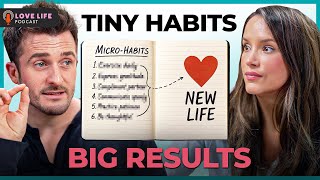
Matthew Hussey and guests discuss small habits that improve dating and relationships. They cover micro missions, why oversharing backfires early on, and how to sit with anxiety instead of running from it. A caller asks about setting boundaries with an ex.
Chapters
Foreign.
Today's episode, we wanted to talk about the micro habits that will change your love life. The small things, dare I say, the tiny things that you can do that add up to a completely different love life than the one you would have had if you didn't do these habits. Now, I don't know what you've come up with, because we each said we'd bring a couple of habits to this episode. All I know is my hope for this episode is that these don't turn into really difficult things to do because we are a culture that is obsessed with, like, magic habits that will cure everything. And I don't want this to be an episode of, like, Silver Bullets. My. My hope is that it doesn't turn into that, but that instead there are things that are almost so impossibly small that anyone could do them, but they really will change where you end up. These might actually be the difference between you being single and being in a relationship, or if you're in a relationship. I'm not sure. I know mine are more centered around dating. I know you might have some for relationships. I'm not sure. But, you know, they might make the difference between you having a really extraordinary relationship and having an average relationship. So I am happy to kick this off with one of mine, which is actually, I'm gonna say, painfully obvious, but I really believe in it, and I believe in its power to transform our love lives, and that is to set really tiny talking missions for yourself when you go out there into the world. Almost think of it as painfully small. Like, especially, by the way, if you're an anxious person, if you have any kind of social anxiety, if you're introverted, if you feel your natural tendency is to stay comfortable when you're around other people. What is something. What is like a micro mission? You could set yourself as a habit when you leave the house. It might be that you've been going to the same coffee shop for the last two years, and you don't know the names of the people behind the counter. And you're, okay, I'm gonna set myself a little mission of I'm gonna find out one of the names of the people behind the counter this time when I go in. Or it might be as simple as, you know, normally I just go in and I say, hey, how's it going? I'll have this. But this time, I'm actually gonna ask a question about their lives that I wouldn't normally ask, and I start setting myself these tiny, tiny, tiny missions that just start to practice a Muscle. Develop a muscle that is either underdeveloped or it's just not being used in all of the right places. I believe in this wholeheartedly. And it may sound tiny, but those little interactions, those are the things that can end up adding up to either new friendships or new relationships. If you meet the right person or it can even be the reason that, you know, that day you're a bit more talkative and the person you int. You started talking to wasn't someone who was, you know, a romantic potential. But then you sat down and you were a bit warmed up, and all of a sudden you started talking to someone else and that person was. So that's my first one is set micro missions for yourself when you're out in the world talking to people.
How many per day?
Oh, I'm gonna say just maybe one.
One every time you leave the house.
Like, yeah, if you go. If you're going. I think it's more. Rather than thinking about it as, like, I have to tick this off every day, I would think about it as, When I find myself in environments where I'm around other people, I'm gonna set myself a little mission.
So my habit is normally to go inward. I'm gonna change my habit to going outward, basically.
Yes. But I'm gonna do it in a way. I call it thin slicing. Like, what's the. If you think, like, going up to someone and asking for their number is like, absolutely no way. Like, that's just too. Which is huge. It's a huge leap for most people. What's like a way that I could slice this interaction so small, so thinly that the next step is something that. It's just not something that I would normally do.
I like that a lot.
We had an email from someone called Maria who stopped me in Heathrow Airport. So. Hello, Maria. It was lovely to meet you. While I was very frustrated waiting for my flight and worried I was going to miss it, but we said hello. She was really lovely. And she emailed in afterwards saying she met her boyfriend because she followed our advice and she's been following us for several years. She said I started conversations, like, all over in different places, literally. I. I think she says her. The guy who she's now dating, he was wearing an IKEA hat. And she was like, I love your hat. It's awesome. That was the start of their whole relationship. So she said, like, it changed her life. Literally going and starting more conversations.
That's amazing. That's amazing. Yeah. In a world where we feel like we're stuck with dating apps and, you know, they just keep us on our phone. The ability to just create more moments where things could happen in real life is everything all right, Stephen, I'm going to you next. What's your. What's. I think we're going to do nine habits today. So that's number one. Stephen, I haven't heard yours. I haven't heard yours either. Audrey, what's one of yours?
Number two, give conversational hooks. Explain you if you're on a dating app or in conversation at a party with someone, give either someone a hook to hang on to just by saying one opinion, one thing you like, one thing you're excited about right now coming up, you can use any conversation, even a generic how are you? You could say, yeah, I'm really good. I've got this trip coming up next week and I've never been to China and blah, blah, blah. That's a hook. Same on a dating profile. If you see, like, dating profiles with no conversational hooks, it's like, even if they're attractive, I'm like, I have no idea where to start with this person because they've got generic pictures, nothing in their profile. And you can make it easy. Give hooks yourself or take other people's hooks. I go, oh, I noticed you said you went to X. I noticed you were wearing blah, blah, blah. That color, that book you said you read. You're into comic books. Like, just use those conversational hooks as much as you can and give them to people.
Yeah, I think to me, that's, that's the part that I, I really love about this. I mean, I like, I like both. Give it both giving hooks and noticing when someone else throws out a hook and actually doing something with it. Yeah, but there's something very empowering about knowing that you can actually make a conversation better by giving someone else more to latch onto. It's not even that you're the one who's needing to do anything particularly special. You just have to do more than the average person does with a pedestrian, everyday question. When, like you said, someone says, how are you? And you immediately start talking. You don't answer literally and say, I'm fine, thanks. How are you? Instead, you throw out a hook of maybe a trip you've just been on and how in some way, tenuous or otherwise, that has affected your mood today or how your general energy is right now.
Or you could be like, oh, I'm in a fog. You know when you've got a deadline and you've just been like, Putting off and this happened and it's like, oh yeah, I had a deadline. Like that's just one hook.
Okay. I love it. All right, so throw out conversational hooks. That's number two. Audrey, coming to you.
I had. Don't treat your love life like a public soap opera. Oprah. Oprah opera.
Yeah, we know there's no shade on Oprah.
So very pro. I think so many of us, we have the bad habit of, you know, especially when we're single and we've got really tight knit friendship group. We'll be like, we'll treat every stage of our dating life and every stage of our love life as gossip and as news and as like know good tea. And the problem with that, there's a few traps that I think people fall into with that. The first one is you're then almost falling into a bit of a stereotype amongst your friends as like the person who has the disaster love life. And you're almost always looking for the story and always looking for the way in which something was like a disaster or like didn't go well or was this or was that. And I think that could be a self fulfilling prophecy of just having a bit of a, you know, disastrous love life as a result. But also I, I just think in general, you know, too many cooks, you know, if you tell people everything about your love life and like, oh, and they did this and they text that and here's the screenshot of this and what do you think of that? You just have all that, you invite all these opinions and you're just not able to organically make up your own mind and let the thing unfold. And I think it contain just what can otherwise be quite a pure relationship. Obviously if you're not sure about whether something is, you know, a red flag or you're like, oh, I didn't like what he did there and I do need a second opinion as to whether or not I should walk away from this person. Whatever. That's different. But I think just in general trying to lean away from treating our love lives like kind of. Yeah, like a soap opera.
That's very good. So don't treat like a sober or so. So. Oh God, sorry. So Oprah.
Soapy Oprah.
Soapy Oprah.
I really love that. I think the, the, we have to be careful especially because not everyone in our lives is going to give us sound advice. So there. Everyone's got that friend who if you even hint at someone doing something that's not perfect, they're like, oh, get rid of them. Like, why would you even. Like, I couldn't. I couldn't. You can't be dealing with that. And it's like they're taking a person who's already anxious or angry or something, and they're just agitating that. And we want friends who help us regulate so that we can bring a powerful version of ourselves to whatever conversation we're having. And the more people you involve, the more likely it is you're going to have people who dysregulate you instead of regulate you.
Yeah.
I often worry when people are very confessional, say, on YouTube or, like, in dating columns, about being hopelessly single, because I'm like, do you want to. You know, it's almost like, is it dangerous to cast yourself in that narrative?
Like, in Nobody Wants this.
I haven't seen that.
Oh, very good, Very good.
That's that show that you watch at any time. I tell you that I'm going to go to read.
Yes. Or anything.
Matthew doesn't want this.
Well, it's. It's one of the few shows that we don't share. I mean, I think you'd actually really enjoy it if you watched it.
I know that sooner or later I have to be okay with certain shows that I'm not going to see, otherwise.
Yeah, yeah, yeah, yeah.
So I. I often think of those Instagrammers who, like, have. Or tick tockers that have whole accounts dedicated to, like, single life, Right? And they say, like, sort of truisms about why they're waiting or why it's so hard to meet someone and not be. And I'm like. And their content does really, really well. And I'm like, what happens when you're no longer single? Like, this whole. Your whole audience has been built on, like, the relatability of being single and the struggle, you know, if you sort of built your own prison where you now can't graduate to a relationship without your whole audience going, well, you're not for me anymore. You used to make me feel good, and now you make me feel terrible. Guys, exciting news for all of you who have wanted to try or get access to Matthew AI. We have a Black Friday offer where Matthew AI is open to you for free for 14 days. That means that you can call or text my digital mind anytime you want and get an answer. Any question you have, you want to know what something means. You know, someone's behavior is confusing you. You're not sure whether they like you, whether they're open to a relationship. They're inconsistent. Matthew AI will Tell you. You can even upload your texts and get Matthew AI's opinion. You want to know what to say to someone if you need to have a difficult conversation, express a boundary or a standard, or just have something fun and flirtatious to text after a successful date, Matthew AI can help you write it. It can work with you to bring out your best self in every dating scenario. It can even help you through heartbreak. Go and try this now with this exclusive Black Friday offer@askmh.com. David, you had some that we don't know. Do you want to do. Should we continue with ours or should we get your way in right now?
I'll let you know. I'm curious about what you guys think about these because I approached it from an angle when I, when I thought about this episode. The first thing that I thought of recently was I've been really interested in, like, sports psychology because, you know, there's a behavior that amazing athletes have that is almost like the more powerful part of it than their physical attributes. And I thought, I think that you could apply some of this stuff to dating and a coach who would give you really great advice on being a really mentally tough athlete could have some crossovers. So I'm curious if you guys think that there is some. I found this article on the athletic where they interview a sports psychologist named Dr. Elizabeth Nobis. And the first one that really caught my eye for her microhabit, I'm. And I want you guys to tell me, I won't tell you how I think that this relates to dating, but I want to get your guys feedback on what you think. My first, the first one that caught my eye was switch out the word but for.
And I, I'm curious how that's been used in a sports context, but I think that lends itself very well to a conversational context because it's. There's something very like. I think people often become competitive in the wrong ways in conversation. So, like, it's good to be able to disagree on things. It's good be able to, to be, to be able to break rapport. It shows confidence that we can do that, that we don't have to agree on everything. It can even be kind of fun and sexy to talk about how you think differently. But the, when someone's telling you something and a competitive nature comes out where you're like picking holes in what they're saying as opposed to, you know, the and. Which is, you know, and, and this, you know, I. Oh, I, I see what you're saying. You know, one of the things I would add is which is a form of. And so to that extent, I have no idea if that relates to what's being said in the article, but that. I think that's a good conversational practice for someone that you're trying to build relatability with as opposed to like egotistically. Egoically competing with someone, which often takes the form of buts.
I agree with that. But I'm curious, Audrey or Steven, do you guys have a opinion on how this would be used in a.
Okay. My other version would be if you think they do a bad behavior and you say, yeah, but look at all these other great qualities they have. But that one behavior might be a real problem. So it might be better to say they, yeah, they're smart and they're loving, whatever. And they're also really, when they get stressed, they're really nasty and cruel. I think Dr. Romany talks a bit about that, about using ands. But don't. Don't say but to excuse someone's red flags.
Yeah. This is one of the. This is one of the key ideas. Dr. Romney puts it so beautifully in Narcissistic and Recovery From Narcissism, where she says exactly what you just pointed out. We. We think the good that someone does is confusing because we're like, how could they do that horrible thing to me? How could they have been so callous, so mean? So this. If they're someone who's also capable of doing this beautiful thing. And they were so kind to me yesterday and they helped my brother when he was sick. And they, you know, all of these things that really confuse us when it comes to narcissism and toxic traits. But as you rightly pointed out, Steve, her whole thing is you have. It's about the. And they helped my brother when he was sick and they cheated on me for five years.
Yes.
In our relationship. And they pathologically lied about XYZ and they. And that the. And actually is what allows us to maintain the complexity of someone having done good things and being a generally nice person some of the time, but also doing such horrendous things and being capable of such destruction that we can't have them anywhere near us.
That's right.
Yeah.
So what is David's version?
Well, so we approach that in very different ways.
I think all of these are great piece of advice in the sports context. It's actually to kind of not. It's to help performance in that you can have two realities be true at the same time. So for example, in here I'm uncomfortable and I can stay in the present. I'm angry and I can act like a good sport. So in dating I thought this was transmutable in that you can be like, instead of, I'm so nervous, but I can bring my best self to this. It's like, I'm so nervous and I can bring my best self. Both things can be true.
I love that.
And if you think. But often this is very ingrained subconsciously, this kind of language. So Dr. Nobis recommends that you give yourself some cues to help yourself remember. And so like painting one nail a different color than the rest or on your computer screen adding a little post it note that just says and on it.
That's really good. I really like that. I, it's funny, it really ties into my other habit that I, my other micro habit that I had.
Oh, you're the next one.
My next one, which was the way I put it actually was to forgive yourself for your anxiety. But it actually ends up getting into very similar territory to what you just talked about. Because we, you know, we go on dates and we often feel very anxious. We aren't getting a text back from someone and we feel really anxious. There's all these situations or we have to go and talk to someone in the way that I've just expressed and we feel anxious talking to someone. And what happens when that, when that anxiety takes hold is very often we start to beat ourselves up. We tell ourselves we're not good enough. We tell ourselves there must be something wrong with me. Why do I get so anxious all the time? This is, you know, like I'm defective in some way. And then we use it as a, you know, a weapon of self hatred in our lives. The three things I think about here, and the reason I think of this as a habit is it can be a trigger every time you get anxious to embed a new thought. So a couple that I can throw out one, make it normal. Like this is not. I, I heard Jesse Eisenberg talking about how he would, you know, he had a panic attack on set once in the middle of a scene and he went up to the director, he said to the director, hey, I'm like kind of like having an issue right now. I'm like super anxious and I'm just like going in on myself. And, and the directors took, told everyone to take a five minute break. And then he said to Jesse Eisenberg, listen, I, you are like having to remember lines, worry about how you're coming across, think about whether the makeup on your face looks good to do this, do that, all at the same time. Throughout the whole course of shooting a movie. Like, I don't know how you do it. He's like, I. It would be weird to me if you weren't feeling like this all the time. He said, I. It's the. The whole situation. He made him feel like the whole situation is. Of course, it's almost like it's designed to produce that. So. And the. The gift that Jesse Eisenberg said it gave him was that he. He went, oh, I'm not. I'm not a freak. Like, I'm like. It actually made him feel normal for what he was feeling. And then that was a gift because all of a sudden he was able to go back and not have to. He could embrace it and say, this is part of this thing that I'm doing, so make it normal. Accept it about yourself. And also recognize that you're definitely not the only one who feels these feelings. Like, when we exceptionalize ourselves, we think that no one else has these kinds of feelings but us. When you realize how common it is for other people to have these feelings, it. Regardless of how composed they seem on the outside, it's actually a very powerful thing. Because, again, you go, oh, I'm not. There's not something. I'm not defective.
Yes.
In some way, this is an extremely normal thing. I would argue about dating that in the same way that Jesse Eisenberg, that director, talked about acting as this thing that, like, feels like it's designed to produce that kind of emotion. It's like dating feels like one of those things too. You have this thing that you want more than anything on earth. For most people who would, like, want to find love, it's like the number one thing they want in the world is to find love, and you're not in control of it. There's like someone else has to say yes. And then not just say yes once, but keep saying yes over and over and over again every day, every time you go on a date, every time you're texting each other, every time when you decide to have a relationship, and every day after that, like, that's a. This is like, it was designed to make you feel out of control and anxious. And when you realize that and you realize, oh, that's not. Then I'm not crazy for feeling anxious about this thing that I care about so much that I don't, that I'm not in full control of. When you realize that it kind of frees you because you go, I'm not weird. Other people feel this too, this situation. Of course it would be weird if it didn't produce any of these feelings. I, I can now actually embrace it as just part of the process and one that maybe it might be worth relaxing into a little bit because I don't want to. Like, I can't just live in this state for the rest of my life and probably the, the ability for someone to leave me never goes away. So I might as well relax into this. So that would be mine. Is forgive yourself for your anxiety and embrace it.
Odd.
This one might need a little bit of explaining, but I think a microhabit that can really, really help your love life and the success of dates and the attraction you get on dates is to avoid the urge to over share.
This is a good one.
So many of us, I, I know people like this. I used to be a bit like this actually. But you know, people will say I'm an open book. I'm just. What you see is what you get with me. I'm just someone like, you know, I just, yeah, I'm an open book. Basically. It's kind of the gist and they almost paint it out like it's a, like it's a good thing, like it's a quality, an attribute. And of course being vulnerable and being able to show different sides of yourself is a really positive thing. But I think we have to suspect ourselves if we almost default to this state of over sharing with strangers.
How would you define over sharing versus just being appropriately vulnerable to the stage of socializing you're in?
Well, I think it's. Because I think it's all about what you're getting out of it. And. Okay, so this is where it, I think it's quite confusing and hard to explain, but. And I mean it isn't, it isn't for you guys because you obviously intuitively know what I'm talking about. But as some, you know, if I'm speaking to somebody who's behavior and whose pattern is to overshare, they might be like, oh, I don't, I think maybe I overshad. Do I overshare? But I'm an open book and that's who I am. And like, I don't think that's a bad thing. And you know, if they can't accept me for who I am, then, you know, whatever, they're not my person. But I think it's, it's about recognizing that information is power first of all. And so that framework is really, really important. Which is every time you share anything about yourself, you are giving maybe too much power to somebody who hasn't really earned it yet. And oftentimes we overshare because that's our comfort place. That's like the place where we go, you know, and we do it for different reasons. Sometimes we do it to test people and see if, like, if we just tell them things about ourselves, will they still be there? Sometimes it's because we think that's the best way to connect with people and we will share things that are not appropriate to share. But oftentimes it's because it is just a comfortable place to exist in and dates. And so I think we just have to start to suspect ourselves and say, why am I feeling the urge to share this? And taking a B, if you feel like maybe if you're hearing this and you're like, oh, maybe I am someone who overshares. I'm not entirely sure, but it kind of. It's. It's hitting a bit of a nerve, then I think all that you have to do is take a pause before you share something that feels like it might be a vulnerable thing to share and just ask yourself, why do I feel the need to share this right now? Is it appropriate that I share this right now? Is this. Has this information been earned? Have they asked for this information? And, you know, is it something that's. Yeah, that's just appropriate to share with. With this stranger? And I think that if we can, you know, just catch maybe even half of our oversharing, that will really raise the attraction that we're able to create with people.
Do you relate out there to the idea of oversharing? And if you do tell us a story about it or some. A moment where you've overshared and regretted it or. Or even just. What do you notice about that pattern? What need do you feel like it's meeting? Is it the need to fill an awkward silence? Is it the need to say something that you think will endear people to you? Is it the need to say something that shows people that you've had it hard? Because then it feels like you get sympathy. Like, if you were being ultra honest with. What do you think is the reason you overshare? Email us podcastthewhussey.com we would love to hear your answers. I relate to having done this before, so. And I still. There's still moments today where I say something and I'm like, why? Why did I just tell that person that? Why?
You're quite good at not oversharing there.
Actually, I would argue I've definitely gotten better.
Yeah. And I want to say the same thing I want to say to anyone who is feeling called out in this. The reason I put it on there is because I relate to this and I actually had to work quite hard in my 20s on, you know, on not oversharing. I had a friend who told me, you shouldn't tell people so much. My friend Mahi, she said, you shouldn't tell people so much about yourself. They don't deserve to know that about you. And I was like, what do you mean? But it really taught me a great lesson. And I think that actually it made me feel so much more in control when I was meeting strangers. And to this day I feel like holding back appropriately with strangers makes you feel more in control and makes you more attractive actually, because then you actually get to, you know, you get to reveal yourself over time and people feel like they've really earned getting to know that about you. And also then you're not, you know, necessarily opening up to people who shouldn't know all of these things about you.
I start every single morning the same way. And no, it is not with coffee or tea. That comes second. The first thing I do before anything else is drink a glass of water with electrolytes in it and cure hydration has become mine and Audrey's. Go to David. Please toss me a few cure hydration packs. Thank you, David. None of these are berry pomegranate. Can I please have a berry pomegranate cure hydration pack? Thank you. These hydrate better than water alone. They're clean, plant based and have zero added sugar. There are tons of great flavors. Watermelon, blood orange, strawberry kiwi and my personal favorite, berry pomegranate. Staying hydrated is not just drinking water. You need electrolytes your body can actually use. And Love Life listeners get 20% off@cure hydration.com with Code Love Life. And if you get a post purchase survey, let them know that you heard about CURE right here. It helps support the show. Don't just drink more water, upgrade it with cure. All right, so I'm just going to call it and say even though I said we were going to do nine habits today, and I have, you know, I know Audrey, you have more. David, you have more. We're not going to have time to do all nine. We've got places to be. One of them being Love Lifeline. We've got a pit stop there. We haven't. Don't you?
Yeah.
Well, let's have one more habit. And then you tell us out there if you want a part two to this episode. Podcastthewhussey.com if you want to hear more micro habits that can change your love life, you let us know and maybe we'll do another episode where we finish them off. Stephen, One more habit.
Be a bit of a mind reader. People like to hear about themselves. People like to hear about their personality. And you can be an observer and notice things about people.
What if you get it wrong?
Well, that's okay. You can just, you know, you say it as in a fun way, a playful way, or if it's an admiring thing. It doesn't matter if you're wrong, you'll be like, oh, you're really good at, blah, blah, you're really good listener, aren't you? Or you're really. I notice you, like, you know, you're whatever. You're a really good storyteller. I know. It's the way it doesn't matter if it's not 100 true people go, oh, do you really think so? But just being a bit of a.
Reminder, do you have.
You have to think it, right? Yeah, but like, you notice something about someone and then you, you get, like. People get a little buzz when they're, like, seen. People love to be seen.
So even if it's not emotionally true for them, because maybe they're not confident about that thing, you have. You've noticed something. You believe it to be true and you're telling them.
Yeah, exactly. And you're giving them that moment, a spotlight moment. And they might be like, oh, no, actually, I'm really shy. Like, that's fine. You can connect on that as well. But you'll be like, oh, well, you looked like you were so comfortable and in control. But people love to get just a nugget about themselves. If you notice. Be a bit of a detective. Just be a noticer.
I think in general, pointing out things that your partner or the person you're dating does well shows a generosity of spirit that's really attractive. And to your point, I think who doesn't like to hear a compliment?
Ed Mylett has this phrase he uses or where he says, let me tell you about you.
Yes.
And he's, he's, he's big on that. And it's, I like that idea that, the way you put it there, Stephen, of spotlighting something, giving them a moment in the spotlight. I think that's very beautiful.
Yeah, that's it.
Very good. Well, we. Look, here's what we covered we had micro missions in conversation. That was number one. We had throw out conversational hooks. That was yours, Stephen. Number two, don't turn your dating life into a public soap opera. Was yours, Audrey. I like that one. Mine, which I'm actually going to combine with David's, was you framed it as embrace the and not the but replace, replace, replace, but with and and mine was forgive yourself for your anxiety and embrace it. And I actually think those are very connected concepts. The idea that you can be afraid, you can be anxious, and you can still be fully involved in your love life I think is a. Is a great, lovely concept. And then, Stephen, be a bit of.
A mind reader and don't overshare on dates.
Oh, I forgot to write that one down. Don't overshare. So we actually got through six. No, I really like that one. That was six. Okay, six micro habits to change your love life. Let us know what your favorite one was in the comments and on our emails. Podcastthewhussey.com I really enjoyed that. I think that was. That's going to help some people. Let me read some comments that have come through. On a recent episode we did called did Millennials Ru dating for Gen Z. We had some interesting comments on this one. This one from a gen Z listener, samurai137x says to hear a millennial say that we have opted out of dating to focus on our mental health feels like a gross oversimplification. It's not that we don't want to date. It's that dating for us has been made such a slog that the mental toll of it simply isn't worth it. It's not a game of benefits, it's a game of detriments. Well, I'll say this, Samurai137, you have a lot in common with other age groups because that is certainly not a sentiment that is limited to the Gen Z among you. You speak to people in their 50s and many of them will tell you or 60s dating and they will tell you I the benefits. It's not a game of benefits, as you put it. It's a game of detriments. And it's simply easier to opt out. So I think you're. I think I'm glad you said it. I don't. I think of course it's a gross oversimplification to say that Gen Z. Well, to say that Gen Z have opted out of dating is a gross simplification to begin with. But the idea that those who have have opted out, you know, for their to Focus on their mental health. Of course, with people, we chase pleasure, we chase reward, we chase the. The happiness in life. And if we feel that those things aren't on offer in our dating lives and it's just rejection after rejection, or it's just chaos or it's nonsense all the time from people or dating apps are just terrible, is understandable for anyone to want to opt out. But I hope you know, even where we began, this episode of setting ourselves micro missions in the real, I hope that that lands, because I truly believe that the great equalizer for everybody who's alive today, no matter what generation, is if you learn the skills to connect with people in the world, it puts you so far ahead of everybody else in the opportunity that you're able to create. Because no matter what, no matter how many of us are on our phones, people exist and they are out there doing things. If we can connect with them, we won't have to rely on these things that have made it so unenjoyable in the first place. I also want to point out, however, that there is the caveat that many people in their early 20s who are dating are not easy people to date, because, you know, we're all learning in our early 20s. We make a lot of mistakes, and when we make mistakes in love, we cause other people a lot of pain. So you are in an age group where people are making a lot of mistakes and hurting each other a lot. The good news is you will get older and so will everybody else. Someone here says culture clash. Hash says, this was a great podcast. It took me so long to realize that there was nothing wrong with me when I found myself falling into a situationship or with extremely avoidant men. They simply lied to me in order to get me to lower my walls for emotional or so sexual purposes and then left. It was not my fault that I believed them. Yeah, I mean, that's. I think it's a really, really good point. There's so many people who are chasing pleasure. They're chasing some validation that they want, and they have figured out what they need to say in the early stages in order to get it. So it's, you know, it's like saying someone walked down the street and mugged. You got mugged as you were walking down the street and then blaming yourself for walking down the street. No, you got mugged. Modern dating simply changed as this behavior became the norm. And it's just so rare to find someone intentionally looking for one person to get into an actual relationship in today's world compared to previous generations, millennials were the guinea pig generation for dating apps and social media. And we are now seeing the repercussions of it. One thing I promised myself in this modern dating era, never let these heartbreaks fully kill the lover girl inside of me, yearning to come out for the right partner. I'm lucky to have found someone amazing today. At the moment, purely through luck and timing. It's probably a good time to shout out sync for anyone who's not on the wait list. We have created a AI driven matchmaking app that is specifically designed for people who are being very intentional about dating. And I joked with my co founder just the other day where we were both laughing because we said no one. The person who goes through the sync process who just wants sex or is just looking to, you know, get a quick fix, they're going to be scared off by this process because you're actually going to have to talk to sink a lot. And it's going to get to know you and it's going to get to understand you and it's a whole process. And you. That process does absolutely does not reward people who are just looking for superficial connections. If you want to join the waitlist, talk to sync.com is the link. Sync is spelled S y n c talktosync.com we're launching in New York first, but it will be everywhere.
We're really excited about this. Like, I feel like you're just glossing over it, but actually this is going to be. We're really, really excited about this because.
We have so much to do in this episode. But I agree with you. Like, it's. This is a big, big deal.
I know it's a big deal. It's a big deal and it's our best attempt at trying to fix the problem of dating apps. So, you know, no small feet.
No small feet. Not easy. But hey, we're. We're giving it a shot. We're giving it a shot. We want to give people something better than what's on offer right now. Thank you so much for everyone who is commenting on the podcast. We love reading the comments. It provides really great discussion points for the episodes.
Do you know something else we love?
Go on.
I love Lifeline callers.
We certainly do.
David, do the honors.
Hi, Matthew. Hi, Audrey. And my question is based on the discussion with Lydia and all the things that you said, Matthew, my situation isn't money, but it is. There is that back and forth of I set boundaries and he gets upset or frustrated or mad and I pull away and he straightens up. And at what point is that just. Maybe that's normal? I'm pretty sure that there's definitely. Well, there's an. How do you know when it's the best you're going to get? Because of the way I pick people, because of the way I'm presenting in the world, because the way I teach people how to treat me. How do we know when it's. You just say, okay, it's good enough.
Thank you. And that was from Kim. So thanks, Kim, for sending in that question. I. I wonder if it might be worth thinking about the question a little differently because the. The idea of best we're ever gonna get is gonna. That will drive a person insane. The, you know, I. If I'm not careful, that will put me in optimization mode in my love life. Always looking for something better. Always looking for, you know, well, maybe I could get a bit more of this or a bit less of that. And human beings aren't stats cards that we're, like, exchanging this one for someone with higher stats. In reality, every time we exchange one human being for another, we're exchanging an entire suite of qualities and behaviors and mindsets and beliefs for a completely different set of behaviors and mindsets and qualities and beliefs. So we, you know, we have to be very careful with thinking, is this the best I'm gonna get? I would say a better question is, is. Is this. Does this represent a connection, A teammate, a. A team that is, that I'm going to be really happy with over the course of my life? You know, not, am I happy? Not just am I happy today, but is this the kind of connection that I think could make me happy over time? Because if the answer is no, that's really the only relevant question. It's not, you know, you don't need to worry if. If someone you're with isn't making you happy. If you. If you don't feel at peace in your relationship, then it's better not to be in one. As opposed to thinking, could I do better? I would be thinking, can I. Can I be happy here? Because I believe you can be happy, not there. I believe you can be happy if you're not in this relationship regardless of whether another person comes along to replace him. So this isn't. You're not pitting him against other potential relationships. You're pitting him against a reality where you are finding that happiness without a person. You're pitting him against every other scenario in your life in which you could be happy. That doesn't involve him. So I would ra asking, can I do better? Is almost like coming from a place of scarcity. It's coming from a place of fear. It's coming from a place of lack of, you know, but what if I can't find anything better than this? As opposed to asking yourself, in some ways, the more challenging question, which is, can I be happy in this? Because that's a, that's actually a much more confronting question. Because if you say if you can, in a way, your question gives you an easy way out. Because if you can convince yourself that this is. That there's nothing better out there, if you can hear enough horror stories from friends about how miserable dating is, then you can default to being in this relationship because you go, I'm not going to meet anyone better, or dating is a war zone and I don't want to be in it again. It actually allows you to default to something that is not good or doesn't make you happy. Whereas confronting head on, am I happy here? Can I be happy here? When we have these moments, every relationship is going to come with moments where you say something you don't like or appreciate, or you have a chat with someone about something maybe you've become a little resentful of or very resentful of, and there's a correction, hopefully, right? And then we have to ask ourselves, has this corrected to the center enough for me to be able to exist here happily? And those are the questions I would be asking yourself. Okay, I, you know, I said in a recent video that people loved on our Instagram, like, you marry someone that you argue well with, right? Because arguing well is going to make life a lot easier than being with someone where you don't argue well. And I define arguing well as can you have compassionate arguments? Do you see each other's point of view? Do you take turns in saying sorry? Or is it always the same person who has to say sorry in order for things to get better? What's your recovery time? Does it take you 10 minutes or half an hour to get good again with someone? Or does it take you days of coldness and stonewalling and making, you know, being made to feel miserable or beg for someone to give you the smallest of affections? Again, that, of course, if you have a very toxic style of arguing, that's something you should get help from for if you're not solving it on your own, and if it doesn't improve, you don't want to be with someone where the arguments are toxic all the time that you're going to argue with people in relationships, but don't stay in a relationship where the arguments themselves are a form of destruction. But after you've had imperfect disagreements, which even the best relationships will have imperfect disagreements, does it actually correct enough for you to be happy? Are you happy with the. You've said some things, maybe you didn't always say them perfectly. You can always apologize for that. Hey, I know I haven't said. I've. I've spoken about things that I was frustrated about or resentful of, and I've not always been proud of the way I've done that. You can always apologize for the way you've brought something up, but that doesn't change the fact that you need something to shift in order to be happy. And you have to be honest with yourself about whether those shifts really take place. So those, that those would be some things to think about. There's no easy answers on these ones. But don't compare it with other relationships. You could have compare it with the, the many, many, many different ways that you could be happy in life regardless of whether you ever find another relationship. Thank you so much for your question. If you want to be on Love Lifeline, we would love to hear your question. Email us with a voice note around 30 seconds. Not too long or we won't be able to play it. You don't want to get disqualified just because your voice note is too long. But you can email your voice note to podcastthewhussey.com and we'll try and feature it in an upcoming episode. Well, it's that time again, Steve.
Oh, my God. The evils I'm getting. For all of our audio listeners, as I was about to announce.
It is time.
What?
David, I was gonna just steal it from you.
What is happening today?
I was gonna, I was gonna go, it's time for Steve sleeves.
There's not enough ease in sleeves.
Oh, it's more ease on the sleeve. I'll work on it. I'll work on it.
It's that time. How does it go, Steve? Oh, there are quite a few E's in Steves. Steve Slee.
Welcome back, ladies and gentlemen. We got a great show for you tonight.
Why'd you do that?
John Stewart always does that at the beginning of his show.
And he's always like, he likes scribbles on his paper. I think I've seen him do that.
Yeah, he does it every time. And he holds paper.
How will you read Steve sleeves now?
Well, how does John Stewart.
Dude, don't do who cares how Jon Stewart does it? You, you're Steve. There is no other Steve in Steve Sleeves.
That's not Jon Stewart's sleeves.
Yeah, it's not John Sleeves. That wouldn't even work.
I just think I'd be a good late night host.
Don't be bereaved.
You know that we can leave without.
Another episode of Steve Sleeves.
Okay, everyone, so we are gonna play replace that habit.
Okay.
Talked about the good. Let's talk about the bad people.
Okay.
We're gonna talk about some bad love life habits and you're gonna tell me how you can improve them. We'll turn them around.
Okay.
Optional extra. Audrey told us about one of her bad habits which was oversharing. Do you have any you used to do Matthew?
Probably the best person to ask is Audrey.
Well, what about ones that impinged you in your dating?
Like when I was single and dating?
Too judgmental.
Shots fired.
I'm just throwing out options.
Okay. You got any more?
This is loaded under sharing. Yeah, I don't know what you got. You've always well groomed, so that one's fine.
I, I would say I was, I had so many. I mean, you're very guarded.
May I say you were more guarded.
So in what way?
Just kept your cars close to your chest. Didn't want to let anyone in too much.
I think you were also, you're very defensive like right now and during dating.
I did, I, sorry, I didn't, I didn't know Steve Sleeves this week was going to be an ambush.
I just, I was just curious, just seeing what we got.
It seems like you're not curious. It seems like you already have all the answers.
Did you text too much. Too much text.
You should have seen the ones that he crossed out when he started the segment. Those were the ones you didn't want to hear.
No, I, I don't disagree with. I think what you've said. I, I, I, Yeah, okay. I, I, I was also just too careless with people's hearts. I think that was the bit. My biggest, my biggest offense that I committed was not I, that I regret in some cases deeply is not being careful with people's hearts.
Well, what about you?
Let's keep it professional. We.
This is uneven. You know ours, we need to know yours.
I, I didn't like it. I told this before when, when I, if someone criticized something, I just thought, well, this isn't, this is not going to work.
Defensive. I just felt hypersensitive.
I just felt like, oh, well, there we go. Here's the start of it. And then I'd sort of like, think there was an indicator that judgmental. It was not going to work.
Sounds quite judgmental.
Not judgment. I was. I didn't want to be judged.
Very avoidant.
Avoidant.
It was quite avoidant.
Sorry. I was trying to do what you just did to Matt.
So, yeah, I'm probably over Creating story. Like, they gave a short answer. So now this is over. You know, creating a story too quickly.
It's a Seinfeld sketch.
It's over, Jerry. Yeah, no, it's like, oh, they gave a short answer. This is over. Being a bit too quick to sort of.
So sorry. Was there going to be a Steve sleeves today or was it just.
Well, this is good stuff.
Nail everyone at the end of the episode.
This is good stuff. So we could stop there, but. Well, let's keep going. So replace that habit. Waiting until you feel 100% confident before you date or approach someone.
Well, I think we can use the. Replace the but with an and on this one.
Oh, yeah, that's right. We had a solution.
We had.
I think that is the best solution.
That's good. It's already. Already. David, well done. You've solved that problem.
Sports psychology, baby.
You have a bad habit of stalking your exes online.
What? What is the. So you have to give suggestions to break the habit.
These are bad habits that impinge your love life. Yeah, And I want to give it. Either give it a mindset shift or something you could replace that with. That's healthier.
Well, I think, firstly, just recognizing what it really is. Like this. You're seeking happiness or control in the wrong place. You know, you're going to an ex. What's the thing you're hoping for? You're going to an ex's profile. You know, ostensibly curious, but really seeking. Like, where am I in life in comparison to my ex?
Well, it depends. When. How long ago you broke up. Right. Is it right after a breakup in this scenario?
Maybe you just keep doing it and it keeps. Like, you keep comparing, like they've moved on. Oh, that ex is now.
Yeah. You mean it as a kind of. Well, the way I heard that is as a kind of chronic behavior.
Yes.
Right.
So you know that it's a. It's a kind of measuring stick all the time of, like, where. Where am I in my life compared to other people? That ex. Oh, no, they've met someone. I'm behind. Oh, no, that one's about to have a baby on it. Like, and it's. We shouldn't Be measuring our success in relation to other people in that way in the first place. So I think that recognizing this is not. My happiness will never lie. In comparing myself to people in this way, I. My ex. Their life has no relevance to mine whatsoever. None. Like no more relevance than the person who just walked down the street outside your house. Like, there's no. These. They have no relevance to your life. And seeing this as just an act of self harm. Like every time I do this, I'm self harming. I think when you can frame it that way, it's. You can interrupt that. You can have a habit interrupt in those moments. And there are plenty of things we do that with, you know, we can block them. Yeah, I think I'm all for systems that make it easier for you to do.
I think if you find yourself compulsively going block them because then it removes like the activation energy.
It.
Sorry, it increases the activation energy and you have to go and unblock them to look at them, which will probably stop you from looking at them. Whereas I think if you. It's a little bit like when you just go on Instagram. I've started taking Instagram and putting it on a random page of my apps because then I have to like search for it. And then by the time I'm searching for it, I'm like, why am I searching for Instagram? So then I don't go on it. And I think things like that can be helpful as well when you're like doing it mindlessly.
Yeah. Okay, Next.
Habit mistaking intensity for intimacy. They texted like eight times in the last. You know, we text back and forth for eight hours. That's like. Well, that can, it's gonna last forever.
That can be a sign that they're into.
You can be. But what if it's a bombardment? What if it's just all very hot and intense but you, you project.
Well, that. I think you just have to adopt a will see mindset and not let yourself get too excited. By the early stages, you can have like a really fun and like positive and amazing day at work or with your friends or on a date or whatever. But what's really going to tell you whether or not this is the right job for you, this is going to be your best friend, it's going to be the love of your life, is whether or not over time you consistently have those positive experiences with them. And so to not sort of judge, to measure too quickly both positively and negatively, I think is a good, good way to look at that.
Yeah, I Think. Think about all the things that you actually need in order to know that you've got a bulletproof relationship. You need to have your first fight. You need to have, you know, year one happen and see what happens when you are no longer in that intense phase. You need to see who they are around the other important parts of your life and your friends and your family and whether they respect those other important parts of your life. You need to see who they are. When you have to say, no, I. I can't do something that night or that week or, we're in a busy month right now, so we have to adjust how much time we can see each other. Like, in order to have a relationship over time, you need to see you. There are so many different contexts that still have to play out, and I think it's a good reminder. A good habit to get into is to stay connected with how many different ways this thing, this relationship still has to be seen for you to know just how important it's eventually going to be in your life. The same is true in business, by the way. You can have a business deal come through and you could be very excited about it, and it can seem like it has tons of potential and all of that. You can also temper that enthusiasm with, there's so many tests that this deal has to go through still. There's so many different parts of the relationship this new partnership has to go through. And I hope it becomes what I hope it will become, but I don't need to. I can enjoy it now and still maintain that. I. I can only know one small piece of it at this stage. And that's the key to having it both ways. Enjoy it and also understand how many ways it hasn't proven itself yet.
Okay. You always get into debates in your dates. It always ends up, like, competitive, and you end up kind of batting opinions back and forth. And, you know, it gets a little bit, like, feisty, but not really connection.
I think you need your buffer words and your buffer sentences. Like, but I could be wrong. Or this is just my opinion. Or I'm curious to know what you think about this, because what I think is this. I think you need to think going into the conversation, like, how can you insert some buffer words and sentences that make it not sound combative and instead sound like a. A debate and a conversation.
That's very good. Yeah. Because I think that's a common. That's a common bad dating habit. When people are used to, maybe if they're smart, they're used to having a Lot of strong thoughts on something and it just kind of kills all the. The. The bit of you coming together, it turns into like, who's right? Who's got the better thing? The better.
You know, there was something I, I read recently. I think I talked about it before on the podcast, but it was this idea. I read it on our friend Chris Williamson's, like a post that he did. I don't even think necessarily he came up with this, but he posted about it. But I thought it was really clever. It was this idea of reverse charisma and how we spend so much time trying to be charismatic and likable that we forget that what makes people actually warm to us is making them feel charismatic and likable. And so if you feel like you have a propensity for debate and wanting to be right, just try and connect with the truth. That that's actually not the way to make people like you. Instead, if you can make them feel interesting in a debate and you can make them feel like they've come out of it, you know, being able to flex a little bit about the things that they know, you're way more likely to get a better result in terms of that person liking you and wanting to spend more time with you. So reverse charisma. I think of this often.
Well, that's what Shakespeare as well said about Sir John Falstaff, didn't he?
Yeah.
Not just a wit, but a cause.
Of wit and others.
That's right.
You make people feel funnier and more interesting and smarter for being around you.
It was a nice duet.
Was. We. We English boys know our Shakespeare, don't they?
Impromptu duet.
All right, everyone, thank you for playing. Ste. Sleeves, Take us out house band.
Why? Why the lack of enthusiasm?
Oh, I was doing the pen thing.
No, but he was.
No one who's listening to the podcast can see you doing the pen thing, right?
Hey, tell me.
So I. I suppose all that's left to do is thank our lovely listeners for. For being here. We really appreciate you. Leave us a review on itunes or Spotify. We really appreciate the reviews. We really do. By the way, that's not just something we say. If you go there now and leave us even a one line review letting us know what you think of the podcast, it means the world to us. And other than that, we'll see you next time. Don't forget to go and check out our Black Friday offer for Matthew AI, where you can get free access to ask me anything you want for 14 whole days. Go check it out@askmh.com only for black Friday. Thank you so much for watching or listening to this podcast. We so appreciate you all and we'll see you next time.
Sam.









