We Just Had Our First Fight and Now They’ve Changed
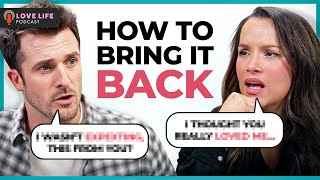
Matthew Hussey, his brother Stephen, and Audrey break down why first fights feel catastrophic and how to navigate them. Anxious people chase and over-apologize while avoidants withdraw. Use the STATE model from Crucial Conversations to keep disagreements productive, set boundaries like no public arguments, and turn conflicts into connection.
Chapters
Foreign.
Do you know what one of the scariest moments in the beginning of a relationship or dating someone you like is?
Finding out your partner's favorite pizza toppings.
Why would that be scary?
Because they might not match.
Is this another, like, you know, campaign against people who like pineapple on their pizza? Because I really think that that's very overplayed.
Stop.
Everybody, stop. I was. This was a good intro. I was on to something, and you've derailed it. Audrey's taken the bait. I suppose it's apt for the subject of this episode. I was going to say that the most scary moment, I always say the most dangerous moment in early dating is when you decide you've like. You really like someone. That's the most dangerous moment because that's the moment where you have a tendency to, you know, lose your boundaries, let people get away with murder, chase too much, obsess too much. But the most scary moment in early dating, especially when you really like someone, is when you have your first argument.
That's so true.
Because when you have your first argument, it's like you just, you. You're all of a sudden in this unknown territory that you can't fully control. You don't know what's going to happen next. And if you're anything like me and have a wonderful ongoing relationship with anxiety in your life, you worry that this is the moment where you lose them. I. I'm curious, Stephen. I relate more to anxiety. Maybe you think you do too, I don't know. But when. What come. When you imagine having an argument with someone in early dating, is the first thought, oh, no, I'm gonna lose them? Or is the first thought, here we go, it's not gonna work?
Well, my avoidant tendencies have historically kicked up in that moment. And I've gone, we are just. This is gonna show us we're not compatible at all.
So that, to me, sort of in a crude way describes the difference between how anxiously attached and avoidant people handle arguments. Like someone who's anxious immediately is like, oh, no. Like, I, I've, I, I've, I've blown it already. I've done something wrong. I shouldn't have said that. I've wrecked it. I'm going to lose them. And then the tendency after an argument is to chase someone, to over apologize to, you know, sit there and anxiously ruminate about what you should have done differently, to fawn that the avoidant is far more likely to go, well, God, here we go. I've discovered that there's something about this situation that's not going to work. And I'm, you know, you're more likely to go cold and distant and withdraw.
Yeah. And I also, I told you before, I like that bit in the beginning, the honeymoon where you both think each other are perfect angels. And then the crack in that comes, and my, my old trigger was like, oh, great. Now they think I'm flawed because they found a problem.
This podcast should have been called. It should have been called Sandwiched between an Anxious and Avoidant. And it. And that would be you.
Well, I'm anxious, too, so I, I.
Okay, well, we, Stephen, should have been in the middle, and it would be an avoidant sandwich.
You two are so needy and anxious.
Delicious. Well, I just want to say to, to anybody that is maybe in the situation where they've just had a fight with somebody or, you know, relates to any of the things that we're talking about. We're going to be talking about arguing today and how basically arguments can actually make your relationship stronger and also how to argue better. We also have an article from Vice that David has found for us where we answer questions around arguing and probably the kind of questions that you have around what is healthy arguing, what is unhealthy arguing. And yeah, I think we should dig into it.
Well, firstly, Audrey, do you. Because some people will have their first argument with someone and think that it immediately means either it's over or something's wrong. Like something's wrong with this situation. What are your views on how do you know whether the first argument you've had is a genuine, like, red flag or if it's just one of the natural, organic moments in getting to know someone better?
It's a really good question. So I think this is a very nuanced and complex subject because I think by default, there is no two arguments that are the same, because it's the same way that every relationship is unique. Every argument is unique because you're dealing with, you know, new people each time, both of which are unique. And so I think the combination. It's very difficult to answer that kind of in, in any defin atoms, but I think we can lay down some principles around arguing which hopefully are helpful to everybody listening. I have the belief that actually arguing is healthy. And I, I remember the other day, my friend said to me, she's in a new relationship five months, and they just had their first fight. And she said to me, like, we just had our first fight. And I went, that's good. That's good. Because it's been five months. They should have a fight. It's normal. And it would be bizarre to spend day in, day out with somebody and never, ever fight with them. And so I think that instead of looking at arguments as spelling the end of something, or, you know, to your point, Stephen, like the. The crack starting to show in this imperfect thing, seeing it as an opportunity to get to know each other better, and almost having the repair part of the argument make your relationship stronger is really, really valuable. I think that also we have to remember that in early dating, especially a lot of the times we argue because we have our baggage, they have their baggage. And it's two wounds coming at each other. It's not really them or you or really about the thing you're arguing about. It's kind of like you just go. You almost look at that person and say, like, you did that one bad thing, therefore you are going to ruin my life, and you are a bad person. I can't trust you. And this is happening all over again. And men this and women that, and, you know, there's this kind of reaction that's very emotional that we can have with people in the early stages. And I think it's also a really wonderful opportunity to understand what those wounds are in the other person and also in yourself. Like, what's coming up for you? Why are you feeling so triggered by this situation?
It's really that the hard thing when you're triggered is that it really feels like moving a mountain to feel better or to be calm or to approach the situation in a productive way because you're just so mad or freaked out or you feel so wronged or disrespected or, you know, whatever story you've attached to this thing has, like, taken over your body when you're genuinely triggered. And when we're genuinely triggered, we. We're. We're liable to act in ways that we regret. And I. I can look back on times where I was really triggered, and I just went about something the complete wrong way. And even in the middle of it, even in the heat of it, I knew I was going about it in the wrong way.
I've had that. Yeah.
What, you'd overreact or you would have a bad way of trying to resolve it.
Yeah, overreact. Get really cold. Get mad. Put, you know, start attacking the other person in some way. And I kind of, like, I had enough sense at certain points to know that, like, I was not being a good version of myself, but it. I felt almost powerless to do better, and then later on really regret the way that I went about it. And I've also been on the other end of that, where many times where someone else is handling something in a really unproductive way, they've gotten really mad, they've attacked me for something I've done, or they are choosing to freeze me out in a. In a way that's really unfair or unpleasant or hurtful. And it's. It's really easy then to. To turn into a reactive version of ourselves with that person. Like, their reactivity begets reactivity. So it. It's like I'm. I'm so conscious in arguments that on one hand, there's something just very informative about arguments. And I don't mean that in a bad way. Like, we're looking for the problems with people, and I'm gonna wait and see how they argue, and then I'm gonna, you know, punish them for that by deciding they're wrong for me, I just mean we learn a lot about each other in an argument. It's a very. It's like a really steep learning curve of, like, who is this person when they go off the rails? Who is this person when they're at their most reactive? Who is this person when they're trig. What triggers this person? That. So there's one that's a positive. I mean, that in the positive sense, it's an intense learning period. But I'm also so aware that if neither person in an argument can find a way to get out of themselves and their reactivity, then you just spiral towards blowing this thing up before it's even really had a chance to start. Because we're talking about your first argument here. The arguments you have very early on with someone. So it. I'm. I know that in the times where I've been really reactive, I. I'm always like, what could I have done differently there that could have interrupted that. That, like, almost this feeling of, you know, my reaction now is predetermined and out of my control, and the train has left the station, and we're just going to this inevitable destination. And if we're on the receiving end of someone else who's doing that, what can we do to not amplify that reactivity?
The best way, I believe, to. To do exactly what you're doing is vulnerability. And when you're fighting, oftentimes, I don't know if you guys relate to this, but I definitely relate to this. You know, you argue, and what you're trying to get is something from the argument. You're trying to be Seen. You're trying to be heard. You're trying to feel safe. You're trying to get them to turn around and say, of course not. Of course I, you know, want to spend time with you. That's crazy. Or whatever it is that you might want from that person. You're just going about it in a bit of a kind of childish way because it's. It's kind of your inner child essentially kicking up and, you know, having a tantrum over a feeling. But I think that as soon as you can bring awareness to it and catch it and say, like, oh, I'm, you know, in that unproductive phase of fighting where maybe, like, it's getting a little bit. I don't like the word toxic, but, you know, it's just not. It's no longer productive. We're not. No longer having. We're just. We're just both hurt. And maybe I've hurt the other person. Maybe I've overreacted. And I can see the areas that I maybe, you know, are not. Not handling myself very well. It's like, it's never too late to turn around and just say, you know, the truth is, I think the reason I'm doing this is because of X, is because I have felt like you don't value me and you don't want to spend time with me, and that makes me feel rejected. And I know that's probably my stuff, but that's just how I feel. Or, you know, I am worried that you're. I don't know, I love you more than you love me, or whatever it might be, like, I don't know, whatever your flavor of why you're fighting, like, trying to bring that awareness and then. And then almost just doing the hard thing of being vulnerable about it and saying, you know, I'm sorry that I'm not handling myself well. This is where it's coming from for me. But I really need you to see where I'm coming from. And I think that's. You talk about the softening, and oftentimes I think two people. When you're fighting, if you're coming at it from a place of ego, it's super hard because you need one person to soften first. And being the person that can soften first and can lead the way and can set the example in your relationship can actually have a really beautiful impact on. On your connection.
You're, I think, better at this than anyone I know. And you have even, you know, in the early days of our relationship, you. You argued better than I did. I would, I would say. And I think that it saved us from kind of spiraling into, like, going from a difficult situation to a worse situation because you interrupted that. And some of the. I want to kind of like drill down on some of the language you just used because there's a lot that was going on there that you spouted out very fast because it's natural to you at this point. But, like, just go that first example. Can you just walk us through it line by line one more time, Guys? It is the last day to take us up on the Black Friday special for Matthew AI. We are giving away two free weeks of access to Matthew AI so that you can experience everything it can do for you as your personal coach. But it expires today. Go over to ask MH.com to get in on this offer now while it's still here. It is one of the most powerful tools I've ever created for people. Whether you're trying to decode someone's behavior, win back attraction, understand what to text or how to have a certain conversation, or, or you're trying to heal from something painful like heartbreak, Matthew AI can be there for you 247 and only today. It can be there for you for two whole weeks for free. Go check it out and grab this while it's available at askmh.com. Let's take this. Someone said they were going to call you at the end of the day and they didn't. And you were waiting for their call. You're still in the first few weeks or months or a couple of months of dating, but they said they would call you and they don't. And it's hurt you because you're, you're a bit mad because you've waited for the call. You, you're, it's like your evening. You were like looking forward to that call. You were waiting for it. It never came. They didn't say anything about it. And then the next morning they texted you and they didn't talk about the fact that they didn't call you last.
Night and you've had a reaction.
You're, let's say you're about to have a reaction. You've been bottling it up. You've been, you didn't say anything last night, but now it's the morning and they have texted you and you're like, you said you were going to call and you didn't. And now it's got to you and it's hurt your feelings and it's, you know, you you hate how much it's been on your mind. Like, you hate the fact that it affected your sleep last night and you were thinking, like, thinking about it as much as you were, but you were. And now it's the morning and you can't just be normal with them by text because you're too annoyed or it would be fake. Play that. Let's play that out.
Well, if you can, if you can, like, catch that before you react, then that's amazing, right? Like, I think so many people will just have a reaction and then they almost have to walk back from that reaction.
But in a way, you are having a reaction, even if you're just texting them, but you're texting them slightly shorter messages, you're a bit cold.
Well, that's usually how it starts, is there's a mood shift. And then the question is, do I even say it or not? But if you're on the receiving end, you can feel the mood shift.
And if, and if you're feeling that, if you, if you were on the receiving end of. Or if you were not getting the call and now it's hurt you and you're being cold the next morning, you're. You're split between wanting to say something and also not wanting to hurt the relationship or not wanting to give away how much it's affected you because you feel like you'll lose power on some level, you won't feel in control anymore. And until this point, you have felt in control, but you're also not. You don't trust yourself that once you get on the phone to this person or once you're in person with them, that you're going to be able to keep hiding this feeling. It's going to leak.
Yeah. Well, I think, first of all, going into it with the intention of, like, my intention is to, is. Is to protect the relationship and to have a great relationship with this person. And so for me, like, whenever you and I would have fights in the early stages, because it's interesting. I also think my experience anyway is, like, you fight more in the beginning than you do. Like, you know, we're six years in. Like, you kind of fight less six years in because there's just. You've hashed out a lot of the things that you would fight about and you kind of like, have got to know each other better and you just know how to handle each other better and you're a bit more. I don't know, it's just a bit easier, maybe. But in the early stages, you're really learning each other. And I think that's.
That's.
That's the tricky thing. But, you know, I think going into it, for me, like, in. In our arguments in early stages, I was always going into it being like, what I want to make sure of is that I don't damage the relationship. And so that's my North Star. And so.
So that's good. So, so begin. Like, before you even say anything, set a very clear intention.
Exactly. Second thing is just reminding myself of the. The belief that I hold, which is the rel. Relationships get better through communication and through hard conversations. And so having this conversation in the most productive way possible is going to make things stronger with the right person. And so, again, that gives me strength and it gives me confidence to know that I can go into it and express my feelings.
So I love that. I love the idea that, okay, I have a belief system underpinning this conversation that says the right relationship is one where I can communicate and things get better, not worse. So if I communicate and things get worse and irreparable, then by definition, this is the wrong relationship. Because a relationship where I can never talk and we can't argue is a hostage situation. It's not a relationship.
Yeah.
So. But what do you say to people who say, I want to believe that, but I'm also aware of how fragile things can be in the beginning, that there is something about early dating that is inherently delicate and things can scare people away, and I can make a fuss of nothing, and I can't always trust that my feelings are valid, you know?
Yeah, of course.
Sometimes my feelings aren't valid. Sometimes I do pick a fight over something that turned out to be nothing and, you know, kind of do a lot of damage in the process. So what do you say to people who want to believe that, yes, you can have arguments with the right person, but balancing that belief with the idea that early dating or early relationships are delicate.
Well, I. I think what the question you asked me is more how do you have the conversation rather than the argument? So I think they're different things. Right. Like, I think if you are asking me how to have the most productive conversation in a scenario you've described, what I would say is you. You set your intention. You remind yourself of your, like, you know, the fact that your North Star is the fact that you want this relationship to work. And then I think you adopt a vulnerable stance where you explain what you're feeling and you say, like, when this happened, it made me feel this. So when you didn't when you said, can I talk to you about something? This may seem a little crazy to you. You probably haven't thought about it much, but believe it or not, this has been really playing on my mind. When you said you were going to call me yesterday and you didn't, that was. That was kind of, like, hurtful. I don't know if it's. You know, I know you probably didn't mean anything by it. And I think that this is the other thing. Ascribing positive intentions to your partner so important onto the person you're dating, rather than, like, jumping to the negative of, like, the reason they didn't call me is because they're an. And excuse my language, and they are, you know, disrespecting me, and I can't trust them. And this is just like all the other situations I've been. And, you know, that's almost. That's going to be so damaging to your relationship. Even if somebody isn't like that, it's going to really, really damage what you guys have. And so I think ascribing really positive intentions and saying, I know you didn't mean to, but when you didn't call me, it made me feel insecure. It made me feel, I don't know, a little bit abandoned. And I know that's really stupid, but I just wanted to tell you because what I don't want is to get resentful and, you know, to your point, Stephen, like, go cold and punish you somehow with my behavior, because you know that that wouldn't be fair to you because you wouldn't even know what's upset me. So I just wanted to be honest about it. Now, if you can have that conversation, I think, wow, amazing. Advanced, right? Like, it means that you have almost interrupted the trigger before you let it boil over. And I think, you know, for anyone listening who's like, yeah, well, I didn't do that. I actually called them up and was like, we need to talk. You know, this isn't gonna work if you don't call me when you say you're gonna call me. It's really disrespectful of my time and. Which we've all done a version of in our lives. And I think if you're in that situation, there is still so much value to understanding. Like, at any point, you get to be the person I just talked about. You get to go, actually, I'm going to walk this back. I'm going to go into my vulnerable mode. I'm going to be honest about how I feel I'm going to explain where this comes from for me, and I'm going to hope that through my vulnerability and apology of my behavior, the relationship gets stronger, because the right relationship will. And the other person will appreciate if they really like you. I think they'll appreciate knowing where that came from. And also, I think apologizing goes such a long way because people go, oh, you're not just some kind of, you know, narcissistic, like, person who doesn't take accountability. You're actually just a person like me who got triggered.
What do you say? I love hearing you talk about this stuff because you're just so, you're so good at it. And I think that there's something so good at arguing. Well, you're, you're good at, you're good at people. You're good at relationships. And it means, you know, that you're, you're therefore able to speak to people's hearts and to avoid the pitfalls that people just so naturally walk straight into. I, I and I think there's such value to people hearing the way you phrase things. One of the questions that came up for me as I was listening to you is everything you just said is really, really great for kind of removing the other person's ego from the situation so that they're not feeling like you're calling them a bad person. You're also addressing the feeling in yourself and being vulnerable with the feeling that it's brought up for you. What do you say to someone who says, but what if I don't think that, like, what, the feeling I'm having is stupid? You know, what if I'm like, this is a totally valid feeling I'm having and I am upset and I deserve to be upset, and I am hurt. And, you know, they therefore don't want to minimize what they're feeling by saying. By saying that it is stupid, which could invalidate it or give. In some ways. It could give, like a bad actor on the other side space to say, you're right, it is, it is stupid, and it's unfair of you to put this on me. You know what I mean?
Like, and then you're like, it's not stupid. I was just saying that.
What do you say to someone who, who's kind of. Because I, that's what I wouldn't want is for some people who naturally minimize their own feelings to go even a step further in minimizing their own feelings to somebody else in a way that doesn't allow them to then stick up for themselves.
Yeah, no, I really like that question. I think you can always find a way that you were not productive in the argument, even if you feel like you didn't cause the argument. Maybe a way you spoke to them, maybe the way that you said something hurtful, maybe a way that you dragged something into it that was just not really relevant, but you were doing it to school points. There's. There's gonna be something like that. You can turn around to them and say, look, you know, I, I meant what I said, and it has really hurt my feelings, but I, I'm sorry for the way that I brought it to you.
But what about even when you're bringing it up the first time and you're saying, you know, let, let's say that someone keeping their promises is really important to you, someone being a person of their word, and they said they were going to call you and they didn't. And then the next morning, they didn't reference that they didn't call you, they just texted you as if nothing. They'd never said that they were going to do that in the first place.
But they don't. They're not supposed to know that that's really important to you. Like, they don't know that about you yet. So you. So if you do blow up at them, I, I think it is absolutely something you've done wrong. Like, it doesn't mean what you're feeling is not valid.
But should you say, I guess what I'm asking is, do you think that you should still say that? Kind of like, I, it. I may just be being stupid or whatever? Or do you think you should stand by the fact in the original conversation that you have with them that this is something that, like, is important to me and I, and you know, you not calling me and then not referencing that you haven't called me is something that I don't like that. That isn't okay for me. What's a way to say that in a way where you don't. You're not minimizing your feelings about it, but you're also not overdoing it in this specific situation, I think you, again.
You have to separate. It's all about picking the one. We group everything together and it's about separating it out. Right? Like, you can say, you know, I know that you haven't meant to do this, or I know that maybe my reaction to this and the way I feel about it is, is, comes from, you know, this thing for me. Like, you can say that and also say, but Consistency or keeping to your word is really important to me. And that's something I really need from someone I'm dating. And when you did that actually it really hurt my feelings. Now it's almost like I know that potentially the way it hurt my feelings isn't so reasonable, but it did and it that's who I am and you should know that about me because it's.
Important and there's still things to avoid like in that you're still avoiding certain traps, which is you're not assuming they had some really malintent, they did something, you know, point finger pointing, calling them selfish. There's actually you're modeling a very good model from the book Crucial Conversations, which is the state model where it talks about certain difficult conversations and and the first it's an acronym S T A T E but it's S. Share the facts Start with what you saw or heard. T Tell your story, how you interpreted it. A Ask for others paths which means like invite their view, allow them to have their view on the situation. Did they mean to make you jealous? Did they know they were doing that? T Talk tentatively. So don't go with you always. You never, you know, if you're not if you're in the early stages, you don't want to start assuming a pattern and then E is encourage testing. Be be open to being wrong about their intent or what they meant to do. So you still. You're kind of. They call it adding to the shared pool of meaning, but you're putting the facts down and how you interpreted them. But then you're kind of encouraging them to put their view and testing that.
That's really good. I really love that. Stephen. I think that's actually super practical for people to have like a model for.
Has been a busy year, so I cannot wait for the holidays this year. And I am someone who is a homebody. I like to get hunkered. I like to draw the curtains, get under a blanket, have something cozy to wear, slow down and just chill at the end of the year. Also, I always find buying gifts tricky for my family. So if Matthew hasn't already thought of these, I'm thinking about the bamboo pajama set and the bubble cuddle blanket from Cozy Earth. Both of them are incredibly soft cozy. I've used Cozy Earth products and I love them and have them in my home and they're perfect for relaxed mornings or just those movie nights at home during the holidays. What I love most is these gifts actually help you create a lovely environment and something that People will actually use beyond the holidays. Not something people just use once, throw out and feel forget you ever gave them it. So this year, give the gift of everyday luxury. Head to cozyearth.com use our code love life for up to 40% off your order. Just make sure to place your order by December 12th for guaranteed Christmas delivery. And if you're listening, after December 12th, don't worry, the same code still works year round for 20% off. So give the gift of comfort that lasts well beyond the holidays and carries you to a cozy new year.
David, you had a Vice article with some really interesting questions that I think everybody who is in the early stages of dating are gonna, are gonna have or even just in long term relationships. Can you, can you throw them out to us?
Yeah, I think that they like divide some things that people will be thinking about in their relationships in terms of arguing into like a couple different sections. I'm curious what your thoughts are. So what, what if, what if I'm a person who, in my relationship I have an argument every single week.
So frequency of arguments is what is too much arguing?
And yeah, yeah, I think if you're a person who's arguing every week, then one of the barometers I use is, is the argument evolving? Are the things we are arguing about evolving? Is the style of how we talk about disagreement evolving? Because if you're finding that every week there are things that come up, okay, maybe both of you have a lot to work on as individuals and with each other, or either that or you're just wildly incompatible. Like if you're arguing every week, you might be just incredibly incompatible. And this might be revealing that if the way you're arguing every week is very fraught, then that might suggest that there's what you know, even as individuals there's work to do because there's we disagree all the time and there's we argue all the time and it takes two people to have an argument. Remember that like arguing is a dance. It takes two people to fight. Because one person can decide, I'm not going to engage in this way. One person can decide, I'm going to engage more calmly. It takes two people to go at it. So if you're going at it every week, you also have to look at yourself. If you're disagreeing every week, it might be a sign of incompatibility. It could be a sign that both of you are working a lot on yourselves and a relationship is bringing up a lot for both of you. But if that's the case, and you both have a growth mindset. The arguments should be evolving and they should be progressing, and they shouldn't be about the same thing every week. That, to me, the big warning sign is if over time, we just continue to be in Groundhog Day of the same arguments in the same way with the same energy. What's the next one, David?
What if we get into arguments in front of our friends often?
Oh, that one, to me is I. If someone doesn't have the decorum to say, we do this privately. That, for me, is something I. I hate the idea of public. Public arguments. Arguments, especially in front of friends. Even if someone implies they're unhappy with you in front of their friends, that, for me is like, huge, Huge. No, no, I agree with you. I just can't. I don't know. It feels disrespectful. It feels tactless. It's like they're now affecting the rest of your, you know, now everyone is in your business. They know it.
I think it. It shows a couple of things. It can show. It can be a kind of betrayal because you're. You're showing a partner they can't trust you to have an air. A degree of privacy around the things that you are, you know, struggling with or dissing, disagreeing on. So they're saying, like, hey, we couldn't have had this conversation away from everyone. It also shows a lack of impulse control, an emotional regulation.
Yes.
Because you're not saying, okay, I'm gonna talk to my partner about that. Or even, like, look, there are some moments where you may say to your partner, can we, you know, can I have a word with you in private? Or you might need to leave the room with them there and then. Right. There's not everything. Can you just fake, you know, being friend cordial with all your friends for the next hour until you get in the car and suddenly have a. An argument? But that's not. The. Excusing yourself with your partner is not the same as fighting in front of your friends.
Yeah, I can do an argument on the street. I don't really care as much on the street, but in front of people, I find something about that just.
Yeah, no, I agree. I do think, though, it can happen if you. And which is, I think an important point for people is, you know, there's a saying. I can't remember it, so I'm going to butcher it. But it's basically something along the lines of unspoken needs become future resentments. And oftentimes, if you're arguing in front of your Friends, it's probably because you are struggling to voice a need or something that you're feeling. And instead of kind of, you know, recognizing that I need to basically pluck up the courage to have this conversation, you're kind of letting it leak because you feel safe, too, in that moment, because there's other people around. Maybe you're having a drink, maybe whatever.
Or you're doing it passively, or you're.
Doing it passively massively. But you're kind of just like, throwing it out there. But really deep down, it's because you have this resentment and this kind of unexpressed feeling. And so just. Just to, again, bring compassion to people if it's something they've done is. It's. It's. It's okay. But I think I agree with both of you, and I think that actually looking at it as, you know, there's obviously something going on that's causing you to do that, because it's not the appropriate place to have an argument.
What's the. Give us one more, David.
One more is. What if arguments last inordinately long, like multiple hours.
That's. Yeah. I mean, anyone who's been in situations where arguments go on for hour after hour knows the utter emotional exhaustion of a situation like that.
Yeah.
I've been in situation where there would be silent treatment for, like, until the next day after. So it's like that whole day was ruined in rumination. Like, there would be no solving it that day.
Same in my twenties. I've had arguments that have lasted days.
But we've had arguments that have lasted hours.
Yes. And we had one argument that lasted. Spanned across two days in the early stage of our relationship.
So tiring.
We just didn't talk to each other.
But we've had. But there's a difference. Like, there's not talking to each other and there's actually arguing for. They're both, in a way, manifestations of the same thing. Right. That. But when you finally break and you don't talk to each other, it's because you can't. You just can't find a way.
Well, I was, like, really pigheaded, and I just was like, you need to apologize to me because you're in the wrong.
No, but sometimes someone, like, hangs up the phone and won't return texts, or they just go, don't. I don't want to talk to you today. And that's like, oh, I hate that.
I think as well, if you're somebody who's like, I want to fix this. And I want to, like, I need to resolve this now. And then you're with someone who's like, I need space. That's so, that's so hard.
That's very painful. Yeah, but you can, you can be like both two people who just keep going at it and you're not, you're just not finding common ground in that situation. I don't, I wouldn't generalize about that because it's. The reality is you can be in that situation with someone who you're extremely happy with or you end up being extremely happy with. So it's not, you can't write off a situation just because you've argued for multiple hours. I, I like to think in terms of. Well, firstly, context matters, right? Is this person a generally good human being who, outside of the context of this argument, acts with decency and treats people well, treats me well, is respectful and, and are they generally respectful in this argument? I'm not saying even the best intentioned people occasionally say things that they wish they hadn't and hurt each other. So even that it's not a hard and fast rule. But like, is this person saying things like, are they a scorpion who right now is trying to eviscerate me and wound me and it's very intentional, or is it, has this become so heated that we've both said things that, you know, we wish we hadn't said there. To me, there's a difference between those two things. There's like crime of passion, right. In arguments. I want to be very careful how I say that phrase, but you know what I mean. And there's someone who sort of systematically, when they're threatened, premeditated, like, goes like, will, that is part of their M.O. to say really nasty things and to hurt you. And I've been in those situations before. There's nothing worse because that person just destroys your confidence.
I think what you're touching on, by the way, is super important as a point for just a, a rule, a blanket rule for arguing like there should be vetoes in the things that you say in arguments. You know, for us, for instance, we have never been in an argument where we've threatened the relationship or we've gone like, well, maybe if you feel that way, then we're not right for each other or maybe like this relationship isn't going to work or whatever it might be. And that's because for us, that's like a really, really strong boundary that we don't cross. And I think that it allows us to argue from a place of Safety, no matter what. You know, you, you and I have always been able to disagree on things from a place of safety and therefore be more productive with it.
I was with someone who used to do the like, well, that's just it that, you know, and I took it serious. I thought we'd just broken up. And then the next day, like the whole rest, I was like, oh, we just broke up. And then like the next day there was like a sorry text, like, oh, we just had an argument. And I realized every argument we had it would be like, I think we just broke up.
But, you know, but that's really important not to gloss over that when that happens, because what someone is teaching you there is what's normal for them. And you can't just overlook those things. You have to address them head on. So what in that situation, what that person showed you was that it's entirely normal to say something that in a normal world would be, would mean the end of the relationship, but in their world actually is just another day at the office of a relationship. It's like, this is a go to place. Oh, yeah, and we're gonna make up tomorrow now when if that's like crazy town for you. And you're like, I, this is, this is not. I can't live in a world where someone doesn't mean what they say when they say these things and is so, you know, it'd be one thing if they said, hey, I deeply regret what I said yesterday. And it came from, I was in a really bad place, I was scared, and I should never have threatened the relationship and I'm deeply sorry for that and I won't do that again. If someone said that, then it's like, oh, we're not living in an alternate universe for me. We're living in this, a universe of shared values where. And shared rules importantly, where you've said something that's really big for in my books, but you've acknowledged that you said something that's really big and you've made sure to let me know that you and you're aware that that's a really big thing to say and that you regret having said it. So if someone comes to you and says, hey, I can't wait to see you tonight and I really miss you, and let's just figure this out. It's like, oh, we're not playing by the same rules. And if we're not playing by the same rules, we need to have a conversation. Because I need to know very quickly if your expectation of what a Relationship should be like, is this. And that's where you then have to go back and say, hey, yeah, listen, you're acting very normal with me today. But the day after you've told me you don't want us to be together, just going back to normal isn't normal for me. And we need to talk about how, how we're gonna like, go about this relationship for this to work, if it's gonna work. Because I can't live in a world where someone can tell me one day we're breaking up, and then the next day everything's back to normal.
And I think setting those BO are super important. And you can do that in the early stages. It's like if someone does do that, you can then sit them down and say, you know, I get it, but never do that again. Because to me, that's a big no, no. And I, I can't be with someone who will just threaten a relationship and threaten my safety every time we fight. And actually you can say that. And I think that allows the other person to know that that's a very hard raw fee. That's a hard no. And not to kind of cross that boundary. Like another example I think can be if you are arguing with somebody who is trying to say something, who's trying to hurt you in the process, and saying things that I always think be really, really careful of not attacking someone's character. You can attack a behavior, you can attack something they've done, but if it ends up being like. And because ultimately you are just a selfish person who only thinks about themselves. And I've noticed that in all these other areas, you're attacking someone's character and you can't really take that back because even when you make up. I don't know if you guys have been in that situation where someone does that to you, you kind of are left going, well, do you just think that I'm a bit of a shitty person? And I think that those things can really damage long term, the relationship.
Yeah, I, I couldn't agree more. We, we. We released a clip recently on Instagram that summed up what I think about this in the context of long term relationships. I want to play this, David, because it got shared so many times on Instagram. Let's, let's play the clip. Do not marry someone that you never argue with. Marry someone you argue well with. That means that when you have an argument, you reach good compromises, you have a good recovery time. In other words, it doesn't take you good days of miserable Toxicity to get good again. It takes you minutes or hours. You're both good at coming to the table to apologize and soften. It's not always the same person who has to save the two of you every time you have an argument. And by the way, you only know these things by having hard conversations early on and being able to talk about the big stuff so that you know who you are. When there are differences in opinions and the goal isn't to agree on everything, you won't, and that's fine. But it is to make sure that you understand each other's expectations and you know ahead of time that you can handle the differences.
That's such a good clip and a good point. Point well made.
Thank you. Well, people said there were a few comments here. Oaks Hit said, me and my girlfriend never argue. I don't see the point. We are both empathetic and communicate well. I don't see any reason why I'd even need to argue with her. I mean, I guess we get into semantics there of what you define as an argument. There are things, there are disagreements we' had that I put into the category of argument that aren't really an argument by normal standards.
There's no plate throwing.
No, no. Lacy K. Correll Sundays, was married 20 years to someone I never argued with. And I totally disagree. And I totally agree with this. I wonder if she's saying, I like, is she saying, david, do you think the problem was that they never argued? Yeah, Right. So she's saying, I was married for 20 years, we never argued and that that wasn't a good thing. Kirby, 70, says, don't wait for somebody to be what you're not. Most likely you are not the person who argues perfectly. Don't wait for a partner that argues perfectly. Look for someone who's willing to work with you on how you both argue. I really love that comment. I think that's a really, really great point, Kirby, because it's so easy to pick holes in the way other people approach things and forget that we, we are not perfect. I think this has been a really good conversation. It's been practical, it's been interesting. Let us know if you want us to continue this conversation and if there's anything you want clarification on or if there's anything you want to contribute to the Conversation podcast, matthewhussey.com especially let us know if you want us to do more around this subject. Let's go over to our love life line. David, who do we have today?
We have Fabiana.
Hello, Steve. And Matthew Hussey's team. This is Fabiana and I'm here to suggest a topic for the podcast. And the topic is rejection. More specifically, fear of rejection. I know that Matthew and David, they touched a little bit on this topic in the last podcast maybe two weeks ago, but I think it would be really useful to dive a little deeper in the psychology, the rationale behind fear of rejection. Why do we fear rejection so much? And in my case, I'll give you an example. If I like someone, this is almost always a state secret. If I like someone that I'm not sure if they like me back, it's always a state secret. And probably to that person you would look like I actually am not interested at all. And that all comes from a place of fear of rejection. So hopefully that's a topic that interests others in the community. It definitely interests me. So here's my suggestion. Thank you.
So firstly, Fabiana, that's a great topic for us to explore more. We'll definitely do that in upcoming episodes. I want to just throw out my immediate thought when you're speaking that idea of it's a state secret. When I like someone, and because it's a state secret, I end up going the other way and appearing like I'm not interested in them at all. That it strikes me that one of the things that you would benefit from is what Oliver Berkman refers to as having an imperfectionism as your philosophy, as opposed to perfectionism. So in a way, there's a kind of perfectionist streak to the way that you like people, you have decided you like someone, it's now become extremely important and it's, by the way, taken on an outsized importance because you know someone can't be that important who you've decided you like. The person who becomes really like the person who becomes really important is the person who sticks with you through thick and thin. The person who becomes really important is the person who shows up for you, who is there for you, who makes your life better in all sorts of ways, who's an incredible teammate that that's the person who's really important. The person you like is not really important. And so recognizing even that simple psychological shift can make a big difference to how important you make someone in the early stages, once you realize that they can't be that important, you can almost give yourself permission to be more imperfect about it. And you, you almost have to treat this the same way that you would treat anything that you procrastinate. You know, whether it's A big, like, we procrastinate big business ideas because we're like, we want to like nurse it and nurture it and we think that it could be so good. And the whole time that we keep it in our mind talking about how good it could be. We never actually have to go and do anything towards it and prove that maybe it's not such a great idea after all, or maybe the timing is wrong, or maybe no one really gets it. We test the, the idea in the real world to see if the idea in our head can actually materialize. The same is true when it comes to relationships. We test them in the real world. But you're always going to be testing imperfectly. You're not going to walk up to someone and say perfect thing and have the perfect movie moment. And guess what? Even if you do, even if the first two minutes that you spoke to someone were pitch perfect movie level scripting, the next two won't be. The next time you meet, you'll say something off key or you'll say something that you're like, oh God, that was a bit dumb. That was a bit awkward. You'll, you'll be clumsy. You'll do something that you were like, oh, that wasn't very smooth. You can't keep a perfect score. Even if you get a perfect score, when you first tell someone you like them or you don't even. And by the way, you don't even have to do that. The whole the imperfectionist mindset to this is not to walk up to someone and be like, hey, I just want to let you know I really like you. The imperfectionist mindset is like, let me not let the perfect be the enemy of the good here. Let me just have, let me put myself on this person's radar. Let me notice something about them. Let me have an exchange with them no matter how small, instead of zero exchange. Let me do something instead of nothing. Something is always better than nothing. Do the obvious thing. Comment on the music that's playing in the coffee shop, comment on the muffins in the case and talk about how one of them looks.
Really.
I keep meaning, I keep like being tempted by that one in particular. You know, like just say anything, say anything instead of saying nothing. And, and what you'll find is you start to test in the real world whether this person is responsive, engaged, interested, whether anything comes of it. It's the same way you treat anything else. The way to do it is not to treat it like this. Perfect. I think of them like the perfect like golden eggs. Like you nursing this egg, the unhatched egg, and you keep thinking about what's inside the egg and you just keep nursing it and nursing it and nursing it, but you never break it open to actually see if there's anything of value in there. You're treating people you like, like the great unhatched eggs. As long as you never crack the egg open. You never have to know whether it could have been anything or whether it would have been anything or not. You can always maintain the idea that it could have been something had you only done more. But we have to value more real life and what's actually in the egg. And if there's nothing going on, the search for something that does show promise, we have to value that more than we value our unhatched eggs, right? So no more state secrets. I like someone, huh? Guess what? That's not that big of a deal, all right? I don't know what they're going to be to me in this life. So if I like someone, it's worth me doing something imperfectly to have an exchange with this person. And if you do that, if you embrace imperfectionism and if you remove them from the importance they have right now by recognizing they cannot possibly be this important yet. And if you start valuing real life over unhatched eggs, you'll find that you do a lot more than you're doing right now. And the irony is the all or nothing approach that you have right now is actually robbing you of opportunities because you're not even putting yourself in the game. Thank you, Fabiana, for a great love life line. Question. If you want to send in your voice note with your question, send it to podcastathewhussey.com 30seconds for your question, please. If they're too long, we can't play them on the show. But send us your question. We'd love to hear it. And we look forward to answering more of them. It is that time again. Shuffle my papers. Look at Stephen, hope he's ready. It's Steves sleeves, by the way. Do you know someone commented and said Steve. Someone commented recently and said Stephen clearly does not enjoy the way that Matthew introduces him.
Is that true, Stephen?
No. We sort of play a role. I sort of play the roll my eyes and he plays the cheeky.
Yeah. What they don't realize is you've been doing this to me your whole life. You've been sort of rolling your eyes at me in a dry way, like acting like you're just exhausted by me and I'VE had enough. You've been doing that forever.
Yeah, it's part of the character.
Character. Don't be bereaved.
You know that we can't live without another episode of Steve Sleep.
Welcome to Steve Sleeves, everyone. Today we are gonna play petty or profound.
I like it. I always love when there's a sort of phrase for Steve Sleeves.
I'm gonna give you some scenarios for what might trigger a first argument, and you're gonna tell me, are they petty, profound? Are they fixable? Are they something one should. You know, that betoken incompatibility between two people?
Okay, hang on. This is petty, profound, and fixable. Well, that. Petty.
No, there's petty or profound.
Okay, fine.
Profound means it's fixable. No, sorry. Petty means it's fixable.
Petty means it's not even worth it. Profound means it's a problem. But then you can decide if it's fixable or not.
Oh, okay.
Okay.
So. Okay. Okay. All right, let's do it. Let's do this.
Okay.
I think this is one of the way. Those ones you've got to play to understand.
Disagreeing about the right way to load the dishwasher.
That's really funny. Petty. We disagree.
Yeah. She does it so wrong.
I feel like you guys disagree on a lot of domestic. Little domestic things.
No, we agree on most domestic things.
Yeah, we do.
But she. If you. All right, here's how she loads it. Imagine someone opening the dishwasher and then just grabbing fistfuls of plates and cups and everything and just throwing them into an open void. That's how Audrey loads the dishwasher.
Loads it like it's a work of art that belongs in some, like, contemporary museum.
If you put a cup the right way up in the dishwasher, obviously, I will fill with water.
I don't do that. I don't. I don't put them. That is too. Fine. You know it. I don't do that.
I've seen her do that.
Petty. Okay, we're gonna have words. We shouldn't argue in front of our friends.
One person wants to splurge on a luxury vacation while the other is intensely saving to pay off student debt.
Well, profound, profound, important. A very, very important conversation.
One person's like, I really want us to go on vacation this year. Like, it'd be really special and nice. And the other person's like, I'm. I'm trying to save right now.
You got to have that conversation. That's. That conversation is like, that can end a relationship if you don't get that, right? You got to have the conversations about money. Money values. You know, the person who feels safe by paying off debt needs to be reassured that there's a plan in place even if they go on a nice vacation this year, that this person who wants to go on vacation doesn't want to continue just indefinitely. Defer joy in life. But they do also recognize is really important to them that they pay off the debt. And how can they make a plan together to be able to still not. Not defer joy indefinitely, but also to be financially responsible. But you got to have that conversation.
Yeah. Profound but fixable.
Profound but fixable. Yeah, sorry, that was the game. Profound but fixable. Okay.
After a family visit, one partner says, your mum's always nitpicking and criticizing things I do. The other says, that's just how, you know she cares.
But I'd say profound.
Profound.
I mean, if they can both laugh about it. Profound. But if the person who says, your mum's always finding fault with me isn't laughing when their partner says that, then profound. Like, you've got.
So you mean the first one is petty. If you can both laugh about your.
Mum'S behavior if it's an argument, because this is in the context of you're having an argument about it.
I guess if you say, like, your mum's always, like, finding fault with me, and they say that's how you know she cares. And you're both like, yeah, we both roll our eyes because we know she's difficult, then. Then it's fine. But if you're like partners genuinely trying to say, like, I. I'm having a hard time with your mum, she's really always pulling me apart. And then they just gaslight you over it, then. Profound.
Profound.
Fix but fixable. But the only way that's fixable is if that person joins your team. I'm not saying it's a team against the mum, but they have to show that they're on your side and that they're like, hey, look, I know I have a difficult mum. I know she has a tendency to do that. I don't have a lot of control over her other than to ask her to stop. But I see you, and I understand it, and I'm. I'm with you.
Okay? One person is an oversharer with their friends. They give a lot of detail about your relationship, and you feel it's too much.
Profound.
Yeah, we, We've. We talked about that in the early stages, didn't we? Like, I, I got upset because you Shared more with your friends than I felt comfortable with you doing.
I forgot about that.
Yeah, and. But it got like. We got on the same page about it, didn't we? Yeah, because I was like. I was like. I feel like I have to be able. We have to be able to have an argument without, like, everyone.
My friends hearing about it. Yeah, yeah, yeah.
But I think that it's important to say. I really want to add a caveat here. You people you can go to in life, like a mandate for an abusive relationship is one where you feel you're not entitled to ever go to someone else and share what's going on so that you have to apply what I just said contextually. Yeah, but we. But that was like a thing. And it was completely solved with us because we chatted about it.
Okay. A blow up over whether a hot dog is a sandwich or whether it's a sui generes item. Sui generis is a Latin for one of a kind, unique.
What was the first option if a.
Hot dog is a sandwich?
Oh, God. It's neither.
I'd say that's probably.
It's closest to a sandwich.
Petty. What? No, you're. You're literally. You've been sucked into the hot dog debate.
Petty.
You got sucked straight into Steve's world. There you were. You were, like, deep in a vortex of stuff. Steve fighting over it. Pet. I'd say petty. You can. You could. That's. That's not worth arguing about.
Okay, Disagreeing on whether it's necessary to clean up your bedroom every morning.
Profound.
No, that's petty. That's petty. If you.
Here we go.
Our bedroom dirty every morning. Like, just.
He would not handle. He would not handle that well.
I mean, to be fair, though, you sort of do sometimes, so. And we're all right, aren't we? So probably Petty.
Do you know what's funny is everyone in this room knows that I tidy up more than we've had. We've had this. We've had this debate on. On air before.
Yeah, let's not.
But Matthew's not right. I think Matthew is a clean freak.
You're not claiming for it. I'm a tiny freak. She's a clean freak.
Yeah. I'm a clean, clean freak.
Tidy, free.
What's the difference?
She's got, like. She doesn't like germs. She's always washing her hands.
No, but the reason I think it's petty is that, like, I think there's different levels. If you're somebody who, like you, for instance, really likes everything to be, like, perfect and immaculate. You could tolerate a. A level, I think, and a degree of me not being that way.
Yeah, for sure.
But if I was, like, disgusting.
But if it was, then it would be profound. If the house was always messy, that would. That would, like. Yeah, that would affect me.
But what he's saying is just in the morning, you leave it a bit messy. Right.
But it's not like you have. You have a messy room all the time. It's not just in the morning when you wake up, you don't make the bed and you.
You leave it messy.
You leave it messy. Yeah. As long as it's not accumulating. In a crazy way, I'm probably projecting too much on this one. But I do think if some. If one person's really likes order and is tidy and the other person's incredibly messy and there's no give and take there on both sides, then that can be profound.
Okay. When you go out together, they always spend an inordinate amount of attention on their friends, and you feel ignored and they just go and do their thing. Oh, and hey, we're gonna go here after. They don't feel. You don't feel included.
Oh, that's hard.
Profound. I think that's profound.
I think it's profound, but fixable.
But they can't be saying that about, like, you know, when you. Hopefully that person's not saying that when they go out with their friends, it's a problem that they don't pay all their attention to them. Because the whole point of going out with friends is that you do, you know, you give attention to other people, and that's healthy in a relationship.
But if, like, especially if you're always together.
Exactly.
And because we go to parties, whenever we go to parties, we don't talk to each other because we just, like, are always together. So then when we're with other people, we just give other people attention. We. We actually don't spend a lot of time together. When we're in. In company, I would say.
No, I agree. And then we debrief.
And then we debrief afterwards.
Yeah. So it depends. I'd say profound if genuinely that person, like, doesn't acknowledge you and.
And also make the decisions.
They make the decisions about what to do afterwards.
That's profound.
Yeah.
Their form of teasing or banter sometimes hurts your feelings. Sometimes they make some jokes and you're like, I don't.
I think that's found.
I really like.
Well, it has to be right. It. It's fixable.
But you know what? You and I are very sensitive people. And I think one of the reasons we work really, really well is that we are aware of each other's sensitivities and we don't say hurtful things to each other. I think if I was with someone who was, like, continuously making me feel upset or disrespected, I don't think I would be happy in that relationship.
Some people's style of humor is naturally a bit more offensive. Like, a bit more, like, cutting.
Yeah.
And we've got friends like that.
We got friends.
Definitely got friends like that.
And sometimes they hurt my feelings. I. I do. I sometimes don't. Like, I'm, like, bracing myself when I tell them things.
You can be with them. That's the other thing. Right. You can be friends with them. But could you be in a relationship with someone?
Shared humor is. Humor is very. It's very profound.
I think it's profound. To me, that's profound. And it's only fixable if when you give that feedback, it gets better.
Yeah.
Or if, like, what if you're always making a light joke and someone gets, like, overly offended and you're like, that's the worst. Exactly.
See, I think that's an incompatibility.
Exactly. Like, if someone is so sensitive, that's how they feel, then that's how they feel, and it makes them wrong for you. And. Yeah, it might make them someone who's going to find it difficult to find love because they're a bit more difficult. But if they really can't help it because they get really offended, then that's who they are.
I. I have a friend who both of you know who. When I went through a really bad breakup and I was in true, like. Like vicious heartbreak, I went to see him and I said to him, I. I'm gonna tell you, like, where I'm at emotionally and what's just happened. And I need you to not, like, make your normal jokes because I can't take them right now. I literally had to say, like, just, there are. There are some, like, right now I'm not. I'm not sure of you. Your normal acerbic wit. So just right now I just need you to be with me. And he was like, got it.
That's sweet.
Yeah. But that's communication. Communication. I didn't. I didn't let him make a difficult. A joke that hurt my feelings and then live with resentment over it. I just said, I know you. I love you. I can't take your today.
Well, thank you, everyone. And please let us know is a hot dog a bun or a unique sui generis item or a sandwich?
Yeah.
Thanks for playing.
Email podcast at Matthew Hussey for any answers you have on that or any of Steve Sleeves or ideas for Steve Sleeves episodes.
Subject line hot dog.
Subject line hot dog. Well, thank you everybody. Thank you Stephen. Thank you Audrey, thank you all of you. Thank you. Matthew listening in. I I've enjoyed this episode. I thought it was a good one. You let us know what did you Think? Podcast Matthew Hussey.com thank you so much for listening. We can't wait to see you next time for another episode of Love Life. Guys, before you go, don't forget to go over to askmh.com to get in on the Black Friday sale for Matthew AI two whole weeks for free only today askmh.com is that link. And thanks again for listening to the podcast. Sam.









