What the Post-Covid Dating Boom Means for Your Love Life
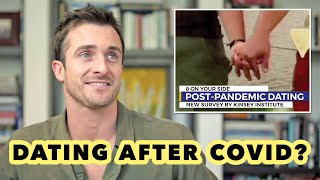
Matthew AI and Steve break down how the pandemic shifted dating priorities: 64% of people now avoid dating multiple partners, 70% want a video call first, and 65% prioritize deep connections over hookups. Hinge's CEO notes singles are more intentional about lasting relationships, while therapist Wendy Strugar explains lockdown amplified existing relationship tensions, spiking divorces.
Questions this video answers
44%
64%
70%
65%
Chapters
What does post pandemic dating look like for you? Let's take a look at what some of the news is saying.
A year of lockdown forced many of us to rearrange our priorities and for many, what we really want in our love lives. According to a new survey by Kinsey Institute, the Year of COVID set up our society for a post pandemic change in dating norms for singles. The overwhelming majority surveyed say they're more focused on finding a serious relationship as a result of the pandemic.
So according to this study, the priorities of what is important to us have shifted. Do you know what was important to us a year ago? Toilet paper. Steve? Very important.
44% say commitment is more important than before. 64% less interested in dating more than one person at a time.
Is that true for you? Have you felt that since the pandemic dating seriously has become more important to you? This accords with an article I read in the Guardian whereby the CEO of Hinge, Justin McLeod. I think I'm saying that wrong. Was interviewed. He said for single people who have missed out on a year of opportunities to find a partner, the priority around finding a relationship has increased. And while many have thought that while decadence would be the reaction to coming out of lockdown, he thinks people are looking for something more serious, less. That is what we are hearing. People are being a little more intentional about what they're looking for coming out of this.
70% plan to now video chat before committing to scheduling a date.
I was, Steve. I was pushing for stuff like this before the pandemic. Jameson, can you be bothered to find a clip of me referencing how important it is to have a phone call before a date? Text can only do so much, so phone calls are important. I want to argue for the phone call right now. You should try and avoid, where possible, going on a date with someone that you haven't had a phone call with. Let's FaceTime for a couple of minutes or whatever, get on the phone with them, just, just call them because that can save you an entire evening. By the way, I think FaceTime is great because when you can actually see someone on a screen, it's the next best thing to a date, right? We see body language, we see facial expressions. It's real connection. But I'm on my way home now. But what are you up to? How's your night? A voice on the telephone. I've been pushing for this because I really believe that we should, before investing an entire evening in someone, maybe see if we have any Chemistry any compatibility via video or phone so as not to waste a lot of time.
And 65% plan on prioritizing finding a deep connection rather than a hookup.
This is interesting because it's in stark contrast to that idea that I've heard about many times from people close to me. It's going to be the roaring twenties when we come out of this. You just wait. It's going to be a bacchanalian frenzy of sex and partying and. Well, Steve, you know. Well, don't say it like that. And I suppose some of that relates to age group, right? There will be people who are in a stage of their life where they feel like they've been denied this exciting, youthful party stage of their life that will go out and, you know, do the biz with lots of different people. But there'll be others, I think, in a different age group who look at this and go, oh, that was what it was like to go through a difficult time without somebody. But here's what's interesting.
On the other hand, you had divorces, which rose rapidly in the early days of the pandemic and have since slowed down over recent months. Wendy Strugar says those getting divorced at the time were couples already in troubled relationships. And when they were forced to spend more time at home together and interact more often, she says, suddenly there was no escape and they wanted out of the relationship.
This, in some ways, is a sort of interesting juxtaposition, isn't it? The idea that you've got lots of people coming out of the pandemic saying, I want a more serious relationship now. This has made me realize that I need depth in my life. I need structure. I need someone to be a teammate with me when the chips are down, when the storm comes. And yet we've just come out of a period of lots of people leaving serious relationships precipitated by the proximity that people have had to one another, the forced proximity, I should say. During the pandemic, there is an easy line to take, which is that the pandemic exposed weak relationships. And I think that's true for an enormous number of relationships. But I also think that we have to remember the pandemic forced a situation that no one would argue is healthy for a relationship. It forced an artificial, superficial level of proximity that no one would design in a relationship that we would say is a healthy one. We talk about spending time with your own friends or getting out of the house, having your own lives, not spending every minute of the day together. So, of course, what will happen. If you force two people into doing that, there will inevitably be some relationships that succumb to the pressures of that. But I do think there are a lot of relationships during the pandemic that made people realize that they were more in love with their partner's absence than their presence. In other words, for a long time, the relationship had survived on the idea that, this is my boyfriend, this is my girlfriend, here's who he is, here's who she is. And as soon as the two people were forced into a situation where they were confronted with each other's presence, they got to know who that person is today. They got to know what, what it's like to actually have to really cooperate with that person under immense pressure, immense stress, what it's like to be a team with that person, to figure out and cooperate with boundaries in an environment that is inherently difficult. So I do think that made a lot of people realize, oh, wow, this isn't the teammate I need or can stand over a long period of time. And it made people wake up to that sooner than they otherwise would have realized. I also think that whilst there are plenty of relationships that, that buckled under the pressure of the pandemic, there will be a lot of relationships that began in the pandemic that buckle under the freedoms of normal life afterwards. There will be relationships that worked when two people were confined to their own bubble, their own world, and it was felt like a sort of cozy space unthreatened by everyday life. And then when life opens back up and they're faced with all of the normal challenges of a relationship, of being out amongst other people, the opportunities, the shiny things, then some of those won't last. What comes out of this for me are two really important lessons. One, the right relationship should be robust enough to handle a change in seasons. You can't have a relationship that only works when everything's going well, when, when both people are healthy, when everyone's happy, when there are no existential challenges. You want to be in the kind of relationship that isn't constantly threatened by a change in circumstances. And the second big conclusion it takes me to is if a lot of people are looking for something more serious now, there may be the danger of panic buying a relationship coming out of this. And what I hope for a lot of people is that will all take the time to look at the last year and say what traits would have been really, really valuable in a relationship during this time. Teamwork, patience, empathy, understanding, a genuine ability to cooperate. Someone accepting our flaws, us being accepting of somebody else's flaws, the ability to argue well, to. To disagree constructively. So many relationships begin because of the shiny aspects of a person or of a dynamic. You know, a shiny aspect can be just crazy chemistry, or it can be a person's charisma, or it could be how good looking they are. And what I find sort of fascinating about the early stages of dating and relationships is that the person that we show off to our friends and our friends all get excited about isn't necessarily the same thing as the person who would make a great partner. What we can do is look at the last year and either from a meta perspective, say, why did a lot of people break up? What was missing in their relationships that they didn't anticipate when times were good and how will I not make that mistake? Or on a micro personal level, we can look at it and go, what qualities would I have really wanted to have in somebody during this time? Because it's really easy when life is moving at 100 miles an hour and we're distracted by our work and how much stuff we have to do in a day, and we're only dating someone for one night or two nights a week, and they just show us their most charismatic self during that time. It's really easy to make a decision about who we spend time with long term and who we have a relationship with based on ultimately superficial and unimportant characteristics that don't contribute to the happiness of a relationship long term. Let me know in the comments. What are you experiencing right now? I suppose post pandemic is a dangerous thing to say, isn't it? Sort of. In this new era of hoping for an imminent end to everything that's been going on, and at the very least a loosening of the restrictions where you live, has it made you more eager to go out there and find a relationship? Has it made you reassess what you're looking for? And if so, how? Leave me a comment, let me know. I'm very excited to read these. I want to know, where are people at right now? Also, before you go like this video, subscribe to this channel and subscribe and hit the bell so that you get reminded when I have a new video coming out. I'll see you next week.









