4 Step Goal System in a Bullet Journal
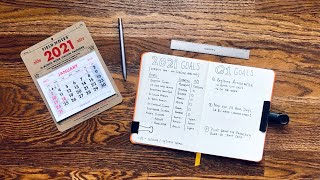
Matt Ragland shows how to set goals in a bullet journal using the QMWD framework: break quarterly goals into monthly milestones, weekly deliverables, and daily tasks. He distinguishes outcome-based goals like launching a course from system-based goals like a weekly YouTube schedule, then demonstrates mapping his own objectives onto a calendar.
Chapters
Hi everyone, my name is Matt and welcome to another Bullet Journal productivity video. It is almost time for the new year, and I know a lot of you are getting ready to plan out your annual goals, what you want to be doing in the new year. This video is very practical and tactical, so go ahead and take out your Bullet Journal, take out a pen, take out a sheet of paper, open up Notion, Roam, whatever you use to plan. Let's go ahead and open that up and get ready to do some work. In this video, I'm going to show you my goal setting strategy, how I take big goals and break them down into smaller, very achievable tasks that you can do every single day, every single week, to make sure that you are making progress on the things that matter the most to you. All right, you ready? Let's go. The first thing that I want you to do is make a list of all the goals that you have in the new year. There are a couple of things that I want you to keep in mind while you're making your list of goals. The first one is no judgment on your goals. Don't overthink them. Don't wonder if they're achievable or not. Don't think about like, is this like a habit or is it a goal? Like, if it's anything that you want to focus on, that you want to complete, that you want to make a part of your life or continue to make a part of your life or remove from your life in the new year, write it down now. Here is what this actually looks like in your Bullet Journal. Write down just 2021 goals, version 1, no judging here, and then write down every goal, every kind of thought you have. I believe I have about 10 here. Any goal that you want to accomplish in the new year. Hey, if you want, take a minute and pause this. Don't go away because there's a lot more to come, but take a minute and pause this so that you can really think about what you want to be doing next year, the kind of life that you want to be living. Okay, the next thing that I want you to do is draw a line down that list in your Bullet Journal, or add a new column in your digital planner, whatever you're doing, and I want you to estimate how much time you think that this goal will take to complete or achieve. I want to put a strong emphasis on the estimate right now, and especially if you're new to goal setting and goal planning, you may not fully know how much time something is going to take. That's why I say estimate. The more that you do these things, the more that you set goals and take action on them and move towards achievement and completion, the more understanding and experience you will gain on how to properly estimate time and know what kind of scope that a goal is going to have. So don't worry if you're like, is this going to take me a few months? Is this going to take me a month? Might it take an entire year? Just write down your first best guess estimate, and then we'll move on. Okay, the next thing that I want you to do is draw one more line down your bullet journal to create a new column. You can do the same thing in your planner, and I want you to think about, is this an outcome-based goal or is this a system-based goal? Let me tell you what I mean in a distinction between the two. An outcome-based goal is something that has a specific, like, number or completion date. Like for example, if I want to, and I will create a new online course, then that is something that I could say a goal is to complete the content and launch it. Once it is launched, the project, the goal is achieved. It's done. It's completed. That is the outcome that I am looking for is to get to launch. A system-based goal is something like this YouTube channel. There is no end in sight for me when it comes to the YouTube channel right now. My goal is to create a system to consistently produce one YouTube video per week for the entire year. Do you see, do you see the difference there? An outcome-based goal is something that has basically a definitive end date or a certain, like a certain outcome that you want to achieve. A system-based goal is saying, I'm just going to keep doing this and I'm going to make this a part of my life and a part of my work for as long as I want to continue doing it. Now you may think to yourself, Matt, that sounds a lot like a habit. Like you have a habit of producing one YouTube video per week. And that's true. There are a lot of similarities between what I'm saying for like a system-based goal and something that is kind of like a habit as well. Your next step is to pick 1 to 3 quarterly goals that you want to focus on in Q1, the first 3 months of 2021. Now I have a framework for goal setting called QMWD. It stands for quarter, month, week, and day. The reason that this is useful is because it takes something that can feel really big, like creating and launching an online course, into milestones that you need to hit every month, deliverables that you need to hit every week in order to hit your monthly milestone. What kind of plan do I need to make for my week? What kind of tasks do I need to accomplish every day or every couple of days to make sure that I'm reaching my weekly deliverable. And if I hit all my deliverables, then I'm going to reach the monthly milestone. And if I do that for all of the months leading into the quarter, then almost naturally I am going to complete, achieve, and have success with the goal that I've set up for this quarter. Now I want to show you how to take the these quarterly goals that you have and break them down into monthly milestones, weekly deliverables, and even daily tasks. And so I want to make sure that I am focusing on the Keynote Accelerator, the email funnel updates, and the new mastermind round. So these are the 3 key objectives. This is 3 key objectives and milestones for the month. Note that this isn't completing everything, but these are the things that I know I want to focus on. From the monthly milestones, I'm going to move into my weekly deliverables. And so what I have right here for the week of January 4th through 10th is taking it not just the milestones that I have, but remember that one of the trickiest things that people often face when it comes to new goals, kind of extra things that you want to do, is not taking into account these system goals and commitments that take up a lot of time. So for me, I still have a big commitment to all of you with new YouTube videos and new podcast episodes. I'm going to focus on my mastermind launch. So that is a monthly milestone, but I'm working on it from a weekly deliverable. These other two right now are just part of those system goals and commitments that I have to publish a new YouTube video and a new podcast episode every week. Now, if 2020 has taught us anything, it's the importance of being able to be flexible with our plans and pivot when things are needed. And so that's also a reason that I don't tend to plan out my year much past just saying like, this is what I'm doing for this quarter, this is what I'm thinking about or intend to do for the next quarter. Now the other thing that you can think at— think about is look at your list of goals and the ones that kind of take in that 3 to 6 month range. And it can be useful just for understanding the flow of your year to start to slot in or pencil in some of these quarterly goals to other parts of your year. Another thing that I want you to think about, this is really important and something that a lot of people miss when it comes to goal setting, especially at the beginning of the new year when things just feel ripe with possibility, especially this year, maybe even more so than any other year we've had in the recent past, is it's easy to feel like I'm going to do a lot of things at the beginning of the year. I've certainly found myself in that situation many, many years. What I'm realizing is when you look at the system goals or commitments that you already have every single day or week and month, they take up a lot of time. And so I really have to think about how much time do I actually have for these new outcome-based goals that I want to add into my schedule. And that's why I want to encourage you, just like I'm doing, maybe just start with one big goal that you want to tackle for the first 3 months, 2, 3 at the most, because what this allows you to do is build momentum at the beginning of a new year. I'm also of the opinion that January is a really weird month because you're coming off the holidays. We're all wanting, like, the, the aspiration is to get into all these new habits and tackle all these big goals. And so we take a lot of energy right at the beginning, but it's really tough to sustain, especially when we're cramming our schedule with all these new things along with all of the other things that we're already committed to. And it creates a lot of dissatisfaction and discouragement when it comes to the actual result of like the new things that you want to be doing. So I actually have kind of a motto of do less at the beginning of the year., and then add things on as I start to understand and see, like, this is what my schedule's like, this is the actual, like, process of putting this goal together. And once I understand that, after a few weeks, I can start to add more things in if it makes sense to do that. But I'm making progress and I'm building momentum on the one thing that I picked at this time of year as I'm going into the new year. Another way that you can link big goals together throughout the course of a year like there are a couple of goals that I know are going to take me most likely an entire year to complete the way that I can have things scheduled out and understanding the time that I have available. The biggest one for me when I look at my goals for 2021 is how I want to validate like a notebook journal concept that I've come up with, launch a Kickstarter program, and if it funds, to actually like do the fulfillment and distribution and shipping of this journal that I want to create. That's nothing that I can do in just 3 months, and it's going to take probably most of the year, if not the entire year, to put together. What I can do then is take this big goal of a successful, fully funded and shipped Kickstarter program for a journal and break that down into quarterly subgoals. Like they're per the quarter, but still a subgoal of the broader, bigger goal. And so that could look like in Q1, I validate the journal concept and make sure that there's enough interest to at least get to Kickstarter. In Q2, I can launch a Kickstarter program. In Q3, I can actually do like the creating— not the creating of it, but actually like getting it printed and binded and all those, like, those kind of creation pieces. And then in Q4, do the, like, distribution, ship them out, get them in people's hands in time for this time of year, uh, at the end of 2021. Often it can take time for some of these big, big goals, but you can still break them down into manageable, achievable chunks that happen every single quarter. And like we've already talked about with QMWD, you still look at this and say, like, okay, what are the monthly milestones for validating a journal? I need to do these things. And so on and so forth, all the way down to, this is what I'm guessing I probably will need to do every day to get to this deliverable, to get to this milestone, and then complete this section of the goal by the end of the quarter. Thank you so much for watching this video. It was a joy to put it together because it also helps me, like, clarify a little bit more of my thinking and how I'm putting goals together. If you have any questions about this, please, you know, drop a note in the comments. Let me know. I I also have a podcast episode about this, link into the description below to the YouTube channel and also directly to the podcast channel itself. And speaking of my new podcast, you can now find Connect the Dots with Matt Ragland on Apple Podcasts. You can find it on Spotify, on Overcast, I think on really any kind of podcast player, it should be live now. So thank you so much for the kind words early on. For those of you that have been listening and subscribing, it means a lot to me., and I will have a weekly podcast for you available now as well. So thank you so much for watching, and I'll see you in the next video. Happy New Year. Getting ready for 2021. It's going to be a great year, and I'm here to help you make the most of it. Thanks so much, everybody. Bye.
More from Matt









Journal reading 📖 Reflectjons on how I’m living & how it aligns with the vision I have for my life.

You don’t have to listen to me. But you do have to be intentional about the systems in your life.
