A Look Through My Sketchnote Book: Tips & Recommendations on Layout, Process, Pens, and More!
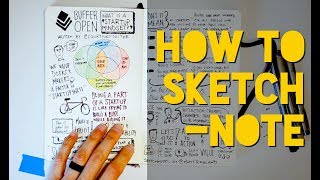
Matt Ragland walks through his sketchnote books and shows how he uses different layouts like story, cycle, and process to capture ideas. He demonstrates specific tools: Moleskine notebooks, Staedtler and Micron pens, colored pencils, and brush markers, with examples from conferences, client work, and sermons.
Chapters
Hi everyone, my name is Matt. Thank you so much for checking out my channel and watching this video. If you're new here, I know we have a lot of new subscribers thanks to the collaboration video I did with Charlie Marie TV, which I've linked below if you want to check it out still. In that video, we talked about side hustles and time management, and in this video, I'm going to be talking about my side hustle, which is creating sketchnotes. You're going to learn how to create a sketchnote. You're going to learn some of the layout details, pens, notebooks, different ways to really lock in the ideas that matter to you, to remember more of the big picture and things that stand out to you so that it really resonates and you can retain more of that information. So I'm going to be taking you through this entire sketchbook and showing you some different things just in terms of layouts and icons. And so we're going to be talking about pen and paper selections. So it's kind of a detailed but still really fun walkthrough one of my sketchbooks so you can see like how I'm thinking about it. I'll share some different tips for capturing these ideas. So I think you're really going to enjoy this video. So let's go ahead and get started with it. Glad you're here. All right everyone, here we go. Let's take a look at this notebook that I have. It's taken me several months to kind of fill it up, but this is just a Moleskine sketchbook. It's pretty common. You can easily find it on Amazon, and I'll link to it in the description below. It's a great notebook to use. I got it from Mike Rohde, SketchNote Workshop, and definitely has some great books. That you should check out. For example, this is a great one to check out. So let's go ahead and jump into the notebook. The first thing that I want to show you is just a couple of illustrations that I did as I'm working out. I hate, I hate drawing on these first pages. It has a very odd kind of fold to it, and so I normally just do some sketches here. You can see I kind of started around July 4th and just do some icons, different things. Here's a good look at a first one that I did. This was for a client that I was working on, working with to do some sketchnotes for them, but you can just see I kind of go through, and I'm going to do a specific video just on how I work with clients, but just, this is just an initial first draft of how I might think through some different sketches. So it's not super built out or finalized yet, but you still get to see the idea. So you can see like, here's something I had for the first sketch, another idea for the first sketch, the second, third, fourth, five, six, seven. You can see how I went through those, and then this is built out a little bit more. So you can see that we've got the full cycle of the process. This is from the TRIBE conference that I went to. This was a— yeah, this has been a little while, and I'm on to another notebook now, but this is how I think through a live sketch note. This was one at TRIBE conference. Allie Did this one, and you can see how I kind of think through it. So this is one of the layout tips that I have is think through it initially like a story. So just going left to right and down. This is more of a cycle-based layout, and so you can see things are just looping back together. A lot of what I'll do during live sketchnotes is more story-based, so coming, you know, top to bottom, left to right, and seeing how we can make this go. So here's a, here's a small example of a cycle within a story sketchnote. So you can see you can You can kind of mix and match. I've got some big sketchnote icons going here. So let's look through some of these. This is one that I did just sitting at Fenwick's 300. It's a restaurant here in Nashville that I just was having, doing some work at, so I decided to sketch while I was waiting on my food to come out. A couple of things on pens and pencils. I just used colored pencils here. But I do use all kinds of colored pencils and pens to fill these in. A couple that I recommend, one is Staedtler pens. These are really fantastic and I've been using them a lot lately. And another one is the Micron series. Let me find one where I haven't totally— Mercy. There you go. You can see Micron pen, they're really fantastic also. I have used these a ton and they have a lot of different differing thickness on them. So this one is 0.05, 0.08. They've also got these brush pens that I use that are really good for coloring in larger sections as well. So lots of different colors. You can see this is kind of my pen and spork, apparently, tin right here. But check out Staedtler pens and Micron pens. I think they're both great. There's a lot of good pen options out there, but these are the two that I use. Going through, you can see this is a lot. This is one that I did for Buffer that got shared a lot. And you see this is just colored pencils again. Let's skip down and see some more that I did in color. So let me just give you a quick look through it all. These are all pen colors rather than colored pencils. This right here you might recognize. So these two you'll see if you've been through my email course, which you can check out above right there. If you've checked out my email course on sketchnoting, you can see that these two, you can see that these are both images that I've used inside those emails. So I've captured them. I have a video about that that I'll share. Also, but I've just captured them really simply using a couple of free apps that you can grab from iOS, and I think they work on Android as well. So I've just created those, and then I drop them right in, so they work really well. These are all doing— these are all with ink as well. This is one I just did live off a tweet, and then this is one that I did. So this is more of a process sketchnote. So we've talked about Cycle, we've talked about the cycle layout right here. We've talked about, you know, the story, which you'll see here. And we've got some different images in there, but it's still basically the same idea. There's also another one. This is the process. And so you can see there's a blog, I have a blog post about this, but you can use this to show a process of something that you've done. So I have one somewhere on making coffee in a Chemex as well, but this is a sweet potato casserole that that I normally make. This is like my go-to Thanksgiving recipe, but it's really simple to do. I just think about what you're making, how you want to put it together, and it makes it a very engaging kind of— let me go ahead and zoom in here— a very engaging type of sketchnote because you can— and recipe because you can really see like this is what's happening. Here's one that I did for the Tim Ferriss Show, one of their episodes. And you can see I do a lot of icon design in here too. Again, here's some more things that I'm using in the email course. I'm grabbing these. If you want to know, make a comment below if you want to know a little bit more about how I'm capturing these. I'm not using any fancy software. It's all free apps. All really easy to do, so I can show you how to do that a little bit more specifically. These are mini sketchnotes that I did. Ignore this— well, you don't have to ignore the Zen sketches to the side, but here, these are like one, kind of one-image sketches of different TED Talks that I was watching and liking. And so I was like, if I had to capture this TED Talk in just one Sketch: What would it be like? A journey through the mind of an artist. How we can make the world a better place. Can computer write poetry? The Year of Yes, Shonda Rhimes. So these are all ways that you can— it doesn't have to be like this big thing. Like, you might look at these and think, oh my gosh, this is a lot to do. And it doesn't have to be that way. It can be exactly the thing that you need it for, because I want you to think about sketchnotes as something that you first do for yourself. You don't have to share it with anyone. It's just something that you do in order to capture ideas. Let me see real quick. Hold on. Let me see if I can find a— let me see if I can find one of my really old sketches. Let's see. Okay, this is on the older side. This was the notebook before. So you can see this right here. This is just, this is laying out kind of a storyboard, but you can see how simple these are. And I'm already making some, like, I don't know what was happening right here, but you can already see I'm just doing really simple things like this is just circles and squares and triangles. So it doesn't have to be this really built out. It can just be something at the beginning that you just want to do for yourself. I'll show you a video. I'll put one together that shows you more of like my really old stuff and how I, how I progressed. So let me show you a couple other things in here. Let's flip through. Another way you can use sketchnotes is to get an editorial calendar together. So this was what I wanted to do in March on my blog and on YouTube. So, how to take sketchnotes at meetings, what if I can't draw. So you can see I'm just taking tiny icons. I also did some posts with Teachable and Zapier. You can still take, you can use this in a lot of different ways. So again, let's start looking back. We had the cycle, we had the cycle sketch note, the story sketch note, the process sketch note, and we can have it like a planning sketch note. So you can see I have like just a bunch of different little icons that help for me really trigger the things that I want to be learning. This is when I started doing— started practicing on faces more and still working on those and trying not to make everyone look like some variation of a U. So you can see I do— I sketch note a lot at my church. So it's definitely something that I— pastors love this because I had my pastor tell me once— let me find one that I did. For him, so Russ Ramsey, he was my pastor for a while. I'll say that's just a terrible sketch of Penn from Penn Teller. I'm sorry, Penn, your lips are not quite that significant. He was like, "Matt, I love how you do the sketchnotes because it's like you're preaching my sermon back to me." And so, you know, pastors, speakers, anyone kind of giving a talk love when you grab sketchnotes because it tells them, it really does help tell them what are the things that stand out. So, here's another thing that you can do. Listen to your life. Again, this is more of like a snapshot sketchnote. And the reason that I like to do these is like, if I only had one image to take away from this, what would it be like? And it, you know, it can have some different aspects to it. But instead of like this huge thing, what is just one you can take away from it? Some more icons there. I went in, this was from World Domination Summit last year. Loved, loved this event. You can see most of these are story setups. Mr. Money Mustache. It's from— I mean, don't feel like they always have to be perfect. I mean, this, I don't know what this is. This is miserable. Yeah, Marco Polo, not my best. So it's something that you don't have to worry about, like, oh, is this going to be the prettiest thing? Is this going to be the best thing? Because Again, I want you to start sketchnoting for yourself. It has to be so that you can remember and retain more ideas, more things that are important to you, and then you kind of build from there. And as you have more practice, it builds that process. Am I right? So practice makes progress. Here's some others, just winding this down now, but here are some other things that I've sketched about. I think these are like coming down to the end with the sermons. But this one is pretty— this one's pretty built out. It doesn't have any color in it, but you can tell that I'm getting better at my icons. Like, I hate doing hands, but this is a good hand for me. And people camping out, voice calling out in the wilderness. That as you continue to practice, as you continue to work, these will all come a little bit better and a little bit easier for you. But again, I want you to remember and I want you to keep in mind that the point of all of this to start is to sketch for yourself, to think about the things that matter to you, that you want to retain, that you want to remember. And as you're getting better, as you're getting better, as you're improving, as you're practicing, it's something that you want to share. Maybe you want to share it right away. You can email your sketchnotes to me anytime. It's matt@mattragland.com. You can send your sketchnotes to me anytime. I would love to take a look at them. I'd love to give you a couple of comments and just give you a big thumbs up for what you're doing. And speaking of thumbs up, if you could give this video a thumbs up, thank you so much for watching it. Leave a comment below and definitely subscribe. I know a lot of people have come in. I think we're up 175 subscribers over the last few days. So please go ahead and subscribe if you're watching this for the first time, and thank you so much for being here. I really enjoy making these videos, and every Wednesday you can look for new one. Thanks so much everyone, and I will see you next time. Bye!
More from Matt









Journal reading 📖 Reflectjons on how I’m living & how it aligns with the vision I have for my life.

You don’t have to listen to me. But you do have to be intentional about the systems in your life.
