A Simple, Minimalist Bullet Journal Setup for 2025
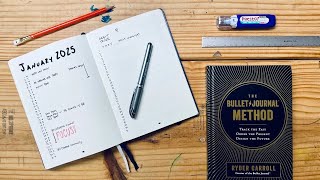
Matt Ragland shows how to set up a minimal bullet journal using Ryder Carroll's method. Start with a daily log using simple symbols (dots for tasks, X for done, dashes for notes), add a monthly spread with two columns, and use his GAP framework to break goals into weekly actions. Three rules: keep it simple, have fun, and constantly ask why.
Chapters
Hi everyone, my name is Matt Ragland, and welcome to a new Bullet Journal productivity video. It is almost a new year, and you know what a new year means. It means a new Bullet Journal setup. What I'm going to show you in this video today is a simple, sustainable practice that you can use for your Bullet Journal. This comes straight from Ryder Carroll, straight from The Bullet Journal Method. This is something that you can do day after day, week after week, month after month, and year after year to be focused, intentional, and productive in the things that matter the most to you. To make this extra official, I even have my official bullet journal shirt. See, it's got the little, little lightning bolt right there, so you know that this is something that I put a lot of time and thought into. There are 3 rules that I want you to keep in mind as you're watching this video. Number 1, keep it simple. Number 2, have fun. And number 3, ask yourself why. I recommend starting your Bullet Journal practice in the new year with a simple daily log. And what is a daily log besides writing down the tasks that you have to do, the events that you have to attend, and any other little notes that come out throughout the course of the day? If you're not used to keeping a daily log of your tasks and events, then I recommend only starting with the habit of the daily log for this first week, potentially even for the first 2 weeks, or the entire month of January. That's because when you put all these things together in a Bullet Journal and you're not used to doing this— this goes for any productivity system— doing a lot of things when you're not used to doing those things often leads to overwhelm, and then you get off track, and then you don't continue something that can be, should be, a really meaningful and important to you. One of the ways my Bullet Journal videos are different than a lot of others that you might watch at this time of year is that I don't focus on the overall structure and layout of the Bullet Journal to begin with. So I'm going to show you that in a few minutes after we've focused first on the practice and application of the Bullet Journal Method in its simplest form, so this can become a habit that you stick with throughout the year. Another organization tip that I find helpful is to at least write all of the tasks that I have on my mind at the beginning of each week and then use this page and maybe another page to just use as a brain dump for all of my to-dos. And then I can migrate from the Master Task List to the Daily Log something that I know needs to get done. So the To-Do's Day email that I have here on Master Tasks also gets moved over to Edit and Schedule the To-Do's Day email. Final edits for the YouTube video right here, that also gets migrated over. Since I'm recording this the week of Christmas, I'm actually doing it right here on Wednesday, Record BuJo Setup. Let's go ahead and X that out right now, have that complete. You can see that like call Brent I had on my list yesterday and it didn't happen until today, so it was migrated over. And then I had a follow-up task lead segment that I just indicated with a plus right here to know that it's something that I need to add to the next day. So now that task gets not necessarily migrated over because it wasn't something that I was planning on doing today, but I migrated and set it up here as a task for Thursday. One of the things that I love about the recent Bullet Journal updates is that it gives you all of this diagnostic information on the journal itself. I used to make marks on my old Bullet Journals that would give me information like how many dots across horizontally and how many dots up and down vertically. And I would make marks about like, where's the half page, where's the third page. Bullet Journal does all of that now, and it's one of my favorite things about this new update, like the Bullet Journal X that they released a couple of years ago. If you haven't gotten one of these before in your recent Bullet Journal purchases, I highly recommend this little quick start guide. It is something that is really simple, really quick, gives you like the overview of how to do your Bullet Journal setup. It's also like a short version of this like very well worth reading book If you have the option, then it's definitely worth like the extra few bucks to grab this quick start guide. If you open up the pages of your bullet journal, you'll see that there is a key for specific symbols that you can use to indicate what's going on in your bullet journal. Now, the most common one is to say this dot, this bullet, indicates a task. X-ing out that dot is to show that you have completed the task, and doing a right-facing arrow shows that you're migrating it to tomorrow or a day in the future. There are others like a dash for a note, a circle for an event, and an asterisk to indicate priority, but the main ones that most people will use are the dot for the task, X-ing it out, scratching it out if it's irrelevant, or migrating it to the next day. Personally, when I schedule an event in my daily log, I just write down the time, and to be honest, I rely on Google Calendar for keeping track of most of my events because I rely on blocking out time for for different calls and meetings that I have, and also because that way I get reminders, those 10-minute reminders that, hey, you've got a meeting, you gotta get to it. As December ends and we roll into January, it's a really good time to do that initial January month layout. And I keep this really simple. It's just 2 columns, 1 column for the days of the month, and then another column right next to it for the days of the week. And that's where I put like big events, birthdays, if there's something out of the ordinary, that's just like the highlight that I'll put for that particular day that I know I need to keep my eye and keep my mind on. And if you want to go a little bit further, move to the next page and make a same corresponding column of days of the month for a simple habit tracker, and then like one-line journal or highlight of the day as you experience each day. When you start with this simple monthly layout and then you build your Bullet Journal habit with the daily log, you'll create momentum that allows you to start to plan an entire week ahead. And I have a really simple— you'll see the theme here, keeping it simple— I have a really simple weekly layout where I'm putting 2 days on a single page. So that means over the course of 3 bullet journal pages, I can lay out an entire week. And what that allows me to do is if I have appointments that I want to put in, say it's the at the beginning of the week, it's Monday, and I know I have an appointment or meetings on Thursday, I can go ahead and write those in. It also allows me to start to protect and plan time for specific things that I want to do on specific days. So that way, if I know I want to work on my newsletter on Friday, I have a space in the Bullet Journal to go ahead and write down, work on, write the newsletter on Friday. So that's already pre-planned, that's already in there. So if there are things in your life that you already know ahead of time, hey, I need to protect time, I need to plan for this, doing this really simple weekly layout will allow you to have the space to put that into your plan ahead of time. Now that you have a look-ahead month layout and you're practicing consistently with the daily log, and you have a plan for what you want to do for the week ahead, it's a good time to start talking about goal setting. Now I want to say that I have a whole video about goal setting that comes out right after this. So if you're watching this in the future, make sure you watch the next video. I'm going to come back and I'm going to link it as a card. It's going to be in the end screen. Everything that you need to know about my goal setting system that, again, very simple, very approachable, very customizable for the things that you want to do in your life and for the goals that you have. What I want you to start thinking about in the course of a week is what goal do you have that you can accomplish this week. That is a really key moment when you understand there's something that I want to do that I can't do today, but I know that I can do a piece of it, if not all of it, this week. And when you do that, that's when you have the first piece of what I call the gap method for goals. And the G in GAP stands for goal, the A stands for actions, and P stands for protection. And when you put those pieces together, then you're looking at each week trying to understand what are the goals that I can accomplish this week and keep it down to something that you can do this week. Because even if we're talking about a bigger picture goal, what is something that I want to do this month, that I want to do this quarter, that I want to do this year. What you can do in breaking down the pieces of those bigger goals that you can accomplish each week, that you can work on each day or multiple days throughout the course of a week, those weeks become the building blocks to the bigger goals that you want to achieve this year. The reason most people struggle with the goals they set or the work that they're doing or or the tasks in front of them, or even a habit like bullet journaling as a practice, is that you're not often asking yourself the simple question, why? Why are you doing the things that you're doing? Why do they matter to the life that you want to be living? And this can sound a little high-minded, but it's really important to continue to ask yourself, why are you doing this thing? And one of the reasons that I believe this shows up really powerfully in the Bullet Journal, more so than any other method that I've used for productivity, is that you are ruthlessly, annoyingly, frustratingly forced to continue to rewrite something day after day that you're putting off and procrastinating on, and it forces you to confront front this question: why is this thing still on my dadgum notebook and I'm not doing it? Is it because I feel forced to do it? Am I distracted? Am I not motivated? Asking yourself why for any of those things is really valuable, even if you don't like the answer, because it gives you a glimpse into a way that your life, your work, could be a little different. So as you're bullet journaling this year, as you're doing anything that you deemed worthy of doing, continue to ask yourself the question, why? Why am I doing this? Why do I need to continue doing this? And as those answers come to light, you'll have a glimpse, you'll have a path forward to asking yourself, to understanding a more purposeful intentional way of living. I don't want to go without mentioning the Bullet Journal Method book. It's been out for a few years, but it is timeless advice. And if you're going through this and you're just checking it out for the first time, the chapters and sections that I would focus on, especially as it comes to New Year planning and setting up of the Bullet Journal, is page 26, The Why, page 34, Decluttering Your Mind, Page 150, your goals, and then the section on endurance, deconstruction, and the correct way to Bullet Journal. And I wanted to share this part with you on the correct way to Bullet Journal because there is a lot of information, and at times misinformation, about Bullet Journaling that's on YouTube, that's on the internet, because I can't tell you the number of people— you can look in in probably the comments to this video and many other bullet journal setup videos that I've done in the past. There's a lot of information about how to do a bullet journal that can seem overwhelming, that can seem like it's more of a scrapbook project than it is a productivity system. And I want to say there's nothing wrong with beautiful bullet journals. I like looking at beautiful bullet journals as well. Try to say that 5 times fast. Bullet— beautiful bullet journals. But I will say that the intention behind the Bullet Journal is to continually ask yourself, why? Why am I doing these things that I'm doing? And finding the alignment between what you're doing and why you're doing it is why the Bullet Journal exists. I like how Ryder says this. Again, this is basically towards the end of the book. I think that part of the Bullet Journal's success stems from its ability to become different tools to different people. Though I strongly advise starting out simple— Ryder and I have that in common— if spending time to embellish, to beautify your Bullet Journal motivates you, makes you more productive, and brings you joy, then you're doing it right. But ultimately, the only standard you should be aspiring to is your own. Focus on evolving your Bullet Journal to fit your needs. The longer you use it, the more helpful it should become. If that's not the case, then it's time to ask yourself why. Is it taking too much time? Are you neglecting your needs by trying to impress others? Are you not making progress? Define the challenge and ask yourself, what could I do to make this, the Bullet Journal, more helpful to me? This is a great book. It's about more than productivity, and I hope that as you set up your Bullet Journal, that you'll focus on starting simple, on building momentum, and establishing a practice and a habit that's going to serve you for the rest of your life. If you have any questions, please ask in the comments below. There are going to be more videos like this. There are lots of videos in the archive about this, and look for the goal setting video that's going to be coming out any day now. It's going to be like over here on the end screen, or it might be over here on the end screen. Just look for it, click on it, ask any questions, because that's how I make a lot of my videos, is simply by responding to questions that you ask in the comments. Make sure to sign up for the newsletter as well. Should have said that at the beginning. Bad newsletter growth tactic to not mention it till the very end. Thank you for watching, and I'll see you in the goal setting video next. Bye!
More from Matt









Journal reading 📖 Reflectjons on how I’m living & how it aligns with the vision I have for my life.

You don’t have to listen to me. But you do have to be intentional about the systems in your life.
