A Simple, Strategic Guide to Crush Your New Year's Goals
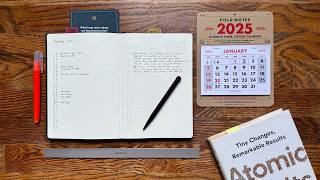
Matt Ragland walks through frameworks for setting and tracking goals: OMG breaks them into outcomes, milestones, and goals; GAP structures your week into goals, actions, and protection time. He shows how to estimate effort, time-block daily work, and align everything to your vision, using his YouTube growth and business revenue as proof.
Chapters
So it's the beginning of a new year, and of course you have goals that you want to achieve. That's why you're watching this video. What I'm going to show you in this video is why the system that you build that powers the goal that you want to achieve is actually way more important than the goal itself. I have a very simple framework for breaking down big goals or dreams into achievable daily or weekly tasks and actions. It's called the OMG framework, and besides just being fun to say, it stands for outcomes, milestones, and goals. Because to me, when you have a system that powers the actions that you take that lead to the achievement of the goal that you set, you're way more likely not only to achieve the goal, but to be able to sustainably keep that kind of success momentum going day after day, month after month, year after year. I've used this system and a couple others that I'll share with you in this video over the past 5 years to build my YouTube channel to 100,000 subscribers, to go over $500,000 in my personal business. And it's also helped thousands of other people who have been watching this channel or have taken my courses that have been able to apply the OMG, the GAP, and WRAP methods in their own life, in their own work, and in their own, like, dreams that they're setting in their lives. All you need to do the things that I'm going to show you how to do in this video, all you need is a pen and paper and the belief that you can do the things that you're about to write down. And it's good that you're writing this down, even if you end up putting it into like a digital tool somewhere for tracking. I still recommend that you write all this down because science, the science has shown that when you write something down, it imprints. I say that it encodes into your mind and into your heart, if you, if you want to go that far. And so it does matter when you write something down and you see it in a place that you're going to look every day. So like, I recommend like putting it on, putting it on sticky notes, putting it in your bullet journal, putting it on your bathroom mirror, something that you're going to look at every single day, write it down, it encodes in your mind, in your heart, and it's going to be something that is much more real for you when you're writing it down versus just typing or tapping it out. If it's helpful to you, I also have a free PDF download that you can get at the link in the description below. It has all of these prompts. It has like a template all organized. So this is something that you can use, both the OMG, the GAP, and the WRAP. You can use every single, every single week, anytime you're putting together a goal, you can use this system. It's the one that I said I've used for the past 5 years, and hundreds if not thousands of other people have used to achieve their goals. Okay, now let's actually get into what you need to do to hit your goals, to achieve your dreams, to do the things that you're going to do to make 2025 really special. The first thing that I want you to do is actually just write down everything that you can think of that you need to do in order to achieve the ultimate outcome, the summit of success that you have for this thing that you want to do. That could be writing a book, it could be getting a promotion, it could be this big project that you're working on. It could be like renovating the house. Whatever it is, I want you to write down literally every single thing that you can think of that could at all impact the, the success that you want to achieve. So just go ahead and write all that down. Again, like, I recommend either bullet journal, some kind of a notebook, but just regular pen and paper, or obviously a digital tool will work as well. I just don't cover that quite as in-depth. And so I go through everything that I've written down. I just make little notes next to like, will this take me say an hour-ish? Will this take me like most of a day? Will this take me up to a week? Then I can start to kind of categorize these tasks and help me figure out, is this something that I can do for just like a daily action? Is this a weekly goal? Or is this like a milestone? Something that's like putting a bunch of different goals together in order to achieve the like milestone. And I can give you a few specific examples on this. So a big, a big, big like outcome, big objective that I have for the first quarter of 2025 is running the Hey Creator Summit. And the Hey Creator Summit is like, it takes, it takes weeks, it takes weeks to put together, if not months.. And so that's my ultimate like objective or outcome is running a great, uh, Hey Creator Summit. And so when I'm thinking about like, okay, what are the key milestones? You can also think of this as like key results. This has admittedly been inspired, uh, in part by the OKR, the objectives and key results framework that I learned while I was working in startups. And so when I think about milestones, I, I also think of like mile markers. So like, as you get like further along the path to your summit of success, to a like, hey creator summit, not to use that word too much, but one of the milestones for knowing that I'm like, I'm on the right track and I'm doing the right things is that a key milestone is booking the speakers. And so that's a milestone, but that has so many like sub-goals or weekly goals and action items that lead to like, the milestone of having all the speakers booked. So when I write all these things down, like, okay, I need 15 speakers. That's not something I can do in an hour. That's not something I can do in a day. It probably isn't something that I can do in a week. So that's something that's like a little bit bigger than just being able to knock it out. And so that's why like booking 15 speakers, getting all the attendees, like attracting all the attendees through marketing and paid ads, milestone of sponsors, and then obviously making sure the operations of everything go really smoothly. These are all like the key results or the milestones, the mile markers of the big project of the outcome, the objective that I'm putting together for this Hey Creator Summit. So as you're going through and you're thinking about the timeline, you're thinking about like the commitment level, like how much work it will take to do each of these things that you've written down. Again, like start to categorize them based on is this a milestone that's going to take me, you know, maybe several weeks to put together? Is this like just some— this is this a weekly goal that I could get done in a week of time with like maybe 2 or 3 hours or a focus day of effort? Or is this something that I just need to focus on for an hour or a day? And the way that I think about these categories is almost like, almost like buckets or like those Russian, those nesting Russian dolls. And it works in the sense that like the actions fill up, the daily actions fill up the weekly goal bucket, and the weekly goal bucket fills up the milestone bucket. You could also think of it like a mind map where actions connect to goals and then goals connect to the milestones and especially, and the milestones all come together and they culminate in the achievement of the primary objective, the outcome that you had. For me, the Hey Creator Summit. You might know that over 90% of goals or New Year's resolutions gonna set in this time of year fall apart by mid-February. And one of the reasons behind that, one of the big reasons that there's not a system, there's not a routine that is going to power your work, your effort, your discipline when that discipline and willpower wears out because inevitably it will. James Clear talks about this a lot in his book Atomic Habits. And I also saw Scott Adams, the creator of the Dilbert comic strip, talk about this in his book, How to Fail at Everything and Still Win Big. I really, really like that title. But he said— Adam says it very, very brutally when he says that systems are for winners, goals are for losers. But the emphasis is on systems because when you have a routine, a system of habits that chain together, you will inevitably have more success and be able to sustain that success longer than if you just had a like time or activity or event-oriented goal. Most of the goals that people set are centered around like doing a thing one time, like running a marathon or writing a book. And while these are still like very like good goals to set, and I suggest that if you want to do those things, you still should, what is going to matter more is are you putting together an exercise a nutrition, a wellness routine that makes it easy for you to run not just the marathon that you want to do this year, but any other physical activity or goal that you set in the days, weeks, months, and years to come. Same thing for writing a book. While writing a book, a memoir, a novel, whatever it is, is something that is worth striving for and an achievement, a goal worth hitting. When you actually like have a system for writing, for editing, for getting feedback, for growing an audience, for like all the things that go into writing a successful book. When you have a system behind that, then it will allow you to continually use that system to create other, other pieces of content and write more books down the road. One of the things that people don't think enough about when it comes to goals, or even just new habits that you want to begin in your life, why you want to achieve this goal, why you want to add this habit to your life, and how this goal or this habit aligns to the person that you want to become and the life that you want to live. This means that you need to have a vision for your life. You need to have an intention for the reason that you are doing these things. A lot of times people start with physical activities or creative outlets because they just feel like, oh, well, this is what people are doing, or this is what people expect of me. And you will stick with something a lot longer if the why behind you're doing it aligns with the why that you're living your life. When you have a vision for what you want your life to be, the kind of work that you're doing, the kind of family that you have, the, the friends that you surround yourself with, the things that you do every single day. Then when you're trying to hit a goal, when you're trying to do a thing, when it feels hard, or it's late, or it's early, or you're tired, and you can look at it and say, well, I'm still going to do this thing within, like, within all the power of myself that I can, that I can harness in this moment. I'm still going to do this thing because writing a book is connected to the why and the vision that I have for my life. I have a vision for my life where I write bestselling books, and that's why I'm going to write 500 words today. That is having a system that aligns with the why that you have for your life that is connected to the vision of how you want to work and who you want to be. My number 1 goal in 2025 is growing my YouTube channel, and a couple of strategies that I'm leaning on in order to hit this goal is improved writing in my scripts. My introductions, and writing better titles. Now, writing might not be the first thing that you think of when it comes to YouTube videos, but I've noticed it's the secret weapon for many of the most successful YouTubers. And I actually have an even more secret weapon to share with you. It's this tool that I've been using for the past year called Lex. Lex is a modern writing tool that helps you find the perfect words for a script, email newsletter, project proposal, and much more. Now, I've been using Lex for a little over a year for a lot of different types of writing, but over the past several months, I also started to use it to help write my weekly newsletter. It has a direct integration with Kit, which means it pulled in the past 5 years and hundreds of email newsletters that I've written to automatically create a prompt based on my voice, style, and tone. And I found this to be really helpful if I feel stuck or I just like can't like kind of get out of my own way with the writing. I'll outline something and Lex will help me expand that outline based on writing that I've already done. But lately I've also been using it to write better intros for my YouTube videos and come up with title ideas because I know that The introduction and the title, the thumbnail also are maybe the 3 most important things, period, about a YouTube video. So Lex has been really helpful with this because I've uploaded a bunch of my old scripts, titles that have been successful for me. Like I said, titles that I've also seen other YouTubers use and help— Lex has helped me analyze what has worked. And then when I give it an outline, then it helps me say like, this is how you should script the first like 25 seconds, 45 seconds, the first minute of a video so that people will not only want to keep watching right at the beginning when they come in, but also something that they're going to keep watching as the video goes on. So in this prompt right here, I put all my top performing video titles into the prompt window. I can add in anything that I want about ideal reader or outcome. Then like this helps me build something that when I have an outline, when I have maybe just the bones of a script, like I know that I want to say this, I know that I want to show that, it will help me expand that and make something that like is like, especially from a storytelling perspective, like how am I showing the proof of something? How am I getting that promise, that payoff in every single section of the video and keep it tight, keep it something that people want to keep watching. I also am using it for better titles. I'm using it for email subject lines. You don't have to have a lot of technical knowledge in order to build the prompts or add the context tags. These are things that I found to be incredibly helpful, especially like I really like the context tags because I can also say like, here's the brand voice for when I talk about productivity. I want to make sure that like these context tags help me add context to the piece that I'm writing on top of the prompt that I'm building. It really is like an all-in-one writing tool that I can apply to any, any type of outcome that I might be working on. So I've tested a ton of AI tools in the past year, and Lex is one that I keep coming back to. It's incredibly helpful. It's easy to use. It's accessible. Viewers of this channel and readers of my newsletter can get a special deal on Lex by clicking the link in the description below. Thank you, Lex, for sponsoring this video and supporting my goals in 2025 and beyond. Okay, now we're going to run an experiment with the week that you have coming up or the week that you're in or even the day that you're in right now. I want you to pick one item from this list, preferably a small goal, something that you look at and say, this would probably take me a day. To get done, or maybe a week to get done. I want you to take one of those maybe like mid, mid-length, mid-commitment items. So you're going to write this down as the goal that you have for this week. So if we take an example from my like Hey Creator Summit key objective primary project for Q1, then a weekly goal that I have for that would be something like contacting all of the speakers or finalizing 3 new speakers, something like those could be 1 or 2 goals for the week. The next thing I'm going to do is either go through that brainstorm list or just as I'm writing them down, think of any related actions that I need to take that once I've checked those things off, once I've actually done them, I will be that much closer to completing my goal for the week, or it may just like be, be done entirely. So these actions would be things like DM 5 more potential speakers, set times during the summit for the people who are actually confirmed, do the outreach for like getting bio and headshots for all the speakers. So in order for me to hit my goal this week of finalizing speakers or getting 3 more confirmed speakers, I need these like smaller actions of finalizing bios, getting headshots. I hope you see how I'm thinking about like the thing for like just knocking out a couple of these smaller action items. These are things that would take, that would have been in the hour or less bucket. And then like all the DMs and all the back and forth, that would be like in the day or maybe even the week bucket. So you can see how I'm taking these daily actions and they are leading me to a successful completion of the goal that I had for this week, which is finalizing speaker details and arrangements for the summit. Okay, here's the last part of the experiment that you're going to run for this week, and it is to look at your calendar. I'm totally fine. I know I'm analog bullet journal guy, but I'm totally fine. I love using digital calendar still. I still rely very much on my digital calendar. So either write it down in your notebook, put a reminder in your phone, or block out. What I do is I block out time and my calendar to do the thing that I said was important to me, to follow through on those actions so that then I can have a successful completion or achievement of the goal that I set for this week. And so I protect time Monday morning to work on, you know, my, my plan, my, my actions. And then I'll also usually like, I'll look for 3 or 4 hours throughout the week to, to work on these high-level goals, if, if not a lot more. But the point is, is that you need to proactively protect or block time to work on these actions, to take action so that you can achieve the goal that you set for this week. When you achieve your weekly goal, you'll start throwing, you know, those weekly goals into your milestone bucket. And as you fill up your milestone buckets, you'll get closer and closer to your primary outcome, to your big objective, to a successful completion of the project of like, let's say, the dream that you have set out for yourself, that you aligned with your life's vision? Do you see how all the dots connect? Everything kind of builds upon itself. When you protect time to take action, you complete your goal for the week. And as you continue to complete goal, you start to stack. I really think of it like I start stacking goals up, I start stacking up winning weeks to the summit of success that I've set out for myself. One thing that people often ask about is, I'm not really sure how long something's going to take, and I totally get that. You still need to kind of guesstimate and protect time. When I started making YouTube videos, I didn't really know how long making a YouTube video was going to take. I thought it might take 2 or 3 hours, and then it turned out it took 6 hours. And so that's, that's okay. I want you to know that the more that you do this, the better that you'll get at estimating time. That's just part of the process. And really what you have to ask yourself is, okay, this is actually going to take maybe twice as much time as I expected. Okay, can I rearrange my life or my work to spend less time on other stuff so that if something's going to take me 8 hours instead of 4, I can still do that in a week? Or do I look at it and say, okay, this still matters to me. There are some other priorities, you know, family, work, other responsibilities that I've already committed to. That's okay. Now this, this goal, this like ultimate outcome, this project that I wanted to complete, maybe I won't be able to get it done in 6 weeks, maybe it's going to take 10 weeks. And just being able to have that conversation with yourself. I've talked about it in other videos, this mindset of like, I'm just going to be a reporter rather than a judge. Because one of the reasons that New Year's resolutions failed, one of the reasons that people like fall apart in mid-February is that they just don't make the progress that they they want in the first several weeks, or something just seems— you just realize something's going to take a lot more time than you expected. And so we give up, we fall apart, we use— we are— our discipline wanes, our willpower goes and just, just evaporates. Instead of like, we approach it like a judge, like, ah, I knew you couldn't do that. I knew you couldn't handle that goal. Instead of looking and saying like, hey, I've made some good progress, you know, reporter style, this is just what's happening. This is going to take longer than I thought, but I'm still making good progress. I'm proud of myself. I've done, I've done some good things. I'm going to keep making progress, even though it's not happening as soon as I want. It can still happen. And that's the mindset. That's the belief that I want you to have. Because remember, you've aligned this desire, this dream, this ultimate outcome that you have with the kind of person that you want to become. With the kind of life that you wanna live. So don't lose sight of that. That's why it's so important to like connect your vision to the day-to-day reality of what you're doing. Okay, so when you have set your goal for the week and you've listed the actions that you need to take to achieve your goal and you've protected time to work on those action items, what you've just done is created what I call the GAP weekly plan, which stands for goals, actions, and protection. This is what I do every single week to take the ultimate, like, objectives that I have for my life and work and break them down into achievable weekly and daily actions that I can take that let me know, because like, I've already written all this down, it's all on the same page. So I know that the thing that I'm doing right now, it still connects with the ultimate, like, outcome objective. The summit of success that I want to reach. And again, like, this is really helpful. I know that this aligns with the type of person that I want to be, with the life that I want to live. And so this helps me in the moment when it may not feel— when the willpower might not be there, the motivation might not quite be there. I can look at it and say, this thing that I'm doing right now, even though it doesn't seem as important as I might want it to be, This helps me become the type of person that I want to be. This helps me live the type of life that I, I'm dreaming about. Quick extra thing that I want to share with you. A lot of what I'm talking about in this video is more of a process-oriented outcome instead of an award-oriented outcome. And let me explain what I believe the difference between those two things are. There's a difference in a like process-oriented system like this where I'm saying like, hey, to go back to the marathon example or the book writing example, if you train and you follow a routine and system for training, you will run the marathon. Okay, chances are you're going to run the marathon. That is a successful achievement of the goal of running a marathon. And that's something that you can achieve or complete, you know, almost every time just by doing the work. Now, doing the work is not, you know, always the simplest thing in and of itself. So it's still something to be celebrated. And lots of people do celebrate running marathons and writing books, and you should. An award-oriented outcome is something like, I'm going to break 3 hours in the marathon, or my book is going to sell 10,000 copies. That is something that's not as straightforward as just doing the work. And so if you're, you, you probably like, if you're watching this, you probably know what type of goal you're working on with this. Is it kind of process-oriented or is it award-oriented? Now the thing that's important to remember is even award-oriented goals still include like the benchmark of having to do the work. Let's take my YouTube channel as an example. A process-oriented goal is to publish a new video every single week, maybe 2 videos a week. Hmm. We get, get a little crazy and get some better, like, actual, like, working systems in here. Maybe I hire an editor, but just publishing a video every week is a goal, is like an outcome that I want, is a dream that I have. But award-oriented, posting videos does not necessarily mean that I would hit any type of specific subscriber or watch time number. Just because I'm posting videos, checkmark on like achieving that, just because I'm posting videos doesn't mean I'm going to go from 100,000 to 200,000 subscribers this year. That isn't more of an award-oriented goal. And it's something that you need— I need to pay a lot more attention to titles and thumbnails, that I need to make sure that the retention for a video stays really strong, that I'm talking about, like, I'm using storytelling better, that my cinematography, my filmmaking gets better. These are all things that on top of just publishing a video, like the video has to be better than videos that I've made in the past if I really want this channel to blow up. It's the same thing with writing a book or running a marathon. There's a difference. There's another level that, that you have to, you have to cross to go from like just doing the thing to making the thing really good and making the thing world-class. That's not what I'm talking about in this video specifically. But it's something to keep in mind. So as you're doing this, you're like, oh, I have— my goal is to like make $100,000 or to like, for me, double my YouTube channel subscribers. I still have to make the videos so that, that goal, that outcome still, still exists. But then it has to be better. So just another thing, just something to think about if you're like, well, hey, Matt, how am I going to like double my income? This year. That's not what this video talks about, because you still have to do the things, but then you have to do the things better. You still have to take action, you still have to publish videos, you still have to write the book, you still have to train for the marathon. But then it has to be better. Your biggest goal shouldn't feel like they're out of reach for you. And they can often feel overwhelming. And that's why I created this system to help break down the biggest things that you want to achieve your your dream goals, objectives, however you want to put like that, that, that top level summit of success, as I like to think about it, break it down into like, hey, what, where do you got to go today? What do you got to do today? And when you, when you do that initial brainstorm, you take everything down and then you start to categorize or bucket it based on is this just something I can do in an hour, you know, hour about, day, week? Is this going to take several weeks to do? And you start to like then align and like connect those, those actions to the weekly goals, to the milestones, then ultimately to the ultimate outcome or objective that you have, then you start to see just like I hike a lot. And so for me, it's like, how is each step, how is each little like bend in the trail taking me closer to that mountain that I see in the distance? And then I hit like trail markers. And that's the part that I think of with like the milestone or just like getting to that next campsite. That's how I know I'm doing the right things. It's, it's, it's all connected. It's all like coming together. It's all like, it's all working. And that's how I do this. Because when you think about doing something really big, it can be a little overwhelming. It can— you will like lose willpower over it. And that's why like having these systems in place, these will give you like the power, the encouragement. It will help you see how what you're doing is aligned with the type of person that you want to become and the type of life that you want to live. Don't forget, you can get a free PDF template for this by entering your email at the link in the description below. It'll send everything right over to you. You'll also get my regular email newsletter about productivity, motivation, analog actions. And I'd love to, like, when you get that welcome email, just click reply and let me know what kind of goal you're working on. I'd love to hear from you.
More from Matt









Journal reading 📖 Reflectjons on how I’m living & how it aligns with the vision I have for my life.

You don’t have to listen to me. But you do have to be intentional about the systems in your life.
