A Simple System for Achieving Your Goals
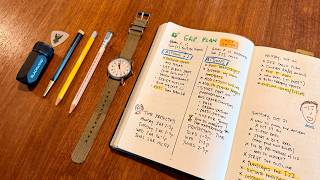
Matt Ragland's GAP method breaks goals into three steps: define a specific weekly Goal, list concrete Actions, and Protect time on your calendar. He uses a two-page bullet journal to map it out, then transfers time blocks to Google Calendar or Notion. Weekly planning works better than vague ambitions because it's long enough for progress but short enough to avoid overwhelm.
Chapters
There's a common misconception about goal setting that I often see people overlook. It's that while you don't need a system to achieve your goals, and following any system does not necessarily guarantee the success that you want, especially if your goal is to make $1 million or lose 20 pounds, but following a specific system does give you two key advantages. The first one is that it takes your big goal and it breaks it down into daily actions that will help move you forward and give purpose to each day. The second is that it greatly increases your completion percentage, which is basically the likelihood that you're doing the things that are most likely going to lead to a successful outcome and achievement of the goal that you have. And that's what we're going to talk about today. In this video, I'm going to teach you my GAP planning method, which is a weekly and daily planning system which will help you align your goals, your actions, and the time that you've protected every single day in order to achieve the goals that you want. Let me just give you a quick outline of the GAP method. The first thing that you're going to do at the start of every week is define a goal, probably a little bit smaller goal that you want to complete or achieve this week. Ideally, this is also aligned with bigger goals that you have. So you can also think of it like a sub-goal. The next thing that you're going to do is write out any like follow-up actions or things that you need to do, tasks to do, whatever you call them. I call them actions mainly because it fits into GAP, but list the things that you have to do in order to achieve the goal. And then the P stands for protect. And so then you're going to protect time, you're going to block time in your week to work on those actions so that you can achieve the goal. Now, really common one for me, and what you're going to see in this example is a YouTube video. My goal is to produce a YouTube video every week. The actions that I have to do in order to produce the YouTube video are things like outline the video, write the titles, There's a bunch of different things that I have to do. Those are the actions. And then I'm protecting time multiple days each week in order to do those actions so that I can achieve the goal. You see how it all fits together? Great.
Video over.
You can go out and do that and you'll be all set. But seriously, there are some other things that you need to keep in mind. Hey, I'll go ahead and tell you that if you want a little bit more help with this, because this is a relatively short video, it gives you what you need to get started. But if you want to think specifically about the big picture, I encourage you to check out my course Analog Action. You can save $50 for being a YouTube subscriber or heck, just a YouTube YouTube viewer by clicking the link in the description below. Because the biggest thing that people struggle with when it comes to these bigger goals is defining not only the multi-week, say quarterly goal that I want to achieve, but also how does this align with the vision that I have for my life. And that's what we talk about a lot in Analog Action. It's also a, per the name, fully analog system. You don't have to learn any new software. You don't have to set anything up. All you need is a pen and paper and to follow these steps that I'm gonna lay out for you. Okay, one of the things that people ask me most often about the is why just a week? Why don't you do like a 6-week goal planning or a quarterly, like 12 weeks? But what I find is that the week is kind of the perfect productivity time block. It's enough time that you can make progress on something really significant, a little bit bigger goal than just like, hey, I need to record the video. There's a lot of other things that go into publishing or producing a video. But it's also not so long that you get a little too overwhelmed or you think like, oh, I've got all these things to do. All I have to do is focus on the goal that I've set for this week. And ideally, again, we're stacking these weekly goals into the bigger goal that we want to achieve over multiple weeks, 6, 8, 12, whatever it might be. Okay, so let me show you how I set this up in my bullet journal. You're going to get the overhead view. You're going to see exactly how I'm laying things out, what the format is like, how I'm moving actions from the weekly gap plan into the daily log. And how I'm kind of at times rewriting them over and over again. I'll talk about that, uh, while we're going through it, but you're going to get to see how everything is actually laid out and how it looks in real time.
So I'm going to start with a full 2-page bullet journal spread. And on the left side of the page is where I'm going to set up the initial GAP layout. And I'm just going to put GAP at the top and then the date. And then I'm going to use this ruler to make a 2-column layout. And on the left side is my goal number 1, and on the right side is goal number 2. There are weeks where I have a 3-column spread for 3 goals, but I have found that 3 goals in this system is the maximum that I can do in a given week. After I write down what success or achievement of the goal would be, like in this example, it is creating 2 new YouTube videos. I'll put a little horizontal line and then I'll start writing down the action. So we've got the G is for goal and the A is for actions. After that, I will start to list anything that I have in mind that I know will lead to a successful completion or, you know, achievement of the goal. So I'll put down as many tasks as I have. After the A for those actions, there's just a few lines at on the bottom of the page, the bottom of the column for protected time. So what I'll just write down here is like Monday, Tuesday, Wednesday, Thursday, what times, like 2 to 4 PM, 10 AM to 12 PM, whatever it is. These are the times that I'm writing down.
And when I do this, I'm kind of making a contract with myself.
This is something that I like thinking about is when I'm writing it down, it's like I'm signing something intentional that I want to do with my time. And again, I will take these blocks and put them into my Google Calendar. I've also used, uh, Sunsama and Notion calendar, whatever it is, whatever digital calendar you have. It's time to work on the YouTube video that you said was important at the beginning of the week. Now the next thing that is happening, and some of you may see this and think, well, this is repetitive. This is unnecessary. If there is a thing that I'm working on for this specific day, say a Monday or a Tuesday. Where I've blocked off time to work on this YouTube video, what I'll still do is if there's a specific action that yes, is literally on this other page, like filming the video, doing a title and a thumbnail draft or whatever it may be, I will then write that task or action back down on Monday, on Tuesday, whatever day it is. You may think that this is repetitive and kind of a pain in the butt, and I'll be honest, it is kind of a pain in the butt. But it is further cementing in my mind that this is a thing that's worth doing. And I've talked about this a bunch also, but when you write something down multiple times because you haven't gotten it done yet, then it forces you to face the reality that you haven't gotten it done yet and ask yourself, why am I not doing it? That's why I think that writing it down multiple times, if you haven't done it yet, is actually a feature of this system and not a bug and not a frustration. So I will continue through the week with this same process. If it's Tuesday, I'm looking at my gap on the page and saying like, what are the actions that I haven't done yet that still need to be done? What time do I have protected during this day to work on these things? And I'm just continually following the system. I'm not overthinking it. I'm not overcomplicating it. I'm just making it really clear and literally in my face on the page so that I can continue doing the things. That are important to me.
One of the other things that people ask me is, do I have to do this with pen and paper? And the answer is no. I know people that have done the GAP method in Notion, that have used ClickUp, that have used just like a basic text file to do any of this. So there are a lot of ways that you can use this. In fact, I consider it to be tool agnostic, so you can set it up however you want. Again, like I believe for myself that just writing things down on pen and paper, and then I will do some storing and tracking and like long-term like research and connecting the dots for multi-week goals in a tool like Notion. But again, that's something that I cover in a lot more detail, like the, the migration of work from analog into digital back into analog. It's something that I talk a lot about in the course. Okay, now to the question of the thing that I want to do is going to take more than a week to do. Okay, great. What you can do is again, check out Analog Action if you want like a very structured answer and system for this. But you can also check out the past like New Year videos that I've done about multi-week goal setting. I'll link to one in the description and also the end screen of this video so that you can check it out. But the short answer is that you're just going to basically brainstorm everything that you need to do, and then just start to organize these things into like, is Is this something that's going to take me a little bit more time to do, like a week? Okay, that becomes a goal. Is this just like one thing that I have to do? Okay, that's an action. Where does that action go? Again, like, that's a whole other video. That's not what we're covering right now. We're just focusing on the GAP method and the weekly, like, planning period. But the other thing that I want to point out and why I think this is so powerful— if you have a vision, if you have not just a goal, but an ideal that you're following for your life, the kind of person that you want to be, the kind of family that you want to raise, the kind of work that you want to be doing, the type of person that you want to be in your community, then you can be in alignment with the goals that you set. You can ask yourself, and some of this is going to be a little bit like, you know, call it woo-woo or like anecdotal more than analytical, but you know, I think if you ask yourself, you know, is this thing that I'm doing connected to— is it aligned with the vision that I have for my life? And you may think it's not a big deal. And I can tell you that the more in alignment you can put everything that you do with the kind of life that you want to live, the more meaning it gives those seemingly inconsequential tasks. So if you look at it and say, this goal that I have to, for me, publish a YouTube video, Well, this action of brainstorming, this action of writing down titles, I mean, I do kind of find that fun, but let's say like writing SEO descriptions or putting in tags. Well, I now know that there is meaning to like tagging videos. I know that there is meaning in doing the little things because it allows the big things to become real and having that type of alignment. With the little things that you're doing, with the big things that you want to be doing and the kind of life that you want to be living, it makes your days so much more meaningful. And when you are living life like that, then you're just living a better story. You're making each day something exciting and important and intentional instead of feeling like you're just drifting along through life. So if you want the whole system for this, check out Analog Action. Since you're watching this on YouTube, you can save $50 with the link in the description below. And if you want to— and if you want to know a little bit more about multi-week goal setting at the beginning of every year, kind of like that New Year, New Me energy, I do a new one of these videos. But the most recent one that you can watch is right here. Make sure that you check it out because again, like a lot of people have questions about like, okay, a day is not— a daily action is nice. A weekly goal is also good. But what about these, what about these bigger things that I want to be doing? How do I plan and structure my work, my life, my habits, all in service of this bigger thing that I want to do? Check out this video for the primer. And if you want to go all the way, check out Analog Action. Thank you for watching.
More from Matt









Journal reading 📖 Reflectjons on how I’m living & how it aligns with the vision I have for my life.

You don’t have to listen to me. But you do have to be intentional about the systems in your life.
