Baronfig Do Work Journal Review || A Goal-Focused Planner & Bullet Journal Alternative
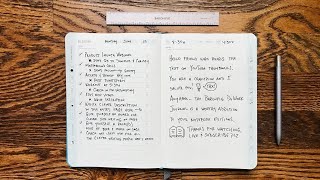
Matt Ragland reviews the Baron Fig Do Work Journal, a minimalist three-month planner with quarterly, weekly, and daily pages designed around top goals and task tracking. The journal uses progress icons, a yield metric, and a dot-grid system for notes, with an index for cross-referencing ideas across sections.
Chapters
Hi everyone, my name is Matt and welcome to another Bullet Journal productivity video. In this episode, I'm going to be doing a deep dive review and walkthrough of the new Baron Fig Do Work Journal. Baron Fig has always been a big supporter of the channel and I have been a big fan of their notebooks. It's pretty much been the primary, like, blank unstructured notebook that I've used for my Bullet Journals the past few years. So I'm excited to dive in and give you a review and kind of my recommendations for how you can best use the Do Work journal by Baron Fig. Before we get started, you can skip this if you want. There's a timestamp to like the start of the review in the description below, but I hope you don't because I just wanted to let you know where I'm at on the events in the US of the past couple of weeks. The reason that I haven't made a video in a couple of weeks is because with the death of George Floyd and the protests and just kind of working through, um, you know, like rethinking a lot of how I've been interacting with people and how I stand up for things or don't stand up for things or just kind of let them go is something that I've been really challenged on the last couple of weeks. If you're on my email list, then you saw kind of how I rode through that. I also link to that email in the description below if you want to read it in more detail. But what happened to George Floyd is wrong. It can't be allowed to happen and can't be condoned in any way. Like, I don't know what part of having your knee on a man's neck for 9 minutes is is okay. And there's just a lot that comes out of that. I have never publicly said Black Lives Matter, but absolutely Black Lives Matter. And I'm, you know, I just, I feel ashamed that I've never like really stood up for, uh, my Black brothers and sisters and like championed them in that way. And I think about like what it would be like if I was talking to like someone that I loved and they told me like, "I just feel like my life doesn't matter. I feel like, you know, things aren't going that way for me." I would like help them and support them and like be an ally for them and be proactive for them. When I thought of it in that way, I, like I said, kind of became ashamed that I wasn't that way when it comes to Black Lives Matter because if I had a friend that was telling me that face-to-face, I wouldn't be like, "Well, you know, you know, all lives matter, because I would be talking to that person one-to-one, and of course all lives matter, but in this moment and like for a while, to be more supportive and be an ally is something that I'm really focused on going forward, you know, championing Black brothers and sisters that I haven't done a good enough job of supporting. One way that I'm doing that is by like just educating myself and a book that I'm reading called How to Be Antiracist. There's a link to the description below, and in that email that I mentioned, there are a few other book recommendations also. So that's where I stand with it. I don't know if you care about where I stand or not, but I just wanted to communicate that to you because I do believe it's important. It's something that I'm going to be more focused and open about, and yeah, I hope that you will be as well. All right, thank you so much for hearing me out. On that. I hope it meant something to you, and if you have any thoughts, whatever they are, I want this to be an open, loving place, and you can share, share your thoughts in the comments. But for now, let's go ahead and look at the Do Work Journal by Baron Fig. All right, friends, here we are with the Do Work Journal by Baron Fig. Love again their minimalist, clean, minimalist, clean design, how like very kind of Apple Apple-esque product experience. That's right, I said it. Where, you know, there's a little resistance when you open. Look at that blue, so nice, so clean. Hold on, this is going to look much better on a black background. Yep, that's gonna look better, friends. It absolutely is. The pen that I'm using today is the Baron Fig Squire. It is a very reason— I mean, for fancy pens, it's a reasonably priced fancy pen. I think around $50, $60, which, you know, you could get a lot of— you could get a lot of janky pens for that, but you could also get the Baron Fig Squire. Great feel, great balance, and, you know, the pen is mightier than the sword and all. All right, so in this nice little holder, let's get into the journal itself. Some of the kind of layout and structure and you know, design of it, uh, will call back to the Clear Habit Journal, which you can check out up here. It's very similar in some of the, like, layout and design aesthetics. But these first few pages, we'll just do kind of an overview, and then I'll dive into some more specific things, some of the notes that I made. But this is the quick start guide, the method, kind of explaining everything right here., and then different icons that they have, what the index and reference points are, and then you just get into the work log. So just a few pages to kind of explain how you can use it and then getting right into it. So the way that the Do Work Journal is organized, it's a 3-month quarterly journal similar to how Full Focus Planner or the Self Journal is laid out. But what you do is you have your quarterly overview where you list your top milestones. And if we go back to the Quick Start Guide for just a moment, in their method they say that milestones are how to organize your plans for the quarter with milestones, high-level objectives that you want to achieve in a 3-month period. So if you've gone through my QMWD training, which you can find listed, linked in the description or up here, then I kind of flip that around a little bit. I think of a goal as the thing that you want to achieve at the end of the quarter, and milestones mark progress, in my opinion. So they've just kind of flipped that around. Milestone is the thing you achieve at the end, and then you set up goals each week, each month to help you stay on track. Try to include at least one goal that relates to one of your milestones. So when you look at your quarterly overview here, You have your 3 milestones. So I'm setting up a mastermind, I'm doing a journal webinar, and creating team help docs. So a few things that I have going on. Um, and then they also have, you know, the highlights, what's happening this quarter, to which I say, what isn't happening in the world right now? Anyway, I digress. Uh, June 2020 product launch challenge I'm doing with Podia, a productivity mastermind, And then I would list month 2, month 3 highlights. The, you know, because I'm doing like family, family vacay would be something that I would add in. You can see that I also, even though I kind of screwed it up right here, I have like the, the month that it actually is. So I would have put like July 2020 here. A couple of things to show you, hopefully I can hold it steady enough, but on the kind of sidebar here There are milestones achieved. You can check or X. And I don't know if that's supposed to be for like each one or all three together. So if I got 2 out of 3, just do what you want there. And then what these are, this is, would be these two little arrows would be ahead of pace, one arrow on pace, and then behind. The only like comment I made here is the sidebar seems a little too constrained for these icons. Like when am I supposed to measure them or mark progress? Am I supposed to do like total hours and a quarter that I worked on these things? So there's some— I don't know how much I would really use this because again, like, how often do I say or see like I'm ahead, I'm on schedule? That's kind of something to me I would look at maybe every month or every couple of weeks in terms of a quarterly overview. And then over here, a little nitpick early on with these is these wins for these, this is total wins. And you, I'll show you right over here, you know, kind of how these, how these lay out, because they have these on every single sidebar. Now the thing is, I can see like the, you know, like the summary or the sum of all of these things, like how many ideas, how many skills did you acquire, you know, connections that you made. Those are all things that I think kind of work well from a cumulative, kind of a cumulative thought process, or cumulative count is what I'm trying to say, for the quarter. But one of the nits to pick is that I'm looking at a daily overview. Like, personally, I would not have every single day an icon for I got a raise, I got a promotion, because to me, these are too rare to put down for daily. Daily. And so there are a couple of ways that I probably would have, like, kind of adjusted those. I think they're great for a quarter, like, kind of cumulatively, maybe even for the week. But even a week for, like, raises and promotions, I don't know about y'all, but I don't get daily raises, even though that does sound nice. So this is the Quarterly Overview sheet. There's only one of these. And then we come into the Weekly Overview. So the week overview, there is one of these like 2-page layouts, 2-page spreads every, every 5 to 7 days. I didn't actually count. The sidebars are the same. We've already kind of talked about those. And this is where I think progress— yeah, progress does make more sense from a weekly overview perspective. Like for this week connected to the quarter, what's my progress? Do I feel— am I ahead? Am I on pace or am I behind? So these make sense for the week. I don't think they make as much sense here for the quarter. So on the weekly overview, you— this is where you do start to list like, what are the top goals that you have for this week, and they should connect back to the milestones that you've created here. So if the goal for the quarter is to launch a mastermind, then I need to have a mastermind webinar to start to kind of promote and talk about that to people. Same thing, product webinars that I'm putting together with Podia, mastermind survey, again, kind of connected back to this, this main milestone right here. And then very similar. So here on the highlights, what's happening for this week, and I don't know if you can read this, but it just says numbers would have been fine. So this is kind of like big picture things, have a team call, webinar, call with, call with Jeff. So these are like big picture things. With the boys again on Thursday. Morgan, that's my wife, she works. Over here for the week, again, this is where I think also total wins can work, but again, I don't think I'm getting multiple raises or promotions in a week. And then there's a little thing right here I didn't mention the last time is that there is a few little smiley faces or not smiley faces. Down here for satisfaction of the week. And I like, I like that. It's kind of similar to my monthly layout. Yeah, so this is an example from back in January of like a check mark if I'm good, a zero or O if I'm okay, and then an X if not great. A similar idea right here: smiley face, neutral face, frowny face. Okay, so now we get into the daily overview. So you just write month, day-ish, year-ish, day of the week. That's how I put it in. You're probably supposed to do like month, day, year, but I like to put in there, this is the day of the week that it is. And then top tasks. These top tasks, or just these tasks in general, but you can't really see it, but there are little stars inside of these top 3. So those are your top tasks, which should connect to your weekly goal. And your weekly goal should connect to your quarterly milestone or milestones. So you can see how these things kind of chain together. Again, if you've watched any of my training on goal setting and the QMD, QMWD framework, which you can watch, description below, it's a very similar, it's a very similar process actually. So this is, you know, just tasks achieved. Did I get to all of them? What's interesting about this is that I often put more tasks than I do. And so I don't know if going through the Do Work would change that for me where I would just kind of put in the things that I know I can do, and then try and do some stretch goals after that. So probably wouldn't, you know, write it out like this, but you could have like stretch or extra tasks that you write below here. So if you get to them, great. If not, it doesn't mean that you can't, can't draw that sucker in as achieving all the tasks. One other thing that I thought was interesting on a daily basis was that they have this thing called yield, and it's like little tiny dot and then a great big dot with fire inside of it. So I don't know if that's supposed to be like how hard did I work today, because there's not a— the, um, the other thing that's not in here is like the satisfaction faces are not here. It's this like yield scale here. I guess if it's a hard day, if it's a hard day, it's gonna be up here. But maybe I'm like on fire and like in a good way, two thumbs up. And I think that's fine. It can just be whatever you want it to be. Yield in terms of difficulty or just how on fire you were. Total hours worked for the day here. I guess this is when you start and when you finish. Actually, yes, that is what it is because that's what it says right there. Start and finish. There is a basically an entire page here of just dot grid note space. And I do, I do like this. One thing that I thought could have been interesting, and you know, you could just do this on your own, is say like up top or on the bottom you could have a one-line journal entry. Then you just have a lot of space to make notes on the day. Now I would say if you are making notes about like a particular topic, idea, and a project that you're working on, To skip ahead a little bit, what I would do instead of like trying to like chain that together for multiple days— you totally can do that, but I would— there's a bunch of pages back here. Let's see, there are 213. There are nearly 50 pages, 40 or 50 pages in the back of just blank kind of traditional dot grid notebook. And so I think you can use these as collection notes, like, you know, for example, mastermind notes. And I have these referenced in my Clear Habit Journal, page 153. But what I can do here, instead of trying to write them in, like, I might still write a little something in right here, like on a page. Like, uh, something that I'm talking about with the mastermind is like this STAT framework. So assigning that, assigning information to a space, a tag, an assessment, and a time. So this STAT process, then I could say that, come back here to the collection notes. This is on page 6 and say, you know, stat process idea. I'm just saying page 6. And then I can come back here, I'm going to reference forward to page 179. So now I've cross-referenced it inside of the journal itself. So that's what I would do in terms of like, if it's just something connected to the day only, then I can leave it right here. Even if it's something that I want to expand on, then likely I'll take the initial capture of the note or idea itself and then move it back to a collection or somewhere where I can write a little bit more and not have it go like page to page. Like I wouldn't do that. Related, so back here on the quarterly overview, notes, you can see that I already did that. So mastermind milestone notes for this on page 179, which I just showed you. So this way I know like these are the mastermind notes connected to the milestone, adding those in here, and then cross-referencing any other ideas that I have during a particular day. And then there's a little location thing. I've been working from home almost entirely anyway, but this is for office whenever you good people get back to offices. Maybe some of you already are. And then remote, yeah, just remote outside of even the home or the office. So everything else with the Do Work journal is just like this daily and weekly overview repeated over and over again. Let's see how many days there actually are. 1, 2, 3— this is thrilling, YouTube— 4, 5. 5. Okay, so 5 work days, which, you know, personally I don't really mind. I don't tend to bullet journal much on the weekends. I usually just journal journal more, or, you know, make notes in field notes or something like that. So it doesn't bother me that they have only only 5 days in a week, and it goes back into the weekly overview. And then there is the index and reference, kind of the last little part. But this index, I was a little confused between index and reference, but the way that it actually kind of looks, I realized, are like related to, you know, use the full width here, but related to your milestones. And so I could say I think back here on the quarterly overview, I could say index page 173, but then I can put like if there are specific important pieces, like I could have put, there's a collect, there's obviously the collection here, but then I also could have said, yes, stat idea on page 6. And I could just keep going kind of across here. I would use the full width of the page for each one of these. So, plenty of spots, like if you have specific ideas related to that milestone, go ahead and list them here as an index. And then a reference, I would just, the way that it is, you know, important information, but to me, that's unrelated to the milestones. That's what I would put in the reference section. And then there are those notes. And again, I would use these probably as collection notes. So for the Mastermind, just go ahead and kind of block off 3, 4, 5, 6 pages that I would just want to use for those because there's— yeah, there's enough. So that is the entirety of the Baron Fig Do Work Journal. That kind of, that cloth, very, very smooth, very classy, that cloth cover that Baron Fig is becoming known for. Nice sturdy end pages right here. You all know how I feel about the first page of the journal, so I love actually that they just, you know, treated that as another title page. And love the icons, love the way they design it, just very, very minimalist, very, very clean, very clear. The icons are very well done, even if I don't agree with and how they're all used, I do really like the way that it looks. So if you are asking me, this is two thumbs up and definitely worth trying. There's a lot to like about the Do Work Journal by Baron Fig. Definitely would give it two thumbs up. It is worth buying and using for yourself, especially if you have a very task-focused, like, work life or just projects, things that you have to do around the house. It's a really good fit for that. It is way more structured than just a blank notebook. Not quite as structured as the, like say, the Full Focus Planner, but more structured than the Clear Habit Journal. So it's kind of in that middle. Relatively unstructured, but definitely has structure to it. I like that it has a whole blank notes page for every single day, but also since it has a daily layout, it kind of propels you day by day. And I could see myself not using as much of like the whole like page note blank space every single day and getting kind of frustrated that I'm not using that because I don't like to waste that much space. If you've been watching all the way to this point, then two thumbs up to you specifically. And you will know, unlike all those other people, that we're doing a giveaway for the Do Work journal.. All you have to do is give this a thumbs up, make sure you're subscribed, and then leave a comment below with what you want to use this journal to do work with. Thank you so much for watching. I'm going to be doing the Grow Daily Baron Fig journal next week. So a couple of back-to-back Baron Fig journal reviews. Again, I'm just big fans of what they do. Appreciate the support that they've shown the, the channel here. And I know that you love all of their products as as well. Thank you so much for watching this video. Be good to each other as you go out into the world, as you start to like, you know, not be quite as quarantined. Listen, learn, love each other. Sounds like that should be on a mug or on a notebook or something, but it is true. This is a— just continues to be a crazy year, and people who care for each other, people who keep their heads, people who like know what really matters in a wild time The world needs you more than ever, so thank you so much for being you and help others be the best, like, most cared for versions of themselves that they can be as well. Can't wait to see in the next video. Bye! Hey, one other thing that I'm doing is donating my June YouTube revenue to the NAACP Legal Defense Fund, and if you want to join me, there is a link below that you can easily access. But any cause that you believe in that that is fighting for racial justice is absolutely worth donating to, and every dollar counts. So thank you. Bye.
More from Matt









Journal reading 📖 Reflectjons on how I’m living & how it aligns with the vision I have for my life.

You don’t have to listen to me. But you do have to be intentional about the systems in your life.
