Bullet Journal Basics: Health & Fitness Tracking
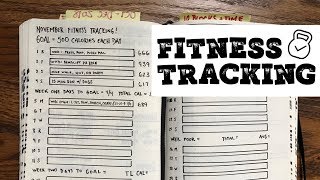
In this tutorial Matt Ragland walks viewers through setting up a Bullet Journal spread to monitor health and fitness. He showcases a 30‑day November layout that places a monthly goal (500 calories burned per day) at the top, then uses a bar‑chart style daily tracker to log both the actions performed (e.g., burpees, push‑ups, miles walked) and the resulting calories burned, which he captures via an Apple Watch. Ragland explains the distinction between action‑based metrics (steps, repetitions, distance) and results‑based metrics (calories, weight) and argues that beginners should prioritize action metrics because they are easier to measure, require no special equipment, and provide immediate feedback. He offers concrete advice on selecting attainable targets, scaling them up over weeks, and visualizing progress with fill‑in bar graphs. The video also includes a downloadable template, a call for community interaction, and encouragement to build sustainable habits before the holidays and the new year.
Chapters
Hi everyone, my name is Matt, and welcome to another Bullet Journal productivity video. In this episode, I'm going to be showing you how I track my workouts, fitness, health, all the things that I'm doing to try and stay healthy, hopefully on a daily basis, and how you can do the same. My goal for November has been to track the number of calories that I burn and hit at least 500 calories burned every single day. Now, you don't have to track calories burned, because the reason that I'm able to do it this month is that I just got an Apple Watch, shout out, so that is really easy to do. And I'm going to show you actually 10 different ways that you can track different fitness goals or movements or whatever it may be. I'm going to separate them into action-based tracking and then results-based tracking. How you're changing, how you're getting healthy, and so that's what we're going to do in this video. It's been often requested, so I'm really excited to be able to finally deliver this to you. Let's go ahead and get started. In this 30-day spread for November fitness tracking, you can see that I have my goal here at the top, and then I have the day, a bar chart, and then the number of calories burned. Let me hop— before I talk too much about the overall month layout and how I have all this organized, I want to show you kind of a blown-up version, if you will, that I put together just for a single week. You can see this is just, just for space. And because I wanted to have everything on 2 pages, it's a lot smaller. And so I said I blew it up a little bit and doubled the size, just so that you could see a little bit easier what a day might look like. So have workout tracker, month, the week right up here. But over on the main, it will show the month that I'm working on and then the goal for that month. So my November goal is 500 calories a day. Which I'm tracking on my Apple Watch. And you can see that it'll just show me with the rings that some of you might be, might be used to seeing. Like right now, I haven't done much this morning, but I'm at 75 out of 500 calories. Any of you who have been watching for a while know my love of bar charts. And so I have a bar chart of, I think this is about 18 dots. The number of dots and width is not important. It just is like kind of a container, but also something that I could track. Like if I didn't hit the goal, I could get like, say for instance, if this down at the bottom where I had 618, let's just say for example that I only hit like 400, then I could throw that in as a way to differentiate that I only hit 400 calories that day. You'll see here is that this is the day of the month. So this was October 25th, 25th through the 31st. It's a Thursday. Even just like walking around doing normal things, I'm nor— I've discovered that I'm normally going to burn between 300 and 400 calories in a day. So 500 is, I have to do something to hit it. That's how I landed on this. But you can see that right over here, this is where I have overall total calories. The things that I'm writing inside of here, it might be a little hard to see. Let me try and bring this up a little closer for you. So what I'm writing inside of the bar chart is whatever I did for a workout or for a movement practice that day. So you can see on the 25th, the 26th, I did workouts at my gym. And I'm not doing like everything that was, was during the workout, but I I did power cleans and burpees, stair carry of weight, glute-ham developer, push-up, squat. So I'm just writing down the things that I'm doing and then the total number of calories right here. And you can see that I'm doing this for every single day of the week. And so far I have hit over 500 calories. Some are a little bit closer than others. That 502 day, even just a little bit of movement will still get me close to 502. I actually didn't work out this day. We drove back from Atlanta to Nashville, still took a decent number of steps, went for a walk, a long walk slash kind of hike in the morning. And so that was enough to get me over 500 for the day. So still have to do something, but don't have to do like too, too much to at least still hit the goal. I'll come back to this what to track in just a minute, but I want to come back to this overall month and show you again, a compressed view of what I'm tracking. So it's the same thing. I have the month, the goal, and then each day has a bar graph with the day of the month, the day of the week, and then whatever I've done for the workout that day. So you can see that big, big workout on Friday the 2nd, 939 calories burned. So you can see I'm still getting, getting everything done so far this week. Now a lot of you have asked me, and not just on this channel but in past blogging, podcasting, different things that I've done, like what kind of tracking should I do? What should I be tracking in terms of fitness or in health? What I'm doing this month again is calories, but it is tough to track calories accurately without some kind of fitness tracker, whether that be Apple Watch, Fitbit, Garmin, any of the number of ones that you could use. But calories is a good one. I'll talk about that in just a second. Other ones that I would focus on probably first are things like steps. Again, you kind of need a step or fitness or pedometer or something to track that step. Or push-ups, burpees, miles, like if you're doing running or cycling, or kilometers if you want to row or do any, anything, or you're just not in the US with our silly miles. Squats, sit-ups, jumping jacks. These are just 10 ideas of things that you could track. But there are 2 different ways to think through these things of what to track. And let me, let me give you what I think about when it comes to this. And there's a difference between an action-based metric and results-based metric. An action-based metric is what you do, things like steps, miles, number of burpees, push-ups, anything like this. So action metrics would be steps, push-ups, burpees, miles, squats, sit-ups. All these would be action metrics. Results metrics are what happens as a result of the actions that you take. And so calories burned or weight gain or loss. The reason for me, I like to focus more usually, especially from a beginner standpoint, focus on the action-based metric instead of the results. Because calories, weight gain, loss, that is a good results-based metric, but only if you have an established habit of taking action on what you do. The reason for this is that things like calories or even weight gain loss can be can be a little tricky to track either accurately or seeing, am I getting the result that I want? Because for something like calories, if you just try and get, say, 10,000 steps, but that's walking, you may burn fewer calories on 10,000 steps than you would. And 10,000 steps could take you all day. You may burn fewer calories on 10,000 steps than you would doing 100 burpees. I think that burpees on here are one of the— is one of the best yet most brutal full body workouts that you can do for a single movement. What it does though is you could probably get through 100 burpees in say like 15 to 20 minutes depending on your level of fitness. It may take longer. You can break it up however you want. But you're probably going to burn more calories in less time on burpees than you would again like steps taken. Another reason that I like to focus on action metrics for this is that you don't have to have any special equipment just to be able to count the number of push-ups or burpees or squats that you're going to do. Even if like for miles or kilometers, if you go to like say a greenway or jogging track or whatever, you don't need anything special on your wrist to be able to say like, I know that I ran a mile or walked a mile. All of that to say in terms of what to track is that if you're pretty new to this and like exercising, of course, you know, consult with a doctor if you need to. This is not like specific medical advice, but I would focus more on the actions that you take versus the results that you see because the results will come after you take action. So if you haven't, if you, if you haven't taken much action before or you're just kind of getting back into it, track an action metric versus a results metric like calories or even weight gain loss. The important thing to remember when it comes to fitness or health tracking is that if you haven't done very much in the past or you're just kind of getting back into it, I would start on the lower end of what you think is doable on at least like a 3 to 4 times a week basis. You want to build in, I would say, like every other day, not, you know, burn yourself out or feel too tired or too sore or anything like that. If I was just starting back out, I would maybe do like 300 calories. Like if you have something that you can track calories with, Or instead of the 10,000 steps, maybe do something like 5,000 steps. If you feel like you're hitting that consistently for a couple of weeks, go ahead and level that up. I would also focus first on action-based tracking. So whether that's the number of steps that you take or like a particular movement like the burpee or a push-up or, you know, air squats, because that is something that you can control without worrying about what the outcome or the result of your movement is. So it really just depends. And so that's why, especially if you're just kind of getting into this, I would focus on something that is like a specific number and a specific action that you can take. So again, doing something like number of steps, burpees, or air squats, something that you can control, you just know, okay, this is how I have to go through and take care of this action. And then I'll let the results speak for themselves. So if I'm doing something where I want to solely track an action metric, Say I wanted to do 100, 100 a day, or 50, or whatever. So what I would do is I would have, like, today is the 6th. Hope you go out and vote if you're in the US. The 6th, it's a Tuesday, so this is 20 dots right here. Say I wanted to do my burpees in groups of 5. So I've got my bar graph here, and Every time I do a round of burpees to get me closer to my daily goal, I kind of fill in those— say I did 15 first thing I got up in the morning. So 1, 2, 3, that's groups of 5. Again, you can organize this any way that you want, and then I would just fill that in. And depending on what kind of markers and things that you use, you may not want to black it in. This paper is pretty solid, so you're not going to see through it too much. But you could use different colors. You could also just like use lines, 20 more, whatever you want to do to fill in that graph. If you went over, you could add it on here. So like 110. But this is how I would do something like, especially for an action-based metric, that go ahead and fill in that bar graph. It could be a vertical graph as well. Day of the month, day of the week, and the number divided out again. So if I'm looking at 100, This is 20 blocks, 5 burpee rounds. So the way that I organize this on my overall tracker is that this number right here, the calories burned, this is the result metric right here, but the actions are right here in the bar chart. This is what shows me the actions that I've taken to get to the result that I want. Make sure that you focus on that focus on the process, focus on the actions that you can take and not so much the results. It'll just be a little bit easier as you're getting started. Hope you enjoyed this video. Make sure that you give it a thumbs up and comment. Let me know what kind of things you would like to be doing to be more fit, to be healthier as you're entering the holidays, and then as we're getting into 2019. It's really crazy that this is so close to the end of the year, and establishing a healthy habit before you get to the new year will really help you make that happen in 2019. So I hope this video works for you. Please let me know in the comments some of the things that you want to be doing as you go into the holidays and go into 2019 to be a healthier, happier, fitter version of yourself. If you want a downloadable template that you can print out and use as an example, or just to use straight up on printed piece of paper for your own fitness tracking, just go to the link in the description below. You'll just enter your email and you'll be able to access it right away. If you're already on the email list, thank you so much. I'm going to be sending it out to you separately with like the video announcement or like additional notes. So if you already receive emails from me, don't worry about entering your email again. I'm going to be sending this out to you within a couple of days of like the video actually publishing here on YouTube.
More from Matt









Journal reading 📖 Reflectjons on how I’m living & how it aligns with the vision I have for my life.

You don’t have to listen to me. But you do have to be intentional about the systems in your life.
