Bullet Journal Livestream! Best Books, Note-taking Systems, plus Q&A!
In this live, informal session Matt Ragland greets a global audience, celebrates community members, and dives into a wide‑ranging discussion about his favorite books, note‑taking and bullet‑journal systems, and practical journaling techniques. He recommends titles across self‑help, philosophy, finance, outdoor adventure, writing, and productivity, explaining why each resonates with him. Ragland demonstrates his personal note‑taking workflow—underlining, dog‑ear keywords, marginalia, and indexing—while answering live chat questions about journal supplies, digital versus paper journaling, habit formation, and how to start a bullet journal when faced with blank pages. He shares his preferred pens (Micron, Staedtler Triplus, Pilot G2/Signo) and notebook brands (Leuchtturm, Baron Fig, Rhodia), discusses Kindle versus physical books, and offers advice on time‑tracking, sketchnotes, and handling overwhelming layouts. The stream concludes with announcements about upcoming videos, a potential paid membership community, and a reminder to join his email list for future resources.
Chapters
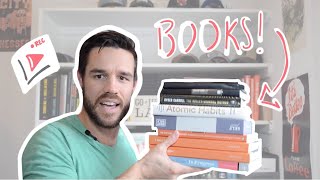
Everyone, how's it going? Welcome, welcome. Go ahead and let me know in the chat that you can see and hear me all right. This is fantastic. I'm so excited. Hope everyone can hear me okay. Hope I connected my microphone properly. Hope everyone's having a great day. Thank you so much for— thanks so much for being here. Yeah, hopefully I got— I got the fancy mic. I'll There we go. Brian says I sound great. I know that I sound great because he would not stand for anything less. Hope everyone's doing well. This is just so exciting. Thank you so much for being here on a Friday at the end of the day. I know some of you might still be, might still be working, but I just want to shout out a few people. Welcome to Ryan and Linda, Sharon, Rose— got your email, Sharon— Anno, Taylor, Carrie June, Mostly Day Hiking, what's up? Thanks for all your comments. Trish from Breezy Point, New York. Muthoni, apologies for any names that I'm screwing up. Linda, so glad you're here. Joel, Julie, Julie, where are you in Tennessee? I'm in Nashville, Music City. Kansi, of course. Excellent. Great, great, great. Thank you so much. Yeah, I did get, I did get the email about Mojo. I've got the emails up here that y'all wrote to me about. With some of the questions. So that's great. Thank you so much for sending those. This is fantastic. Hey, Casey. Thomas from England. Jenny from Houston. New York City. Excellent. Renate from Belgium. Leslie. Everybody. Joel in Mexico. Katia from France. Nash from Brunei. Hopefully I'm pronouncing that properly. Maryann from Canada. No, you, Chris, you did not miss it live. This is live. It is live currently. You are all set. Majorie, uh, Marjorie, apologies, uh, California. This is going to be so not fun at the beginning for everyone who is, uh, watching the replay because it's just going to be me excitedly saying hi to everyone for several minutes. Welcome, Ben. Welcome, Nicole. Excellent. Y'all, this is Nicole. I think today— was it today or yesterday? Nicole, who I work with, this is her 3-year anniversary at ConvertKit. So shout out to Nicole. Nice. Steven also in Nashville, Rumi in Mexico, Alex in Raleigh. Awesome. Awesome. Yeah. November 16th. Let's see. Brandon in Salt Lake. Brandon won the bullet journal giveaway. I thought I haven't sent it to you yet. Don't— it's totally me. I haven't sent it to you yet. It's literally right. It's right there. It's right there. I'm going to send it to you. Isabel in Clearwater. Dylan in Arizona. Man, I am just blown away. Thank you so much for showing up. Definitely gonna do more of these. I'm already, I'm already super excited. All right, so we're a few minutes in. One of the things, like I said, as we're going through this, just because it's so special to be here live with all of you, make sure that you ask questions. I'm gonna answer live. I can't type and be on live camera at once. And so we're gonna go through some books, some ones that I recommend, ones that I really like. And then we'll talk about a couple of note-taking, a couple of note-taking strategies. I know most of the note-taking will really be just going over it with you real quick and then also letting you ask questions, because there were a lot of questions in the comments about the note-taking and a lot of the gasps about folding, folding the, the pages that I know a lot of people were not fans of. But you know, I I gotta do me. I gotta do me with the dog ears, okay? If the camera's up, hold on, I can fix this. I think I can. I'm going to plug in the direct Ethernet and that should help. Some of these books, we just hit 100 live, so that's amazing. I was hoping for like, you know, 20 or 30, so that's, so again, thank you so much. There are several books that I want to talk with you about that I wanna show you I think these are— these have all been important books, or they're books that I'm reading right now and I'm really excited about and wanted to share them with you. But here they are. Here's just a little, a little sampling, a little, a little starter for you. These right here, these are all good. These are all quality books. I'm gonna go through them and give you a little overview of all of them. If you have seen or you have any questions about specific types of books, that maybe you've seen on the shelf or you want to ask about, uh, please, this is, you know, that's the shelf. And so ask about any of those books or any particular type of book that you're interested in, because I love to read. I've always loved to read, uh, ever since I was a wee lad, uh, in Florida. I would just read all the time. And so, uh, that has been something that's always been really important to me. So I have lots of thoughts on books. I have lots of recommendations on books. It's, uh, Yeah. Gosh, it's tough to keep up with the chat. What's up, Paul? Favorite book. Good start. I would say favorite slash most important book for me has been The Chronicles of Narnia. You know, this is something I've probably read every book in here about a dozen times. About a dozen times. And that's like the whole, the whole big set. This— so I bought this. This is the first set of books that I bought with my own money. I think I was like 8, and they were at a thrift store in Wachula, Florida, which is like— don't look for it. It's, it's a fine old town, um, but I got these at a thrift store there for a quarter each. There's 7 books in the series, so I paid a dollar, a dollar 75 for, for these. Can't do anything about that life. Um, everything's fine. Yeah, but I paid $1.75 for these. And this was, um, my— actually, my mom wrote this. So on my 10th birthday, so I was 10, my mom wrote this. Matthew began— Matthew, mother— began reading these in October 1993. So I was 10 years old. This is the first set of books that I personally bought. Uh, hey Jenny, so glad that you're here. All of this is great. There are some other things. Kanzi is running, running the chat for me. Nicole asked Tribe of Mentors versus Tools of Titans. So let's hop on down to that one. I think they're, you know, they're different books based on what you want out of them, which may not be the most— may not be the answer that you were looking for. But the reason that I like Tribe of Mentors Tribe of Mentors is more advice and life lessons, which I really appreciate and like. Tools of Titans is exactly what it sounds like. It's, you know, Tim talking to— it's basically, if you've listened to Tim's podcast, Tools of Titans is kind of taken from those rapid-fire questions he asks at the end, like, what's one piece of advice you would give to someone in your 20, you know, 20 years ago? Questions like that, like his rapid-fire questions at the end. Those were distilled basically into Tools of Titans. Tribe of Mentors is a lot more wide-ranging for me. And so I just, I liked the advice and the style of it better. And the reason that I do like these books, even though they're massive, like these are like someone breaks into your house, you take a couple of these books and, you know, slam it together like two bricks, you're gonna do some damage. The reason that I like these books is because you can, even though they look huge and they are, you can open to anything and you can get like a good like 5 minutes of reading in and have something really tangible to take away. So I give these books away a lot. I give them to a lot of people. All right, let me check out some of the other questions. Yeah, everyone saw the Everyone saw that fall. The sign is okay. Yeah, the sign is okay. Uh, what book inspires you the most? Self-help, life, health, writing? I think they all inspire me in different ways. Uh, I'm trying to read more, uh, philosophy lately. So like Stoicism, different things on Christianity, some other religions also, uh, because I find I get so much of like the self-help and, um, like business. I get a lot of that, and that's just like part of my work, so I see a lot of that. I find like the philosophy, Christianity, it all like, it grounds me in a different way. And so I really, uh, I think I get more out of those books because it's something that I'm not getting out of like normal everyday life. That's a really good question. Uh, there's another, another book that I want to show you real quick. These are great questions coming in. I'm going to try and get to all of them. I'm gonna have a better way to do questions next time. This one I'll just talk about real quick. Discipline Equals Freedom by Jocko. You can look for Jocko on YouTube and he talks kind of like this, except way deeper and more intense and bigger than me. Jocko is great because he's just very no-nonsense. Like, his writing style, it's like the most like abrupt poetry in a sense, like This, like, let's see, something that he would say is like, the way of discipline— people look for shortcut, the hack. If you came here looking for that, you won't find it. Because so often, I think so often we think to ourselves, and what is the way that I can get around this and like do it the fastest way? And what Jocko talks so much about is like, there probably isn't a way to do that. Yeah. So highly recommend. There's a few books by Jocko. I would get this one first. Discipline Equals Freedom Field Manual. It's really easy to read. You can get a lot out of it in a short amount of time. His other books are great too. Nicole can remind me of the one that we read. Extreme Ownership is also fantastic, but Discipline Equals Freedom is just like a kick, a kick in the pants. It's fantastic. You all know about the Bullet Journal Method and all of my dog ears right here. This is great. I did a whole video on it, but I just wanted to bring it up again for all of you here. I can't recommend it enough. Like, again, I was— I emailed them as like Seriously, this, this book is just better than I thought it was gonna be. I thought it was just gonna be like, yeah, bullet journal book, like here's my dots and my stuff. Yeah, so I really like that one. Yeah, Jocko has a toddler book coming out as well. Sheiks asked a couple of times, best money book. So I have not read actually very many money books. The one that I've read that I kind of like the most, is Money: Master the Game from Tony Robbins. Even though he's not a money guy, he— it's so well-researched and sourced that I think it's just a really good primer. It's a thick book, but Money: Master the Game by Tony Robbins. And another like really simple way to like to start thinking about taking care of money is The Richest Man in Babylon. It's written as a parable. And so it's really easy read, but very, very applicable. If you follow everything. Yeah, I won't be able to link the titles here because I'm not going to, I'm not gonna type them out. But if you're on the email list, I wanna go ahead and say this. If you're on the email list, I'm going to email a replay of this out and everything, but you can just go to bulletjournalguy.com and e— So if you've done that before, you're going to get this. But if you haven't signed up for the emails, I'll link as many as I can remember in the description after this. But with, with the email list, definitely check that out. Holy cow, y'all. 125 people. Fantastic. What philosophy books can you recommend? I'm glad you asked. Again, what I'm giving you here, there's so many things like from a simplicity standpoint that I would recommend starting with. Okay. And so there are more complicated philosophy books. The Daily Stoic is a great one to start with. Again, it's an easy read. It's an easy read. It's a daily reader. So it's something you can get through pretty quickly. Oh, look, a 2017 birthday check from my grandparents that I never cashed. You're welcome for that extra money. But yeah, this is, this is really great. Another good one to start with is Ego Is the Enemy. Also by Ryan Holiday. And then Meditations from Marcus Aurelius, also excellent. Another good one— now it's just an audiobook, but again, this is from, this is from Tim Ferriss audio publishing, whatever— The Tao of Seneca. Really good. Yeah. Okay. Yeah, thanks for the birthday check. Outdoor adventure books. I would say like the, the one that I just have right here, that to me is one of the most compelling, uh, outdoor adventure books. I don't know what happened here, but it's called, uh, Born to Run. I don't know what all this is. Oh yeah, a beer can exploded in here. Um, Born to Run is fantastic. It's just, it's such a compelling read. Uh, the other one that I would recommend especially in terms of like outdoor adventure. Into Thin Air by Jon Krakauer is fantastic. Okay. Let's see. I'm just gonna, I'm just gonna go out. Yeah. Man's Search for Meaning is fantastic. Thanks for, thanks for listing this. And Leslie has a good question that Paul initially asked. What are your thoughts on Kindle books versus having actual physical books? Read a lot on Kindle but tend not to reread them since I don't physically see them. Yeah, that's a really good point. And sometimes I will reread on Kindle. It's just kind of keeping it, top of mind, I tend to read more fiction books on Kindle because I'll just flip through them. I don't normally take notes and I rarely highlight fiction books. I just enjoy reading them. And so that way it's easy to carry. The other thing that I'll almost always get on Kindle also is the daily reader that maybe I'm doing for the year. So I actually have Daily Stoic on the on Kindle as well. And the reason is, like, when I'm traveling, I still want to— I still want to keep reading that, but I'm not gonna usually carry like an additional physical book. So I almost always carry the Kindle whenever I'm traveling. Good question. But I will— I will reread them. I don't know if that's gonna help very much, but yeah, that's a good question. In terms of— so that's normally like, if it's a book that I'm almost positive that I'm going to want to highlight, mark up, then it's, it's just going to be— it's going to be physical. So I've been getting a lot more— I went a long stretch of getting a lot of Kindle books. Now I'll say, like, if there's a book that I know I'm gonna like or I'm interested in and I see it's on sale for Kindle or it's way cheaper, then I'll probably go ahead and pick it up there also. Okay, good questions. All right, let me give you another one here. This just came out from, from my friend James Clear. It's called Atomic Habits. Now I've talked with— I've brought up habits a lot, you know, about morning routines, evening routines, things that you're doing with the fitness video that just came out. I hope you, hope you liked it. But, and especially if you have gone through like the 5-day and 30-day Time Tracking Challenge. I talk a lot about habits. This is, uh, James wrote this to be like the best book ever on habits, and I think, I think he's nailing it. I'm about a quarter of the way through, uh, it's, it's a fantastic book, highly recommend it. Just came out, and keep an eye out for his— I think it's The Atomic Planner that's going out through Baron Fig. Um, I helped James out with a few things on that, and so I'm excited to see how well it's going to do. Also. Okay, my book, my book pile is a little precarious. All right, what bottle? This bottle or the bourbon bottle? This bottle. Uh, this is a Hydro Flask. Yep, this is a Hydro Flask. It's fantastic. Yeah, Atomic Habits is great. Uh, what kind of journaling did I start with? I just started with like normal journaling for the longest time, like just writing it, like whether it was a line a day. So the, the video on like how to journal for mental health and all that stuff, like this kind of journaling, this is the kind of journaling I did for a really long time. Let me show you. Let me show you an old— this is great. Let me show you. Let me show you. This is a journal from, I don't know, a long time ago, like 6 years or something. But you can see this was when— some of this was like, I don't know, before bullet journaling was really a thing. But this were things— oh, an old Wi-Fi password. We went out to— remember my trip planning one that I did? So this right here is when we went to Yosemite and all the like. This is your, you know, the weekly schedule, the flight info, all right here. This is a Moleskine softcover pocket notebook. Yeah. All right, um, let's see. All right. Yeah. And Jenny, Jenny has a great point. I've been doing more, more books through the library also, especially like I read through like this epic fantasy series and I got like the first few books and I was like, I'm not going to buy all— I can't buy all 20 of these. I like them. I don't like them that much. I'm going to have like, you know, a whole like thing from Brandon Sanderson. So I do keep all old journals. I love them. And even if I'm not gonna look at them often. Like, I don't look at this often. You can tell I like picked it out of the old notebook thing. It's just like this. Yeah, this is from 2011. Yeah, and yeah, the beginning of 2011, end of 2010. So it's just really, really interesting. Oh my gosh, look at that time track. Now, I haven't always like done time tracking super duper consistently. Time log from January 22nd. Yeah, January 22nd, 2011. Whoa, I talked to Eddie at 11 AM. Wow. How to journal when life is boring. I think you have to kind of reset your expectation and thought around like what is boring and what isn't. There's a great book for this, uh, and well, Man's Search for Meaning is great. Like, if you think about, like, um, what's it called, logotherapy is basically the ideas that Viktor Frankl developed out of, uh, Man's Search for Meaning. If you, if you feel like your life is boring, read Man's Search for Meaning. Another good, uh, book to read on this, it's more of a business book, but you can apply a lot of these principles to your life as well. It's called Building a StoryBrand. By Donald Miller. Best self-help book you've read? You know, off the top of my head, that's a tough thing to answer. That's a tough thing to answer because different books hit me at different— in different ways at different times. And so Man's Search for Meaning was really important. You know, Discipline Equals Freedom was really important. A lot of Seth Godin's books were really important. All that. Preferred journal brand and why? I like both the Leuchtturm and Baron Fig. I do like that the Baron Fig one is a little bit larger and has a pocket at the back. If you watch my original Baron Fig video, I just, you know, I got like stickers and knickknacks and stuff. I've not seen Rocketbook. I do keep all old journals. Let's see. Yeah, yeah, Way of Kings. Thoughts on digital bullet journals? Uh, this is a good question. I don't use them. It's not something that— one, I'm— I know I'm gonna have to like do some stuff to set up the way that I would want it to. And I just— the reason that I like the like regular bullet journal is because it's something that's not digital, and I spend so much of my life looking at a screen that I'm trying not to. Uh, Joel's asking, has my son ever tried a journal like me? He does not. He does like to scribble in my journals, so that's fun. Yeah, I am reading my first full book on like my— on the Kindle app of my phone, which I don't necessarily— but it's the new Basecamp Jason Fried DHH book. It's just such a— like, it's just— it's, it's really— it fits. For that. I wouldn't recommend it for the most part. Okay. Another book on writing is not On Writing by Stephen King, even though that is right, right there and an excellent book, but probably my favorite book ever on writing is Bird by Bird by Anne Lamott, especially— I've probably read this half a dozen times, especially Earmuffs Kids, the chapter Shitty First Drafts. Is fantastic. I highly, highly recommend it. I've probably read that a dozen times. Okay, starting a new pile because that one is going to fall and I can only withstand one toppled, one toppled thing at a time in a single video. The War of Art is also fantastic. I would say that if you are having trouble like breaking out of a rut, whether that's with a creative project, whether that is like something physically or emotionally, the two books that I would recommend and I don't know if they could be by more different people, but The War of Art and again Discipline Equals Freedom. There's just something very direct about both of these writing styles. And Steven Pressfield is an amazing writer by himself. Just he has written like across like fiction, nonfiction, amazing. But The War of Art, Discipline Equals Freedom. If you're looking at like Atomic Habits, like if you're looking to establish a new habit, if you want to break a bad one, if you want to get out of a rut that you feel like you're in, those three books Excellent. Okay, um, 2 more and then we'll talk a little bit more about the note-taking. We'll answer some more questions and yeah, answer any questions you had about supplies. I know some people asked about pens. I'll get to that, uh, in a moment as well. Uh, last 2 like specific recommendations that I wanted to bring up to you. I think this is a great little book called It's Not How Good You Are, It's How Good You Want to Be. It's a nice little, nice little easy read. You can see I marked it up a bunch. I also— and we'll talk about this in a second— notes, some specific notes I have on them. Lots of marginalia in this book. Marginalia. It's— this is a great— this is a great book. I love the— I just love the way he also just says this is the world's best-selling book. I don't know what he bases that on, but just like the nerve in a good way. To say like, this is the world's best-selling book. And finally, maybe best for last, maybe most important for last, but this book called Tribes by Seth Godin was incredibly important to me. My dad gave it to me. My dad gave me my first Seth Godin book, which really, you know, helped set me down a lot of this path of like I'm gonna do, I'm gonna work at a startup, I'm going to like have a blog, I'm gonna do things online, I'm gonna share with people, I'm gonna do all these things that started with Seth. And a book like this called Tribes is like what started a lot of things for me. The very first books of Seth's that I read is our Purple Cow and and Free Prize Inside. Both of those are great also, but Tribes, probably my favorite overall Seth Godin book. It's another one that I give out a lot. My dad gave this to me on my 25th, 25th birthday, so thank you, Dad. All right, those are all the books that I wanted to specifically recommend to you. If you have any other questions, go ahead and drop those in. Uh, let's see. Hey, Ashley! Ashley has been with me even before the bullet journal stuff. So thanks for watching and being here, Ashley. What else do we got? Yeah, I do need some— I should have a beer. It's 5 after 5 Eastern Time. What's the good and the bad things about self-help books? I'll tell you, like, they're both the same thing. I think it's interesting, like, the duality of that. The good thing is that it gives you a lot of things that you can do to better yourself. The tough thing about self-help books is that they're also built to make you— almost to make you think that you still have to learn more, that you still have to do more stuff in order to be ready to take the next step. And that's not the case. That's the trick. Like, you have to take the thing that you feel like you can do in the now, all right? In the now. Everything else can come later. Like, you can still keep learning, you should do all this, but I see so many people that get stuck in a rut of just reading a bunch of self-help books and not really doing anything. And that can be, that can be tough. Okay. Uh, okay. Lois is asking, um, so much my head, that's what I need in a bullet journal. The blank book overwhelms me. How do I start? So one of the things I do to start Where's— as you know, if you've watched some of my, like, setup videos, I do not like the front pages here. I think they're terrible. So I just do something goofy on the first couple of pages. Anyone who picks these up will think I'm insane. And that just like kind of gives like, okay, well, the first 2 pages are just junk. Now I can just start writing. I am going to have, Lois, a video that's a video that's coming in the next few weeks is 31 journal prompts to like something that you can do throughout December. Okay, so be on the lookout for that. Let's see. I do like the Rhodia brand. I haven't— humble brag coming up— I'm getting journals sent to me now, and so I'm not gonna spend money on them. So yay. How to build habits. Read, read James' book or his blog, just jamesclear.com. He explained every— anything that I would say about habits, a lot of that is taken from James. So it would just be me like low-key plagiarizing him. Alex. Yeah, so this is a good question because I do this a lot. Bullet journaling for meetings, how to deal with lots of tasks over many different projects. So what I do anytime I'm in a meeting— and, you know, full disclosure, I don't always do this in a bullet journal. Sometimes I do this like in the apps that we work— that we work with at my job, so it's a little bit easier. But when I do it in a bullet journal, what I would do is I just— I just make a big list, and then I go through and categorize it and like shoot them out to other projects wherever they need to be, whether that's online, whether that's different notebooks or different parts of the same notebook. That's a good question, but that's normally what I do. What was my draw to bullet journaling? I've just always enjoyed books and notebooks and writing things down. Like I said, this is from 2011. I've just always— and just, you know, the simplicity of it kind of, kind of came, just worked with me. Yeah. Let's see. Okay, let me give you a couple other things. Just as, as some more questions are coming in. Remember we talked in the— where we talked in the Bullet Journal video about how I'm taking notes both in the journal. So what I'll do, and this is copied, cribbed, um, total credit goes to Robert Greene and Ryan Holiday for sharing this method. And like I said, if you're on the email list also check out the description after this. I'm going to send out a whole resource list of everything. Uh, probably won't be until, uh, sometime in the weekend, so, because I'm going right from this to dinner. But what I do is I go through and sometimes I'll eat— I'll either— I either underline, I make a written note like this right here. I will also, gasp to some of you, uh, do a little— do a little dog ear. One thing that I think I do differently, I'd love to know if other people do this, is that I'll make like a little almost topical keyword note on the dog ear. I'm going to try and bring this up. Uh, yeah, I don't know if you're really going to be able to see that, but I'll make almost like a little keyword note on the dog ear so I can take a quick glance as I'm flipping through and like, oh, steps, video, 5 friends. And that gives me a quick reference to what it is that I'm talking about. So that's what I'll do in the book itself. And then once I've been through it, I'll give it a little time. It's not an immediate thing, but give it a little time, go back through, and the things that really resonate— like, here's a couple examples from this book. See, same thing. Like, here's a, here's a dog ear underline. I just dropped it. But then I go But then I go back through and I write down either whether it's a quote, a thought that I had about it. But this, this one is, your vision of who you want to be and where you want to be is the greatest asset you have. Without a goal, you can't score. And I wrote down the theme, clarity of vision, from Paul Arden. And then related, there was another— there's another related section to this that it made me think of. Don't be afraid to work with the best, which is on page 86. And sure enough, don't be afraid to work with the best. I guess this guy, ooh, the film director Eric von Stroheim. I guess he was awesome. Okay, so that's what I'll do for notes. Um, I haven't always done this. This is a fairly recent thing. And so I'm going back through books that have been really important to me. I like skimming back through them, taking those important notes, things that really resonate. Any questions about the note-taking? Uh, I know it sounds pretty, pretty overwhelming to some folks. Uh, so I totally get that. Ooh, I'm losing— there we go. Get a little bit more light in here. But any questions about note-taking? Yeah, it's fine if you couldn't read it. All right, Dylan's asking, do you know if the official Bullet BuJo notebook takes Sharpie pens? Well, it does, it does do pretty well. Like, I've— aha, just one sec. Yeah, so I— another thing that I do, I'm good, I'm gonna go over all this in my 2018 2019 mega video, but I'll also write down— you can see right here, like, the title. So when I have it stood up, I have the same thing. This is pretty recent also, but 2018 log here. So I'll write down— and this is, this is with a Sharpie, but let me find— I do, I do use some Sharpies, usually red, just to get it to stand out more. See if I can find something. Here's, here's one. I don't think it's going to focus very well, but this is all, this is all Sharpie, and you can see it does kind of come through. This is the back side, so it does come through. Yeah, maybe it's not great, but you can do it. Who cares? It's yours. All right, let's see, uh, how can I take better school notes? I do have— thanks, Gabby. I do have a video about notes for notes and setups for college students, so check that out. I would say I feel like I don't know enough about biology to give you a reasoned response. Sorry. Ken's asking a note-taking question, especially since you've been so awesome in the chat. I do make a, I do make a page of contents and number, number your pages. I didn't— well, the official BuJo notebook, the Leuchtturm, does that for you, and I really like that. I had to go back and do it in the Baron Fig, and I did not like doing that. Do you section your subjects in your bullet journal? No, but I should. It's a goal for next year, for the next one. Totes McGoats. How can I make hard concepts more visible? So I used to do a lot of like visual note-taking instruction, sketchnotes. A good, a good book for this, Gabby, if I'm pronouncing your name correctly, I hope I am, is the Sketchnote Handbook or the Sketchnote Workbook. And to make hard things more visible, if that's what you're asking about, like this book was super important to me. I actually like did a bunch of freelance work as an illustrator, like, directly from this book. Good question. This is a great book. Mike is awesome. How many journals do you keep in one year? Keep the, keep the questions coming. We'll probably do it another 5 minutes or so. How many journals do you keep in a year? Usually 2. 2. Do you have a video on tracking reading, like reading logs? No, but it is something that I've been, that I've been thinking about that I'd like to do. Have started taking, and you saw this in the Bullet Journal Method, I did start taking better notes like directly in the Bullet Journal. So I have a— check this out in the Bullet Journal Method review, but you can see everything that I did right here. Okay, you can see everything that I did right here. Uh, and then I have on my index another thing that I'm not that great at, wanting to get better at books read collection I have on the index. Okay. Yeah, just Chris said it really well. Having blank pages with no structure was weird when I first got mine, but as soon as I pinned it, the paper is blank no more. Yeah, I agree. I will say, like, I've had— and I'm curious, I'm curious about a couple of things that I wanted to ask y'all on this now that I have you as a captive audience. Is I was— there are so many things now that I do every week, like with a layout, that are just repetitive. And there's a part of me that is like, man, I should just get some of these printed so I don't have to, so I don't have to like do the day dadgum thing myself every time. What I want to ask y'all is, I wonder like how interesting that would be to y'all, like if I put together a notebook I wonder, like, if you would be interested in that, let me know in the chat because it is something that I'm thinking about. I'm thinking about the way that I've been doing my weekly layouts, the way I've been doing my weekly layouts, all the, the trackers that I use, doing some kind of notebook that I can just have and like, you know, share with others also. And then another one that's focused on time tracking because one of the things that like always throws me off with time tracking is is making that, making that daggum thing. Sometimes I'll do it just without even like putting the lines in, but then it's a little confusing. Um, but let me know, let me know. Okay, cool, seeing some interest. I think that's, I think that's cool. But yeah, I— the other thing that continues to hold me back on it is that I know bullet journals are really specific for a lot of people, but I guess, you know, if you want to do that, then you can just keep buying the blank ones because I think they're great. Let's see, do I have a different notebook for bullet journals and logs? From Ryan, no. I guess like I have the smaller one, but that's why I just put it in— just put in my pocket back here. You guys have seen that part of the journaling video. I don't use BuJo stamps. I don't even know what those are. I have enough— I have enough stuff. I I know, like, I'll see something, I'll want it, but like, no, I don't use that. Let's see. Yeah, stencil. That might be smart, Samantha. Okay. Video about dream capture or dream— like, I, I could do— I do have one for goals. Are you talking about like dream dreams, like sleeping dreams, or like I'd really like for that to happen dreams? 'Cause I do have a goals video planned. Yeah. Yeah, and I am thinking about the— hey Aaron— I am thinking about the bound note cards for time tracking. That's probably the first thing that I'm going to try. I don't dream that much, so no, that hasn't really come up for me. Okay, let's see, a couple other things people asked about just as the last do a few more minutes. This has been awesome. You all have been fantastic. It is getting dark outside. Shout out to 4:45 sunset in Nashville. Um, the main pens that I use, there are 3 types. The Micron, the Pigma Micron series is great, and I've referenced those in almost every single video that I've done. These are great. The Staedtler Staedtler Triplus Fineliner series, also great. I like these. And then kind of just like whatever gel pen, like these Pilot G2s, get them anywhere, they're solid, they write well. They do smear a little bit, which I'm not a fan of. There's, um, there's a blogger, podcaster, his name is Brad and he runs Pen Addict. And yeah, you want to know about pens, Brad's your guy. I do say everyone here, like, one thing that you could help me out with— there's no way I'm going to remember all of this when I go to make the description stuff. So as we're doing— as I'm like putting things in the description, if there's something that I forgot, just bring it up in the comments. Be like, hey Matt, what was the thing that you said about that thing? I'd be like, oh yeah, it was totally this thing, and I'll put it in the description. Sharpie pens are great. Yeah, uh, do I watch other journaling channels? Some, some, uh, I actually try not to watch too many because, um, I absorb information really well. And one of the things that has gotten me in trouble about that in the past is that I have had people, not for the bullet journaling but for other things, would be like, hey, I talked about this thing. I was like, gosh, I did watch that video and I was just thinking it. And so not that I was ever plagiarizing Um, but I would never want to be accused of that, so I try not to watch too many of those because I don't want to be accused of such a thing. So, uh, Amanda Rach— Amanda— Amanda Lee is phenomenal, uh, writer. Of course, uh, Kara Benz is a friend, she's awesome. Um, Sunshine and Stationery is great, she's really cool. And there's— I think there's a guy Well, Alec Fisher is another one. Okay, so maybe I do, maybe I do. And then there's another, there's another guy. I think it's just Minimalist Journal, I think is his Instagram tag, and he is super clean and minimalist, so big fan. Which size Baron Fig do I use in my pockets? Just the Pocket Confidant. Yeah, Kara Boho Berry, she's awesome. Yeah, and Taylor brings up a good point. It would save some time, but tweak it for yourself. Yeah, totally, totally. I think that's— I think that's important. Pilot pens are really great too. The Pilot Sig— it's not Sigmatic— Signo. Pilot Signo. Pilot pens are great too. Do I ever have journal paralysis? Um, yeah, sometimes. Like the feeling you can't journal more. Yeah, sometimes. But I just honestly, I just try and skip over that because I know it's not serving me in any way. Uh, yeah, he's asking, do you have two journals at the same time? Yeah, I mean, I, I try and keep like more of like the thought, the thought stuff in here, and then more of like work in the Baron Fig or Leuchtturm journal. Like this is very work productivity focused, and this one is more like reflection. Like, you want to— you want to know within my— in my heart and feelings and things that are going on, this right here, this, this is what you need to come into the house and steal. Just take that, leave the other stuff. Yeah, Uni-ball Signo. Thank you, Leslie. Okay, uh, let's see, everyone, thank you so much. Go ahead and drop in a couple of couple other questions. I'm gonna scroll down. Another thing, another thing is that I do think I'm going to keep doing these live streams. This has just been so much fun and y'all have been fantastic. But one thing, I kind of floated this in the email list, is I'm thinking about doing a membership community as well, and I would be doing more live streams in those for a smaller group of people because it's, you know, It would be a membership thing. And so y'all, you know, those— so if you're interested in that, you can let me know in the comments. I don't know if it's going to be Patreon or something else, but let me know in the comments. You can also sign up in emails. That's where I've started to like ask people about it, like very, very small, very small amounts. So if you enjoy like this direct thing and a little bit more access, then I do think that in the new year I'm going to be doing more of a membership. Community. So please let me know about that. Uh, tips to focus more in class, uh, take notes on paper and not with your computer, not on your phone, throw your phone away. Just kidding. Um, get, get the technology out of it if you want to take better notes. Yeah, Minhoo Bullet is great. Uh, we've connected, he's awesome. Let's see, what are some other ones? Yeah. Oh, the old Southern accent. I don't know about that. I mean, it's something that I could do. Don't get me started. Stop. Casey and I have known each other a long time, so he knows how to get me going. What a monster. All right, everyone. Thank you so much. This was amazing and definitely going to be doing more. I can't wait to share more of these with you. Keep an eye out for the updated description on this. I'm not gonna do it tonight, I'm taking my wife to dinner. Probably will try and do it tomorrow, Sunday-ish. But if you wanna make sure that you're getting everything, make sure you sign up for emails. Just go to bulletjournalguy.com or you can go to matt Ragland.com. You know, two ways to get to the same place. All right. Let's see, what else? I do, I get up between 5 and 6 AM. Yeah, I do get up between 5 and 6 AM almost every day. If I'm working out in the morning, my workout group meets at 5, so I'm normally up at 4:40. Not saying that I enjoy that, just saying I enjoy the results of doing that. Thanks, Casey. Let's see. Yeah, thanks, Kanzi. I don't have, I don't have the membership set up yet, but yeah, please, please let me know. Either in the comments, you're letting me know in the chat, which is fantastic. But also sign up for emails. That's probably where I'm going to be pushing it out first. And I'm probably going to do a cap on it. And I think I'm thinking about doing two things, a membership that's more of like, you know, kind of a Patreon style. And then I think I'm doing, going to do like a small group, like specific project, like, you know, two months working closely together on like being more productive or better morning routines. So. Thinking about structuring it in a couple, couple of different ways. Yeah. All right. Yeah. Thanks, Kanzi. Thanks, Julie. Appreciate it. Squeaks, Squeaks 91. First live BuJo. That's awesome, Dylan. Yeah, you're welcome. Thank you. Thanks, Chris. Excellent. Yeah, I had a lot of fun. Thanks to all of you. You're all fantastic. Can't wait to do this again. Have a great rest of your day, your week, your weekend, and I'll see you in the next video. Happy Thanksgiving to everyone in the US and happy holiday seasons are coming up. You're going to see me, you're going to see me plenty of times before that, but just wanted to say, all right, thanks everyone. Take care. Bye.
More from Matt









Journal reading 📖 Reflectjons on how I’m living & how it aligns with the vision I have for my life.

You don’t have to listen to me. But you do have to be intentional about the systems in your life.
