How to Future-Proof Your Bullet Journal with Proactive Rapid Logging
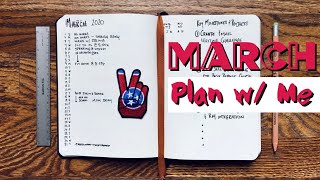
Matt Ragland walks through his bullet journal system for early 2020, showing how he breaks monthly goals into weekly and daily tasks using minimal spreads. He tracks three habits (movement, journaling, reading) and found mood improves with consistency. Instead of a future log, he embeds upcoming months directly into his proactive layout.
Chapters
Hi everyone, my name is Matt, and welcome to another Bullet Journal productivity video. In this episode, we're doing a plan with me, look ahead for March 2020, as well as reviewing my layouts for January and February. How consistent was I able to be? How was my tracking? How did I get everything done, or not get as many things done as I hoped for? And so we're going to be doing a little bit of review and a preview, looking forward to March, some of the things that I got going on, how I do my layouts for each month and week. And so this is a good recap, kind of resetting what I've been talking about and what I've been doing in the Bullet Journal Basics series, as well as the 2020 planning video, which you can check out here or in the end screens and description links below. From a Bullet Journal perspective, the first 6 months of 2020 are an interesting test for me, because I like proactively outlined every single week and month of the year for those first 6 months. And so this is the first time that I've done that kind of proactive outlining in my Bullet Journal that far in advance. If you want to see more about why I did that, make sure you check out the 2020 planning video. Again, there are links to it in the description. But for now, let's go ahead and jump into the bullet journal, into that overhead shot, so you can see exactly what I'm doing to plan out March, some of the things that I have going on, and a lot of the stuff that I'm excited to share with you.
So let's take a look at what I'm doing to plan out March and the things that I have done over the last couple of months with my newfangled bullet journal proactive logging layouts. Setup that I've been doing. Just a reminder, if you wanna see why I would have done this with my, like, proactive layout for January all the way out until June of 2020, make sure you check out the 2020 planning video up here. So if we take a look at March, you can see that I'm still doing my same monthly layout, very minimalist, very simple, day of the month on the left, and then the corresponding day in the right column.. And then all I'm using this for is like big picture events, like if my wife works, my sister's birthday, my mom's birthday, the boys are on spring break, taking a trip down to Florida. And so those are what I'm using the like monthly layout for, just really simple, big picture. And then again, on just to show you an example from last, from February, then the weekly Layout is where I put in like the daily tasks. So again, looking forward at the month is where I put like those big picture things. And then right here on this right-hand page is where I put in my habit tracker and my mood tracker.
Now I'm using the Clear Habit Journal.
And so there is a habit tracker already included, but I don't like using this one as much just because, you know, to be honest, again, I've talked about this in some videos, I abhor wasted space in a journal. Like, it really messes with me mentally, and I just don't track that many habits. Like, I think there are like maybe 10 rows here at least. What I have found is that the 3 core habits for me are daily movement, journaling, and reading. If I can do those 3 things every day or several days in a row, trying not to miss 2, at most 3 days in a row of either one of those things, then my mood, I see a corresponding boost in my mood and just contentment. So that's why I keep all of this with the monthly spread with this layout, so that as I'm reviewing and maybe going back, so let's look at February real quick, I can see, I did miss a little mood tracking right here, but I can see in context with the month what were the big events that I had What are the habits, the mood, and then what are the main projects and objectives? So I still need to add in my projects and objectives here for, for March. And as you can see, there are usually 3 main things that I focus on. My work with Podia takes up the majority of my time, but then I also have like this YouTube channel. And so there are things that I'm trying to do for each of these. And this is where I put my top 3 to 4 objectives for the month. Now, if you're wondering, how do you take these monthly milestones or monthly goals and break them down into weekly or daily tasks, make sure you check out the goal setting video that I have up here as well. So, looking forward into March, I'm doing like this same standard thing is that I have the week ahead sheet right here. So, let's just take a look at what this is. So, as a recap, So this is the one that we're actually in right now because we're in the last week of February as I record this. And I have my main Podia work objectives right here. I have my like YouTube channel courses, you know, to-do list right here, and then things that I want to do at home, and then like some miscellaneous tasks down here. So these are like the weekly deliverables or objectives that I have. And then I'm going daily looking at, you know, what are the agenda items I have up here, and then to-do lists are down in the bottom. So you can see each day takes up a half sheet. So that's the same thing that I'm doing for March. I have my weekly, my weekly sheet, which I'll go over this coming weekend. I usually do this Friday into Sunday, the weekend, reviewing, like we've talked about many times, reviewing the week behind and then previewing the week ahead. So this is where I'll start to fill out agenda items, to-do lists, some time blocks, and then I add everything in here. So, I already know that I have a flight on Wednesday. Moving on and moving through. So, you can see that what I've done is that every few pages I have the week ahead preview objectives page, is what this is going to be, and then the daily, the daily half pages for each.
I think it's important to note that anytime I make a plan for something, I go into it now kind of realizing and thinking that not everything is going to go according to plan. But the reason that I think a plan is so valuable, at least for me, is that it gives me basically a map to follow. Now I've set that map up for myself on experience and intuition, but it does give me a sense of where I'm going and important milestones that I need to pass or check off just to know I'm on the right path. The more that I do this, the more I get better at anticipating things that might change, or just understanding when something really has changed that I can pivot or go in a different direction, or just, you know, stop doing the thing that I had the plan for.
The reason that it's nice to like proactively lay out these weeks and these months is that now I can easily connect and see in context like my future log instead of using it like, just as I don't even have it in this one because I'm not using it. But instead of having a future log at the front or the back of the Bullet Journal, I'm able to just look ahead and like, I can know, like, let's say in May, then I know that my wife has a trip, it's her birthday.
So I can go ahead and look ahead into that May monthly layout.
Same thing with, I think April is here, going on a retreat with work, family beach trip.. And so I can look ahead. I can use this in context as my future log.
So that's the reason that I did this kind of proactive layout.
Now I still have my notes down here at the end because there were about, let's see, after, after June, there were maybe, yeah, about 40 pages left. And this will be actually plenty for me to add in usually all of the, all of the miscellaneous non-contextualized daily notes that I might have, it'll be really easy for me to add those in the extra 40 pages at the end. So that's what I'm looking forward to in March. I'm speaking at a conference called VidFest on March 5th. Really excited to do that. We'll get to spend some time with my family as well. Boys are on spring break, so have a couple of days off to spend with them. That'll be a lot of fun. And yeah, It should be a really good month. The thing that I want to, like, do a quick review on with January and February is that this layout is working pretty well for me. I did kind of fall down a couple of times, get off the wagon with— I already showed you with mood tracking right here. And there are a couple of stretches where I just, you know, I got really busy and I didn't put very much into a day, or like here on Wednesday, February 12th, nothing. And then I did go through a stretch. Let's see, where is it? Now I did mark it. Yeah, so this week of January 27th through February 2nd, I was testing out Roam Research for notes and planning this week. It's very interesting, but that's why as I look back, I have like just a blank week here. And that's okay. Again, I said earlier that blank space in my journal kind of stresses me out, but you know, every once in a while, I guess it's not that big of a deal.
And I just need to give myself some grace with that.
I am planning on a video about Roam because I think it's a really interesting way to organize information online. But that's everything that I was doing for March, a quick little recap and look back at how this proactive bullet journaling layout is going.
And so far, two thumbs up. Now in terms of the long-term, like proactive outlining of a bullet journal, like I'm doing, I'm still going to stick with it for the entire 6 months, but it hasn't been— I haven't been able to stay as consistent with that.
Like, okay, well every single day I got to fill this out.
There are a few too many blank days or like blankish days and what I anticipated, but it really, you know, kind of in review, all of the, like whether it's been the Full Focus Planner or the self journal, that has happened to me when I go with like more of an outlined structured planner versus just the open-ended like unstructured bullet journal method. So as you can clearly see, not perfect with my bullet journaling, and there are things that I mess up, there are things that I miss, there are things that I don't write down. And one of the things though for me that when I have kind of a herky-jerky bullet journaling stretch is that it always brings me back and I realize When I am doing this and when I'm consistent with it, those tend to be the calmest times of my life. Or even when I'm really busy, it brings me into like a sense of calm. Journaling really is a bit of like self— like mental self-help for me. And a little bit of— yeah, it's like meditation for me in a sense. And so when I feel my life getting kind of crazy, it's just another trigger that I've realized now. It's like, okay, get back to the journal, get back to paper, make sure you get your head out of your apps, and make sure that you're focusing on the things that really matter. And writing things down and bullet journaling, journaling in general, is a really good way for me to do that. So thank you so much for watching this March plan with me video. Make sure you check out the other videos in my Bullet Journal Basics series alongside the 2020 planning video, because it'll give you a better idea of what I'm doing with the first 6 months of more structured bullet journaling, even in the clear habit journal, and some of the pros and cons of it, how I'm using a future log, different things like that. So thank you so much for watching, and I'll see in the next video.
Thanks, bye!
More from Matt









Journal reading 📖 Reflectjons on how I’m living & how it aligns with the vision I have for my life.

You don’t have to listen to me. But you do have to be intentional about the systems in your life.
