How to Set Up a Beginner Friendly Bullet Journal for Productivity [2022 Plan with Me]
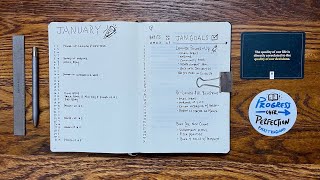
Matt Ragland shows how to build a bullet journal without fancy supplies. Start with a daily log using basic symbols, add a weekly spread using his GAP method (goals, actions, protections), then pick a minimalist monthly layout. Keep it simple and consistent.
Chapters
Hi everyone. Happy holidays. Merry Christmas and a happy new year to all of you. I'm sure that many of you are getting your first or your next bullet journal ready to go in the new year. I know for me personally, I go through about 2 bullet journals per year, and I just want to show you how you can get set up really quickly, really simply. You might be watching a lot of videos and there are a lot of good videos and tutorials out there for the Bullet Journal, but what I focus on and what I want to help you with is cut through a lot of the noise, the clutter, the decoration of a Bullet Journal and just show you a simple minimalist walkthrough tutorial of how you can get set up and started on the Bullet Journal really quickly and easily. The way that I'm going to show you how to set up a Bullet Journal does not include any fancy pens, stickers, washi tape, dividers, ribbons, or anything like that. Not that there's anything wrong with any of those things. I just don't use them, and I don't think that they're necessary for establishing a Bullet Journal habit. What I love about the Bullet Journal is that it allows me to be really focused on what I have to do for the day. It helps me stay present instead of going onto an online or even a mobile-focused app that's a task tracker or a goal planner. With the Bullet Journal, I just look at the page and it allows me to see, hey, this is what I have to do. The most important thing that you can do when starting a new Bullet Journal is to start small and start simply. You're going to hear me use that word simple a lot during this video because I want you to establish the habit of using your Bullet Journal every day instead of doing like this big Bullet Journal setup with future logs and trackers and all those things. Again, they're all very good to use in certain situations, but if we're just talking about like, hey, let's get started, let's establish the habit of a Bullet Journal Method, what I want you to do is start with just a simple daily log. Now I want to remind you that you can look at the timeline and the timestamps of this video to see how we're going to progress through the setup and what we're going to do is go through the daily log, the weekly spread, the monthly layout, and we'll also talk about master task lists and a little bit about habit trackers at the end as well. Most of the rest of this video is going to be you actually looking at the Bullet Journal while I describe how to set things up and some different things that you can do. Now that we have all the little details out of the way, let's go ahead and get started setting up your Bullet Journal for the new year. The simplest way to set up your Bullet Journal. Is with the Daily Log. The Daily Log is the foundation of the Bullet Journal Method and is the easiest way to start your habit. Because remember, what matters is that you get in that habit of practicing and using the Bullet Journal. And if you have it in your head like, oh, I have to do this Future Log and I have to do all these habit trackers and I have to check all these different pages, then it's going to create more friction to you actually using the tool and practicing the method. The daily log is the easiest way to start, and simply all you're going to do is write down your to-do items. So make those bullets in your bullet journal, just start writing down the things that you have to do today. I also like to write down the actual times of agenda items like meetings or appointments, and then I'll make a little dash if I have a note or something that isn't a task, isn't a meeting, but just a note that I want to make about the day. Now, the other thing that you can do that is a, some of the key Bullet Journal indicators or symbols that you can use is of course when you're done with a task, go ahead and X through it. If you have one that needs to be done next day, just make that arrow symbol so that you know you're migrating it to the next day. And if it's something that you realize you don't need to do anymore during that review time at the end of the day, then just go ahead and draw a line. Make a strikethrough all the way through that task or through that agenda item and know that you don't have to worry about it anymore. Honestly, if all you do for the first week, even the first month of the new year, is just practice your daily logging, I promise you will be more productive. You will be more focused and present with the things that you actually have to do because you won't be getting distracted by other task managers. You won't be opening up your productivity app and seeing another app on your phone like I often do. Maybe you're better than me., but you will be able to just open up your Bullet Journal and see, this is what I have to do today. So it makes it really easy to stay focused and present. Now, once we go from the daily log, we're going to expand our practice into the weekly spread. When we expand our Bullet Journal practice to the weekly spread, this is where we start to take something that might take a few days to get done, and we start to make these master task lists or goal lists. Now I have a specific system that I use for weekly productivity called the GAP method, and that stands for Goals, Actions, and Protections. I'll explain that a little bit, and I have a more expanded video that I'll list in the description below. So if you want to know more about the GAP method, it's one of my most popular productivity systems. Make sure you check that out. Using the GAP method for my weekly plan helps me clarify what is my big goal for the week? What is the one or two things that I absolutely want to do or have to do. And getting that clarity on my goal really helps me break down and then say like, okay, if I'm going to achieve the goal this week, what are the action items? What are those to-dos that I need to make sure I have time to do during the week? And that leads me into the P, which is protect your time, block your time if you're familiar with calendar blocking, to make sure that I have the time that I need in order to work on the action tasks so that just by completing those, I will achieve my goal at the end of the week. I find the GATT method really useful for identifying the main goals that I have for each week, breaking them down into action tasks, and then protecting time so that I make sure that I can do the work that I have said at the beginning of the week is really important to me. Now, if you don't want to go that far on the GATT method, then another way to look at the week ahead is just to start to make a master task list of the things that you know you have to do. So these can be different tasks or actions that don't have a specific day that they need to get done, but it just allows you to do a bit of a brain dump each week and start to write down, these are all the things that I have to do so that when you have some time to work on a new task, you just look back at that master list for the week and grab a task, knock it out, check it off. Let's look at the monthly layout in the Bullet Journal now, and I'll actually start The pages for each month with a monthly layout. There's a very simple minimalist monthly layout that I use, which is all the days of the month in a column and then the corresponding days of the week in the column next to it. So for example, we're coming up on January 2022. So it would say like January and then 1 and then an S for Saturday and then 2, then an S for Sunday, 3, M for Monday, and so on and so forth. So this gives me a quick look at remembering, hey, what are the days and the days of the week that are corresponding to, to those days. And then it also gives me a line or a row for each day to write down any primary, any like big events. So maybe it's birthdays, maybe it is like something out of the ordinary, maybe it's a date night with my wife, couldn't be anything like that. It's usually like big events that I, want to look at the beginning of each week and say, is there any like main event that is coming up that I need to make sure comes into my weekly plan and into my daily log? Another way that I like to create a monthly layout is to basically copy a pretty standard like wall calendar or desk calendar layout. So you have the weeks at the top of the calendar and then you box in the different days of the month and it just looks like you have a nice little like mini wall calendar, desk calendar. In your Bullet Journal. A nice thing about this is that it does give you a little bit more room to jot down those events because you have an entire square to add some text in instead of just one line in your Bullet Journal. Because, you know, those can get a little tiny. So far we've covered how to create your daily log. We've talked about the weekly spread, your weekly plan using the GAP method. And then we've expanded that out into how can I do a monthly layout so I just kind of have an understanding of what the days of the week, the days of the month are like. And if there are any big events that I need to keep a heads up for. If we stopped right now, you would have an effective, simple system for starting your Bullet Journal habit, for starting to set up your first Bullet Journal or your next Bullet Journal. I want to be really clear about this, that you can stop the video right now. I mean, I would like for you to keep watching, retention and views and all that, but you could stop the video right now and just practice your daily log. And then once you're comfortable with the daily log, you've done that 5, 6, 10 days in a row. Start to work on that weekly spread. Establish like, what do I want to do each week? What is my goal? What are the actions? When do I protect time for these things? And then once you're used to creating your GAP method, creating your weekly plan, go ahead, expand out to the month. And once you're ready to do that, start looking at it and saying like, okay, what is a little bit bigger goal? Notice how we're starting small and we're getting a little bit bigger. Like, what's my goal for today? I want to do it. I want to do this. What's my goal for the week? Okay, that's going to take a little bit longer. Now, what do I want to do in a month? We could also expand this all the way out to what do I want to do for 3 months, for a quarter? What do I want to do for this year? Because what we're doing is we're expanding the things that we're able to do. We're expanding our capability. We're increasing our confidence through competence by doing the right thing, by doing the little actions every single day. So as you get ready for that, and if you just want to start to practice it, practice it without judgment going into the new year. And I'm going to do a whole nother video on this. So just keep an eye out, make sure you subscribe, ring the bell, all those YouTube-y things. What I want you to do is think about what do I want to accomplish this month in January? What's a 3 to 4 week goal that I want to work on, a practice that I want to establish? Starting a Bullet Journal is a really good one, building that Bullet Journal habit so that you're coming back to it every single day. But you might want to do some other things. Maybe you want to start writing, or maybe you want to start your own YouTube channel in the new year. So what I want you to think about is what goal do I have for the month coming up? And then let's start to work backwards. Okay. So think about if I was to achieve this goal by the end of the month, what do I need to deliver? What does my goal need to be? Those sub-goals each week so that naturally if I'm knocking off those goals each week, I'm going to achieve my goal at the end of the month. Okay. And then we break, we bring it down to that week, right? And you think about, okay, well, if my goal for this week is X, And then what do I need to do? What are those actions? So see how we've taken a monthly goal and we've used our GAP method to identify what we need to do each week in order to accomplish our goal at the end of the month. And then of course we bring it all the way back to the daily log and we think, huh, if my goal for this week is to do X, what are the, you know, like Y and Z tasks? What are those actions that I need to do today in order to move me closer to that goal? And when do I need to protect time, protect my attention and focus today to make sure that I can work on those actions so I can complete my weekly goal so that by the end of the month, I'm going to knock those off 4 times, those 4 weeks, and I'm going to achieve my goal at the end of the month. Remember, I'm going to do an entire video about this goal setting breakdown and framework, but if you're just setting up your first Bullet Journal or your next Bullet Journal for the new year, this is a very beginner-friendly minimalist, simple setup that you can use to get started with bullet journaling. Because it really is, I think, one of the best, if not the best productivity tool for daily focus and attention. Because remember, you're not looking at some app and, you know, nothing really wrong with apps. I use some of them, but when it comes to presence and focus and just opening up that notebook and saying, okay, this is what I have to do today without getting distracted by other apps or notifications or even other team members or coworkers saying like, hey, can you check this out? Just opening up my notebook. I'm saying, I got to get this done. Start to work on it. Keeps me focused, keeps me present, keeps me productive. Thank you so much for watching this video. And my name is Matt Ragland. I actually don't know if I said that at the beginning, but thank you so much for watching. Keep an eye out for the new year goal setting video that's going to be coming out soon. And also, if you want to sign up for my email newsletter, please do that. There's a link to the newsletter in the description below. I'd love to communicate with you on email as well. I send out a weekly email newsletter. And one more thing that I want to tell you about is that my live course, the Productivity Power-Up, is starting in just a couple of weeks. The launch starts on January 1st and onboarding week starts January 10th. The first class starts on January 17th. And if you want to start the new year with a virtuous cycle of productivity, if you want to understand how to use a Bullet Journal and, you know, some helpful apps, If you want to understand how to take action, how to protect your time, how to organize your ideas and information, and how to use the right tools to put it all together, this is going to be perfect for you. It'll help you create a calm, clear, simple system of productivity that you can use for the rest of your life. So if you like this video, this is just a little bit of what we're going to be going through. It'll help you get started, but the Productivity Power-Up is the thing that I make that is going to be most helpful for you in your getting things done journey. Okay. Thanks again for watching, and I'll see you in the next video. Bye.
More from Matt









Journal reading 📖 Reflectjons on how I’m living & how it aligns with the vision I have for my life.

You don’t have to listen to me. But you do have to be intentional about the systems in your life.
