Key Lessons from 10 Years as a Creator
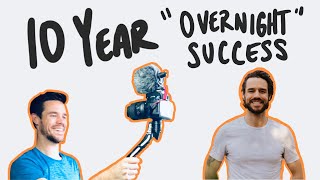
Matt Ragland spent a decade building a creator business from blogging and failed startup applications to a thriving YouTube channel and podcast. A bullet-journal video unexpectedly spiked his viewership, and he used the 10-repetition rule to reach 10K subscribers. He credits consistency and community over niche focus.
Chapters
Hi everyone, my name is Matt and welcome back to my YouTube channel. I have a very special episode and video for you here today because it is the story of my journey as a creator. I wanted to share this because I know many of you watching my channel are creators in your own right, or you have a side hustle, you want to start a side hustle, maybe you want that side hustle to become your full-time job. What I want to share with you today is that journey. Of mine, of like wanting to start a blog and doing some writing and starting a podcast, having both of those kind of fail or not really take off, about like substitute teaching, about working at UPS, about starting to work in tech at startups with ConvertKit and at Podia as well. I also share my first like tech job where I basically got fired after just a few weeks, and I quit another job to do that. I was just, I was devastated. We had a young kid. I'm getting a little too into the story right now, but Now this is a little bit longer of an episode, and so I put some timestamps in here to give you some guidance about where to listen in. But I will say this has been previously released as a podcast, and so if— as a podcast in my Connect the Dots episodes. And so if you didn't know I had a podcast called Connect the Dots, or you haven't listened to this episode yet, you can check out the link in the description below. I'm going to send you directly to that show so you can listen to it. But I wanted to share this with you. I'm going to be sharing a little bit more about like just creativity, the intersection of productivity and creativity, my journey where I see these like different things overlapping and how people who do creative work get that work done, stay motivated, make money, and just live and build a life that they really care about. So I hope that you enjoyed this episode. Let me know in the comments below what your biggest takeaway was or something that really resonated with you. Maybe there's a moment that I describe, you're like, oh, I've had a moment like that before. I'd love to hear from you on that. It's a really personal episode for me, but I believe in sharing our stories because I know when I hear other people share their stories, I'm like, oh, I've had something like that happen for me. So I hope that something resonates in this story for you, and I'd love to hear from you in the comments below. Thanks so much for watching, and here we go. Let's go back to around 2008. Now we're not going to go quite this far back, but I do want to put a pin in this year as a beginning of my journey as a creator because it was around this time that my dad gave me my first set of Seth Godin books. And the first two that I read were Purple Cow and Free Prize Inside. And shortly after that, I'm not quite sure off the top of my head when this book came out, but I also read Tribes from Seth Godin. These 3 books from Seth really started me down this path of becoming a full-time creator and thinking that work and creativity and expression could be done in a different way than maybe I grew up. Like, creativity or the arts always felt like more of a hobby than an actual profession, and to actually be paid, and not only paid but make good money, like Lifestyle money, family-supporting money, and more to like on the work that you create. Growing up, that really wasn't really part of how I thought about, you know, life could be or how work could be. And so I give a lot of credit to my dad who was always side hustling when, when I grew up for giving me these books by Seth and like kind of talking about some of these ideas. Fast forward a couple of years to 2010, and this is really when where my creator story begins. I started my first blog that year and I was writing about minimalism. I was writing about my ideas in marketing and leadership. Me at, I think, yeah, I would have been 27 years old at that time. It really just got me in this practice of I'm going to be a writer. I am a writer. And I say that term, I am a writer specifically because it was around 2010 2011 that I first discovered the blog of my now very good friend Jeff Goins. And Jeff was another important figure in my life, someone who encouraged me, who like gave me some space and even a platform. I wrote a guest post on his blog. I think it was my first guest post that I ever published. I remember meeting Jeff at Puckett's in Franklin, Tennessee. Some of you will know where that is and what that is, or you can look it up. And it was the first time that I had had a face-to-face conversation with someone who did this thing he was doing for full-time work to becoming a full-time blogger and writer who's a published author. He gave me a lot of good encouragement and advice, just like, you have to be specific. Even all the way back then, you have to be specific about what you're writing and who it's for and why it matters to them. Things that are timeless bits of advice that I still carry with me today. From 2010 to about 2013, I was working as assistant director at a Christian boys summer camp called Camp Rockmont. Shout out to Camp Rockmont. I feel like I've mentioned them a couple of times on the show already. What I was doing there is that I did have some extra time. I was on the road a lot and I wasn't always, you know, my wife wasn't always able to come with me because she worked. And so at nights when I was in the hotel, I would just write. A lot and I would read these books about marketing and blogging and I would read all these different blogs like Copyblogger and all these different— this was about the time that Pat Flynn was starting with Smart Passive Income and so I was consuming all this content. I was learning, learning, learning. I was trying to apply it to my own blog as well. In 2013, we moved from Asheville, North Carolina to Nashville, Tennessee. Before that, we lived in Jacksonville, Florida. I went to school at the University of Florida in Gainesville, Florida. I also spent many years in Louisville, Kentucky. Really try and stick to the vills when I'm making like moving decisions. But all that aside, we moved to Nashville because my wife was going to Belmont University to do their accelerated nursing program. I really saw this or wanted to take this 18 months as an experiment to try and be a blogger, a freelance WordPress developer. And I say developer in like the not developer the way that I understand it now since. It was basically like, hey, you don't know anything about WordPress, I'm going to install a theme and get WordPress set up for you. I wasn't doing any coding whatsoever. I knew how to like bold text, and that just like blew the minds of the, of the people that I was helping set up these WordPress themes, but not actually developing and coding. Just a disclaimer on that. But I had continued to write during all of this time. I had started to do more guest posts. I did a guest post for Michael Hyatt. I did a guest post in the very early days of the Buffer blog. I was really close, I think, to being hired at Buffer as a content marketer and in their like kind of support and education team. So I was taking in all these different books. I was still learning a ton. I was writing my my butt off like every single night and just trying to get as much of a volume of work and practice as I could. Now, the thing that I didn't do as well in this time, and looking back, probably one of the main reasons that my freelance or blogging work didn't take off, is that I was not as focused as I needed to be on what the actual topic was. I was way too broad in general, and this is a common mistake mistake that early creators make. And on one hand, and I'll tell you about this when I get into the YouTube section, but on one hand, it is good to like create a broad variety of content, as long as you're consistent at creating content. But I wasn't as consistent as I needed to be, and I wasn't as focused as I needed to be. And because I wasn't as consistent, I couldn't see what was resonating. And because I wasn't as focused, I like didn't get like people would come to my blog because they saw a fitness post, but then I would talk about marketing and people might come for a marketing post, but then I started talking about fitness. They'd be like, what is this guy talking about? But I also did 30 episodes of a podcast called Story Signals. I was very interested in the elements of story at this time. It's something that I had learned a lot about at Camp Rockmon because you tell a lot of stories to to kids. You tell a lot of stories at summer camp. So what makes a great story? I got into the hero's journey with, with, by Joseph Campbell. I learned a lot through Donald Miller's Storyline Process, which was like the personal application of what has become his StoryBrand framework. And so I was really getting into all these elements of stories, and I wanted to express those and talk about people's specific stories as creators, as they led startups. Probably my most famous now guest that I had on the show was James Clear, which was really cool. Even then, I recognized that he was doing some really incredible writing, and now, like, 7 years later, he's not like, ah, here's James Clear. Hey James, tell us about your work. Now it's like, James Clear, hundreds of thousands of copies of Atomic Habit. So I got to talk to him, I got to talk to Ryan Delk. So it was really cool to run the Story Signal show, even if it didn't end up becoming everything, anything that like really made money or something that I was known for. I was practicing, I was getting to that volume of content, I was closing the gap, as Ira Glass calls it. He talks about, and I tell this to so many people who are getting started, is that when you get started with creative work, and probably for years, you're going to see the work that you admire, that inspires you, and then you're going to see what you're actually capable of doing right now. Now, it could be because of time, it could be because of talent, but there's a gap between who you currently are and who you want to be. And what Glass talks about is really the only reliable way to close that gap is through a volume of work. Another thing that happened in 2014 was I was still writing a lot, and I applied for a content marketer position at Help Scout, which is a wonderful company, also remote, that does like basically help desk software. And I really admired the company and the founders, and so I applied and I made it to the final 3. And so I submitted an article, I went through rounds of editor— of editing, and it was all a really good experience. And I, I wasn't 100% sure I was gonna get it, but I felt really good about it. And I remember getting the email from Help Scout saying that we decided to go in a different direction. And I was actually working at a UPS store at the time, so, you know, the shirt, not the shorts. I wasn't on a truck or anything, even though that would have been pretty cool. I tried to stow away once and they're like, you got I gotta get out. But I was like boxing up, you know, stuff that people send because they just bring in stuff to the UPS store. They're like, box this up for me. I was like, cool, I can do that. And I was also substitute teaching and coaching, wasn't making a whole lot of money right then. And the— I really kind of had my heart and my head set on getting this job at Help Scout because it's like, I'm gonna make a lot more money, I'm gonna I'm going to be in startups, I'm going to be a content marketer, I'm going to be able to do like all of these things that I've been reading about. It's going to be my profession, not just my hobby or my freelance. And it didn't happen. And I remember that I slumped down in this tiny little, this tiny little room, and I was just so devastated in that moment. I was like, I don't know what I'm going to do now or what I'm going to do next. I actually got introduced by my editor at Help Scout to another company. Actually, the company that I had written my Help Scout article on was Backcountry.com. And Backcountry reached out to me and said, hey, we really like the way that you thought through, like, this process. You actually clarified some things for us that we hadn't thought of, and we would like to talk to you about working here, about having your perspective as a product manager. And I was like, oh sweet, I'm not really sure what a product manager is, and I was kind of upfront with them about that, maybe to my detriment, but I'd love to talk to you some more about it. So they flew me out to Salt Lake, and then I drove up to Park City, where— which, wow, Park City, Utah, yes please— and was going to like interview with them. And so I flew out to, I flew out to Park City. I like interviewed for the job and it went well, but I didn't get it. And it didn't surprise me at the time because as I was going through the interview, I was like, all this stuff that you're asking me about product manager, I don't really know those things. I just know that like this is how like I could see it working. And they're like, yes, we agree with the conceptual way that you're thinking about it, but the actual like how you're gonna do it, you don't know anything about that. And I was like, Yeah, that's probably, that's probably fair and true at this point. This was late 2014, and at this point I would just turn 31 years old, and I was feeling a little stuck. The blogging hadn't really worked out, at least from a financial perspective. The podcast had not taken off. I had been working really hard for about a year at this point, maybe a little longer, trying to get a writer or now product job at a startup. And none of these things had worked out. We had a child on the way, we were living in a really small duplex in Nashville, and I wasn't feeling very positive about my choices at this point. And for a little while, things didn't get better. I continued to work at UPS, I continued to teach and coach in Nashville at a couple of different schools, and And when summer 2015 hit, we had our son, Kanan, and he's wonderful, but we are still like in this kind of, kind of odd place. Now, I had continued to try and get hired at a startup, to keep writing, to keep connecting with people, to keep building my network. And I had a breakthrough in the summer of 2015 when I started connecting with Noah Kagan, the founder of Sumo, AppSumo, SumoMe, just all the all-encompassing Sumo brand. And we talked about bringing me on as basically a content and product educator. And I was brought on, I was hired, it was, you know, I had made the leap. Now the little distinction here that still made it tough was I had just been hired that summer at Harding Academy in Nashville. When I got the opportunity at Sumo, I, you know, kind of went back to Harding and said, hey, I just— I— we have a child at home. This is more money, more flexibility. I can work from home. I'm sorry, but I need to not do this in-house sub thing. And they were very gracious about it. But I started working for Sumo in August of 2015 as a webinar producer, basically was the title. There's only one catch. I hadn't really done many webinars at that time, and the very first webinar that I did was with a company called CoSchedule, and there were a few hundred people on this webinar, and I just got super nervous. Any, any of you who have been on, you know, an early webinar, it's it's very common to feel nervous when you're on live video, which I know is— maybe sounds super ironic to all of you right now considering I have over 200 published videos on YouTube, not to mention these Connect the Dots podcasts or the daily videos that are going out right now. So I've gotten a lot more comfortable with it, but there was a day in 2015— I think this was probably September of 2015— I did this webinar with CoSchedule and it went really I felt like it went really poorly. I was nervous the whole time. I didn't speak as clearly as I wanted to. And then at the end, I thought that it was over, but it was not over yet. We were still live. And they're like, "Well, how are you feeling, Matt?" And I thought we were off, and I was like, "I am so fudging glad that that is over with." Except I didn't say fudge. I said the word, the queen mother of dirty words, the F-word for all of you Christmas Story fans out there. And they were like, okay, well, we're still live. And oh man, whoo, that was terrible. And, you know, just was it after that and some other things, it just wasn't gonna work out. At Sumo. And that was a lot on maybe me not being as upfront about where I was with my webinar capability at that time. They needed someone more experienced than me. So I was actually on a trial run at that time, and the trial run was over. The downside was that I had, I had quit my job at Harding, uh, to do this job at Sumo, even though I was just on like basically a contract at that point. And now I feel like Now we've got a 4-month-old and my wife's working nights, and that was probably one of the most difficult stretches of my life up to this point. Really hard. But, um, Lord provides. And not long after that, I was, you know, still working really hard. I was still really focusing on like getting content out there, making connections, building my network. And somebody that I had connected over the past couple of years in Nashville was Brian Harris. Now he runs a company called Growth Tools and Growth University, but you may also know him from his blog Video Fruit. And so I had connected with Brian and I was on a webinar with him and Nathan Barry, who at that point had pretty much just started ConvertKit. And they were— Nathan had come on to Talk To Brian's email list, of which I was on. I had been to Jeff Goin's— here's Jeff again— I had been to Jeff's TRIBE conference and reconnected with Brian there. And this was like 2 days after my fateful webinar with Sumo. And Brian was like, "Hey, how's everything going with Sumo?" I was like, "Oh, well, I don't think it's going to work out. I'm just not as experienced as the they need me to be. And so I was pretty— like I said, I was in a really rough place at that point. I almost didn't go to the conference. I was like, what's the point? But I go to that conference, I reconnect with Brian, and then in the next couple of weeks I'm on one of Brian's webinars with Nathan. And then apparently, as the legend of Matt Ragland goes, Nathan was saying afterwards to Brian, hey, you know, ConvertKit's, you getting some momentum, getting some speed, I'm probably going to need to hire some contract help with the customers. And Brian was like, oh, Matt, who is on the webinar today, he's a friend of mine and he's done some work with Sumo and is really great at working with customers, so you should reach out to him. Brian connected me to Nathan and within the next week I was doing some contract work work with ConvertKit. And then a month later, I became— I was employee number 5 at ConvertKit, which I think has like 70-ish employees now. At the time that I joined, I think we had less than 500 customers. And when I left in the spring of 2018, we had over 20,000 paying customers. But I would say one of the most important things that happened for me and to me while I was working at ConvertKit pretty much every week for the nearly 4 years that I was at ConvertKit, I did a webinar. And so that is hundreds of Q&A webinar teaching sessions. And that was really important for me. It built a lot of confidence and momentum that I could create content on a consistent basis. I was able to work with and connect with a lot of the creators who I admired because they were using ConvertKit for their email service. And so I was on calls with them, I worked with them on like workshops and webinars, met some of them in person, uh, either at events or ConvertKit's conference Craft and Commerce, which is wonderful, by the way. The more that I connected with them, certainly I saw that they were, you know, very human, but I also noticed that like they're not any smarter or more special than me. Like some of, some of them definitely are, but a lot of it is just like an extreme focus on topic and consistency over time and a willingness to keep putting work in public for people to learn from. And to see that so specifically and like talk to people like Pat Flynn, of course Jeff, um, you know, many others about the kind of creative work that they were doing and the companies they were running, it gave me a lot of encouragement and motivation to think like, okay, like the gap we talked about with Ira Glass, the only difference between what Pat Flynn is doing and what I'm doing right now is just a matter of work, time, and focus. Now we're in February of 2017, and I'm sitting on a rooftop in Oceanside, California, about to shoot my very first YouTube video. It's just a headshot video, me talking about the ConvertKit retreat that we were wrapping up. And my guest host on this video, my very first video was a collab, how fortunate for me, Charlie Marie, who I worked with at ConvertKit. She's the creative director at ConvertKit right now. I can't say enough good things about Charlie and the encouragement and help that she gave me in starting my YouTube channel. She's just wonderful and amazing. You should subscribe to her channel. My commitment at that point that I made to myself about the YouTube channel was recognizing the mistakes that I had made with both the blog and the podcast was not in how good they were, because I do feel that they were good, but they weren't consistent enough and they weren't focused enough. Said, I'm gonna publish a video every day for the month of February. The thing that I wanted to like really hone in on was my consistency. I didn't know enough about what topic I wanted to create about that, like, I could be also focused on the topic as well as the consistency. But if you are ever stuck at the beginning of your creative journey, always focus on consistency instead of topic first, okay? Because this is where people often get stuck, and I can totally understand it, because the sooner you can get to a niche focus of your topic, the more successful early on you will be, because people know what to associate you with. Remember, people would come to my website for a fitness, for a fitness post, but then the next, you know, next week I'd post something about marketing, and marketing people would come in. But then the week after that, I'd post something else about a different topic. So I was just too all over the place, and I wasn't consistent enough. So no good both, both ways. With YouTube, I was just going to be consistent, and my idea was that through consistency I would be able to build my library of content, but also see what of the 3 or 4 topics I was talking about resonated the most with people. Was it going to be marketing? Was it going to be like working at a startup? Was it going to be leadership lessons? Was it going to be book reviews? Was it going to be productivity? I was really following something that James Clear told me about on the podcast and talked a lot about about on his blog as well in the early days, was that I was going to publish a video every day for February and then every week thereafter, no matter how good I felt it was and no matter how long it was. I kept that up for the first time ever. I was consistent. I did 28 videos in 28 days, and I did, you know, a few more, so 30 videos in 30 days. I was building momentum, I was building confidence, I was learning how to make better videos. And then pretty much with very few misses, I went week by week for the whole year of 2017 up to that point, so it ended up being close to 70 videos. Now, in August 2017, on my 55-ish video, I just dedicated my weekly video to like, here's how I plan my week in a bullet journal. And yeah, that did a little bit better than my normal videos. My average view count at that point was probably a few hundred, and this one got like 400 or 500. I was like, oh, that's interesting, but you know, whatever. I'm just talking about a bullet journal here. I thought, well, I'll make a video about how I'm planning the new year. And oh look, I'm reviewing all the videos that I did to see like which ones resonated, right? I was consistent, so which topics were people most interested in? And by far my most popular video at this point was that bullet journal video from August. It had maybe close to 1,000 views, and everything else was the 300-400 range. So not only was I going to make a "here's how I'm planning 2018" video, but I was going to say, "here's how I'm planning 2018 with a bullet journal." 11 months and 70 videos, I had about 650 subscribers. Well, within 3 days of that video being published, it went over 1,000 views, and within a couple of weeks, I was over 1,000 subscribers. And that was a huge lightbulb moment for me, obviously. I was like, I'm gonna keep going. With this. And the way that I kept going was that the, that first video was about 20 minutes long and people had a lot of questions in the comments. Why do you lay something out this way? What are the 10 blocks? Why are you doing this thing? And so what I did for basically my next 5, 6 videos, even more, was I just started responding to comments. Hey, what are, what are these 10 blocks about? I made a video about the 10 blocks. Why do you put your time in these, like, you know, in these grids. Make a video about time tracking, make a video about my monthly plan, about my weekly plan, about my daily plan. Every single question that made me think about how I could create a video for it, I made a video for it. From 1,000 to 10,000 subscribers by June of 2018. About 70 videos in 2017 and had just under 700 subscribers. And then from the beginning of 2018 to the summer of 2018, I went from 1,000 subscribers to 10,000 subscribers. I was just as consistent, but I was focused on the topic of bullet journaling and productivity. I wanted to connect the dots for you on one other little aspect here. When I hit 10,000 subscribers, I had made about 100 videos at that point. And I want you to think about and remember— go back and listen if you have to— to the 10 rep rule episode of Connect the Dots. Because remember I said try 10 repetitions or 10 practices of something— 10 videos, 10 podcasts, 10 blog posts, 10 trips to CrossFit, whatever it is. Try something 10 times to see if it's a good fit for you, and probably around 100 you'll feel like you really have some good momentum. You're moving towards mastery, certainly not there. And that's that synced up so, so incredibly for me. Around 100 videos, I hit 10,000 subscribers. If you're in a creative process and you create 100 pieces of quality content— I'm not talking about 100 tweets, but 100 pieces of quality content— then you will create momentum for yourself. You will gather a tribe, especially the more focused and the the more consistent you can be with how soon you get to those 100 pieces of content. Let's fast forward now from that 2017-2018 period of getting started with YouTube to now, end of 2020, beginning of 2021. I've made the transition from side hustler to full-time creator. And honestly, I didn't think that this was going to happen. Like, if you would have asked me this last year, the beginning of 2020, I would have thought like, oh, in a couple more years, hopefully I can make the transition. Now here I am, just a year later. In fact, less than a year later, I, I quit my job at Podia. When I look back at the last 10 years, I can certainly see that there was like a 5-year increment for both of those. So 2010 to 2015 was like my getting started, my learning, my practicing phase. And then from 2015 to 2020 was my startup phase. Like, I worked at ConvertKit and Podia during that entire time, but I was also like continuing to apply everything that I was learning about creators and content in those 5 years. So now, end of 2020, beginning of 2021, I have courses, I coach people both in groups and one-on-one. But I'm so excited for this next 5-year phase because the the past 10 years, while they've had some rough moments, I can certainly look back and I can connect the dots, not just with the people, but opportunities with my dad, you know, reading Seth Godin books, meeting Jeff, meeting Brian, having, being connected with Noah and Sumo, and then Nathan and ConvertKit, Spencer and Podia, how much Charlie helped me with YouTube, and all the incredible people and all the different, like, times that, you know, I not just received help and encouragement, but I'm really, I'm really proud of myself for sticking with it. And I could certainly look back and say, like, okay, well, I could, I could have done this differently then, and it probably would have led to more success or like a faster timeline. But I also know that, like, I'm really happy with where I am right now, and I'm really excited for what especially the next 5 years holds for me. Thank you for listening to this episode of Connect the Dots. I'd love to hear what you thought about it. I went into a lot more detail on this video than probably I have anywhere else before, and so I'd love to hear from you, whether that's on Twitter or Instagram. You can reach reach out to me just @MattRagland. You can also email me matt@mattragland.com. I'd love to hear from you, love kind of your feedback or thoughts of like, hey, this stuck out to me, or when you talked about, yeah, uh, having, having a new kid and not been, not doing the work that you thought you were going to be and just feeling stuck, and that, you know, early 30s, that resonated with me. I'd love to know any of those things. So please reach out to me, I'd love to hear from you. Thanks so much for listening. Thanks for watching on the Connect the Dots YouTube channel. Please make sure you subscribe, rate, review, all the things. It really, really helps the show grow in these early days. So thank you so much for your support, and I'll see you in the next episode. Bye.
More from Matt









Journal reading 📖 Reflectjons on how I’m living & how it aligns with the vision I have for my life.

You don’t have to listen to me. But you do have to be intentional about the systems in your life.
