Minimal Bullet Journal Setup | My Back to Basics BuJo Spread
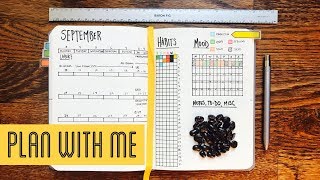
Matt Ragland shows his September bullet journal setup, returning to basics after summer experiments. He adds back habit and mood trackers, separates personal to-dos from work tasks, and uses outcome-driven weekly blocks instead of long task lists. He also schedules specific time slots for helping colleagues.
Chapters
Hi everyone, my name is Matt, and welcome to another Bullet Journal productivity video. I hope you're having a fantastic day, and welcome to September, everyone. It's September 1st. I'm going to show you how I'm planning for September in the Bullet Journal. For max productivity. And what I want to focus on, what I'm focusing on, and what I encourage for you to do as well is to really get back to the basics. I know that we've talked about that in like some previous videos, but after a lot of testing, a lot of iteration, and kind of getting off the rails a little bit over the summer with my own like habits and routines, you know, just summers, summers are great, but they're also a little, they're a little odd. Like kids aren't in school as much, may not be working as much, you're going on vacation, things are just different. And so now that school has started back up and we're getting into more of that end-of-the-year rhythm, I want to focus on— I'm personally focused on getting back to the basics. So that's what you'll see in this month's spread. Of course, you can download a template for this month's spread just by clicking in the description below. There's also going to be— nope, it's over here— a little card that's going to pop up. You can go directly to the page where you can download it. Now, I will say, if you're already on the email list for Bullet Journal Guy, I'm going to send this to you directly. So if you're if you're already on the email list, if you already get emails from me, then I'm just going to send you the template and you'll get it that way. So don't feel the need to like opt back in again. However, if you are not on the email list, that's a really good reason to be. That way you get everything directly. You're not going to miss anything. And there are special specific emails that I only send to people obviously who are on the email list. So go ahead and join that. I hope you enjoy this video. Again, think about getting back to the basics. When it comes to September, and it's going to be a fantastic close to the year. We're going to do a lot of great things together, and I can't wait to share them with you. All right, here we go. All right everyone, so here we are in September. It's crazy to think that there are 4 months left in 2018, and really my focus for this is getting back to the basics. So you can see I've got my habit tracker back here. I also moved, I'm going to reveal a little something to you. Let's come back to the beginning of the year. As you can see, I didn't really, I just, I lost momentum on my yearly habit tracker, and so I'm going to come back to what I have right here of just doing it for the month and keeping an eye on it. The reason that I want to do this is that I've noticed over the past couple of years that in September, October, I tend to kind of hit a swoon just in terms of my mental, emotional, sometimes even kind of physical energy. And I want to keep, I want to keep an eye on that. I want to keep track of that with the the mood tracker right here. So you can see I've got a few different colors: productive, happy, solid, stressed, tired. So that's what I'm going to be using to track. I've got my habit tracker back here. I had this in February and March and it went really, went really well. I really liked having that, so bringing that back. I didn't really do it as much over the summer. I couldn't tell you why. I was just trying out some other things. Doesn't mean those things didn't work, but I did notice that I wasn't effective. I wasn't quite as disciplined. And so it's good to test those things and see what works best for you. It's something that I've talked about a lot when it comes to planning and productivity systems is create one that works for you. So here we are, same kind of monthly layout. I've got the weeks up here, and again, this is just for, just for a quick glance. Like, I'm gonna be— I'm traveling some, I'm doing my third Spartan race down here on the 22nd, and then I'll I'll just be filling in. Again, these are, these are big picture things. It's not meant to be like the weekly agenda, just like, hey, I'm traveling, hey, someone's visiting, things like that. I also moved down right here, like notes to do miscellaneous throughout the month. One of the things that I noticed back in August right here is that I needed a better way, and this is the, the week that just ended, a better way to track personal to-dos. Now you could say like, hey, I've got all my top tasks right here.. But those tend to be, for me, I just naturally put work stuff in there more, and that's what I concentrate on and what I use the majority of my bullet journal for. What I want to do is have a better way for tracking personal to-dos. So let's come back in. This is from the, this is from the college, if you're wondering what that is. You can check, well, I'm not going to link to it. It's there. But fitness tracker coming soon. But that's where I'm going to be putting the notes, to-do, miscellaneous. It's going to stay right here even though I have, you know, this fun little bookmark. I can also look at it like, okay, yellow, here we go, straight to it for the month. This helps me get back no matter where the marker is. This helps me get back to the habits and mood tracker really quickly. If you're wondering what this is, this is a first attempt at what became the mood tracker right here. So This was more of like a week. This ended up being much, much better. Okay, so there's a couple other things, there's a couple of things that I want to point out. So you see, I don't have as many blocks right here, I only have 5 instead of 10. I've also got my tasks right here. I'll explain why this is here versus here, or why they're both here. This little Monday through Friday block right here, and then outcome. So this is the main page I'm going to concentrate on because it's a little bit different. This This one is pretty normal. I have got my, you know, got my top tasks, got the days of the week. The reason that I've got an entire week right here is because one, it's a short week, so this is coming off Labor Day, so I just kind of put them all in. The other thing is that I'm traveling this week, and so I won't have as many like normal meetings and things like that. So, a normal week for me is still going to look like what this one is. Again, tasks to do, I've got this block, 5 blocks up here, and then Monday, Tuesday. So this looks more normal. I'm still doing this, but it just doesn't look this way because it's a different week. I'm at a conference and it's a short holiday week. Coffee break. Let's concentrate on this left page. What I want to be— what I'm going to be concentrating on in September versus what I had been doing, you know, in the past with 10 blocks right here is that I noticed, say, for this one, that for this old 10 blocks, and I still would really recommend this and use this, is that I started to get a really good feel for how I was using my time because I had done this for months. The other thing was that I started to, I've just started to do more, to spend more time on fewer things. And so you can kind of see right up here, right away, a great example of this is that I had like 4 blocks for this Creator Pass project that I was working on. And then I had a block for like responding to like support tickets in the queue. What I realized and what I think like going forward testing this out is that I want to really focus on the projects and the outcomes. Talk about this in a second that I'm focusing on for that particular week. So I don't need to have necessarily a block anymore, or what I'm trying, what I'm testing is that I don't need to have a block for queue. For meetings, things like that. And so that's— those are just things that I'm going to have, and I've done a really good job of like putting boundaries around those. And since I've been focused and disciplined on this for several months now, other people that I work with understand that. So I'm really focusing for this week and then for the month of September on the projects and outcomes that move the needle for me. And so for this week, what I have for you right here is generally writing better emails, working on this course, focusing on analytics, redoing our workshops, and then these playbooks. And so I want to make sure, like, if I'm not spending, you know, at least 4 hours on at least half of my work time on these things, then they're not going to move forward. And that's the real— that's the outcome that I would need to put down. That's what I'm going to put right here in the outcomes. And that's the thing that I want to focus on for the week and really for the month. So this is actually the outcomes. These are the outcomes that I want for the week ahead. It's not that I'm just saying like, okay, I wrote a bunch of emails, you know, check, check, check, check, check, check, check. The outcomes directly reflect the blocks that I have here, and the tasks that I will have on the right are directly a result of what I put down here in the outcomes that I desire for the week. So starting this down here and having these specific outcomes in mind, that will inform how I create my primary blocks and projects and the type of tasks that are needed in order to accomplish them. So I hope that connects. Start with the outcomes that informs the type of blocks that you have, which inform how you want to go about and build into your, build into your top tasks. The reason that I also have tasks over here is that sometimes, you know, you go into the week and you just have some things that don't have a specific day that they need to happen. But you still want to keep them in mind. And so I would and will put down here, say on Sunday or Monday, these are the things that I know need to get done, and then I can divvy them up based on which day or like how my— how the week looks, where they would fit the best. The last thing that I want to point out too is this Monday, Tuesday, Wednesday, Thursday, Friday little chunk right here, and I wish I could zoom in a little bit more, but what this is is one of the things that's like a blessing and a curse is that I do really like to help people. And a lot of people at my job enjoy like helping others with the work and the tasks that they have. But it can also get in the way sometimes of the outcomes of the blocks of the tasks that you have in your own work. And so what I'm doing is just saying like, okay, I'm going to focus on spending a little bit of time each day on helping someone with a task that they've, they've asked for my assistance with. So I just have this broken up for each day. Now coming back to this week, you see that I put in, I worked on the task force for account management, I built a chart for a coworker, I helped a little bit more in the queue, I didn't help anyone on Thursday, and then on Friday I spent some time with Drake, not rapper Drake. A student named Drake. And so I was able to see like, okay, I— and actually Drake had reached out to me earlier in the week and I saw that I didn't have anything put in for Friday, so I was like, hey, can we talk on Friday? So again, it just helps me give some boundaries for myself, a bit of a framework for thinking about how I can help people. So that's, that's what it does, and it is helpful because it gives me some boundaries and a little system for thinking through how I can help people. But also make that space for being, being someone that's able and willing to help other people get their, get their work done and apply my own talents to the things that will help them move forward. So this is September. This is the month at a glance. Like I said, I'm focusing on the basics. I'm getting back to my habits and mood. I've been doing these, but just the fact of like having them written down, you can see, let's come back. Maybe to— here's June. June kind of sucked. This did not work at all. And I traveled a bunch. I was on vacation for a good chunk of June. So I think that's where things kind of got off the rails a little bit because I got out of my routine on vacation. But you can see I didn't— like, this looked really pretty. I didn't do anything with it. So I'm getting back to just this grid right here for habits and mood. Pay no attention to this. A better way to track my own personal notes and to-dos. And again, I can put personal tasks here also. 'Cause a lot of times like that, like, we're having, like, all kinds of things that are happening at the house, and I just need to put those here because that's not anything that needs to happen on a particular day most of the time. I really encourage you to kind of follow along with this. Knowing what you're doing in terms of the habits and the mood that you're in can help keep you mindful of the ways that you interact with people. And coming back right over here Again, this is just, again, getting back to basics, coming into the end of the year strong and relaxed. At least, see, I said— I wrote down right here, morning routine is the catalyst for a good day for me. And so I'm getting back right here, tracking my habits, keeping an eye on my mood. Thanks for watching this video, everyone, on planning for September. I've got a couple other great videos in the wings for the rest of this month. I can't wait to share them with you. We're going to be talking about fitness tracking, Also going to be talking about how I plan for trips using a bullet journal. I'm about to go to a conference in San Francisco. I'm going to show you like how I put everything in and just really kind of use that. Of course, I use my phone. I don't want to get any comments— I mean, you can leave a comment, but I don't want to get any comments like, "Hey, you should just have it all on your phone." Of course I have it on my phone, but if you've watched me, if you've watched this video and this channel for any length of time, you know that I like to write stuff down. I think one of the things that's sets this community, this like idea apart a little bit more than some others, is that we know that when you write something down, there's just a little bit more of a click in your head. So of course I'm writing things down, I'm putting them in the Bullet Journal. I can't wait to share them with you. Make sure that you're on the email list so that you get the notifications. You can also turn on notifications here on YouTube, but I don't— does anyone do that? I mean, I'd be honored if you turned on notifications for me, but I don't turn on notifications for anyone, even, even people that I like.. But I hope everyone has a fantastic week. Have a fantastic start to your September. If you have any questions or comments or curiosities that you want to leave, please drop them below. I'd love to hear them. I'd love to hear from you about those things. And like I said, there's also a link to the template for this month's layout in the description below. And there's like cards and end screens and all those normal YouTube-y things. If you are enjoying this, please subscribe and give it a thumbs up if you are not subscribed already. This channel has been growing really strong and it makes me really happy. It also lets me know that these are the kind of things that you enjoy watching. So it's really important to me. A lot of the things that I do videos about are because you made comments about them or sent me DMs on Instagram. That's how, that's really how I do a lot of the videos. And so thank you so much for watching. I almost said rate and subscribe, but this isn't a podcast. I appreciate all of you, and I'll see you in the next video. Thanks. Bye.
More from Matt









Journal reading 📖 Reflectjons on how I’m living & how it aligns with the vision I have for my life.

You don’t have to listen to me. But you do have to be intentional about the systems in your life.
