My Complete Bullet Journal Goal Setting System in 2020
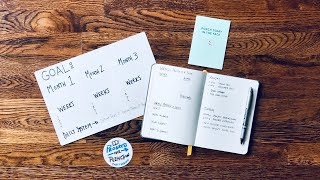
Matt Ragland walks through his QMWD framework: breaking a quarterly goal into monthly milestones, weekly deliverables, and daily tasks. He uses booking speaking gigs as an example, showing how to reframe it as reaching out to 20 venues, then mapping the specific monthly and weekly actions needed to get there.
Chapters
Hi everyone, my name is Matt, and welcome to another Bullet Journal productivity video. This video is the follow-up to my 2020 Bullet Journal layout and planning video. So, if you want some ideas for how to lay out and structure and organize your Bullet Journal for the upcoming year, or any new Bullet Journal that you might be starting, make sure you check out that 2020 planning video right here. Also, there is going to be linked in the end screen and the description below my Bullet Journal Basics Planning Series. So you can check both of those out. They're great for getting started with a Bullet Journal and planning out for several months in advance. This video, however, is how to plan and execute your goals using the Bullet Journal with a quarterly system that I've developed. It's not that special, to be honest. I mean, it's called QMWD, but that literally just stands for quarter, month, week, and day. So, it's basically taking a big quarterly goal that you'll want to accomplish, that you want to accomplish, and breaking that down into monthly, weekly, and daily tasks and systems that will allow you to make progress and eventually achieve the quarterly goal that you have. So, I know that the thing that you really like seeing is me working on the Bullet Journal. In this video, I did use the Baron Fig Mastermind Deskpad. It's the same kind of like dot grid, thing, but it's just much bigger and lays flat, so it's a lot easier to draw and write on and for you to see it on the video. But that's what we're going to be getting into today. Hope you enjoy it, and here we go. It was a bad snap. Here we go. I don't know what I'm doing with my teeth here. Here we go.
I want to show you how you can take a big goal you might have for the quarter and break it down into achievable steps that you can accomplish for every month, week, and day that constitutes the quarter. Now I like the quarter for goals because it gives me a pretty close approximation of time that I can do something relatively big or a big piece of a larger goal that I might have for the year.
And it's something that is not really that much time, it's less than 100 days. So the way that you can think about this, so let's go ahead and start breaking it down.
We're going to start the quarter and we're going to say like, what is my one big goal. I encourage you to limit to one goal, especially if you're getting started with goal setting in general. It'll give you something to really focus your time on, and you won't feel torn between different objectives or goals that you have. So you're gonna have the one big goal for the quarter, that 3-month period, and then we're going to break it down and say, what are the 3— of course, 3 months in a quarter— 3 monthly milestones didn't really have to write monthly there, but 3 monthly milestones that you have that if accomplished will help you achieve that one big goal. And then we're going to break it down even further. So what are the 4 deliverables that you can have each week that if accomplished will help you meet that month's milestones? And then what is kind of the system or the process that you can have every day that will help you reach that weekly deliverable? And then what are the system and tasks that you can accomplish either every day or multiple days of the week that help you achieve that weekly deliverable, then meet the monthly milestone for those 3 months? And then at the end, if you do all of these other things, will help you achieve the one big goal that you have for the quarter.
I will make a quick caveat that if you're new to goal setting and achievement, or you just haven't done it in a while, you might want to take it down from a quarterly goal into a monthly goal that you have, and then think about that weekly milestone and the daily task systems that you can set up. So it's still the same thing, but something a little bit closer, something a little more like reachable and achievable. And even if you don't hit that monthly goal, then you can still think about like, okay, what, what went wrong, what went right, and that way you can make changes going into the next month instead of feeling like you have to wait for the end of the quarter. So it's totally fine to make those adjustments, make those changes so that you can just like work the muscle of goal setting, achievement, and systems thinking.
So let's break this down for something really specific that I have personally. We're going to go quarter, month, week, and day. So my goal is to book 3 more speaking gigs for 2020. That is the thing that I want to have achieved at the end of the quarter. So what do I have to reach at the end of each month in order to achieve this final quarterly goal? And what I'm talking about here is doing a little bit more of systems thinking rather than like I may or may not book the speaking gig, so maybe a good, like, sub, kind of quarterly goal for this is to say that my quarterly goal is actually to reach out to 20 gigs. That's something that I can definitely achieve. I may or may not book 3, but probably if I reach out to 20, I'll have a good chance of booking the 3. So what are the milestones I have to reach each month in order to do this? Well, let's say for the first month I have a speaker pack that I need to complete. Okay, so I have a speaker pack. And 2 is to find 20. Now maybe that won't take an entire month, but it might. That is my goal though, my monthly milestone. And then the third is to Send inquiries and make the pitches. Okay. So these are the 3 monthly milestones that I have that if I complete these, then I will definitely reach that 20 gig outreach goal and most likely reach my quarterly book 3 more speaking gigs goal. So now I have to think about, and then I take the Sharpie away for this. I won't write all of these out, but now I'm thinking about like, okay, let's say for January. So then let's say for January, that first month, February the second month, and then March the third month. So now I can break this down into each week and think about 1, 2, 3, 4. What are the things that I need to do in each of these weeks that can help me put my speaker pack together, can help me find the 20, and then can help me write and send the inquiries. So hopefully you're seeing all of this. Let me zoom in a little bit for you. And so now I know each week I have these things that I have to do, this weekly deliverable that if I complete this will help me get my speaker pack done, will help me find those 20 conferences or retreats or whatever. And then number 3, to send the inquiries. So let's say for the first week, my goal is to research how other speakers pitch their, organize their packs. I need to get my reel for speaking together. So a few different clips. That'll probably take 2 weeks. So I'm kinda using 2 weeks right here. And then, Number 4, so the last week of January, this fourth weekly deliverable is to complete the pack. So you can see if I am able to do each of these deliverables each week, then I'm going to be able to reach that monthly milestone of having the speaker pack completed. So now let's talk about it on a daily basis. What kind of time do I need to allot every single day in order to reach these deliverables each week. So what I can do is basically all I'm doing right here is I'm thinking about I need to probably create an outline. This goes more into systems than it does like this is the specific thing I need to do for like each of these things, but I need to outline the tasks, and I need to block time. So I'm doing all of this, and this goes back into, like, what you're doing from a daily and weekly perspective with the Bullet Journal of previewing the week ahead and reviewing the week in the past. So you can do a little bit better job of saying, like, okay, I thought I had this amount of time available last week, but I didn't get everything done.
I need to change this up a bit.
And when you're doing these weekly, you know, these weekly reviews and previews, it gives you a really good idea of the time that you have available. And I don't know why I put the parentheses there, previews. But this gives me a much better idea of this is the time that I have available that I can adjust if needed.
And that way I'm staying really flexible with the goals that I have.
So you can do the same thing with the quarter, month, week, and day system to again outline and define the one big goal that you have, the three monthly milestones that if achieved will help you reach your one big goal, the four deliverables that you have at the end of each week that if reached will help you reach that monthly milestone, and then the system and tasks that you have every single day that help you make the time to complete those weekly deliverables that, if you complete those, will help you reach the monthly milestone. And ultimately, once you reach each of these 3, will help you achieve that big quarterly goal that you have.
Thank you so much for watching this video. Just a reminder that if you want more resources on like really like nitty-gritty planning in a Bullet Journal and what everything means and how everything connects, make sure you check out my 2020 planning video in the cards, in the description, and and the end screen that you're about to see is my Bullet Journal Basics playlist that I'm in the midst of. I took a little, I took a little break from it, it being the new year, wanting to do these 2020 videos. But if you want to know more about like how to set up your bullet journal, really like, again, specific information about the index, about the daily, weekly, monthly spread, about what indicators mean and how you use them, collections, threading, all of it is in that playlist. So make sure you check that out. Thank you so much for watching. Give this a thumbs up and subscribe if you want to know when more of these videos come out. We talk about the Bullet Journal, we talk about habits and systems and other ways that you can use analog tools to make progress on the projects, the people, and the purpose that you have in your life. Thanks so much for watching again, and I'll see you next time.
Bye.
More from Matt









Journal reading 📖 Reflectjons on how I’m living & how it aligns with the vision I have for my life.

You don’t have to listen to me. But you do have to be intentional about the systems in your life.
