November Plan with Me in a Bullet Journal: Fitness Tracking, Monthly Notes, and Staying on Track
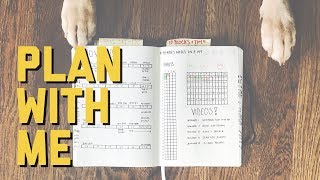
Matt Ragland shows his November bullet journal setup, including a simplified mood tracker, habit list for exercise and reading, and a new "focus time" block for uninterrupted work on high-impact tasks. He walks through his monthly and weekly spreads designed to keep productivity and personal growth on track.
Chapters
Hi everyone, my name is Matt and welcome to another Bullet Journal productivity video. In this video, I'm showing you how I'm getting planned out for November. There's so many things I love about this month. There's people that I love that have birthdays, from cousins and grandparents and brothers and just other friends. So there's so many things to love about November, including Thanksgiving here in the US. It's one of my favorite holidays. I just love the food. I love that you get to spend time with family and friends, and there's just so many things that I love about it. So I'm I'm going to show you how I'm planning out this month. I'm going to show you a little preview of some other videos that I have coming about gratitude and fitness and other things that I have ready for the end of this month. So I'm really looking forward to this. This isn't going to be as long of a video as I've had the last few weeks. I think those are around like 20 minutes each. This one should be like right around 7, 10 minutes at the most. I'm just going to be going over some things that have been working for me, things that I'm changing up a little bit, and also a couple of things that I've pulled out of the recent Bullet Journal Method book that I've been finding really useful. So, here we go, let's start planning for November. This month for November, you can see I'm doing a lot of the same things that I've been doing all year now, but I did simplify a few things and make some changes that I want to point out to you. Now, you can see that I have my normal November layout for the month here on the left side of the page. Just going across, I start my weeks on Monday and take them through Saturday, Sunday. Right here. So I do that instead of just starting on the 1st. And so you can see I've got like October 29th, 30th, 31st, Happy Halloween everyone. And then I just keep going throughout the month and then also have like December 1st, 2nd on that Saturday, Saturday, Sunday down at the bottom. So normal, normal dates, normal month. And then this right here on the right side again is where for the month I'm tracking my habits and also my mood and also have a and a reminder for the videos that I want to be doing. So a little bit of a preview for all of you here. November Plan With Me, that's what you're watching right now, like Inception. And then I want to do next week, let me know in the comments, I'm planning on doing a livestream about the books I read and some more about note-taking that lots of people commented on in the Bullet Journal Method book. And then fitness tracker, gratitude journal, and then journal prompts. I'll have 31 journal prompts for you to go through December on. One thing that I changed about the mood tracker right here, and I admit I totally, totally failed on it for October. I was kind of, I did a poor job of migrating. Oh shoot, it's not even in this notebook. Okay, it's not even in this notebook. Like I said, I did a poor job of migrating. But I didn't really fill out, because as you probably remember, let me go way back and find one. I had like so many different— this was last September— I had so many different states that I had to kind of think myself through. And while this does make for a very lovely tracker, I switched it to something that's just a lot simpler, which is green, orange, normally yellow, and then red. And so this way I'm just getting like, you know, kind of like traffic lights. And we do this at work where we ask each other at the beginning of each week and then kind of at the end of each week, like, what are you? Green, yellow, red? Now, yellow shows up terribly on paper, and so it's orange here, but it's just a— since I'm thinking about it in those terms for work anyway, just asking myself, are you green, yellow, red, or green, orange, red? And this gives me kind of a quick— a better quick glance. So, like, Monday I wasn't feeling very well. I don't know if you can tell, still kind of have a little scratchiness in the voice, but then I've been recovering and doing much better since then. And then cutting down the habit tracking a little bit. So exercise, reading, journaling, and then meditating. These 4 things are the ones that I want to really track going into November. So that's what the month looks like. Another thing that I've done a little differently is that you'll see fitness tracking preview. That's all. Is that I've been like putting notes at the end of the week, and I'm going to show you how, you know, a little bit more about this. But I've been putting notes in right here, like something that just kind of comes up top of mind. Sometimes I've also put it over here at the beginning of the week. I also in October— I also in October was making a kind of a note catcher, like a catch-all, a catch-all kind of note spread over 2 pages for anything that isn't specific for like the week or the day itself, just somewhere I want to put notes. So I'm recreating that in a more official way. For November. So you can see I've just got month's notes on page 149. I don't think there's anything there right now. The month hasn't started, but I've got November notes right here. So now if things are coming up that aren't specific to that day or week, I can just drop them in these two pages. Now ideally what I would do, and I just didn't, I didn't think of it in time, is that I'd probably do going back like these two pages, which are now the end of October, these two pages would be the November notes or the monthly daily notes, fitness tracking, again, which I'll talk more about in a couple weeks, fitness tracking on these two pages, and then like the month habits and dates on these two pages, and then start going week by week spread. So that's what I'm going to do in November and going into December, and probably going to have some version of this going forward into the new year, but I'm going to talk about that at the beginning of the new year. For the weekly spread, I'm still doing this kind of outcome-based planning for the week. And so what I'll do here, and let me show you what I did at the beginning of this particular week of October, is that I'm putting down the things that I want to have accomplished as an outcome for the week. And so new OKRs, plan with me video— hey, that's you— schedule trainings, and then timeline for event tracking. So these are the 4 main things that I want to have made significant progress on and/or completed by the end of the week. And this really informs how I go into my week, what my meetings are like, what my top tasks are like, and then also what I'm spending my focus time on. I'll talk more about that in a second. You may be asking yourself, what's the difference between tasks here and then tasks here? These on the daily pages tend to be more of like things that are associated with that day. So again, coming back to like, say, that was last week. Coming back to Wednesday, it's actually the 31st right now, is shooting the video, establishing OKRs. And so these are top tasks more associated with the day. The tasks here would be things that are more associated in general with the week. So getting my costume finished up. I am Iron Man. And then I get ingredients for chili. Different things like that. So these are more— these aren't specific to a day, I can do them at any time, but still I want to have them written down somewhere. So that's what goes— tasks right here versus tasks on the daily pages. And then this focus time is a new thing. You all know that if you watch this for any length of time, you know that I kind of love bar charts a lot. So these are 5 sections for focus time of each day during the week, and there's nothing special about like, oh, there's 3 dots here, and so what does that mean? It doesn't mean anything. It's just just spaced out that way. I did want to keep it even. And then all I'm doing, as you can see right here, is I'm just putting in the one thing that I want to focus on during this focus time. Okay. And I found that to be really, really effective and important because it helps me make progress on these outcomes, on these top tasks, because I've given focus time for it. Now, if you're asking yourself how much focus time do you allow for this, I would say at least an hour. The more the merrier, in a sense, but a 1, 2, even 3-hour block. I would say what I try and do is at least an hour of focused, uninterrupted time every day, and then hopefully sometime, usually I can do it on Wednesdays or Fridays, a longer, like, 2 to 3-hour block. But that's what I'm doing with focus time. Again, working on Creator Pass, calculating open rates, working on my OKRs, a deep dive into metrics, and then mapping out the email strategy. And so these are the things that I would want to focus on during the focus time. And you get, you just get so much better at your work and at the things that you care about when you're spending focused, uninterrupted time on it. So I'm going to link to Cal Newport's book Deep Work. In the description. I've done that in the past, and a lot of you have, have made comments about it and how much you've enjoyed it. So definitely check that out. And the rest right here, very similar to what we have. So again, this, this is just the same daily page and top tasks. I am adding in— I haven't always had like a Saturday, Sunday here, but I wanted to start adding that in, especially in the fall. There are just so many more family and friend events, and so I just want to have something to write that down there. So if you're looking for a monthly or weekly layout, definitely check this one out. I think it'll be minimal and useful for you because you're able to see what you have in the month, the things that you want to track, everything that's related to your particular week about with the days and the tasks, unattached tasks to a particular day, your focus time, the outcomes that matter to you, and then notes and notes for the week, sorry, and then more general, like, notes for the entire month. Thanks so much for watching my video about planning for November. There are several new videos on the plan for this month and going into the end of the new year. I don't have a specific download. I still, like, shame, shame, shame on me, I still have a download I owe to people from the September plan with me video. So I'm going to be sending that out to you with some of the things that I changed about this November one. So I'll link to that still in the description below. But the other thing is that the Bullet Journal Method book giveaway went so well, nearly 1,000 people registered. And so what I'm going to be doing is I have other, I have other, like, books. I have these things. I have these books. I don't need them. I'm going to be doing some more giveaways going into the new year. I want to make it a regular part of this channel, and they will only— some of these will only go out to the email list though. So I'll do some bigger ones like Bullet Journal Method. I have a time tracking giveaway that I'm going to be doing at the end of the year, kind of going into December. But some of these, like books that I just showed you, I'm only going to be giving those out to my email list. So make sure you sign up for emails in the description below and make sure that you're on the list for those going forward. All right everyone, I hope you have a great week. I hope that November and the end of the year is going to go so smoothly. For you. And bullet journaling, journaling, planning, tracking— these are all things that I believe are going to help, and that's what I'm going to help you with. Have a great day. I'll see you next time. Bye.
More from Matt









Journal reading 📖 Reflectjons on how I’m living & how it aligns with the vision I have for my life.

You don’t have to listen to me. But you do have to be intentional about the systems in your life.
