PLAN WITH ME | Bullet Journal Setup | Time Blocking & Tracking for Productivity & Focus
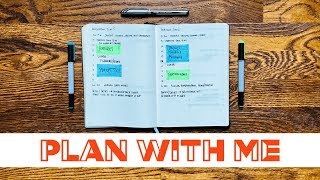
Matt Ragland shows his June 2019 bullet journal setup with a minimalist monthly spread and a new vertical hourly weekly layout for time-blocking. He tracks actual time against planned blocks in a pocket notebook to spot gaps, and invites viewers to try a time-tracking challenge.
Chapters
Hey everyone, my name is Matt, and welcome to another Bullet Journal productivity video. I'm really excited to share this one with you, especially, it's a new Plan With Me video. I'm trying out some new things with time blocking and time tracking that I want to share with you. I know it's been a few weeks since my last video, so shout out for watching this to all of you. If you want to hear a little bit of a monologue explanation/plans for the summer, then I'm going to share that at the end, but for right now, It's almost June 2019, that's insane. Let's go ahead and jump into the planning video now. I'm excited to share all this with you. Let me just, I mean, can I just say again, it's so nice to have this community and have all of you to share this with. So as we're jumping into June, still using the same monthly layout, really simple, really minimalist of the days of the month connected to right in the next like dot column, the day of the week. So first being a Saturday, Sunday, Monday.. And then same thing over here, syncing up with the primary habits that I want to track. Let's zoom in a little bit. The primary habits that I want to track: movement, journaling, and reading. My AM and PM mood, and then a one-line journal. I do want to say right here on the one-line journal, you may see, let me come back a little bit to the beginning of May. I kind of fell off, just, you know, total transparency with you. I kind of fell off with the tracking right here. May was a super busy month, as you'll hear about in the outro monologue. But the thing that I don't feel as bad about in terms of like the one-line journal tracking is that I did complete like every, right now I'm at every day this year for full-on journaling. So if I am writing my main journal entry here in the little pocket size, this is a Baron Fig by the way, Baron Fig Confidant. Pocket size, then I'm not going to worry as much about the one-line journal entry here. So same calendar layout, days, habit tracking, mood, journal, super easy to do and find. One of the things that I'm doing a little differently is that right away I'm going to have this June tasks and notes, and you're going to see why I do this in just a moment, but I'm having a full, like, a 2-page spread here to make little notes or tasks that might not be connected to a particular day, but just something that I want to do. Like right here, take my wife to watch Endgame. I've seen it, she hasn't, so she needs to see it. So let me, before we go into June, it'll make more sense if I show you what I've been doing the last week of May. Some of you know, if you're on the email list, that I changed jobs at the beginning of May. And so my weeks started to look very different than what I was doing the whole year before with ConvertKit. I'm with a company called Podia now. And I don't have obviously all of the meetings and everything that I did. And so I'm trying out a different kind of weekly agenda by listing my hours in vertical form. So like 5:00 AM through 10:00 PM. These are all of my waking hours. And so with this, I can be either really, I can be really proactive with saying like, this is the thing that I want to spend time on. And I've started to do a lot more time blocking because I have fewer meetings, just in general, fewer specific times of day that I have to do stuff. And so you can see that I have, go ahead and zoom in here, that I have a couple hours blocked out, like, work on this project, work on new onboarding emails. And I have this several different places. I can also go ahead and put in the one-on-ones and meetings that I would have. So, like right here, Podia meeting, meeting with Lynn, meeting with Spencer. And I, outside of that, can put in those big blocks of time where I can really get into the deep work of making change. And I've really enjoyed doing that. Now I don't do that as much on the weekends because I like for my weekends, I just put down some things here of like we hope to do, but I don't, I don't have as tight of a schedule on the weekends. My wife and I just try and pick one or two things that we want to do together or with the boys, and then we just kind of go from there. Now she worked this entire weekend, so I had a little bit more planned out for what I wanted to do with the guys, guys being my 4-year-old and 5-month-old. Again, here is my notes and random tasks for that week. So just different notes. You can see I'm using just the dash, the emphasis dash, for like different like little notes, and then like a question or a task. Uh, random thing, random thing. Oh, this is where I planned out the video for what you're seeing right here. We're currently in the time blocking section right here, and next we'll go into time tracking. Other thing, just little random aside, is I'm thinking about starting a podcast with my wife. Here's some of the things, some of the topics that we might talk about. So make a little comment if you saw this section of the video, make a little comment if you think podcast with me and my wife about just our family, how we think about these different things like our values. Thinking about doing like 10-ish episodes just to see how it goes. So now let's look at the current week. And again, what I'm trying to do is I'm tightening this up some, making it a little— making it really easy to see and follow instead of doing like 2 sets of times. Some of you may have already thought of this when you saw it. I started to transition it right here, but just simple minimalist hourly layout right down the center. Here I am on Tuesday right here, and what I really have is just this onboarding project for the rest of the day, and then, you know, working on the video. This isn't entirely correct, but you can see I'm getting a lot more proactive with how I want to use my time. Now I am going to spend some time tonight since this is kind of Tuesday coming off Memorial Day. I would normally do this on Sunday or Monday, but since we're a day later is that I had a lot of dependencies with a couple of meetings today. And so sometime tonight or early tomorrow morning, I'm going to go through the rest of the week and map out where I want my time blocks, especially now that I have my— let's see, I have a meeting with Greg here. Shout out to Greg if you watch this. With this now, I can go through, and now that I have all my meetings, uh, filled out, I can go through and I can fill in all of the time blocks for the projects that I need to be working on. This allows me to have a really proactive look at how I want to spend my time during the week. For now, I'm still using this week, weekly sheet right here for these to-do lists. Kind of going back and forth between like this notes and random tasks. Gonna be testing how I feel about the differences in this, but like I know this came out of the meetings today, but working on some feature videos this week. So just popping those right here. Time blocking can be amazingly useful because it gives you the time and space to create the deep work that you need in order to move your work forward, to move your ideas, to make them happen. I know for me that it takes a good 30-ish minutes of almost like mental creative warm-up before I really get into the groove of creating that work and thinking about things in a different way and just feeling like I can, I can write or I can make a video or I can like do something big at my job. Like I need a little bit of that ramp-up time. And so really blocking out those 2 to 3 hours to be able to on something uninterrupted, and that's the big, that's the big kicker. You have to be able to limit, minimize, or completely remove any distractions in your environment or with your devices that can pull you away from that creative deep work. One other thing that I want to show you that I've been trying over the past week is updated time tracking. So I've been wanting to do an updated video on this for a while, but but just these really simple pocket notebooks. This one is from my friend Chris at Bond Travel Gear. Nice little pocket notebook, real flexible. I wanted to be really intentional with my time and make sure that the things that I said that I wanted to do in my proactive time blocking here was being transitioned to what I actually did on a daily basis. So what I've been doing, and this is kind of a lot, but it will give you a very, sometimes brutally accurate look at how you're spending your time. Is that on this page, see both of them I write down hours of the day, again, 5:00 AM to 10:00 PM, I guess it would be 11:00 if it's this whole 10 o'clock hour. But my plan, my proactive plan for the day with the time blocking, and then what I actually did. So you can see some of the differences here, like say at 11:00, now this, we moved our meeting, but I had initially said, okay, at 11:00 I'm gonna meet with Spencer, that got moved to 12:00. So I just made a change there, worked on in-app messaging, had lunch, worked on the talk. The thing that I'll do is like as I go through and I make things proactive here on the scheduling side, if that matches up, I'll just give it a checkmark and I don't rewrite the entire thing. And this has been really useful. Some things I will, some things I'll spend a little more time on, but I'm just going through here and I'm saying like, this is the plan. That I have, and this is what I actually end up doing. And so this has been really useful and illuminating for me. And even after like 5 or 6 days of doing this, it shows— it allows me to be even better at what I was doing. Like, if I get off the rails on my time a little bit, this has really, really helped. And so I do encourage you, I'm going to be doing— I think I'm going to be doing an updated time tracking challenge, like just a 7 or 10 day thing that we can do together. Over the summer, drop in the comments, let me know if you'd be interested in joining that and I can kind of get that going again. This time tracking of looking at it from a very proactive perspective in the morning of this is what I intend to do. And then a retro kind of retroactive reflective look at like, okay, and not in a judgmental way, but just looking at and saying, this is what I intended to do. This is what I ended up doing. How closely did it match? What were some of the pros and cons of that? And what do I need to do either more or less of going into tomorrow. So I encourage you to check that out. You don't have to have a different notebook for this. It is nice from a time tracking perspective to have something that's easy to fit in your pocket, but since I work from home, what I'm going to be doing, what I'm going to be doing going into next week is having just one, one spread for this in my Bullet Journal. And so What I'll do is, you can see again, 5 through 9, 5 AM to 9, what would end up being 10 PM down here, is going to be, I'll fill in my proactive schedule and then I'll just make notes over here on the right side of the page with anything that I did differently. I can have notes. One thing that I might do a little bit differently, you can see I have all the hours right down here and then for this one and a couple others, I end up doing pretty much the same thing from 6 PM to 10 PM every morning and kind of the same thing from 5 AM to 9 AM. A lot of times I'll, you know, wake up, wake up, work out, journal, read, breakfast with the boys, and then, you know, get into the day. And so that's— after a week, I noticed that's pretty much my same morning every single day. And then it's the same thing around like 5-ish PM, spend time with family, play with the boys, eat dinner, baths, bed, read, clean, bed.. And so I found that even after a few days, I didn't need to like write that down every single time. So what I might do instead is say like just block off 5 AM to 9 AM, make, you know, like one line right here, like did this a little bit differently or got a standard operating procedure, 5 to 9, and then 6 to 10. And then notes and tasks can go in the bottom third of the page, right here. So, and again, anything that I do differently or is a little bit of a change, I can put in a retro— a reflective retroactive note on the right third of the page over here. And that's why I've enjoyed doing time tracking again in the way that I showed you, because I'm putting it down as the block of time, what I intend to do with it, and then I'm going back and kind of reviewing retroactively, like, this is what I actually did. It allows me to see the gaps and differences between what I intend to do and what I actually end up doing. If you want to see a more complete video on either one of these things, either time blocking or time tracking, leave me a note in the comments. You can watch a previous time tracking video here, but I've been doing some different things including the side-by-side comparison, and so I'm probably going to do an updated video. But let me know if it's something that you're interested in, because that will help motivate me a little bit more just to know that you're, you're excited about it. Okay, so what have I been up to? What's the direction of the channel? Especially if you've been watching for a long time, then you've noticed, no doubt, that the last 3 videos have not been as Bullet Journal focused. There was the bag review video, there was fear setting, and then there was one about fighting distractions on your phone. And this channel is still very much about the Bullet Journal Method, about tracking and being mindful of your productivity, doing that with an analog tool like the Bullet Journal, with these small notebooks that I've been showing you today. The thing that I do, like, I do just personally want to try some different things because to me the Bullet Journal is a tool for helping us be more mindful and focused about the things that matter. And so I'm kind of applying that same principle to some other ideas and mediums that I've been thinking about, including like, how do we think about the time that we spend on our phone? Or how might, like, being intentional about the things that we carry and have with us, like a bag, be another reflection of that type of principle. So it's still very Bullet Journal focused. I get really excited about this still. I have a bunch of, bunch of other ideas and videos that I want to do for you. And the other two things, if you're on my email list, you already know this, and if you're not on my email list, I would love if you signed up. There's a link in the description. It's really easy to sign up for. There are also a couple of different challenge ideas that you can join. What I shared in the email newsletter is that in the past 6 weeks I got a new job, and so that So that has taken up a lot of my time. The other thing that has taken up a lot of like my vlog video time the past month is that I am doing a talk at a conference, my first big conference talk in Boise. It's called Craft and Commerce. And I have been putting, I've probably put close to 40 hours of work into this talk, into the slides, into the preparation, the outlining, the rehearsing. Everything about it. And every time I've started to do a new video for, for you, I've just been overcome with this thought of like, I have to be so prepared. I have to do so well. I want to do so well at this live talk. And I just ended up working on the talk some more. So the talk is June 8th at 9:44 AM Mountain Time. After that is over, all of the time that I had been giving to that talk is going to come back to you, and I have ideas for more challenges and courses and, of course, videos and lots of other things that we're going to do together. So, keep an eye out for an uptick in content over the next few months. Thanks for being patient with me. I appreciate all the support. The other thing that I've been doing, if you're not following me on Instagram, it's just @bulletjournalguy. Again, link in the description. But I've been doing like about every week just a very casual Instagram Live on Monday or Tuesday. You can sign up for notifications and it's just been like me coming on, answering questions, talking about, talking about my week. It's just very low-key. It's very raw. Lots of interaction. So if you enjoy, if you enjoy that, if you're on Instagram, follow me there. It would be awesome to see you and say hi. Send me a DM or drop a comment on one of the pictures. What I've been doing mostly there are the stories and lives more so than the posting, just because I like that interaction with all of you. So again, thank you so much. This has been a blast. I'm really excited for the summer, for the rest of the year, to share things with you, to continue to build this community together. Thank you so much for getting me to 30,000 subscribers. I just— it's— I still remember having like— I literally, I really do remember having 300 subscribers. It was a couple of years ago. I remember getting to 1,000 subscribers. And so getting to 30,000 is just insane. So thank you so much. It's an honor and a pleasure to serve you. And if you have any ideas, things that you want to see in future videos, please drop them in the comments below and I will— I'll put them on my list. I love doing videos for you. So thanks again so much, everybody, and I hope you have a great week. I'll see you with a new video really soon. Thanks. Bye.
More from Matt









Journal reading 📖 Reflectjons on how I’m living & how it aligns with the vision I have for my life.

You don’t have to listen to me. But you do have to be intentional about the systems in your life.
