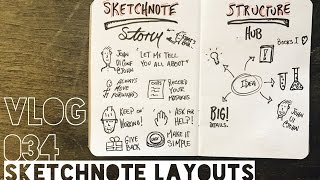
Matt Ragland shows three ways to organize sketchnotes: the story layout reads left to right like a book, the hub layout radiates ideas from a center point, and the big-idea layout builds one large illustration around the main concept. Keep sketches simple and match your comfort level.
Chapters
Hey, what's up everyone? This is Matt. Thanks so much for joining me today on the video. I'm actually doing my first Facebook Live from my computer. I've almost always done it from my phone in the past, but now doing it live on the computer, live on the desktop. So you're seeing this, just let me know that you can see and hear everything all right. But thanks so much for joining me today. One of the things that I get asked a lot in terms of scheduling sketchnoting is, how do I organize my sketchnotes? And a lot of times it's just a scattershot approach, which can work just fine. The number one rule that I would think about here is, no matter what, make sure that you can understand it. So, the first person you should always create for is yourself. And I, I believe that. Because it's something that you can do that, especially with sketchnotes, helps you remember something that has happened in the past. Whether that's a meeting you were a part of, a conference that you attended, you know, any kind of like a sermon, a talk, anything like that. It should be something that when you look back, it clicks for you first. So, make sure that you're creating, that you're making that thing for yourself first. Okay? The second part of this is that I have come across a few different ways that you can organize your sketchnotes. And I was putting this together today. Hopefully this isn't flipped for you. I don't think that it is. But there's a couple of sketchnotes layouts that I recommend. And the first one is just the story type. Okay? And when you think of it that way, think of it more like a book. And so, let me bring this up. I'm terrible at putting things in front of cameras. I should get better at this. The first one is this story structure. So if you think of it like a book, it goes left to right, top to bottom, and you can just put it together that way. So when you do this with the story structure right here— good Lord, I look retarded— you have the speech, if it is a speaker, having that speaker up in the top here, the title, and then it's just going through and giving particular sketches, particular little notes about things that stand out to you, things that you want to remember. The second part of this would be— the second part of this would be the hub strategy, and it's right here. And in that, you kind of think of it like spokes on a bicycle wheel, and where you have the central idea or the central theme, and then you're just shooting out to different spokes on these. This is an idea, this is This is a book that was enjoyed. This is a little bit more about John the UI guy, some of the big details of his talk, whatever it might be. I want you to remember also that this doesn't necessarily mean that you have to have these crazy sketchnotes. It can be a really simple sketch. You can even just highlight different things that stand out to you. The third one, and then I'll give you a look at other ways that I've used this instead of just— is using what I call the big idea layout. And in the big idea layout, like, let's say you have something like a primary thought, or it kind of led— or maybe the title lends itself to— so lends itself to like a bigger sketch that is, you know, where you kind of fit all the content into like one one bigger illustration or sketch. And so if you had one of those, like, the 4 steps to becoming a published author, then I would maybe draw like literally 4 steps right here. And that way I can put everything into those 4 steps. And so it's contextualized within an image. Let me show you a more specific way to do this. This was at Tribe Writers a couple of years ago. I'm just looking through this. And Joe Bunting, who is at thewritepractice.com. Joe's great. So, you can see here that at the top here— at the bottom here is where I have, like, he talked about 3 steps to great writing. It was really throwing me off. He talked about the 3 steps to great writing. And so I put together, as you can see, the 3 steps: courage, acceptance, and quality. So when you think of it in those terms, you can see I have those 3 steps and everything is contextualized within those 3 steps. So I would think of it in those ways. Do you want to tell it like a story? Do you want to have more of a hub and a bicycle hub and spoke, or do you have like a bigger type of illustration or sketch that you can use to provide context to the story at large? So I would think of it in those 3 ways: the big idea, the hub, and then the story. I probably do the majority of mine in the story structure. And let me give you just a quick flip through some of these. Um, where's So this is something I did with— this is more of a hub strategy, but this is something I did for slash with Brian Harris. And this was for— so that's more of a hub strategy. I have a ton of these, and this was one I did with CJ at Sounds Like a Movement. For Seth Godin interview that he did. And so this is more of a— this is not a part of it. But this right here is more of the story structure. So I have Seth, I have CJ's logo, I talk a little bit, you know, just giving a little bit more context there. So that's more of a story structure. And that's what I've done for most of these. So it really just depends on what feels best to you. I have found that the story structure usually reflects the way that I'm thinking about it the best. But again, just really depends. Here are some more examples. This was also from Tribe Riders this past year. Carrie Wilkerson and Emily Freeman. So a lot of things— I'm going to do a full video just kind kind of going through my sketches here. Here's another one with Tim Ferriss' show. So, it really just depends on what resonates with you. Again, whenever you're doing sketchnotes, make sure that you're the first person you're sketching for. So, however you best take in information, however is going to help you remember things the best, don't feel like you have to get in here and try and make these really, you know, incredibly complex sketchnotes because depending on how you feel about your sketches, it may not work out that well, and then you just feel disappointed and your expectations were maybe too high. Like, these are really simple shapes that you can use to get started. You know, these, these 5 right here and the dots and everything. A great book to read on this is Sketchnote Handbook from Mike Rohde and Then Dan Rome's Back of the Napkin is fantastic as well. So thanks so much for watching this. I'm going to do another video next week where I go through this whole book because it's done. It's done now. It's full. You can see I'm on the, on my last page right here. I'm done. No more. Totally full. And like, I even kind of used the back page. So looking forward to sharing that with you, some of the takeaways. This is, you know, a year is the year of sketches. So I'm excited. Thanks so much for watching this. I'm gonna post it on YouTube also, so go to YouTube, check it out, subscribe there, uh, stay in touch here also. Thanks for watching.