The Best Books I Read in 2023
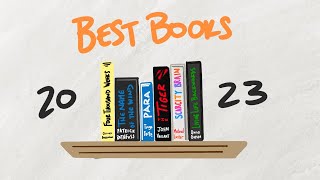
Matt Ragland picks six books from 2023: Four Thousand Weeks on mortality, Tiago Forte's PARA Method for organizing knowledge, Scarcity Brain on habit change, Living Life Backward on Ecclesiastes, The Tiger by John Vaillant, and Patrick Rothfuss's The Name of the Wind. He explains why each one stuck with him, from turning 40 to building a second-brain system.
Chapters
In today's video, I'm going to share my 6 favorite books from 2023. The way this video is going to work is in the next 30 to 60 seconds, I'm going to tell you what those 6 books are, and then we'll go back and I'll give you a little bit about each book so that you can get an idea of whether or not you may be interested in reading it. So here's the quick list of each book: Scarcity Brain by my friend Michael Easter. I previously recommended The Comfort Crisis, excellent book. "Four Thousand Weeks" by Oliver Burkeman. This is the productivity book that I wish that I had written. Get more into that. Number 3, "Living Life Backward." This is a faith book. Think of it almost like Stoicism for Christians. It's how Ecclesiastes teaches us to live life in the light of the end. We'll get more into that. My favorite nonfiction book that's still a story, The Tiger by John Vaillant. This is— I learned about this from Ryan Holiday. Great, great, great, great book. The PARA Method by Tiago Forte, signed edition. There he is. Thanks, Tiago. This is a short version of what I think is the most helpful part of building a second brain, and that is PARA. The 6th book is, as of now, my favorite fiction book, and it feels a little recency bias, but it's The Name of the Wind by Patrick Rothfuss. But you can see that I work next to a place where people work out, and I'm trying to get this video done before the next class starts. Right now it's just a coach working out. The way that I want to start the longer breakdowns, and these will only take a couple of minutes each, is by concentrating on what most people who are subscribed to this channel will be interested in. From a productivity perspective, this is the book that I wish that I had written. In fact, I avoided reading this book for a year because I, some of you may know, am into time tracking. I did a course that was all about— I called it 25 Hour Days, and then I did a time tracking challenge. And so when I saw Time Management for Mortals and I saw 4,000 Weeks, I was like, gosh, what a good idea. I should have done a version of this. And so I was frustrated for no reason at the author. For stealing my idea that didn't exist. I didn't write the book, Oliver Burkeman did, and he did an excellent job. The thing that is challenging about this book that I would not have gone down the path, and I'm glad he did— it is a challenging book because it forces you to confront the reality that you're not going to live forever. I just turned 40 this year And even though I still have a lot of life to live, God willing, there is a part of hitting 40 where you're like, I don't have as much time as I thought I did when I was 20, when I was 30. And the way that Berkman kind of lays out, hey, you're not going to be able to do everything that you want to do, you have a limited amount of time, how can you be intentional and purposeful about the time that you have, making sure that the purpose that you have, and the people that you get to share it with. Those are the priorities. So, 4,000 Weeks, Oliver Burkeman. Yes. Also productivity related, The PARA Method, Tiago Forte. I'll link to my review of the Building a Second Brain book that came out a couple of years ago. But to me, PARA, which stands for projects, areas, resources, and archives, This is the most applicable and easiest to implement element of building a second brain. This is also the one that I've stuck with the longest because it can be used— it's endlessly repeatable across many different types of platforms. So I can have a, you know, projects folder in a projects collection in my Bullet Journal. I can have a projects folder on Dropbox and Google Drive and iCloud on my desktop. It's so useful. This, highly recommend. It's also a very short book, easy read, less than 200 pages. And as you see, like, it's, it's the size of my head. It's smaller than my head, so it's easy to, to get through. Now let's shift a little bit and talk more about personal growth and development. And for that, Scarcity Brain by my friend Michael Easter. Michael is great. I've previously talked about his book Comfort Crisis. We've worked together some in the past. I'll just read you the COVID of the book because it explains it well, which is what a book cover is supposed to do. Fix your craving mindset and rewire your habits to thrive with enough. This spoke to me, and like when Michael told me about it, I was like, yes, give me the book, give me the preview copy right now. I still like struggle at times with— I spend a little too much time on social media. Twitter specifically, sometimes Instagram, sometimes YouTube if I'm like just trying to check those views a lot. I haven't quite like kicked that craving. What kind of news is going on? I'm more about sports news. I listen to too many podcasts. Yes, I listen to too many podcasts. I just kind of always have something going in my ears. You can approach it from a food perspective. Oh my gosh, stuff. There's a whole chapter in here about like craving to, to get more things. But it's like, hey, when you see a thing and you gotta have it, that's your scarcity brain saying that you're not going to have enough, that you're not going to do enough. So can't recommend it enough, Scarcity Brain. Let's talk about something that I mentioned in 4,000 Weeks, and that is this book Living Life Backward. And in like the subtitle for it, how Ecclesiastes, one of, to me, the most confounding book in the Bible, how Ecclesiastes teaches us to live In Light of the End. If you're familiar with Ryan Holiday, Daily Stoic, it has a lot of Stoicism vibes in it. And you say like, you know, were the Stoics influenced or inspired the unnamed writer of Ecclesiastes? Who's to say? But it has a lot of memento mori vibes, which is like you, you understand you're gonna die one day, right? This is a book that from a Biblical perspective helps ground us in the understanding that you're gonna die, and so if you're gonna die, what really matters? But at the same time saying, because you're gonna die and because you know what God has given you in this life, you should enjoy to the fullest everything that God has placed for you under the sun. I will admit I'm still wrestling with this book and the book of Ecclesiastes in general. I'm I, like I said, it's the most confounding book in the Bible for me. And to me, there are lots of confounding books in the Bible that I'm still wrestling with and, and try to understand. Shout out to Brent Beshore— Beshore, not quite sure the pronunciation— but he recommended this on a couple of podcasts, and I've really enjoyed it, even if I'm still wrestling with it. Let's talk stories. My two favorite stories, and I read more fiction this year and more like story-driven nonfiction. So yeah, it's still a story. It's not a made-up story. It's a real story. I, I think of the 26, 27 books that I read this year, almost half, maybe more than half— I'd have to look at the number up in the description— are fiction or story-driven narratives. So let's first talk about The Tiger. The Tiger is a great book by John Vallant. I hope I'm pronouncing that properly, but it's about the— a man-eating tiger and the attacks and the hunt and the people involved in it. This isn't a long time ago. This is 25, 25-ish years, 26 years that this happened. Very well written. It's endlessly interesting. I I found myself sometimes avoiding things that I was supposed to be doing to just read more of this book, sleeping less so that I could read more of this book. There are so many sections in here where they are like describing the Siberian wilderness and ecosystem. There's just incredible nature writing, even if it wasn't a compelling kind of cat and mouse game sort of story. Quick aside, hopefully you don't hear the music from the workout that's getting ready to start.. And if you do, I apologize. I will avoid this in the future. In the spirit of publishing without overthinking my publishing, I'm just going to ship this. And if it's a problem in the future, I won't do it at this time anymore. Last book, my favorite novel of all time, maybe definitely my favorite novel recently, The Name of the Wind by Patrick Rothfuss. And this is the third time that I've read this book and then the sequel, The Wise Man's Fear. I've read both of them in the past couple of weeks. It's a thick book. I would say, you know, it's 3 C's thick of a book. 700 pages and then Wise Man's Fear is closer to 1,000 pages. So a lot of book here. A lot of book. But not only is it a very compelling interesting story, it's a fantasy. It's a fantasy story so there's some magic and It's, you know, it's kind of set in a not quite Middle Ages but definitely not modern either sort of setting. So I love it. There's also so many things in here. Again, like, I'm gonna put some of my favorite quotes in the newsletter, so make sure you sign up to the newsletter because I'm going to put some of my favorite quotes in here. All these books I read on— I read on Kindle. I literally bought all of these just so that I could show them to you and again, not hold up the Kindle, but there are so many quotes in here that just like, this is a great way to think about life. This is a great way to connect your mindset to your purpose. This is like a good way to think about how you interact with people when it comes to power and persuasion. Wonderful book because it's a great work of fiction that shows you how you can align pieces of the story with things that are happening in your own story, in your own life. These are my favorite 6 books of 2023. I'm going to be doing a longer post on the newsletter where I'm breaking down some of my favorite quotes for each of the books, and I'm also going to tell you about the other 20 books that I read this year. It'll be more of a list with a little note about each one. It won't be as in-depth as I did for these books, but I hope you check it out. If you go to the link in the description, you can sign up for the newsletter where you're gonna— in the next few weeks, you're going to get annual review, you're going to get best books, you're going to get some of my favorite gifts coming up. That's going to be sooner rather than later so that you can order something before Christmas if you want. And then also bullet journal setup for 2024. Goals for 2024, all that's coming on the channel in the newsletter. Make sure you sign up to get it and I will see you not only in the next video but also in the newsletter. Thanks for watching. Thanks for reading. Thanks for all the love as I get back. Sorry, it feels like I'm yelling. I'm excited and I'm also trying to talk over the music. Love you all. Bye.
More from Matt









Journal reading 📖 Reflectjons on how I’m living & how it aligns with the vision I have for my life.

You don’t have to listen to me. But you do have to be intentional about the systems in your life.
