The Easiest Time Blocking System for the Bullet Journal
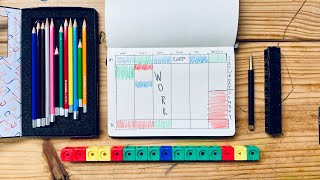
Matt Ragland shows how to block time in a bullet journal to match what you actually do. He tracks his 40-hour work week as a father of four using Google Calendar and colored blocks, then explains why knowing your capacity keeps you from overcommitting.
Chapters
One of the most important resources you have in your life is your time. I'm a father of 4. I run a business on a very normal 40-ish hour a week schedule, and I want to show you how I use time blocking to get everything done that I need to, or at least reduce the amount of overwhelm and feeling of like, ah, there's too much to do that I have in any given day and week. When you use this time blocking system, and you can create it in any way that makes the most sense to you, you'll have a better understanding of your capacity and more confidence that you're able to protect and block time for the things that matter in your life. When people ask me how I have enough time to do all the things that they see me doing on the internet, or maybe just in life, I always tell them that time blocking or calendar blocking is my secret weapon. This isn't just something that I do personally or for work. This is also something that we do as a family. My wife and I meet every week and talk about what our calendar blocks are like and when we get to do the things that matter the most to us individually and as a family. Now, certainly you don't need to have kids or even be married to take advantage of time blocking in your life. We all have things that we're busy with, and if you find yourself thinking, I don't have enough time to do all the things that I want to do, then this is a really good opportunity to start to track and block the time that you're using and see how it could be more effectively used going forward. One of the things that you're going to see me using in this video are these fun counting blocks. I'm also going to show you my Google Calendar layout. I do a lot of my time blocking in Google Calendar. I also do some in the Bullet Journal. So there's a few different tools that I use for this. You can use any or all of them, or even just something that you come up with personally. This is a very flexible system, and I want to really emphasize that. Don't get caught up on the tools that I'm using. Think about the strategy and the principles of time blocking and how it could be used in your own life. One of the most important parts of time blocking is actually a little bit before, and it's time tracking. Now I have a few videos about time tracking that you can check out, but I want to emphasize that if you want to know where your time is going, then you have to track what you're using it on. It's a lot like if you're not sure what you're spending money on, well then you got to start tracking what you're spending money on so you can better categorize the types of expenses that you have. You can think of time a lot in the same way. Now here's the thing, you may not actually want to change after you understand how much time you're spending on a particular thing. And that's as long as you are self-aware and understanding and are making a clear decision about, yeah, I would like to spend this much time on my phone. I would like to watch this many shows. If that's a decision that you're making, that's fine. But go ahead and make sure that you're clear about it so so that you can understand what you're spending time on. I want to block out 30 seconds at the beginning of this video to say thank you to Mighty Networks. Mighty Networks is a big supporter of my channel and my work, and it's what I use to host the Father of Fire community that I'm going to tell you a little bit more about at the end of this video. Now, I'm also going to tell you a little bit more about Mighty Networks in just a few minutes. But if you want to know what I'm talking about and why it's the best community platform, then go to the link in the description below or just hang on for a few minutes and I'm going to tell you more. What time tracking and then time blocking has really helped me with is a better understanding and more awareness of my capacity and where my limits lie. Because I gotta be honest, I would love to create a YouTube video every single week, but as I have tracked my time and blocked my time for YouTube videos over the years, I know that even what I think is a relatively simple YouTube video without doing a lot of editing or spending a lot of time on the thumbnail or the title, it's still going to take me at least 2 hours. That's really fast, probably more like 4 hours. And I know after tracking my time and blocking my time and seeing like, this is what I want to do personally, this is what my responsibilities are for work, for the company that I'm a part of, I don't always have 4 extra hours every single week that I can give to YouTube on top of like spending a couple hours on the newsletter every single week. So there are some things that through time tracking and time blocking, I better understand the capacity that I have and what my limits are if I still wanna sleep a decent amount or if I still wanna exercise 3 or 4 times a week. Those are decisions that I've made, but I've made them with the information of tracking my time and knowing this is how much it takes. Am I willing to do that every single week? Because for me, and I would probably say for most of us, the frustration comes in a lack of awareness and not understanding this is how much time I'm spending on a thing. And not being able to make clear decisions about what you actually want to spend time on and what your priorities are because you don't know where your time is going and what activities you're spending it on. I'm gonna explain these color blocks to you and let's go ahead and take a look at my Google Calendar as well because I do like a layout. I don't do this every single week. I've mostly done this just so that you can see how I'm like mentally thinking about this and how I'm often planning it out with my wife. I'll put it into my bullet journal as well. I don't have like a strict organizational system around this. I don't have anything to sell you around it because it's not even strict for me. So I can't be like, oh, you definitely got to do this. But what I'm saying is I'm usually sleeping about, you know, this is 24 hours. There are 24-hour blocks right here in the fun blocks that I stole from my kids. And there are 7 sleep blocks right here. Now sometimes I may only sleep 6 hours. So let's go ahead and take that one off. And I could instead work 9 hours, or I might sacrifice an hour of sleep to get an hour of workout time. So when I think about how I like switch these blocks back and forth, that's one of the key pieces of flexibility that I want you to think about, that I want you to know. Like there might also be times where I need to add on another sleep block. Maybe I'll get, you know, some 8 hours of sleep. Maybe I will have to spend more time, get to spend more time with my kids because my wife has a thing that she's doing or she needs some extra time to herself. She's, she's a stay-at-home mom. So totally understandable. I want her to take more time for herself. So even when you're looking at calendar blocking or time blocking it to this extent, I want you to remember that this is a flexible system. And really what I'm going for is overall that I'm spending, you know, 40 hours of time at work. Each week. I'm working out 3 to 4 times, and that's for about an hour each time. I'm also spending about an hour a day on like personal time, personal development. That could be reading. It might be watching a show with my wife. Is there a time of reading that you can also spend with your wife, whether you're reading the same book or you're just, you know, sitting on the couch and enjoying time together? And maybe you're talking about something that you're reading. You're just like breaking down the day back and forth between reading or journaling. These are things that my wife and I try and do 2 or 3 times a week. We also like to watch shows, but that way we're spending time together. We're also like doing something that we enjoy. I like to find those times where I can, I call it happy stacking. You can also think of it as like time block overlap. Another way to do this that I often will like bring my kids into it is we'll spend time together and I'll also be doing a workout. So we might like turn it into a little bit of an obstacle course. So it might just be a game that we're playing. So I'm still counting it as a workout 'cause you know, I'm getting sweaty, I'm moving around, I'm playing with them and they're having a good time. We're having family time, I'm having workout time. It's a win-win. It's a happy stack where I'm doing a lot of things that I enjoy doing with people I enjoy doing them with. Another thing that I block time for multiple times per week is to go into the Father Fire community that is hosted on Mighty Networks. To me, Mighty Networks is the best platform for community and courses. There are two big reasons why. The first one is people magic because one of the things that is going to make your community really work is the ability of the community to connect with each other. And I know that sounds obvious, but when I tried to do community in the past myself, it became really hard as the community host to connect everyone and learn enough about them so I can be like, oh Dave, you should connect with Ryan and Kevin, you should connect with Jimmy. What Mighty Networks does with People Magic is it takes all of that off of my plate. It connects people based on their location. It connects them based on the type of work that they do, maybe some of the other interests that they have. So it's automatically making those magical connections for members in the community as they join. Another thing that Mighty Networks does really well, and I've used a lot of community platforms and they are the best at using AI in like a healthy, helpful way. Another thing that I had struggled a lot with on community early on was like, hey, if I wasn't posting every day or multiple times per week, sometimes multiple times per day, it felt like that the community would kind of dry up if I wasn't posting. What Mighty does with their AI polls and questions is it starts to learn about what the community is talking about and it starts to develop these different types of polls and questions and ways that people can engage with each other. And you can do it automatically. Now, you can also look at everything ahead of time, but I have like 2 or 3 polls and questions per week that are scheduled out for several weeks in advance. And I can generate all of those literally in a matter of minutes because Mighty is learning about what Father Fire likes to talk about, and it can come up with those questions and polls on its own. And then I just review and approve. Mighty Networks also has all of the main features and benefits that you would expect for a community and a course platform. But in my opinion, People Magic and the AI polls and questions are the biggest game changers for me as a community host. So if you want to try out Mighty Networks for your community-driven business, I can't recommend it enough. Click the link in the description below to learn more and let me know if you have any questions. Now I show you all this to give you like the big picture of how I'm thinking about these 24 blocks that I'm using in a day and how I'm planning this out. And a lot of times what I'll do in terms of calendar blocking on something like a Google Calendar is I'm doing it this way so that I can keep myself consistent and see like, hey, this is what I want to be spending time on. I'll even do like, it's not on the calendar that you're seeing right here, but I'll often do like even a more specific work block breakdown. So I'm saying out of those 40 hours, I need to be using 10 of those hours for content. So basically 2 hours a day, I need to be focusing on YouTube, on podcast, on a newsletter. And that's just for like work. That doesn't even necessarily count like these YouTube videos. But there are also like another 10 to 12 hours that I'm spending on the Hey Creator community, our community for creators building businesses together. So that's about half of my time right there. So I'm blocking that out. I'm protecting that time. I'm making sure that I'm spending the amount of time that I know is within my capacity and within my limits to do the things that will also drive the business forward. And if you're watching this and all of, all of these blocks and all these calendars and all these colors are kind of throwing you off, I'm not saying that you have to like block out every hour of every single day. All right. You don't have to go that far, especially if you're watching this and it feels a little overwhelming. What I do want you to do is take that one thing that you know you should be doing, that project that you want to be working on, but maybe isn't a part of your everyday or every week routine and protect 1 to 2 hours for that a couple of times over the next week. So as you're watching this, look at your calendar and say, Maybe it's before work, maybe it's right around lunchtime, especially if maybe this is something you're like, hey, I want to start doing YouTube videos, or there's a passion project that I want to work on that really matters to me, but I just haven't found the time for it. I'm telling you, you have to protect the time. You're not going to find the time and no one is going to come up to you and be like, hey, why don't you go ahead and take 7:00 AM to 8:00 AM? Why don't you go ahead and take 4:00 to 5:00 PM off? And go ahead and work on that thing that matters to you. Very likely no one's going to do that for you. You have to protect and block that time for yourself. So no matter what, go ahead and put it on the calendar. And when it comes up, even if you don't feel ready for it, even if you don't feel like you can make it happen right now, go ahead and do something for it. Even if it's just sitting at your desk, think about like, I call this task versus time when it comes to like a time block here. If you want to like start with writing and you only get like 10 words out or zero words out, what matters is that you give yourself the space and you have the discipline to say, I protected 30 minutes, an hour for this. I'm going to make it happen. We would talk about the same thing, like when people were getting started with their fitness, like, hey, just, just go to the gym. Just go to the gym for an hour. You don't have to do anything. Just get in the routine. Of protecting that time for yourself. And you're going to see that momentum starts to build. You get 100 words in, you get 500 words in, you get a little bit of a workout in, you get a better workout in, you start to feel better and better. That applies to everything else that you want to do. Let me know in the comments what you're blocking time for. If you had 1 hour a day that you had to protect for the thing that mattered the most to you, the thing that you're really focused on doing, maybe a thing that you haven't had time to do up into this point? What are you protecting and blocking time for? Let me know in the comments. And I know I talked about my kids at the start of this. So if you're watching this and you're a dad specifically, I actually have a community for you. It's called Father Fire and it's free. There's a link to join in the description below. All you have to do is come and be yourself. Tell us about the things that you're blocking time for. Tell us about your kids. We're reading books together. We're talking about our families. We're talking about The vision that we have, these are things that really matter to me. I want them to matter to you as well. If you're a dad, if you're dealing with some of this stuff in terms of like, I don't have all the time to do all the things that I want to do. I think about that every single day. So I'd love to think about it and talk about it with you in FatherFire. Link to join in the description.
More from Matt









Journal reading 📖 Reflectjons on how I’m living & how it aligns with the vision I have for my life.

You don’t have to listen to me. But you do have to be intentional about the systems in your life.
