Why you forget what you read... and how to fix it
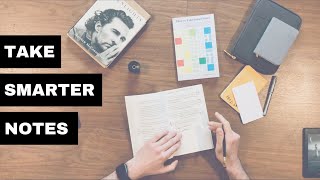
Matt Ragland shares a 90-day challenge using handwritten index cards to build a personal knowledge base. Each card holds one idea with metadata and keywords on the back, organized into clusters you can reassemble like Lego blocks for podcasts, videos, and blog posts. The system cuts writer's block by spreading creative work over time.
Chapters
What is the point of creating over 100 handwritten notes on index cards? Well, it turns out that it makes everything about my creative work a lot easier and more fun. At the beginning of October 2020, with 90 days left in the year, I started a 90 90-day notes challenge. Why not 100 notes? Well, because I didn't get the video out fast enough. Now, these aren't just any kind of notes. They are specific Smart Notes, or what I like to call Quick Notes. Now, what is a Quick Note? I'm so glad that you asked, because if I just sort through and I find my note about notes, which is very meta, then I can tell you without having to like pluck it from the top of my head, even though, yeah, I totally could, that a Quick Note is quality unique, individual, contextual, and a part of your own knowledge base. Now, what does that really mean? Often what we think of as notes are actually more like fleeting or fast notes, just something that we jot down and rarely, if ever, return to. And even if we do return to it, then it's missing a lot of the context that makes us remember why it was so important in the first place. Now, if you're wondering why I am so taken by this particular note-taking process, then I encourage you, after you watch this video, to check out what is basically part 1 of this series and why note-taking is basically a superpower for your creative work. But the quick and dirty version is that this type of note-taking helps supercharge your productivity by giving you a, basically a knowledge base, a second brain for those Tiago Forte fans out there, a second brain of ideas, concepts, and pre-written notes that you can use to populate and create any type of content that you want going forward. And in fact, that is what I found to be most useful about taking these type of quality, quick, smart notes nearly every single day for the past almost 100 days now, creating these notes that act like little building blocks or Legos of content allows the actual content creation process to be happening basically all the time. I don't want to rehash everything that I talked about in the previous video, so make sure you watch that one after this as well. It's going to be linked in an end card and the description below. But one of the common questions that I got from people was, what the heck are you going to do with all these note cards as you create them? Won't they be hard to find or organize? And my answer to that is, so far, not really. It's pretty easy to organize them, and it's fun almost to sort through them, to flip through them. It's almost like a treasure hunt for being a creative person. It makes reading a lot more engaging. It does make reading a little bit slower, but I really know when I finish a book now, I have a stack of cards connected to that book, which I'm then connecting to other concepts and other notes and at times other books that helped me build this interconnected thought and idea. So on the front of the card is the note itself. On the back of the card is any other connections, references, kind of a bibliography of different sources that may, like, come to mind or connect, even from the original note. The other bit of organizational data that I'm putting on the card right now is just really simple. I'll often just put down the date that the card was created, a number to reference it, and then also any keywords that are associated with the type of note that it was. So if it's about work, if it's about creativity, if it's about mindset, if it's about faith, if it's about any kind of keyword, I'm writing those all down on the back. Now these keywords are really important because this is how I'm creating the keyword clusters or note card clusters categories that help me find cards that are related together. A lot of people have been commenting on my Instagram posts about this, and occasionally on the last YouTube video that I made about this, asking like, what am I gonna, again, what am I gonna do with all these cards? How am I gonna organize them? I can't figure it out now, and so I'm just not gonna do it. So you're eliminating this wonderful creative piece of work that you can do because something that may or may not be a problem 100 cards from now. 'Cause I can tell you that I have 100 cards in front of me right now, and it's not really a problem. Maybe it'll be a problem at like 300 or 400 or 500 cards, but I will take care of the problem when it's actually a problem. I don't eliminate myself or remove myself from something that is healthy because eventually something might be a problem, and let me tell you, it's probably not gonna be a problem. My favorite part of taking quick notes is how much easier it makes content creation for me. Let me give you an example. What I commonly do for my podcast episodes now is sometimes I'll go into a new episode with a very general, very broad idea of what I want to be talking about for the show. But instead of just talking off the top of my head, which I have done a lot in the past, I will now go through my notes with that general idea in the back of my mind and start to pull out related cards that connect together for that idea. It's almost like a literal way of connecting the dots of different ideas. I'm just using note cards instead of concepts that just might be fluttering about in my head. In this way, content creation with note cards does become like a treasure hunt for your mind, and it also makes it— it makes the creative process a lot more distributed instead of focused on a particular moment. Instead of stressing yourself out with writer's block or podcaster's block or, you know, like video creation block, instead of worrying about like, what am I going to talk about right now, and just trying to pull ideas off the top of your head, instead, go into your notes, start to see where ideas and connections and notes are being made. And then you take cards from those different clusters. And then you create a singular for the moment, content cluster for the piece that you are creating at the moment. That's how many of us approach creative work or the practice of creative work. It is constrained almost to a time, and constraints can have some healthy effects on us, but it also creates a lot of pressure when we are approaching our creative work in this way. Note-taking in this method allows you to distribute your creative work amongst the different days, weeks, and months so that when it's time to like have a published piece, you're no longer trying to constrain your creativity to that moment. You are almost acting as more like a curator of your own previous creativity. You're just bringing together different notes like Lego blocks and assembling something. And then awesome. I've got, I've got this, I've got this outline already done. I have many different types of content and ideas. Fused together, and all I have to do is add the connective tissue that is relevant to the moment, to the piece, to the video, to the podcast, to the blog post, to the email, to the course lesson that I'm going to be teaching and sharing that day. Since I started taking notes like this, I have rarely, if ever, felt like I was starting with a blank page for any type of creative piece that I was putting together. And even if I found myself like in front of the computer trying to put together a concept for a piece of content or a lesson, and I felt like I was hitting a bit of writer's block or just, you know, creator, you know, creator's block, then I realized it was because I hadn't flipped through my notes yet. And if I didn't have enough notes, then oftentimes I would realize like, well, I haven't taken a note. I haven't taken these notes in 3 or 4 days. I'm out of practice. I'm trying to focus my creative energy on one particular moment instead of spreading it out through an entire day, week, and month. Once you're able to stay in that habit and in that practice of note-taking though, the biggest benefit by far is that it will distribute your creativity around different days, weeks, and months instead of concentrating it and forcing it into a specific moment, which most of us do. And when you are in that flow, what I find really wonderful is that it nurtures this environment in your life and in your work of stress-free creativity and productivity, because it's something that you're just kind of doing all the time. And when it comes to actually publish work, instead of feeling like you have to do all the work right then to create your video or your podcast or your blog post, or even like a book that you might be putting together, now instead you're more just organizing the notes that you've already taken. Because they are quality, they are unique, they are individual, they're contextual, and they're a part of the knowledge base that you're building in your own brain. So each note can stand alone by itself, and I want to make that really clear as well. Again, please watch the other video about this, but each note is an individual building block. You can use it to convey one idea, and you should keep it to just one idea per card if you're using, if you're using physical notes. But that is something that is so important and so cool. So when I go to create a podcast, for example, all I'm doing is treating, treating my note exploration like a treasure hunt, and I'm creating a unique content stack for that particular piece of content that I'm creating. When I'm done, everything else just goes into its previous content clusters, and then I can just use them again for the next piece of content when it's ready to go out. If you're interested in learning more and practicing more of this note-taking process, it's something that we cover in detail in the Productivity Power-Up, which is my guided 4-week course where we take you through every element, every principle of productivity, which will help you no matter what you want to apply it to. Most people in there are applying it to some creative work that they're doing, but we also have realtors, we have therapists, we have engineers, we have developers and designers, Anyone can join the Productivity Power-Up and get a lot of really effective resources and principles to apply to whatever work you want to be doing. Make sure you check out the other two videos that I have on note-taking. They will provide more context and steps for how you can practice this type of note-taking yourself. I really appreciate you watching this video. If you have any questions about how you can organize and use the notes that you been taking. Maybe you're a part of the 90-Day Notes Challenge. Please leave them in the comments below. And thank you so much for watching this video. Make sure you check out the newest episode of Connect the Dots podcast. It's going to be linked below as well. Thank you so much, and I look forward to seeing you in the next video.
More from Matt









Journal reading 📖 Reflectjons on how I’m living & how it aligns with the vision I have for my life.

You don’t have to listen to me. But you do have to be intentional about the systems in your life.
