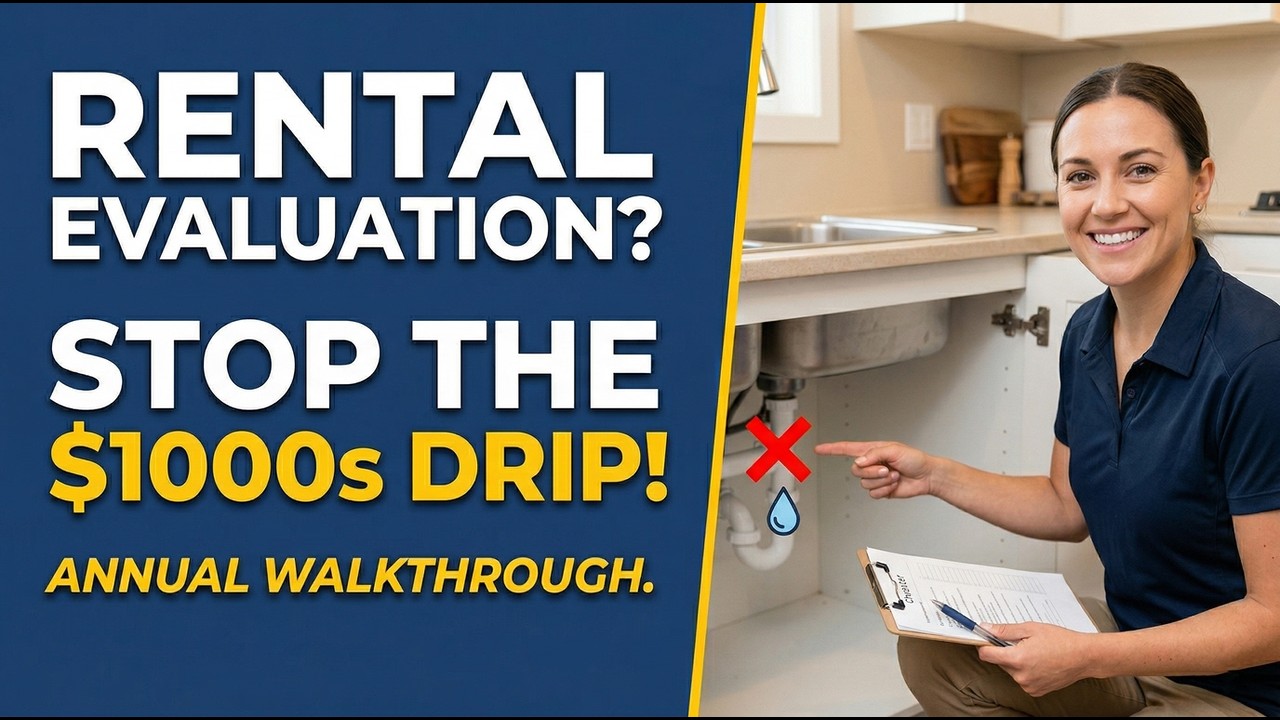
Mendell Gosnell, CPM explains why landlords need annual property evaluations. A professional walkthrough catches small problems like drips and loose seals before they cost thousands in repairs, verifies compliance with Oregon habitability laws, and documents the property's condition for insurance claims and deposit disputes.
Chapters
What is an annual property evaluation and why is it necessary? Well, if you own a rental property, you've probably heard the term annual property evaluation, but what exactly does that mean? And why do professional property managers insist on doing them every single year? Today we're breaking down what an annual property evaluation actually includes, why it matters, and how it protects both you and your investment. So let's get into it. Firstly, what an annual property evaluation is: a planned preventative inspection of your rental house or apartment. It's not a full home inspection, though. We're not licensed home inspectors, although we work with licensed home inspectors, and that's possible. You can spend the money to do that. Not— that's probably not necessary, but it's not a surprise visit either. It's a scheduled walkthrough where trained team members check Things like the condition of the interior, safety and habitability issues. They look for signs of leaks or damage. They check the smoke and CO detector to make sure that they're functioning properly. They'll check the HVAC filter condition, cleanliness, and general upkeep of the property. They'll make sure that your— the lease is being followed and the tenants are compliant. For instance, how many pets they have and if they're smoking or taking care of the property like they need to. Think of it like a yearly checkup for your property. So number 2, why annual evaluations are absolutely necessary. Well, they catch small problems before they become expensive repairs. Many major repairs start as minor issues, a tiny drip under a sink, early moisture around windows, a loose toilet seal, a clogged gutter, a slow drain. You get the picture. Things like mold or rot or flooding, pest issues, structural damage. Annual evaluations, they identify these issues early and they help you save money, often thousands of dollars. And they ensure Oregon habitability compliance. Oregon has strict habitability laws, things like making sure that your tenant has working heat, that there's no active leaks, that the electrical system is safe, that the plumbing is functioning, that the smoke detector and the CO detector are in working order, that the weatherproofing throughout the house is working as it's supposed to, that there's no mold or moisture intrusion. The annual evaluations confirm that the property meets those legal standards, protecting the landlord from lawsuits, rent withholding, repair and deduct claims, habitability penalties. It's a key risk management step. Also, they help monitor tenant care and lease compliance. Most tenants take excellent care of the property, but some don't. Evaluations help verify that the property is being maintained, that there's no unauthorized pets, there's no unauthorized occupants, and there's no illegal activities, that there's no smoking, and if the lease prohibits it, and overall that the home is being reasonably cared for and clean and the appliances are being taken care of. It's far better to catch a lease violation early than during move-out when damage is costly. Also, they provide documentation for insurance liability and long-term planning. Annual evaluations create a documented record of the property condition, maintenance needs, the things that are coming down the, in the future for capital expense requirements, uh, the tenant compliance and the, just the overall safety and functionality of housing. So this documentation can protect landlords during insurance claims and very common that they're gonna come in handy for deposit disputes and also with any tenant conflicts. And the future property value hinges on taking good care over the long term of the investment property. So it's really a part of the long-term asset management. Also, the annual evaluations really improve the tenant experience, retention. Tenants appreciate when the property is taken care of and they feel that we're making sure that it's safe and well-maintained, comfortable for them. And it's, everything's in good working order. The annual evaluations often catch issues that tenants never report, which improves their satisfaction and increases renewal rates. Tenants stay longer when they feel cared for. What owners receive after the evaluation, you'll receive a detailed written report, photos of the interior and exterior, notes on any concerns, recommended repairs, preventative maintenance suggestions, and an overall summary of the tenant compliance issues. It's just a real clear snapshot of how your investment is performing. Why professional managers handle this better than do-it-yourself landlords? In my opinion, professional property managers, they know exactly what to look for. They understand Oregon habitability laws. They're able to identify early signs of moisture or even structural issues in some cases, document everything properly, and communicate with tenants legally and professionally. And they are able then to follow up by coordinating the repairs quickly. That creates long-term maintenance cohesion, and it really ensures that your property stays in top condition and your liability stays low or is minimized. So if you want peace of mind knowing your rental is safe, compliant, and well-maintained, our team is always here to provide thorough, professional annual evaluations. Thanks for watching, and we'll see you in the next video.