Alana and I discuss the concept, "love."
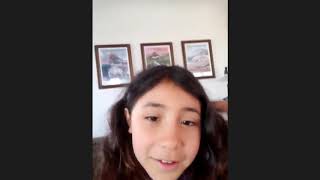
Michael Strong asks his daughter Alana what love means. She works through examples, parents to garbage, and lands on a definition: love is something you feel about something you really don't want to lose. She ranks what she loves most, with parents at the peak and trash at the bottom.
Chapters
Hello, Alana, how are you?
Hello, Michael Strong, how are you? I'm good, how are you?
I'm well. You're in a hammock, it looks like.
Yes, I am.
That's very cool. Is that at your house?
Um, no, because we're at an Airbnb. Because there was a leak on the 4th floor and it went down to our floor and it's creating mold. So to find the mold, you have to knock down some, some of the cabinets in our kitchen. And so it's too dusty to cook. So we moved to a hotel for 2 days and then now we're at this Airbnb.
Got it. Got it. Well, hammocks are cool. Do you think hammocks are cool? Yeah, yeah, something about them. So what I was thinking about today is what is love? How would you explain what love is to somebody?
Um, well, maybe definitely love your parents. Hmm, I have to think about that one.
Okay, sometimes the way I think about stuff is I think about stuff I don't love, and then I kind of put in categories what I love and what I don't love. And so what are examples of things you don't love?
I don't really know.
Would you say that you love garbage?
Uh, not really.
I wouldn't think so. Um, okay, so you love your parents, you don't love garbage. Um, how about driveways? Do you love driveways?
Yeah, for people to get around.
Okay. And do you love streets?
Yes.
Do you love mountains?
Yes.
Do you love stuffed animals?
Yes.
Do you love toys?
I have 3.
Okay, you have 3. Do you love all your toys?
Uh-huh.
Okay, do you love washing dishes?
It's actually kind of fun.
Okay, so it sounds like other than garbage, you love most things. Is that right?
Yeah.
Would you say that you love streets in the same way that you love your parents, or is it a little bit different?
A little bit different.
So can you explain what the difference is between loving streets and loving your parents?
Well, loving your parents, like, you— I mean, they've taught you what they— they've taught you things and streets don't. Your mom made you and your dad has been with you. To me, that's really how I love my parents. I just think what they've done to help me.
So would you say that it's the same kind of love, just more of it for your parents and less of it for the street? Or would you say it's a different kind of love for your parents versus—
I think it's a different kind of love.
Okay. So let's focus in the kind of love you love your parents. Would you say you love your stuffed animals in the same way you love your parents, or is that a different kind of love?
Just a little different.
So would you say the way you love your stuffed animals is the same way you love the street or different?
Different.
So would you say the way you love your stuffed animals is closer to the way you love your parents or closer to the way you love the street?
Closer to the way I love my parents.
Okay, I could actually imagine doing like a map of this, a map of everything you love, and, you know, maybe your parents on one side and the stuffed animals in the middle and maybe things like the street way out there, um, where some things are one kind of love more and some things are a different kind of love more. Um, is there anything else you love in the same way you love your parents or is the love for parents super special?
Um, yeah, I think it's super special.
Okay. How about other family? Do you love other family?
Yeah, I do.
Is that pretty close to the same as love for parents, or is it kind of different?
It's pretty close.
Okay. How about friends? Do you have friends that you love?
Yeah, um, I have friends that I've been with since I was very young, and I really know them.
And is that like your love for your family, or more like your love for your stuffed animals?
I'm kind of more like my stuffed animals, but they, but they're still really nice to me and they're my friends.
Okay, so again, I'm going back to this map where, like, your parents are— can I do it on the screen? So, like, your parents are maybe way over here at the top of the screen or top of the map, and like the street is down here, and so parents and then maybe other family and then friends friends, and then stuffed animals, and then maybe driveways and streets down here, you know, something like that. Does that make sense?
Yeah.
Okay, so let me think about other things like dishwashing. Is dishwashing close to the street or close to stuffed animals, or where does that live?
Street.
Okay, is there anything Are there any other toys that are close to the stuffed animals?
Are there any other toys that are close to the stuffed animals?
Yeah, in terms of how you love them.
Um, my toy dog Rojo, he's— I've had him since I was, since I was at least like 4 or 3. He's really special to me.
He's a toy dog?
Yeah.
Okay, do you have any real pets?
No, I don't.
Okay, um, are there any animals that you love?
Um, I love tigers, um, and mostly the bigger— some of the bigger kinds of cats.
And is your love for them more like your love for streets or more like your love for stuffed animals?
Um, since they're— I would say a little bit in the middle because they're animals, but also like they're not near me, so I don't really get to see them as much except for the zoo.
Got it. And how do mountains fit in? Are mountains more like stuffed animals or more like tigers or more like streets? Where does he love them?
Um, I would do I would do more like tigers because, like I said, for the tigers or some of the big cats that I don't really get to see except for the zoo. I really don't, I don't really live in places that has mountains, so I never really see them except for pictures. But I really do really want to see I've never seen them in person, no.
Have you ever hiked in a mountain?
Um, I don't recall.
Okay, well, I think— do you like going on hikes?
I do.
Yeah, I bet you enjoy hiking on a mountain. Um, so let me think of another example. How about sunshine? Do you love sunshine?
Yeah.
And where does that fit? Is that closer to mountains and tigers or stuffed animals or streets, or where does that fit?
Um, I think it would be category of stuffed animals because it gives you vitamin D and it also helps the trees grow, which makes you, which makes you breathe better.
Got it. Got it. So let's go back to the original question and see if we can answer it. So what is love? Can you explain what love is now that we've thought about it for a while?
Um, like maybe, like since, maybe since like you've been with your parents long, or maybe you just had a baby brother or sister, you could love them in a way and stuff.
I can't hear you. I heard you say you could love them in a way with your parents or baby sister. Did you finish your sentence?
Yeah.
Okay. So I still don't quite understand how you're explaining love. So what is love? What is Alana's version of what love is?
Um, Like you could love something in a way, like you love your parents the most because they were with you since you were born.
So I see. So rather than explaining what love is, it sounds like parent love is sort of the kind of— go back up to this corner— parent love is kind of the peak or most, most the best example of love. And then other versions of love are kind of lesser versions, is that right?
Yeah.
So we could just think of parent love. What is love? It's what you feel for your parents. Is that kind of what it is?
Well, and it could, and it could be what you could feel for anything really.
Okay. So it's a feeling of some kind. Um, what kind of feeling is it? How would you explain it? Is it a good feeling? Is it a bad feeling?
It's a good feeling. Like, if you were going to a ceremony and you were going with your parents, like, you wouldn't maybe want to lose them because they're your parents and you love them in a way that really cannot be broken.
Okay, so that's helpful. I think that was a good explanation. One thing you said that might be helpful as well is you say you don't want to lose them. So would we say if we love something and we don't want to lose it?
Yeah.
Okay, and one of the things that does for me is, going back to trash, I think we're all okay if we lose the trash, right?
Yeah.
And with sunshine, we don't want to lose sunshine. We don't want to lose the streets. We don't want to lose stuffed animals. It sounds like what I, what I like about the not losing it explanation is, you know, going back to my diagram on the screen, parents are what we really, really, really, really don't want to lose. Trash is what we really do want to lose. And so maybe, maybe if we love, the more we love something, the the less we want to lose it. Does that sound right?
Yes.
Okay. So maybe for now we can call that, um, you know, Alana's definition of love is love is something you feel about something you really don't want to lose. How does that sound?
It sounds good.
Okay. What are you going to do for the rest of the day?
I do not know.
Okay. Well, I hope you have a lot of fun one way or another. And hope to talk to you next week, okay?
Okay.
Bye-bye, Alana.







