Alana on Generative AI
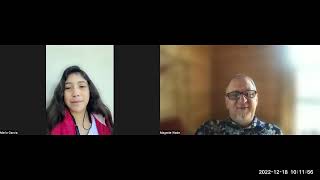
High school writer Alana talks with Michael Strong about using ChatGPT for coding and writing assistance, arguing that AI-generated images count as art because humans write the prompts. She's not worried AI will replace writers yet, but says she'd rather write herself than prompt an AI to do it, because personal voice matters.
Chapters
I didn't think so. Anyway, how was school?
All right. Can you say that again? Yes, I can.
How was school this week?
It was awesome. I love it.
What did you discuss?
Well, just speaking off of one of my favorite parts from this week, from Thursday, I brought my neighbor's dog Stella Croaker onto the Humanity Zoom call. One, because she's my neighbor, and two, she's an editor and she's 90, and so she has quite a lot of experience, um, just from everything. So everyone loves her.
She told the kids about what it was like to be an editor?
Yes, and just about her life and how she found Drive and things like that.
Wonderful. Wow, I didn't know you knew a 90-year-old that well.
Yeah, I do.
What do you like to talk to her about?
Um, well, when I usually go down and talk to her, we talk about, or we look over books and old books about London and stuff like that. This is, well, she's, uh, she's British, so she, um, she has books about one about London and the subways and stuff like that, and I just love to learn more. So I go over that with her. When I was younger, I used to read books to her. I used to go down and ask her if she'd like me to read to her, and it was always a pleasure.
Wonderful, wonderful. Um, did you also read some stories this past week?
Yes, yes.
Do you know what— do you remember what you guys read and discussed?
Uh, well, we did. We read an article. We've been— we were talking about AI, except for Thursday and Friday, just earlier this past week. Um, well, we were talking about— or I remember one of our discussions was about if AI-generated art actually counted as art. Because I mean, it's because apparently there was a contest and an AI-generated art piece won, and everyone kind of got offensive and defensive and started saying, "Eh, that's not art, that doesn't count as art." And there's just kind of this conflict whether it is or not.
What's your opinion?
Well, I mean, it certainly does look like art. It looks much like a painting, except it was just generated from different things that the AI has learned. I think that in a way it is still art. The humans, even though they're not putting— or the people are not putting as much effort or time into it, they are still programming or prompting the robot. Um, so I think I, I've said that, and I think that's kind of a good point because the AI doesn't have a mind of its own yet, or it can't think for itself. It learns, but it can't think for itself. Mm-hmm. So I mean, it's still technically us who are making it. Got it.
And so have you seen— so that's visual art. How about, you know, ChatGPT where you put in prompts and it gives you written stuff? Did you look?
Oh yes, I love that. That was so amazing. I don't have it yet though.
Got it. And why do you love it?
Well, I just, I think that the computer being able to pick out the tiny details from your prompt, your message, and then putting it into a command and then following that command. I say, I just thought that that was really cool. It's really useful. Um, it helps. It's definitely going to help me with my writing. Um, it generates code for you too, which is kind of crazy. I'm not going to use it to compete, that's— or to cheat, that's cheating. But I think if I could learn from that, that'd be useful.
Uh-huh. And as a writer, you're not concerned or you don't feel threatened that the AI is going to replace you as a writer?
I mean, I think that as long as we humans are careful, about what we put in, because the AI learns from everything you type or command or something. As long as we're careful with that, I mean, I haven't given that much thought, just to be honest. I just feel like AI writing for themselves without any prompt could happen, but not right now. But I do think that one day AI is going to get more techy and more advanced. So it might be a possibility.
So remind me of your character's name in your stories. I forget her name.
Oh, Abigail Williams.
Abigail Williams. Thank you. So suppose that instead of you writing Abigail Williams, you could just write different prompts. Write a story about Abigail Williams, you know, going to the moon, or write a story about Abigail Williams going back in time or whatever.
That's kind of boring.
Why?
I mean, you're just typing in a command and then the computer's following it and you get a whole 10-chapter story. Like, I mean, come on.
Is it boring? Is it boring?
Or making it?
You like writing?
Making it is boring. I love writing. Yes.
I got it. I got it. And what if AI gets to the point where they can't tell if it's a human-written or machine-written?
Then I guess we're just gonna have to live with it. I mean, that'd be really weird. Who made this, a robot or a human?
So what do you see? You know, you're gonna grow up with AI. The AI is, you know, just gonna get better and better and better. So what do you see as the role of humans when AI can do all kinds of things?
Well, I think I think it depends on what the AI does. I mean, let's just, I mean, maybe, can you give me an example?
Suppose AI, suppose it's, and this is not yet the case, but suppose it gets to the point where you could write Abigail Williams stories more easily by giving it a prompt than writing them yourself. Would you keep writing them yourself?
I would keep writing them myself, but I think a lot of people wouldn't. They'd use AI to their advantage and make things easier, but I would definitely keep writing by myself.
This is more authentic. Because you love writing?
Yes, I love writing.
Got it. So, um, it's— some people, some artists feel threatened by AI. They're concerned that AI will replace them. And suppose you like to read books. Suppose that right now when you read a book, typically, you know, the author gets some money because, you know, the author, when they write a book, they get royalties. Suppose that authors can no longer make a living writing books. Will people still write books or will AI make all the money from writing books or what happens?
Well, I mean, there's a lot of people on Earth, so I think that some Some people will probably keep writing books while, like I said, others would give in and let AI do everything for them.
So it sounds like you're thinking both in terms of people writing and people reading the writing, that there's some people will prefer human to human and other people that are totally happy letting AI take over. Is that kind of your vision of the future?
I think so, yes, because we are all very different in ways.
Got it.
I am different from the person across from me.
I mean, so one argument I've heard is that human beings will remain more distinctive, that Alana will have Alana's voice and the Abigail Williams stories by the AI won't be quite as original as the Abigail Williams stories by Alana. Do you think that might be?
I think so. Yes, because we were playing around with the AI generator, the prompt. Giver command thing. I don't know what to call it. And my teacher asked the AI to generate a poem about the Ukraine conflict in the style of Jack London. And it actually worked. She said that it didn't seem like Jack London wrote it, except it had a more— or it seemed, but it also seemed like a robot made it. It wasn't as authentic. And original and some evidence to back that.
Got it. Do you— could you imagine using AI to help you as an author write? That you would do part of the writing and you would use prompts to do part of the writing and AI generation to do part of the writing?
Um, I mean, I guess I would do that in very small parts. I, I could also just ask the AI to help me if I, I don't know, give me ideas or I don't know, help me with my grammar if there's no one willing to edit my books because they're all just like, you say AI, you say AI. Sorry, go ahead.
I was going to say there's already grammar check and spell check, so we could use Grammarly.
Grammarly, Grammarly.
Right. Another line that I've heard is that humans that human personalities that are who we are will be part of it. So a lot of times, you know, you know who J.K. Rowling is, and you know who Tolkien is, and you know who probably C.S. Lewis is, you know, famous authors.
Yes, I think I know that one.
Yeah, so one other thought is that people will like to know about the human behind the story. And so then being an author is kind of about building your personal brand. Have you ever heard of the idea of your personal brand?
I think I have.
What does it mean to you?
Well, this idea and ideology just for yourself. Oh, have you heard of, I don't know, Alana Garcia? Yeah, she's the one who, I don't know, did something crazy while writing a book. Oh, I know her. Let's read her book. Yay.
Okay, that's pretty good.
I guess that's just an example.
Yeah, yeah. Well, it's built on, you know what consumer brands are, like there are brands of cereal and brands of cars and brands of, you know, the brands of everything. Disney is a brand, Ford is a brand, Toyota is a brand, Cheetos is a brand, you know. So yeah, the idea is, right, there would be a brand around Alana. And so even, you know, with a lot of things, people care about the person. So does it make sense that maybe if you want to be an author, part of it might be the combination of your writing and your personal brand?
Yes, I think that makes a ton of sense.
Why would people prefer humans if AI can do all the work?
Well, I mean, like you said, that personal brand, I think I always love looking at, or yeah, like you said, I always love just turning the book and looking at the back and finding out who the author is and some of him or her, his or hers backstory. That's always really interesting because then I get to learn or get to know about new authors. But if there's a book that was created by AI and on the back of the book it said made by AI, This AI was programmed by blah, blah, blah, blah, blah. That's not very interesting.
So what you're saying is already the human connection is important to you aside from the story. And that, okay, that makes sense. Well, it's an exciting world. Are you excited about the future given AI?
I am very excited about the future. I'm excited of where AI will go and just technology in general.
So some people are afraid of a future with technology. Why do you think some people are afraid?
Well, because I've heard, like you said, um, people are— some people fear AI and robots taking over the world, like, I don't know, Mitchells vs. Machines, if you've ever heard of that movie. Um, but I think that I mean, I guess that's a valid concern, but that, that, I think that would be if somebody programmed the robots to do that, or the robots or AI had a mind of its own. Uh, that seems kind of, or I don't know how long it would take for people to introduce that to the world, and I'm not sure if that will be approved of and taken in. But I'm just excited to see all the new technologies and things like that.
Got it. Well, on another occasion, we should talk about— so there are people concerned about AI safety. It's one thing to worry about AI taking our jobs. It's a different thing to worry about AI actively harming people. But that's a whole other conversation. So for today, I'll keep it short. And are you excited about your competitions today?
I am. I am.
Okay. You're feeling good? Feeling strong?
I am.
Alright. Have a wonderful day. Do a great job, and we'll talk to you soon. Okay?
Thank you, Michael. Bye.
Bye-bye.







