How to Develop an Amazing, Happy Child
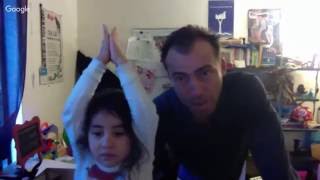
Michael Strong talks with a parent and their four-year-old daughter Alana about her advanced language skills, bilingual reading, and curiosity. Alana writes personalized cards, loves podcasts, and explores how tools work. Her parents use adult-level conversations, Reggio Emilia storytelling, and low-judgment feedback to nurture independent thinking and learning.
Chapters
How about yourself?
Well, do we have Alana there?
We do. Alana, sit up.
Buenos días, Alana. ¿Cómo estás?
Bien.
¿Y usted?
Yo estoy muy bueno. Gracias. Gracias.
Awesome. Here, sit up, Alana.
So what's the news from this week?
Well, I had a busy week. I was in South America, and then I came back for a couple days, and I was in Denver. And then Marla and the kids drove to Vegas to go to a friend's wedding, and we were at a friend's wedding on Friday night. Auntie Michelle's wedding and Uncle Stacy's. And then we just drove back yesterday. So Lana had an awful lot of time in cars, and unfortunately I was gone for a week, so I didn't get to see her too much. But by all accounts, she was amazing.
Well, before going into Alana's life in the cars, I wanted to let Alana know, I hear you write Christmas cards. Is that correct?
Do you write Christmas cards?
Yeah.
Wow, that's wonderful. To whom do you write Christmas cards?
Lola and Lelo are my cousins.
And what do you say to them?
What do you say? Will you write?
Merry Christmas.
Oh, very sweet. I think it's wonderful that you're writing Christmas cards.
Thank you.
You're welcome. You're welcome. So what do you like to do in the car when you're driving, Alana?
Um, I like to do when I'm driving, wait until we ask somewhere.
What?
What do you like to do in the car?
Um, wait until we go somewhere, Dad.
Like podcasts or iPad?
Podcasts.
What kind of podcasts? What podcast do you listen to?
A travel podcast.
Oh, what's it about?
Um, like guys travel.
It's true. There's a podcast series. It's Some English Guy, of course, and he's traveled the whole world and he has guests on that have traveled even more than he. And it's great. It really gets me motivated for traveling and I think it rubs off on Alana by osmosis. She's heard a lot of cool stories there. We also do like kids' podcasts, storytime, adventure hour, debates that we talked about last week. Although I was a little selfish in this last podcast, or this last road trip back from Vegas. We listened to daddy's podcasts the whole time.
And she mostly— she's quiet and mostly listens?
Yeah. I'm telling you, Alana is the most well-behaved little child. She's so easy to travel with. You know, it's wonderful.
And, you know, to some extent, I'm always wondering and curious about the extent to which, you know, it's kind of natural or, you know, idiosyncratic to Alana versus to what extent it's a consequence of so many hours of conversation that you and Marlowe have had with her at a relatively high level so that she can sit and try to make sense of things that most 4-year-olds would not try to make sense of.
Yeah, you know, it's probably some of both, of course. Alana is a pretty remarkable person, and you know, there's times she gets bored in these podcasts and she'll sing. I mean, she'll just start singing. That's kind of her response if she's bored, which is fine with us, you know. But definitely, just, you know, Alana's always been around me and Marlo and my friends and our conversation, and we don't dumb it down for her. We don't not talk about— I mean, there's obviously a few topics that wouldn't be discussed, but I wouldn't discuss topics that are inappropriate for my children. I rarely discuss those with people anyway. Like, it's just not something that comes up a lot. But she is around us a lot. Hopefully she thinks it's normal to think and to talk and to express. I think it's rubbed off on her. You were talking about her making Christmas cards. Alana, in every card she writes, writes a personalized message of some sort. Like, we went to the wedding for a friend of mine from high school, actually prior to high school in Hawaii, and Alana knows them pretty well because we've hung out with them here in San Diego many times. And so she wrote, "Happy wedding, hope you have a lovely day." Auntie Michelle and Uncle Stacy. And the spelling was cuter than a bug's ear, let me tell you. But she wrote out that whole message and then drew a photo of two people, stick figures, one of which is wearing a pink dress, and that was Michelle for her wedding day. And every card that she does, she expresses some individual sentiment or message. And she really— I mean, that's what to me, like, that's the most impressive thing about her in the last few 2 months is that her reading is great and everything, but she is really able to express herself.
Now that's fabulous. Have I talked to you about kind of the Reggio Emilia style of storytelling with young children?
I don't think so.
Reggio Emilia is its own, you know, people know of Montessori and Waldorf. Reggio Emilia is for young children, and to some extent I see it as a second or third cousin of Montessori. It's a small village in Italy they've evolved quite a long ways beyond Montessori. But one of the things they do that's really cool, they talk about the thousand languages of children, is they focus on developing young children's abilities to tell long stories. And they do it— most children don't write at all or write very little at the age of 4, but they do it with pictures. But the idea is, I suspect Alana can tell quite a bit of a story already, but the idea is frame by frame by frame. So if you go to a Reggio Emilia school, you might see a room with 20 or 30 frames, you know, kind of like a cartoon or animation, where the students just keep drawing sequential images. And one of the things I like about that is telling longer and longer stories, both orally but also in visual form, really, you know, it's another form of intellectual development. They're learning to kind of weave together longer and more complex narratives. And then because Lana can write, you could imagine her telling a longer story with many frames in it, just like a book. You know, in some ways, she has the model of books with images plus words. She could basically be writing substantial books with multiple frames and multiple words And post them up around the house.
Indeed. A while back you had talked about books, maybe we did talk about this a little bit, and she was drawing, rather than just drawing pictures, you had said have her draw books. And so we'd fold up paper and she'd draw 4 frames and then sometimes 6 frames. And then she kind of moved into writing more, like writing words. So that's her thing, she'll just sit down and write words. But I've actually got these blank booklets. That we probably have 10 or 12 of them, and they have maybe 15 pages, and I bought them with the idea being that she could write a book.
Oh, that's wonderful. Has she used a couple of them?
Yeah, we haven't, she hasn't fulfilled a whole one yet. We usually wind up losing them or getting distracted or something, but I think what you said is a great idea, and between now and next week, we'll have Alana write a Christmas story or something. We'll have her write a storybook.
Alana, do you want to write a book?
Yeah.
Oh, wow. You think you can write a book?
Yeah.
I think that's marvelous. If you can write Christmas cards to people, I bet you can write a book. You want to write it in English or in Spanish?
English.
¿Por qué?
Porque y en español.
Oh, she's going to write in both.
Marvelous.
There you go. Yeah, Alana's reading, like when she hits a long Spanish word, she sounds it out no problem. So much easier than English. Those are silent letters and all these things. The only word the other day, she was reading a book and the only word that she had trouble with in Spanish so far was hija. You know, she was pronouncing the H instead of recognizing it as being silent.
Yeah.
But, you know, she'll get there.
Hey Alana, what are you doing?
I'm doing— I'm as fast as binoculars.
Oh, do you like binoculars?
Yeah.
Yeah, we've got a little pair of binoculars for her that she uses in car rides and when she sits in the hammock outside on the balcony, she looks around.
Why do you like binoculars, Alana?
Because they can see far away.
Do you think it's magic, or how do they do it?
They have, like, circle glass.
That's right.
Secret glass?
Say that again. They have super glass or secret glass? What do they have?
Circle glass.
Oh, they have circular glass.
Circular glass.
That helps see far away.
Oh, so it's something about the glass that makes things close up? Is that what you're thinking?
Yeah.
Wow.
You have really powerful binoculars?
Yeah.
8x12.
Wow.
Fairly strong, strong enough.
By the way, I think it's pretty wonderful. Did you explain to her how binoculars work and that it was the glass?
You know, I don't think I did. I'm just thinking about it now. I think that she learned about how like a spyglass or a telescopic sight from one of her TV shows or several of them where they use them to see things far away like the Dragon Rider show comes to mind. So I think she kind of learned the concept of a spyglass from that. And one day she was asking me several, maybe a month or so ago, She asked if we could go get spyglasses. Well, I've got binoculars. She was like, what? So I grabbed them for her and I gave them to her to play with. I asked her to always put them back and she does a very good job with that. And so I've actually never talked to her about how they work, I don't think. Which is a shame in hindsight, but clearly she's figured out some of it.
Yeah, yeah. You know, and clearly she's ready to start having a really— I know you've been having cool conversations with her for a long time, but— You know, I always just like to figure out how kids understand the world. And I was open to her saying it was magic or something. She totally surprised me by being— not only was it not magic, but she very specifically knew it was the glass. Yeah, she's willing, she's constructing the world. You know, the nice thing is of simply by asking her and trying to get how she understands it, you know, letting it all come from her and seeing how she's making sense of things. And then of course, then she will realize that we care about how she makes sense of things. Yeah, but she knows you care about how she makes sense of things all over the place.
And it's not just me though. When we hang out with my friends, whether it's my friend Gene, you know, Gene is a 68-year-old retired Marine and Merchant Marine and, uh, very colorful life in between. Um, we go to his house once a week and spend time with him, and he talks with her just like an adult, asks her questions, you know. I think she's used to it. If we go and hang out with my friends and eat brunch on Sundays, which we often do, she'll spend an hour, hour and a half talking with adults who are not me, without me present or without me nearby. I've got Logan to to fend with, you know. So she'll speak with Sherry or Biggs, and they're all an interesting cast of characters. Biggs is, uh, Asia's dad. That's why—
Alana, do you know what a mind is? What is, what is your mind? Or what is a mind? You ever heard the word mind?
Um, I, I don't know what's a mind.
A mind is what you use to think. Do you have thoughts inside your head?
Yeah. Yes, I do.
You do? Do you think about what you're going to say sometimes before you say it?
Yeah.
That is your mind. Your mind is the part inside your head. You know, it's— sometimes we call the brain the physical part. The stuff there, but then the mind is the part that's thinking. Does that make sense?
Yeah.
So every time you try to figure something out, you are using your mind. Yeah. You try to figure things out sometimes?
Yeah.
What, what do you figure out? What do you try to figure out?
Making books.
You do? Do you think about how to make books?
Yeah.
You think about the drawings? Do you think about the words? Do you think about both?
I think about both.
Do you like thinking about the words better or the drawings better?
The words and the drawings.
You really, really like both of them? Okay, that's fun. Yeah, and just, you know, the little pedantic thing, things like this or that and which is better, you know, Bloom's taxonomy, those are the highest level thinking skills, but really it's just evaluating, making judgments. And no, she's ready to have very serious Socratic discussion.
Absolutely. And she's not kidding when she says that she's thinking about both. Like, it's not just taking the easy answer. She sits down, like, every one of her cards, and this has been true for months and months and months, and it's been— and it gets better every time. She puts thought into what she's gonna write. You know, a lot of times we've asked her, you know, it's a birthday card, or please say happy birthday, or it's a wedding card. And like the other day, we're in a heck of a rush and, uh, going— getting— Marlo was in a heck of a rush getting them ready to go to Vegas in the car. She asked Alana to make a wedding card. She gave her no specific instructions. And Alana wrote all on her own, "Have a lovely day." Lovely, L-U-V-E-L-E-E. Have, H-A-V-E. Who needs those silent E's? She wrote that and then she drew two people and one of them had a dress because it's a wedding day and she knows that you wear dresses on wedding days. It does show thought. She is very sincere. And if Alana, she'll give you a real answer. If she doesn't like something, she'll say it.
What? Yeah, well.
There's no judgment in our household for not giving us the quote right answer. You know, we, like, especially I try not to spoon-feed her questions or answers, you know? I make her think and say things.
Clearly, she's doing great. She's quickly becoming aware of her thought. I mean, she got, you know, not perfectly, but got mind right away.
Yeah, if you had said brain, she would have known that already, because that's the word that we use more.
Right, right. But it's an interesting distinction and complementary. In the interest of keeping these short and also respecting Alana's attention span, I'm going to wind up. But I'm going to start checking in to see if not only you're available, but if Alana is alert and available. Because we can really start digging in with her each week.
No, definitely, definitely. Alana is always available. She's here with us. She's not as shy as she even was, I think, 6, 8 months ago about these things. And I think it's maybe because she sees that we do it regularly, that I value it. We talk about you, and we talk about learning during the week. So you can see that she has a relatively short attention span like her father.
But for a 4-year-old, she has a fabulous attention span. Adiós. Adiós. Adiós. Adiós. Hasta la próxima semana.
Hasta la próxima.
Hasta la próxima.
Okay, bye-bye.
Bye.
Bye.







