How to explore ideas with your child: Alana on "What is fear?"
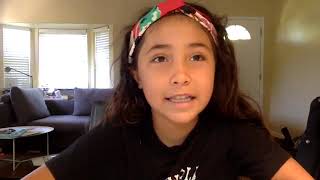
Alana explores what fear is with an adult guide, from physical dangers like ziplining to modern triggers like creepy shows. They discuss why fear evolved to protect ancestors, how scary media hijacks that ancient response, and why heroes in stories must face danger to become heroic.
Chapters
Hey, Alana. How are you?
I'm good. How are you?
Well, thank you. So today I was wondering, um, what is fear and why are we sometimes afraid?
Fever?
Fear.
F-E-A-R. Oh, I thought you said fever like the sickness.
No, no, no. Now, what is fear?
For me, fear is like when maybe I don't want to do something, or, and like it's scary or it's dangerous a little. Sometimes like I feel like I don't want to do it, but I have to, so I'm kind of scared.
Yeah. So lots of different things. When you don't want to do something, are you always— anytime you don't want to do something, are you always afraid, or only some, some kinds, sometimes?
Only sometimes. And sometimes when you're afraid, like maybe you're going on a very high and huge zipline, you're scared because you don't want to fall. And if you fall, it's very, very high, so you might be a little.
That sounds scary.
So maybe when you're Skydiving.
Have you been skydiving?
No, but I want to.
Okay, even though it's scary, you still want to? Okay.
It seems fun.
Okay, so do you think usually when we're afraid, we're afraid that we might get hurt?
Yeah, usually.
Are there any— can you think of any examples of when we might be afraid when it's not about getting hurt?
Maybe you're afraid of something creepy, or maybe you're afraid of a show that you're watching because maybe it's put nightmares into you.
So let's start with the creepy then. Why would we be afraid of something creepy?
Because maybe it'll scare your bones out because like it makes like this, sometimes it makes weird faces and it has this weird voice on Sometimes creepy stuff can have those kind of stuff, kinds of stuff, and maybe you don't like it even though it's on, and then you just stop watching it because you're afraid.
And so you would say the reason those are cases where we're not in danger of getting hurt is that maybe your mind knows that the thing on the, on the screen cannot hurt you, but you're afraid anyway. Is that right?
Yeah.
Okay. Are there— would you say that when you're in danger of getting hurt, then there is a good reason to be afraid, but if there is no reason to be, if you can't, if you're not in danger of getting hurt, then there is no reason to be afraid?
Well, you can be afraid even if you're not getting like hurt or if you're in danger because like Like I said, maybe there's a monster on the TV or maybe there's something creepy on the screen, but you're still afraid even though it's not real. It's just something on the screen. You can still be afraid. Like sometimes when I see creepy stuff, either maybe on Google or maybe my mom's warning me about something and she shows me a picture maybe, or maybe my dad does that. Or maybe I just see it. It makes me really scared, and sometimes I feel like it's either under my bed in the dark, and sometimes I'm really afraid.
And then you mentioned nightmares too. Why do you think that sometimes we have nightmares from scary things?
Well, once I once learned that maybe the reason we have nightmares, and this happened to like our ancestors, so like cavemen, the reason they had nightmares was to like— so when it happened in real life, they could do what they did in the dream. Like if you were getting attacked by a wild bear and you ran away, maybe that's something you should do.
Does that explanation make sense to you?
Well, it kind of does, but now it doesn't really because there's no wild animals really in the city. Not really.
Okay. So do you think that maybe we have, there's certain things that are part of our nature that once made sense, like back when we lived around wild animals, but they don't make sense anymore today?
Yeah.
Okay. That's interesting. And so I guess we just, we just have to realize that, our minds were formed in one set, in one environment, and we live in a different environment? Does that sound right?
Yeah.
Okay. Do you think that, um, what most of the things we're afraid of are usually things we should be afraid of, or do you think most of the things we're afraid of are things where there's no good reason?
Um, for me, most of the things that I'm afraid of, I should be afraid of. Like maybe going on a trip where there's, well, I'm not really afraid of going on a trip where there's a lot of wild animals, like maybe lions or maybe deer, stuff like that. I mean, that would be really cool. But maybe if you're going skydiving and it's like a 100-foot drop or maybe higher, I think I would be scared a little.
And so do you think sometimes people like to watch scary shows on TV, right?
Sometimes.
Do you like to watch scary things for fun?
Well, my shows that I usually watch aren't really scary. To me, they're kind of scary. Well, they're not scary, but sometimes like the scary parts that I don't really mind most, but all of them are really just interesting. And most of the movies that I watch are almost always interesting. Even though it seems a little scary, it's not really scary.
Okay, so you do definitely don't watch things because they're scary?
Yeah, because sometimes it puts nightmares in me. Like maybe if I get told a story and it has really bad things in it, or yeah, it's kind of scary. It'll put maybe nightmares in me and I'll have them for at least a month.
Oh, wow. That's a lot.
Or a week.
Okay.
Or a week, yes.
But still, it sounds like scary things could have a substantial impact on you.
Yeah.
Do you really try to avoid them for that reason?
Yeah. And sometimes it's not really nightmares like in my sleep, but I think about it a lot when I'm awake and it really scares me.
Got it. Um, and so did your parents give you this explanation? Have you heard the term evolution?
Yeah.
Okay. Yeah. It sounds like your parents gave you an explanation that we evolved over millions of years or our ancestors. You were exactly correct to say our ancestors, our ancestors evolved over millions of years in an environment where there were dangerous threats to our life out there. And, and that if we didn't pay attention to those threats, we could die. And if we died, we wouldn't have children and therefore they wouldn't be our ancestors. So the ones that survived were the ones who were appropriately afraid of threats to their life kind of thing. Um, but it sounds like, you know, it sounds like you're, you're, you and your parents are sort of thinking, and I'm not disagreeing, that maybe those fear impulses that were essential for survival back in the day are no longer essential for survival today. Does that sound right?
Yeah.
So that's interesting. Um, and do you think that there are other ways in which we evolved one way and our life today is different?
Maybe that we thought maybe, but like, maybe our ancestors didn't really think of maybe using machines like maybe the computer or maybe a printer, stuff like that. Then maybe we evolved to think more like that and then we built it.
That's, that's a huge interesting story right there about how technology evolved and so forth. But I want to go in a different direction for now. Some other time we'll explore that. But one thing that came up for me when you were explaining was that we did not evolve to have fake scary things on screens. So when we are afraid of something on a screen, it seems like it triggers our fear. Even though it's not real. Does that make sense? Yeah.
Yeah.
So sometimes— why do you think that there are so many scary things on video out there? If we're afraid of things, why don't we just always have nice stuff on video?
Maybe it's because maybe the person who makes that show or movie or thing on the screen is maybe trying to attract people because maybe It's scary, but there's some parts that are really funny or maybe really good. And then it maybe persuades them to watch the scary parts, maybe.
But why not just cut out the scary parts? If the people are attracted by the good parts, the happy parts, the funny parts, why leave in the scary parts? Why shouldn't we just get rid of every single scary part?
I don't know, because that's kind of happened to me too. Like sometimes, not always, because I've watched one of these shows like 10 times, like all the seasons, but sometimes at this part it's really scary, but I don't really pay attention to that because I'm always wondering what will happen next.
Well, see, this is an interesting thing is Some people think that stories need conflict in order to be interesting, and by conflict, often that includes something scary. You know, that it includes a fight, or it includes a loss, or it includes a dangerous situation. And the notion is that if a story doesn't have some kind of conflict, it's kind of boring. Do you think that's likely?
Yeah, that's actually kind of likely.
I mean, if that's the case, then maybe sometimes we need the scary parts in order to enjoy the whole story, in order to be attracted to the whole story.
Yeah.
Does that, does that maybe make the scary parts make more sense as to why they leave them in there?
Yeah.
Okay. Well, again, exactly how we design stories, and you might start as you watch things, pay attention to Sometimes it's up and down kind of emotionally, like there's a happy part and a sad part and a happy part and a sad part. Do you notice that, that stories kind of have this emotional up and down some of the times?
Yeah.
So you might start to pay attention to that. And we'll also kind of talk about how stories are structured. And one way to think about that is that they're even structured in ways that appeal to how we've evolved, our kind of ancestral appetites. Do you know what a hero is?
Yes.
So there's even something called a hero's journey. And part of the idea is that the hero needs to leave home and go and face a challenge and a threat of some kind and then vanquish the threat, you know, slay the dragon or win against the evil sorcerer or something like that. Before he or she can become a hero. Does that make sense?
Yeah.
Because you can't have a hero if you're just, you know, sitting on your couch every day, right?
Yeah.
Not very heroic. So one of the things, one of the things to look out for is the role of conflict and danger and challenge in living a heroic life. And in either in movies or in real life. And so you might kind of think about how, how conflict or danger or fear relates to living a heroic life. Do you like, do you think ordinary people can live heroic lives?
Yeah, they can. Like maybe they're off on a quest like you said, or maybe they're helping their family out, or maybe they're training hard, or Or maybe they're doing very good in some activities like maybe school or martial arts or archery that maybe leads them to help the family or the world.
I think that's a wonderful statement. So there's so many interesting things you've said that I want to keep exploring, but I'd like to try to keep these short. So people watching them, you know, they don't watch, have to watch for half an hour, an hour. So no, I want to talk about stories and quests and the evolution of technology. The evolution of human beings, the role of conflict, how stories flow. So many interesting things we explored today. So what are you going to do today?
We might go to the skate park if no one's there or if it's open.
All right. Well, I hope one way or another you have a way to have a really fun day. Okay. All right. Bye-bye, Alana.







