Jocko Willink, Intellectual Grappling vs. Physical Grappling
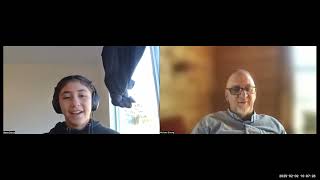
Michael Strong trains jiu-jitsu up to six hours a day, five to six days a week, inspired by Jocko Willink's "discipline equals freedom" mantra. He sees martial arts as essential for children's confidence and self-defense, and draws parallels between physical grappling in jiu-jitsu and intellectual grappling in debates.
Chapters
Um, so good to see you. I take it no competitions today?
No, not today. Um, just some training, but that's it.
Got it. So I saw, I think it's in the last week, might have been the last 2 weeks, that Jocko Willink tweeted about you. Did you see that?
Yes. Um, I think he tweeted about something I had, or my dad had posted. That I had said in one of his tweets, if that makes sense.
And what do you think of that, of Jocko Willink tweeting about you?
Well, I think the whole notion of that is pretty cool because I'm not on X yet, but, um, I think the whole situation of why he was tweeting about, uh, the post that I did was pretty cool because I thought it was, um, or I thought the thing that he posted about, which I'll say that in a moment, it was really interesting and I wanted to put my opinion on there. So he had— so this guy, he had, um, not Jaco, another man had posted his opinion basically telling fathers not to put their daughters in jiu-jitsu because it— not a word-for-word quote, but he was basically saying that you shouldn't because it's allowing 14 or teenage boys to grope at and to touch your daughter and stuff. And then Jaco posted a tweet back saying, to the words of— I'm not quoting— but put your daughters into jiu-jitsu so that they can defend themselves from that type of thing. And I, you know, I agree with Jaco, so I made a Loom video about my opinion, and I said that it's the wrong thing to do just to shield your daughter from those things instead of exposing them to it and having them learn how to defend themselves. Um, and we were kind of late to the game, but my dad posted it as a response on Jaco's tweet, and then again on some other tweet that Jaco was in. And then he saw it, apparently watched it, and then retweeted it. So I thought that was a cool experience and a cool thing to do.
Got it. And how well do you know Jaco?
Um, pretty well. Uh, I used to train at his old gym, Victory MMA, until about 2020. Um, and I would see him very often, and he recognizes me and my brother whenever at jiu-jitsu tournaments and stuff. It's always very fun to say hi.
So you were already a pretty serious competitor when you left that gym?
Um, I would, I enjoyed competing, but I wasn't in it so much as to win, if that makes sense.
Yeah. Yeah. Well, I think it's maybe last 2 or 3, seems like almost 4 years you've been pretty serious competition. So maybe roughly after you left his gym is kind of when you, about when you got started as a serious competitor.
Yeah, I could say so. Like when I, when I started training with competitors for sure.
Got it. Well, very interesting. And to what extent do you attribute— there are two related things. There's reading the Way of the Warrior book, and then there is actually practicing jiu-jitsu. Do you think the book and the practice kind of went hand in hand, or would you say one has been more influential for you than the other?
Well, I read his books when I was a couple years ago, and that's what inspired me to start jiu-jitsu. They were very inspiring and influential, especially when I first started, because I could totally relate to the character. I was really new and stuff, and those books have a lot of different lessons that I still take to today. I think the main one being Jaco's Trademark. I don't know if it's a trademark, but his saying, discipline equals freedom, that helps a lot because sometimes I need to have discipline in order to keep training and things like that. So I think the messages in the books are still influential to me and that I'm also training a lot.
Excellent. Actually, to dig in that just a little bit, so are you suggesting maybe there's some days you don't feel like training and then you remember discipline equals freedom and just remembering that helps you have the discipline to go and train again that day?
Yes, pretty much.
I bet. Are there any days when you just like, not today? Or how does that work?
There are for sure days. I mean, even though I'm young, I'm sometimes I'm still like, or some days when I wake up in the morning and go to 7 AM or 6 AM practice, I'm really groggy and I'm really tired and I just want to sleep in and stuff. I know that I still have like 6 more hours to go training or something, and, and I'm still motivated, but my body's kind of worn out. And so usually I think of all the work I've done and things like that, and I push myself to, you know, still go to practice and things like that.
So you have 6 hours of practice some days?
Yes. Wow.
How many days a week do you have 6 hours of practice?
I mean, I guess all throughout the workdays of the week, maybe except for Wednesday because I have school in the morning. And then I think now I'm starting to do— to wrestle on the weekends. But I've had a schedule for the past couple of months where I train in the morning and then afternoon, and it amounts to maybe 5, 6 hours.
Wow, that's intense. Once you're doing it, I knew you practiced daily, but I thought it was like 2 or 3 hours. 5 or 6 is really intense, especially at your age. Once you're doing it, do you generally enjoy it?
For sure. Yeah. I feel like, and I'm also surrounded by all my friends and things like that, so that helps a lot. Sometimes when I like during the weekends and it's on, it's Monday, sometimes I'm like, oh no, it's training. But then when I get there, it's, it's hard, but it's a lot of fun.
Got it. And I expect at night you're really tired in a healthy, good way.
Yeah, for sure.
I'm just thinking, you know, a lot of Americans, maybe not kids your age, but a lot of Americans have a hard time falling asleep. But my bet is if you're working out that much, you probably fall asleep really easily.
Most nights, for sure.
Yeah. Well, I want to just think a little bit about the role of— I'm not going to say being famous, but, you know, Jocko Willink has a pretty big audience. Um, do you have any— do you like the idea of him focusing on you and giving your message attention, or for you, it's more about getting your message out there that's important? Um, what do you think about, you know, suppose he were to cite you more often, is that a good thing? This goes— tell me a little bit about what, what you think about that.
Well, I think in this case it's more about my message that's getting out, like you said, because I wasn't really looking to get cited or reposted or anything like that. I just wanted people to see the video. Um, if I were to get cited or reposted more, that would be cool, cool, because I would get more publicity. And then if it was about messages like these, and people would be able to watch them or read them and then learn a little more or something like that. But I mean, it would be, it would be fun for people who like visit my Instagram and stuff and things like that. But I feel like in this case, it's for sure more about the message.
Got it. And is it your belief that, um, most or all girls should learn jiu-jitsu so they can fight, and/or most or all kids, boys and girls, should learn jiu-jitsu so they can fight?
Well, I don't think that everybody needs to learn specifically jiu-jitsu. I think, I mean, if you can't, you can't. If you can, you can. I think it's one of the best things to do in order to learn self-defense and confidence and humility and things like that. There's other ways you could wrestle or box or Muay Thai, but I think the main argument I was posing was that the man who posted about how your daughter should not be doing jiu-jitsu, he was saying that you're just allowing them to get touched and things like that by just specifically 14-year-old boys, he said. And I think the part that I was trying to say was that that's actually not— that's not what's happening. People, I mean, most people are very, very respectful, and you're learning how to defend yourself and not, I mean, not intentionally directly exposing yourself. That.
Got it. Um, and you— I'm— I don't know the technical meaning of grapple in your context. Would you say that you grapple either in wrestling and/or jiu-jitsu, or is that not the right use of the word grapple?
I think that's the right use, like physical grappling, for sure.
Because I wanted to transfer to intellectually grappling. Would you say that you feel capable of grappling intellectually with adults on issues like this?
Uh, I mean, about this issue, I think for sure, because I'm really, or I'm experienced in this issue, maybe not about other things, but, um, yes.
Yeah. And I wouldn't expect you to be able to grapple with a quantum physicist about quantum physics because you don't know any. Um, but you would say in terms of confidence that there's an issue like this where you have, in this, in your case, my bet is you have way more experience than this guy did. Um, so if there's an issue where you have more experience— and part of the reason I ask is some kids, and I think most kids, would be intimidated by an adult, uh, you know. And so just like you, it sounds like you are not intimidated by— well, you even grapple physically with adults in training, correct?
Yes.
And you're not intimidated?
Uh, most of the time I'm not intimidated.
Of course, sometimes, of course, of course. But it sounds like, would you say that in a domain where you have a knowledge base, you would not be intimidated by grappling intellectually with an adult in real life?
For sure. Actually, I didn't think about it that way. But right as I read the tweet, when my dad showed me, I was like immediately disagreeing and things like that and thinking about rebuttals in my head, I guess. But I can also kind of visualize a scenario where an adult said something that I wasn't knowledgeable about, and I would have kind of just succumbed to the idea and agreed maybe, or wanted to learn more about it. But in this case, I was knowledgeable and maybe, maybe even more experienced than that guy. I'm not sure. So I was completely confident.
Have you ever grappled with an adult on an issue where the adult had a strongly held opinion and you really kind of wrestled the other person to the ground with your arguments?
Not personally, to be honest. I've never been in a situation where I've needed to do that.
How about in class? Would you say you've ever, so to speak, grappled with one of your fellow classmates? They had a wrong opinion and you, you know, debated them into— I don't want to say into submission, but, you know, you sort of— do you like the analogy sometimes, not always, but between kind of grappling physically and grappling intellectually? Does it make sense?
Especially when it's about a debate. And I think I have a couple of times before. I can remember a couple scenarios.
Yeah, got it. I mean, I assume you're not the least bit intimidated by your classmates intellectually.
Uh, maybe if they're older than me, but not as much as an adult, for sure.
Got it, got it. Well, I think it's really interesting, um, you know, the analogy between you know, again, clearly differences between physical grappling and intellectual grappling. But I also think there are similarities. What would you say are the similarities and differences between— I think the differences are kind of obvious, but what would you say are the similarities between physically grappling and intellectually grappling?
Well, for physically grappling, you have to Or, I mean, sometimes you do have to kind of strategize your way through things, especially if the fight's going kind of slow. And then I think you kind of have to do that, or do the same when you're intellectually grappling, because just imagine it's a debate, you have to come up with good arguments and things like that. And the difference is obviously the grappling is physical, or grappling in jiu-jitsu or wrestling is physical, and then intellectually it's not physical. Also, sometimes in jiu-jitsu, especially jiu-jitsu because I'm more experienced at that, sometimes I don't think at all when I'm fighting. I kind of just do it. And I think when I'm debating somebody, I think I do really need to focus and think, maybe just because I'm not as experienced. I'm not sure.
Got it. Very interesting. In which case, you've given me lots to think about, as well as our audience. And I'll let you have a good day, and we'll see you next weekend.
Sounds good.
Thanks, Michael. Bye.







