Loving your child's mind: A Difficult Socratic Workout
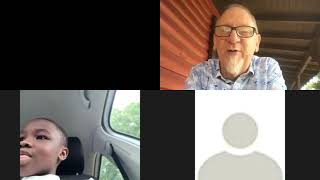
Michael Strong guides students Alana and Sankara through a close reading of what makes science credible. They unpack what
Chapters
Yes. Or—?
Sancara, what are you doing? Sorry, Michael.
I'm not doing anything.
Stop fiddling.
He's the one who saw recorded the meeting. I have a quotation on science.
Alana, can you see the quotation on science in the chat? I can. Do you want to go ahead and read it out loud for us the first time?
For the first paragraph?
Um, how about you read the whole thing and then maybe we'll go back and do paragraph by paragraph. Okay.
Science is the systematic enterprise of gathering knowledge about the universe and organizing and condensing that knowledge into testable laws and theories. The success and credibility of— the success and credibility of a science are anchored into the willingness to the willingness of science scientists to expose their ideas, expose their ideas, and resort to independent testing. This requires the open exchange of data, procedures, and materials. Abandon or modify previously accepted conclusions when confronted with more complete or reliable experimental or observational device.
Observational evidence. And then you've got one more sentence. Okay.
Adherence, adherence, adherence to these principles provides a mechanism for self, for self-correction. That is to found— that is for self-correcting of the credibility of science. Go back to it now.
So, um, I trust that this was fairly complex to understand. Is that fair enough? Yes. Okay. I always like to go on a scale of 1 to 10, with 10 being perfect understanding— you understand every sentence, every word, everything— and 1 being no understanding. It might be in, you know, Chinese or Swahili or something. What, what, how well do you understand this on a scale of 1 to 10? You understand it around a 5 or 2 or 9?
Um, I would maybe go like a 5. Okay, terrific.
Sankara, how about you? On a scale of 1 to 10, how well do you understand that paragraph? A 4. A 4, okay. In which case, the way I like to read hard things is, you know, so Alana, I respect your suggestion, just read the first paragraph. Sometimes I like to get the whole even if I don't understand it, and then I go back and do it bit by bit. Um, does that make sense as a strategy? Yes. So in which case, maybe we'll let Sankara just read the first paragraph, and let's see if we can make sense of the first paragraph. Go for it, Sankara.
I can't find the chat.
If you click on the bottom, on the bottom, I guess it's different on the phone, but you should see a little thing that says chat.
Found it.
Found it? Can you see that first paragraph now?
Science is the systematic enterprise of gathering knowledge about the universe and organizing and condensing that knowledge into testable laws and theories.
Okay, great, thank you. I would expect this one sentence has a whole lot of complexity to unpack. Do either of you want to either ask— well, first, do you have any questions about any words or expressions in that paragraph. Anything you want to ask about because it's not clear to you?
Um, what is testable?
Yeah. Okay, so you're looking at that last clause, um, condensing that knowledge into testable laws and theories. Alana, do you have any idea what the authors might mean by testable laws and theories?
Um, maybe that if a certain scientist or a certain person has many ideas that could form into a law or a theory, you just condense it down into like one simple thing.
I mean, not simple, just one thing. So you're focusing on condensing, is that— but I think Sankara was asking about testable. Why? What, what is meant by testable here? Like maybe like just testing out laws or theories, or maybe like Yeah, just see how they go. So why might scientists test laws or theories? What's the relationship between science and testing laws and theories? To make sure it works. Okay, and how, how would a scientist test a law or theory to make sure it works?
You can touch it.
Or you could try and work the theory and then see if it works.
But I guess I'm, I'm getting that, but how can you tell if something works or not?
Um, maybe something bad happens in the theory or the law, or it, or if it makes something bad happen, maybe.
I'm not sure. Okay.
Sankara, do you have any other ideas on how we can test to see if a scientific law or theory works?
Because, um, it has— if, if a theory works, that, that, that can only mean like, um, it can fit in in what happened then. And if a theory doesn't work, then Yeah.
Okay. Do you guys, do either of you know any theories where we, do you know how any theories in science were tested? Can you think of an example of a theory in science that was maybe tested? Go, Sankara.
So, when there was, in the beginning, like in the 2000s, when they were first starting to find planets, planets outside of our Solar System, they, they looked at something and then every couple of years they looked at the star and then they saw like a kind of black dot come around it and that's when they found the first planet and they started studying them.
Aha! Alana, do you understand what Shankara is referring to?
Not really, but it's not how that theory worked, or like what they did.
Okay, um, let me see if I can rephrase it. So, um, you know, it used to be that we owned planets in our solar system around our sun, you know, Mars, Jupiter, Venus, Saturn, Uranus, Neptune, Pluto. Um, but Sankara is talking about at some point they thought there might be planets outside. I think that we've long thought there might be planets outside the solar system. And so we could call that a theory. The theory is that there are planets outside the solar system. And so Sankara, can you clarify how what you just described might have been a test for the notion that there were planets outside the solar system?
So they looked at a star, and then there was— when a planet orbited around the star, the side they were facing, there used to be a black dot, and once it left the star, there would be like a, like a timer, like a manual film timer kind of shape at the end. That's when they knew it was a planet. And it's not a theory anymore, it's actually a fact.
Okay. And Alana, is Sankara making sense yet, or?
Yeah. It's making, he's making more sense, yeah. Now he is. Okay.
So Sankara is giving us an example of a theory that there might be planets outside the solar system, and we tested it by observing stars and observing these black dots, which we then interpreted as planets. That— and Sankara, check, let's check to make sure you and I are on the same page. I think part of it was that the black dot went back across the star at regular intervals. Is that part of it? Yeah. Okay, um, so now we have an example of testing, testable. Well, Sankara, you're the one who asked about testable. Does that seem like a case of a testable law in theory? Yeah. Okay, so I'm going to read that whole first paragraph and see if it makes sense to all of us now. Science is the systematic enterprise of gathering knowledge about the universe and organizing and condensing that knowledge into testable laws and theories. So does that paragraph mostly make sense? Yes. Yeah. Okay, um, so we used an example from astronomy, the, um, planets. Based on that definition, why would biology be a science?
It's the study of— it's the study of animals and plants.
Okay, and what makes— I mean, most people usually describe biology as a science. If you guys take science in high school, you'll probably take a biology class. A biology is pretty much always considered a science. So why would, you know, given that we have astronomy and testable theories in astronomy, why would biology be considered a science?
Because they, they could— it's kind of scientific to study the animals and stuff.
And you say kind of scientific. I agree. And I'm trying to get— do you know of any testable laws and theories about plants and animals or living things?
A theory says— I'm not really good at geology, I'm only good like astronomy and yeah, and matter and stuff like that.
Okay, no problem. Hey Marawa, can you hear us? I hope Marwa's connection's well. Alana, what do you think about biology as a science? Do you have any idea why we might think of biology as a science?
Um, maybe because they, maybe because they had this theory of that maybe plants and animals too were living things, so they studied it.
Maybe that would be a science. Okay. Do you think there might be, um, testable laws and theories about Animals and plants? Yes, I think so. Okay. How about— here's one. Animals— humans, you guys know that humans need oxygen to breathe, right? Yeah. Do you think you could test whether or not animals need oxygen to breathe?
It depends. What does it depend on, Sancara? Because the— only the animals we know right now need oxygen to breathe, or some kind of gas to breathe, but there could be like life on other planets that don't need that, like maybe they need carbon monoxide, which is poisonous to us.
Ah, I see. So you're pointing out that as far as we know, animals on Earth need oxygen to breathe, but there might be other animals on other planets that breathe differently. Yeah. And actually, I think there are some microorganisms at the bottom of the sea that maybe have a different kind of biology, so that's— there is an interesting variation there. But maybe let's just try to see if we can make any sense of this rest, the rest of this, if we're kind of okay about that first paragraph. And I'll read the next chunk, the success and credibility of science. What do we mean by the success and credibility of science?
Um, maybe this— all the stuff it's made.
Okay, go ahead, Alana, what were you gonna say?
Maybe like the dedication all the scientists put into their work and experiments.
The dedication and, uh, Sankara and all the things it's made. Do you guys know what credibility means? What does the word credibility mean? Go, Sankara.
Maybe— I'm not really sure because, um, maybe it means the Credit again.
Okay, that's a reasonable hypothesis. Alana, do you have any idea what the word credibility means?
Um, I agree with Sankara, but maybe it means something a little different, like maybe like the ability to get credit, or the ability to get credit.
So one of the things I would encourage you both to do is, um, if you're not sure about a word, feel free to ask about it. So credibility is related to a word like credit, for instance. But in this case, credibility is kind of the believability. It's— credible is something that it's highly, highly believable. And I think most people would say that we should probably believe science more than, you know, some other things like a rumor. Would you— does it make sense that maybe we should believe science more than a rumor? Yeah, you guys know what rumors are, right?
Yes. Yeah, like, like, um, like there was a rumor in my school, uh, this guy called Judah, um, so there was a rumor that, that he went into the girls' toilets and nobody liked him, but that wasn't true.
Okay, so it's— is it fair to say that rumors are sometimes or even often false?
Yep.
You think that science is sometimes false or not?
Sometimes false.
Yeah, sometimes false because there can't be mistakes, but they can be.
Okay, but is it fair to say that science is probably more credible than rumors? More, that is. Yeah. More likely to be true. Okay, so that's what this next paragraph is talking about, is why science— well, maybe before reading it, can either of you explain why science is likely to be more believable than rumors? What makes science a bit more believable, or maybe a lot more believable, than rumors?
Because they actually, like, they go in depth with things, they study it, they— and if they're— and if they're They don't think their answers are right, they, they check it and check it, even if they know it's right, they check it again. Well, there's a rumor. Go ahead. There's a rumor, like, once they have the answer, they think that's the answer and then it spreads.
Okay, so scientists check and check and check their answer again and they study it and everything? Alana, do you either agree or have any additional explanations for why science might be more credible than rumors?
Um, I agree with Sankara, but also maybe one other thing that scientists are besides rumors is that, um, they're more open-minded. And like Sankara said, rumors, they don't really check anything.
Okay, cool. Um, well, you guys are both developing hypotheses around what the rest of this is saying. That is, the rest of this is going to explain why this writer thinks that science is more credible. And point number 1 is that scientists expose their ideas and results to independent testing and application by others. This requires the open exchange of data, procedures, and materials. So how would exposing your ideas and results to independent testing and replication by others make science more credible?
Um, well, it said like open to different procedures, materials, so So like I said, open to different things.
Mm-hmm. That's certainly part of it. How about the independent testing and replication? Do you guys know what replication is? Yes. What's replication?
It's like repeating or making something again and again and again.
Yeah, so if we get a result in science, other scientists try to replicate that result. And then the next point, because when I— we could go much more slowly, but I want to kind of wrap this up. Um, the next point is abandon or modify previously accepted conclusions when confronted with more complete or reliable experimental or observational evidence. So why would that make science more credible than, say, rumors? That they abandoned or modified previously accepted conclusions. When confronted with more complete or reliable experimental or observational evidence. What are they saying there about the credibility of science?
They say that they got more evidence, so they're more sure about maybe a different result, so they look over their previous conclusion or just abandon it.
And why would it be a good sign to abandon a previous conclusion?
So that— because it shows that you got either more evidence or materials or things to do stuff.
Okay, I mean, kind of what I'm thinking is suppose there's a rumor and it turns out to be false and somebody still believes it when you've given them evidence that the rumor is false. Does that seem like you're seeking the truth? No. Have you guys ever known anybody who keeps believing something even when they were given evidence? That contradicted what they believed?
Yes. Um, yeah. Why do people do that?
Why do people keep believing stuff even when the evidence goes the opposite?
Because you're— No, you can go.
Um, maybe it's because they just don't want to maybe give up on their belief, or just, they just don't want to switch. Are lazy about it.
Yep, I think that's really a fascinating psychological phenomenon that sometimes they don't want to give up on their belief. Were you going to say something else, Sankara? No. You have any ideas why people don't want to give up on beliefs?
They were just going to be the same as, um, Adonis.
Okay, one last sentence and then we'll go. Adherence— this is again why science is more credible than rumors or any— a lot of other things. Adherence to these principles provides a mechanism for self-correction that is the foundation of the credibility of science. What do they mean by a mechanism for self-correction?
Um, uh, maybe just Well, self-correction, correcting yourself if you've got a mistake or something that you need to work on, self-correction. And then I'm thinking of just maybe like a way to do things.
So like try different— Do you think that people who spread rumors care much about self-correction?
No.
I could imagine one kind of person who before spreading a rumor would go and try to check the facts themselves. And another kind of person that just spreads the rumor regardless of— without checking facts. Does that make sense? You're nodding, Sankara. OK, cool. In which case, how was that? Let's do a best part and most frustrating part of unpacking that. Paragraph on science. So Sankara, you want to start? What was the best part and most frustrating part about a paragraph, unpacking that paragraph on science?
The best part is that, um, I think we actually got to understand the paragraph, but the bad part is that it was really hard. Okay.
Is it okay if I drag you through really hard stuff sometimes? Yeah. Okay. I like, I like doing it. Just like a hard swim workout, I think a hard brain workout is a good idea sometimes. Alana, for you, what was the best part and the most frustrating part of unpacking a paragraph?
Um, I have the same as Sankara, and then probably another best part was just getting to do this because I wasn't here last week. And then maybe that part, like Sankara, was that it was really hard to do.
Well, um, it's great to have you back, Alana. Um, we've missed you when you've been gone. And I'll ask you the same question as Sankara. Is it okay if I have you guys do really hard stuff sometimes? Yes. Okay, just like jiu-jitsu, you have to do hard stuff there, right? Yes. All right, all right. Thanks to you both for working hard and hope you have a good week. Bye-bye.
Bye.







