Socratic educator Michael Strong with Alana, age seven
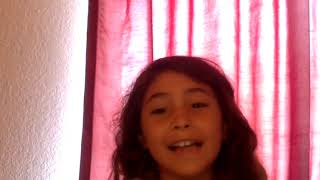
Michael Strong guides seven-year-old Alana through what infinity means. They work out that infinity is not a real number and doesn't exist in the physical world, even though galaxies are vast. By the end, Alana describes infinity as invented and imagined, like a unicorn.
Chapters
Hey Alana, how are you? Are you there, Alana?
Yeah, I am.
Okay, great. So do you still enjoy being 7?
Yes, I do.
And second grade is pretty good?
Yeah, it's going really good.
Okay, excellent. So I sent your dad an article on infinity. Have you ever heard of infinity before?
No, but I had heard some people use the word infinity, but I don't know what it means.
Okay, well, I thought we might read this little article a little bit and see if we can figure out what it means. Is that okay?
Okay.
So, um, do you have it right there in front of you?
Uh-huh, I do.
So what is infinity? Do you want to read, um, the first part there? Sure.
Infinity has no end.
Okay, does that make— yeah, go ahead and read to the next blue part and we'll figure it out all together. So go ahead.
Okay. Infinity has no end. Infinity is the idea of something that has no end. In our world, we don't have anything like it, so we imagine it and are trying to get there. But that is actually not actually infinity, so don't think that like that. It just hurts your brain. Just think endless or boundless if there is no reason Something should stop, then that, then it is infinity.
So does that make sense at all?
It does.
So can you think of something that, um, is endless or boundless?
First, what does boundless mean?
So boundless, bound, if something is bounded, it means it has a boundary. Like a shape has a boundary, the screen we're looking at has a boundary. Anything that has an end to it has a boundary.
Oh, like an end, like, so boundless is basically like there's no boundaries?
Yep, no boundaries, no end, whatever.
Okay.
Can you think of anything that's like that?
Like maybe Like what in, uh, what in the topic of boundless is it something like a shape or something?
Well, could you have a shape that doesn't have a boundary?
I don't know, maybe.
How— so you know what a square is, right?
Yep.
So a square has a boundary that's these 4 lines, right? And a circle has a boundary, that's the edge of the circle, right?
Yep.
So shapes— what makes a circle is the boundary, what makes a square a square is the boundary, and so that's why I'm trying to think if it doesn't have an end to it, how could you have a shape?
Oh, okay.
So but it's good to think of things. Do you think Most things have a boundary or an end.
The things that have an end or don't have an end?
Yeah, well, we're trying to find if there's anything we can find that does not have a boundary or does not have an end.
Maybe I would need to think on that because I— everything that— everything in the room that I'm sitting right now in has a boundary.
Okay, that seems likely to me as well. How about outside the room? If you were outside at Balboa Park, do you think that things would still have boundaries?
Yeah, like Like, um, sometimes the walls that they have, or like the circle for the fountain, those have boundaries.
So let's see, I'm going to go back to what we read. Infinity has no end. Infinity is the idea of something that has no end. Then there's a line that says, "In our world, we don't have anything like it." What do you think that sentence means? In our world, we don't have anything like it.
Like we don't have it.
So if we don't have infinity in our world, how can we even think about it?
Maybe it's just like something somebody just like thought about it and then said, "Oh, maybe I could put this in this." thing, or I could just make it popular even though it's not in our world.
So like an imaginary thing somebody wanted to make popular?
Yeah, maybe.
Okay. Um, you know, there's an interesting case. Let's, let's think about numbers. What's the, what's the biggest number?
The biggest number?
Yep.
Wait, that gives me an idea. Counting has no end, we just don't know other numbers after infinity.
So now I'm— you said a couple of things there. So you used the word infinity, right? And you said— yeah, go ahead.
It's the last number I know.
What's the last number you know? What is the last number you know?
Infinity.
But here it says infinity has no end. So how can it be a last number?
So maybe, um, like we just don't know any more numbers?
Okay, let's go ahead and read the next section where it starts, infinity does not grow. Well, let's see if this will help us understand infinity. Okay. Okay, go ahead. Starting in infinity does not grow.
Infinity does not grow. Infinity is not getting larger. It is, it is already fully formed. Sometimes people, including me, say it goes on and on. Which sounds like it is growing somehow, but infinity does not do anything. It is just. It just is.
So what do they mean by that? Infinity is not going on and on, it doesn't do anything, it just is. Does that make any sense at all?
A little. It does a little. Like it just, it's like fully formed, so like It can't, it can't grow more, so, so it's just, it just is.
Okay, let's look at the next section. Can you read the next section, please?
Sure. Infinity is not a real number. Infinity is not a real number. It is an idea, an idea of something without an end. Infinity cannot be measured. Even these far away galaxies can't compete with infinity.
Okay. So first, when it says infinity is not a real number, it is an idea, an idea of something without end. Weren't you telling me that infinity was the last number?
Well, it isn't the last number. So maybe we'd like for now, for me, it's the last number I know, but maybe other people know other numbers higher, or maybe we just need to invent some new numbers or something.
But here it says that infinity is not a real number.
Yeah, so maybe I'm wrong.
Okay, if it's not a real number, um, does it make sense that it is the idea of something without end?
It does.
So do you think that, um, do you think numbers are endless, or is there a last number somewhere?
Maybe it's kind of both for me. Like, maybe there is a last number, but, but I don't know if it keeps going on or not.
Ah, you're talking about going on and on. The thing before it says it goes on and on, which sounds like it's growing somehow. But it says infinity does not grow somehow, it just is.
Yeah.
So you're saying maybe the numbers keep growing on and on?
Yeah, maybe.
Okay. Um, do you think of far away galaxies as a long way away? Do you know what a galaxy is?
I do. Like right now we're, we're just, we're, we live in the Milky Way, I think.
Yep. Um, do you think galaxies, well, the one we're in, we're in, but have you ever seen pictures of other galaxies?
I don't think so.
Okay. Well, um, the picture, if you have, if you have the website in front of you, that's a picture of a galaxy, of a different galaxy. But the idea is they're very huge and very far away. And so even if we can see them a little bit with our eye, when we look up at the sky, they're super far away. Makes sense that some things are just super far away up in the sky.
Yeah.
Um, but they're still not infinite. So they can't— the way this person says, even these far away galaxies can't compete with infinity. Um, what is, what do you think he means when he says these far away galaxies can't compete with infinity?
Like maybe they don't have it either. Like, so they can't compete with it.
Okay. Um, do you think that maybe they have boundaries?
Yeah, maybe they have boundaries. Um, so maybe they can't compete with it or they just don't have it. Okay.
Do you think with respect to numbers you can imagine no end, or do you think— is— how would we know if numbers ever had an end or not? Is there any way to figure that out?
If there is, I would have to think about that because I don't know right now.
Okay, well, um, did you enjoy this little article on infinity?
I did.
Do you think that you mostly understand it?
Yep, I do now.
Okay, and so what would you say infinity is right now?
Infinity is like just this thing that person made up that, um, like it's not a number and it doesn't— it probably doesn't get larger and, and we, and we don't have it. It's just like something. It's true.
Anything else?
I don't think so.
Okay, that's a pretty good summary. So it's— is it strange to think about things that don't exist?
It is.
So do unicorns exist?
Well, narwhals are the unicorns of the sea, so narwhals exist.
That's true, but do the like horse, horse-style ones exist?
I don't think so.
So do you think that infinity is like a unicorn, or is it a different kind of thing that doesn't exist?
Like, it's like a unicorn, but it's not a unicorn.
Okay, okay, well, I, I like to think about big ideas even if they're confusing. Are you okay thinking about big ideas even if they're confusing?
I am.
Okay, I'm gonna let you go have a fun Sunday, okay, Alana?
Okay.
Bye-bye. Bye.







