Socratic educator Michael Strong with Alana, age seven
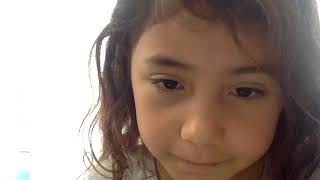
Michael Strong talks with seven-year-old Alana about Robert Frost's "The Road Not Taken," asking her to read it from memory and then walking through each stanza with questions about what the words mean, how the speaker feels, and what the poem is really saying.
Chapters
Okay, how are you doing, Alana?
I'm good, how are you?
I'm well. I hear you're 7 now.
Mm-hmm, I'm 7.
Happy birthday! How's it feel to be 7?
Bigger.
All right, and what grade are you going into?
I'm going into 2nd.
Whoa, you're going into 2nd grade? You are getting so old, I can't even believe it.
I think I'm starting tomorrow.
Wow, that's exciting. So I thought since you are getting so old, we could start reading and discussing things together, and so I suggested to your father that you look at a poem before we get on. Did you get a chance to look at the poem?
Yep.
Do you have it in front of you?
No, but I did read it, and I think I know what the meaning of it is.
Okay.
And my dad's bringing it to me right now.
Okay, great. I thought we might start with you reading it out loud. Would you mind reading it out loud?
Yeah.
Okay.
From like to the first to the very end?
Yep, the whole thing. The title, start with the title and then read the whole poem.
The Road Not Taken. Two roads diverged in a yellow wood, and sorry I could not travel both. and be one traveler, as long as I stood, and looked down one as far as I could, to bend to where it bent in the other grove. Then took the other, just as fair, and having perhaps the better claim, because it was grassy and wanted wear, though as for the passing there, had worn them really about the same. And both that morning equal lay, in leaves no step had trodden black. Oh, I kept the first for another day, yet knowing how way leads on to way, I doubted if I should ever come back. I shall be telling this with a sigh somewhere ages and ages hence. Two roads divided in a wood, and I took the one less traveled by, and that has made all the difference.
All right, thank you. Do you like the poem? Do you not like it? How do you feel about it?
It makes me feel like I'm like in the woods, like in the, in the path that's less traveled, doubting if I should ever come back.
Got it. Wow. So what do you think the poem's about?
It's— I think for me it's about this traveler who goes on a travel, and for me that travel is in is on a path divided by the other path in the woods. So for me, and he doubted that he would ever come back.
Got it. Just in general, do you like poetry? Do you read very much poetry or not so much?
Not so much. This is probably maybe like the second poem I've read, but it's probably the One of the best I've read.
All right, so one, just one word, diverged. I think you pronounced it differently. It's in the very first line, two roads diverged in a yellow wood, and then towards the end, the third to last line, two roads diverged in a wood. Do you know what the word diverged means?
No, but maybe it means like separated?
That's pretty good, yeah. You know how sometimes you're in a path and the path goes two different ways? That's what it means to diverge. So diverge means to kind of go apart like that. So separate, pretty much separate, but I always have like this visual of, you know, things, a path going in two different branches. Make sense?
Yep.
And so when it says two roads diverged in a yellow wood and sorry I could not travel both, does it make sense that you couldn't travel both?
Yeah, it does.
Have you ever been in a situation where you were wondering which path to take? Do I go to the right? Do I go to the left?
Not really, but maybe it'll come up.
You can imagine a situation like that, right?
Yeah, like I was in Bubble Park and then they put like these two new roads separated by like this building or something.
Yep. Do you ever go hiking?
No, not really.
Okay. So you know what hiking is, right?
Yeah.
Sometimes if you're hiking, there'll be a trail that goes one way and a trail that goes the other way, and you have to decide which trail do I take. So first, the title. The title is The Road Not Taken. Why do you think the author, the author's name is a man named Robert Frost, by the way, and he died a long time ago. But why do you think Frost named the poem "The Road Not Taken"?
Because like that road wasn't taken very much. It wasn't walked by very much. So I think he named it because that person made a difference by walking into that road, the one less traveled.
And how do you think the person made a difference that way?
Because like No one went there before, probably, and then he just decided to go there, and then when other people heard about it, he made a big difference.
And how do you know which, which road he, which path he took?
Excuse me?
How do you know which of the two paths he took?
I actually don't know, but I know it's the one less traveled.
I see. So let's see if we can figure out if there's— do you know where in the poem there's evidence that it's the road less traveled that he takes?
Excuse me?
I guess in the second last, uh, the second to last line, that's where he says, "I took the one less traveled by, and that has made all the difference." Um, so why do you think it made all the difference? What difference did it make?
It made that difference. Maybe nobody knew that you should take the road less traveled, and he took the one less traveled, so he probably made a difference with that.
And do you think— what kind of difference? Do you have any kind of any idea what kind of difference it might have made?
Maybe a difference of like paths or something like that.
So let's read stanza by stanza and see if we can figure out a little bit more what's going on here. So I'll read the first one for you. Two roads diverged in a yellow wood, and sorry I could not travel both and be one traveler, long I stood and looked down one as far as I could to where it bent in the undergrowth. Why do you think he says he's sorry he could not travel both?
Because like he can travel both and maybe people want him to try the one more traveled, but he wanted to do the other one, so he said, I'm sorry, I couldn't do both.
You think other people wanted him to take both or wanted him to take the other one?
Yeah.
I see. And why do you think it's other people who wanted him to take both or the other one?
Because maybe they knew, because since it's the only one that they took, maybe they know that it's safe.
What evidence is there that there are other people involved? Is there— do you see somewhere in the poem where it talks about other people? No. So you're kind of adding that without any evidence in the text, right? Do you know what I mean by evidence?
Close. Because like, here's a clue for me, because when he said, "I'm sorry, I could not take both," it's like saying to another person, I see, I see.
Okay, that now I see, and clue is a good word for that. So that's why, that's how you're interpreting that. Do you think it's ever possible if you're all by yourself to feel sorry about making one choice rather than another, or sorry about having to make a choice?
Maybe like, maybe I'm sorry for myself for taking this because Maybe like there isn't anything here.
So it's possible he's talking to himself or thinking to himself?
It's possible that he's talking to himself, but it's also possible that he's writing a note or talking to another person after his travels.
Okay, let's go to the second stanza. Then took the other as just as fair, and having perhaps the better claim, because it was grassy and wanted wear, though as far for that the passing there had worn them really about the same. What is he saying in this stanza?
In the— excuse me?
What is he saying in this stanza?
What's a stanza?
It's a verse. You know, there are 4 blocks. If you look at it, there are 4— the poem is broken up into 4 chunks, 4 paragraphs, sort of. So I just read the second one. So that's what I mean. So the second block of text. What is he— does he add anything in those lines? Or are they just words? Or do they mean anything?
For me, like, the meaning, like, he's like saying of his travels, or he's writing a story about his travels, or maybe just a poem.
Okay. When it said, um, having perhaps the better claim, why do you think— what does that mean? Having perhaps the better claim in what way?
Maybe he has the better claim, like, well, my claim to go on this road is stronger than yours because it's the one that's less traveled.
And when you say stronger than yours, are you still thinking he's talking to another person, or is he talking to himself or thinking to himself?
It could be possible of all those, but for me, maybe he's talking to, like, Another person before his travels, and then the end is like after his travels.
Got it. Got it. I'm going to go on to the third one. And both that morning equally lay, in leaves no step had trodden black. Oh, I kept the first for another day! Yet knowing how way leads on to way, I doubted if I should ever come back. What is he saying in those last two lines? Yet knowing how way leads on to way, I doubted if I should ever come back.
Cause he didn't— cause he knew way to way, like, but he doubted if he would ever come back if there was like something there, or maybe he just doubted he would never come back.
What does it mean how way leads on to way?
I think for me in that line it means that this way leads on to that way, and then it's just like a whole new thing.
So it's kind of like if you make one decision and then another decision and another decision, you kind of go, you kind of keep going in a particular or various directions, something like that?
Yep.
Okay, let's do the last one. I shall be telling this with a sigh somewhere ages and ages hence. Two roads diverged in a wood, and I, I took the one less traveled by, and that has made all the difference. So why do you— what about the first two lines of this one? I shall be telling this with a sigh somewhere ages and ages hence.
Because maybe, um, like he's like very emotional there, so he's like saying with a sigh, like a big sigh, like, like that. Maybe he's just like very sad, or like he hasn't been home for ages and ages.
So you think people sigh. What does it mean when people sigh? What kind of emotion is a sigh?
For me, a sigh is like when you're like very bored or if you're very sad.
So bored or sad? Do you think he's bored or sad?
Maybe he's just sad because he hasn't seen his family or friends in a long time because in the other line it said ages and ages and For me, it's like, means like he hasn't seen something in ages and ages.
Got it, got it. So do you feel as if you understand the poem a little bit better after reading it more closely and looking at some of the lines?
Yeah.
Do you like it better or do you like it less or about the same?
Like it more and the same.
More and the same? Would you like to read some more poetry at some point? Sure. Okay, in which case I'm again going to wish you congratulations to be a 7-year-old starting second grade, and I will find some more poetry for us to read together and discuss in the future. Sound good?
Okay.
Okay, have a great Sunday, Lana. Okay, bye-bye.







