Socratic educator Michael Strong with Alana, age four
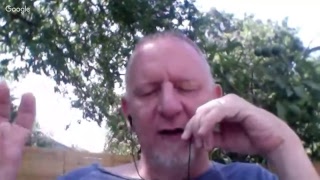
Michael Strong asks four-year-old Alana questions about freezing water, boiling, and what an experiment is. They talk about her jiu-jitsu training, she learns the Spanish word for beach, and Michael keeps asking her to explain what she thinks.
Chapters
Good, how about you?
I'm well. It looks like you're at the beach again today.
I can't hear you a little bit.
How about now? Is that better? Yes. Okay, I've got a little microphone in here, so I'm going to hold it up to my mouth. So you can hear me loudly and clearly now?
Yes.
Okay, so that must be Logan standing next to you?
Yes, it is.
Boy, he's getting big. It looks like he knows how to walk.
Yes, he does.
How long has he known how to walk?
Well, maybe my dad knows.
Okay, for a while, I suspect. So do you remember what we talked about last time we had a conversation? We were talking about ice and how ice is formed.
And I made ice.
That's what your dad said. So tell me about, tell me about making ice. How did you make ice?
I put a cup, a little of water in a glass cup, and then I put it in the freezer.
How long did it take for it to turn into ice?
Well, after that I went to the beach and then I came back and then I checked it and then it was ice.
All right. And I think we said that you were going to do an experiment, right?
I was.
So was that your experiment?
Yes, it was.
And what did that experiment tell you? What did you learn from that experiment?
That maybe penguins could go in it. Plus penguins love ice, or maybe not.
So maybe penguins could go in the freezer?
Or they could go in a bottle of water and then put them in the freezer, then they'll turn stuck.
I see, I see. So now what do you think makes water turn into ice? Do you have any ideas?
The coldness.
Coldness. Okay. Just a little bit cold, or does it have to be really cold?
Really cold.
Do you know how cold is cold enough?
No.
Do you think that if you put water in the refrigerator, it would turn into ice?
No.
Why not?
It's not made for making ice in the refrigerator.
But the refrigerator is cold, right?
A little, but not that much.
Okay, so water turns to ice when it's colder than the refrigerator, and do you think it has to be as cold as the freezer?
The refrigerator is not as cold as like the freezer.
Okay, okay. Do you know what happens when water— do you know what it means for water to boil? Have you ever seen water boiling?
Yes, like when it pops a lot of high bubbles.
Yeah, that's right, that's right. So what do you think is happening when water is boiling?
It can boil eggs.
Yes.
Okay, do you think that the water has all those bubbles just because it's happy?
Yes.
Okay, so you make water happy and then it boils eggs, right?
Yes.
So how can we make water happy?
By boiling it.
Well, couldn't you just talk to it? Could you talk to it and say, "Hey water, cheer up and boil me some eggs"?
But it wouldn't talk because it's a machine.
It's a machine. Okay. Do you think you could boil water on the beach? No. Why not?
Because water is not boiling water.
So is boiling water like a special kind of water? You have to buy boiling water from the store? I'm sorry, the airplane. I couldn't hear you because the airplane.
Me too.
So, so I was asking, is boiling water a special kind of water that you buy at the store? Do you see your parents bringing boiling water home from the store?
No, you need to make You need to make boiled water.
Okay, well, how do we make boiled water? Do we put it in the freezer?
No, we put it in a pot and put it on the stove.
So does it— you know how the stove makes it boil? Is it just magic?
No, you heat it up.
Oh, so now you're talking about heat. So you think heat makes water boil?
Yes.
Does every bit of heat make water boil, or do you need lots of heat to make water boil?
Maybe you need lots of heat.
Okay, and have you ever seen boiling water disappear so that the pan is almost empty of water?
Uh, no.
So this is another experiment you can do. So you might have— you probably, because Because heat is dangerous and stoves are dangerous, you want your dad or mom to help you with this. But you might have them boil water and then watch it go to disappear. Because I bet if you let it boil long enough, the water will disappear. Does that sound crazy? Do you think that really happens, or am I kidding?
I don't think that really happens.
Okay, great. So last time we figured out that water, if you put it in the freezer, freezes into ice. So your experiment for next time is to figure out, with your parents' help, what happens when you boil water for a while. See what happens, okay? And then we'll— you can tell me after you did the experiment.
Sound good?
So what is it? What is an experiment exactly? Can you explain what you think an experiment is?
It's what you try.
Like when you try to, um, make ice. Okay, make ice. How about when you try to surf? If you try to surf, is that an experiment? No.
No.
How about when you try to read? Is that an experiment?
I think so.
How about when you try to do a math problem? Is that an experiment? Okay, do you think trying to boil water until it disappears is an experiment? I don't think so.
You don't think so?
Have you— do you ever hear grown-ups using the word experiment? Have you ever heard anybody use the word experiment before?
No.
Okay, it's really hard to know what words mean if you don't hear them used very often. I bet you hear the word Logan used a lot, so you know exactly what Logan means, right? What does Logan mean?
Like whenever he says mama, I know he wants mom.
Okay, so when Logan says mama, you know he wants mom. Um, and when you're— when you call Logan, does he know what you're saying?
Yes.
Okay.
Around to me.
Okay, so sometimes I think we understand words if we use them. Do you think you understand words more if you use them?
I think so.
¿Qué es una playa?
Playa.
Sí.
A beach.
Okay. Do you ever use the word playa?
No, not in a long time, but now I can say it.
But you remember it from when you used to use it, right? Okay, so a lot of learning new words is learning how people use them. So I'm going to suggest that the reason the putting water in the freezer was an experiment was that you weren't sure what happened with the water, so you wanted to test out, test out an idea. Does it make sense that sometimes you have to test your ideas to see if they're true? Or false? So what does it mean to test? How do you test something?
Like when you build something, you need to test it out if it flies, or if it's a robot, you can test it out if it walks.
Okay, so you could test to see if a robot walks. That makes sense to me. Do you think that testing water in the freezer to see if it becomes ice is a little bit like testing the robot to see if it walks? Or different? Maybe it's different.
Maybe different.
Okay, okay. So you are just learning about experiments. I think that the putting water in the freezer was the very, very first experiment you ever did in your whole life. Maybe. Does it feel good to have done an experiment?
It does feel good.
Okay, and then I think if your parents help you boil water until it disappears, to see if it disappears, that will be another experiment.
Okay.
So then you'll have two experiments, okay? And then you— then we can have another conversation about how experiments are similar to testing things out and different? Do you think it's similar at all?
I think so.
Okay, you know, my sense is that today is a beautiful day on the beach and that I should let you really run and play and have fun today and that we should—
Wait!
Go ahead, go ahead.
I just want to tell you something.
Please do, tell me.
Now I go to jiu-jitsu.
Whoa, that's impressive! That's wonderful. Congratulations.
Thanks.
Do you have a belt in jiu-jitsu?
Well, there's a green jiu-jitsu, but I think I'm gonna get it today.
Okay. I was supposed to get it yesterday.
Is jiu-jitsu hard?
No, not very hard.
Didn't you do some other martial art before this? Maybe karate?
Yeah, I did gymnastics.
So do you think jiu-jitsu is going to be better?
Yes.
Okay.
And it's more.
It's more? Okay. So I look forward to hearing more about jiu-jitsu, and I also look forward to hearing about the experiment with water boiling. Any other news on your side?
No.
Okay. I went to Africa. Did you know I went to Africa?
Yes.
Do you know where Africa is? Okay. Do you know what maps are?
So they're like pictures of the world.
Yep, that's exactly right. That's exactly right. You could have your mom and dad show you where Africa is on a map. Okay.
Okay.
It's the opposite direction from Hawaii. So you know where Hawaii is?
Yes.
Okay.
Small islands.
Exactly, exactly. Okay, so I'm going to let you play on the beach. It was great to catch up, and we'll talk next weekend about your experiment with boiling water, okay?
Okay.
Okay, have fun. Bye-bye.
Bye.







