Socratic educator Michael Strong with four year old Alana
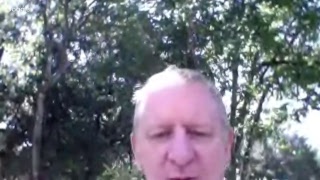
Michael Strong asks four-year-old Alana why ocean waves happen, then guides her through questions about what makes waves in bathtubs, pools, and cups of milk. They explore cause and effect, talk about freezing water into ice, and define logic, experiment, and science.
Chapters
Sound wouldn't work again.
And I can only hear you a little because— because I don't know why.
If I speak louder, is that better?
No, it's kind of soft again.
Soft again. How about I'm getting closer to the computer? How about this? Is that better? Is it louder?
Yes.
Okay, tell them that we just increased the volume so that it's gonna help.
We just increased the volume.
Is it better now on your side?
Yes.
Does this work?
Yes.
Okay, how are you?
Good, how are you?
I'm very well, thank you. Did you have a nice week?
Yes. What did you do? And I went to the beach again.
All right, what did you do at the beach?
Well, maybe I hung out with some friends.
Did you go in the water?
Yes, and I went surfing, but my mom wasn't there because she was sleeping.
You went surfing?
Yeah, and maybe I did it yesterday.
Wow, I didn't know that you could surf already. Can you get on top of the board?
Yes, yes, and I catch like half waves, and, and then I can go back to the beach.
I'm really, really impressed that you can stand on a surfboard in the water. Doesn't it like wiggle and stuff?
No, I cannot. Okay, well, that's amazing, but soon I can do it.
Okay, well, I'm very impressed. So what do you want to think about today?
I don't know.
Okay, usually I'll come up with something to think about, but I thought I'd let you see if you had any ideas. Um, let's, let's think about the water. Why do you think, why do you think there are waves at the ocean?
Because it rains. That's why.
So do you think that if it rains more, then the waves are bigger?
Yes, but I don't think the waves are going to be bigger. I never seen one, but I see one before, but I never seen anyone.
So if rain causes waves, does rain cause waves in a swimming pool?
Swimming pools don't have waves.
That's what I thought, but it rains in the pool and it rains in the ocean, right?
Yes. Well, maybe there's little waves in the pool. In my bathtub, whenever I, I go in it, there's little waves.
I see. So I'm thinking through—
and with no rain. That's incredible.
It is incredible. Um, do you— have you ever heard the word logic? No. Um, I'm gonna try to explain what logic is, okay?
Okay.
So logic is when you say if this happens, then that happens. So when I asked you if it— if rain causes waves of motion, Then why doesn't rain cause waves in the swimming pool? You see how there's a similar— I'm asking similar questions about when and where does rain cause waves?
Yes.
Okay, that's logic. So when I ask you questions, I'm trying to understand how you connect ideas together, and that's what I'm— so I'm asking about how you think logically. How you connect ideas together. Okay?
Okay.
So I want to go back to the bathtub. What do you think causes the waves in the bathtub?
Nothing, except when I kick.
Your kicking maybe causes waves. So now I'm going to go back to the rain in the ocean. How about instead of the rain in the ocean, let's try the swimming pool. If you kick in the swimming pool, you cause waves?
Yes.
So do you think kicking causes waves?
Yes, but in the ocean you need a— well— In the ocean, you need a kick on your surfboard so you can catch a wave.
I love it when I see you thinking. I love it when you slow down and try to figure these things out. It's very fun.
Thank you.
You're welcome. So, um, I'm gonna go back to the bathtub. I bet if you move your hand in the water, um, you also cause waves, right?
Yes, but I'll need a high bathtub.
Okay. How about, um, how about if you drop a ball into the bathtub? Would that cause waves?
No, but when you throw it, it'll be a little waves.
Okay. Um, so do you think the same thing that causes waves in bathtub causes waves in the swimming pool? Or do waves in bathtubs and swimming pools work differently?
I don't know.
It's hard. How about suppose we had— actually, have you ever seen one of those backyard swimming pools, like the little round things? Yes. Are those—
and I've seen one in my friend's house. Except I've been in her pool when it was in her— when it was her birthday.
In her backyard?
Yeah, except she didn't have grass except the pool.
I thought that you probably had a friend with one of those pools. So do you think that those backyard pools are more like bathtubs, or are they more like great big huge swimming pools?
Well, that one was a pretty big one.
Do you think that you could cause waves by kicking in there?
Yes.
How about throwing a big ball into the water? Would that cause little waves?
I don't know.
Okay, okay. I'm just trying to figure out the whole world. One thing is sometimes if you like do this, like when I do this, I can feel air going up against my face. Can you create— do you think— are those airwaves? Can we call those airwaves?
Yes.
So we can create airwaves with our hand.
Yes.
Is that similar to how we create water waves if we put our hand in the water?
Yes. Or maybe if we put a lot of toys, there'll be a lot of waves.
If we put water toys, it'd be a lot of waves?
Yes.
Okay. Um, so Do you think that, how about like a cup of milk? If you shake a cup of milk, does the top sort of jiggle?
Yes.
Why does that happen?
Because like when you move it, and then when you drop it, it's going to have a lot of waves.
Okay. Do you know the word liquid? Yes. What does liquid mean?
Like when it's something wet on the floor, you can slip on it. I mean, you can slip on the liquid.
Do you think that milk is a liquid?
Yes.
How about oil?
Oil?
Yeah.
I think that's a liquid too. And I think water is a liquid too.
I think water is a liquid. How about ice? Is ice a liquid?
No.
Why not?
Because it lives in the Arctic in the cold.
Do you have a freezer with ice in it?
I have a freezer but with no ice in it.
Oh, okay. Do you know what ice is made of?
No.
What happens when ice melts?
Because of this, the water, it turns into water, and then, yeah.
So like, is that magic?
No.
Why not? How do you know it's not magic when ice turns into water?
Well, it is kind of magic, but maybe it's just because of the sun.
Okay, you know how we turn water into ice? Can we turn water into ice?
Maybe.
How do you think we would turn water into ice? Um, should we say hocus pocus, abracadabra? No. Why not? If it's a kind of magic.
I know, but there's no magic in this world.
Oh, you don't think there's magic? So how do people turn water into ice? Is it a secret? Maybe, maybe we have to, um, find somebody who knows the secret.
Yes.
You think your mom and dad know how to turn water into ice?
No, they never done that.
Okay, okay. Um, what if I told you I know how to turn water into—
that would be cool.
That would be cool. How about, do you know what an experiment is?
No.
An experiment is when you try something When you try something, ideally you try to figure out what will happen. So what do you think would happen if you put maybe a little cup of water into the freezer?
Well, maybe it'll turn into ice. You think it will? Yeah.
Why do you think it might turn into ice?
Because the freezer is cold.
So you think maybe if the water is in a cold place, a cold enough place, then it turns into ice?
Yes.
Okay, okay. Um, maybe you and your dad can figure out how to do that experiment to see if it's true.
Yeah, maybe.
And then, then if If that works, then you, Alana, would know how to turn water into ice, right?
Yes.
And then you'll know without magic how to change water into ice.
Yes, I hope that's true. Okay. But if it's not, that's okay.
Good for you. So, um, what— where— where have you— have you ever heard of science? E, n, n, n, no. Okay, we are talking about science. Science tries to understand how the world works, and when I ask you these questions and we talk about these experiments, um, I'm— we're thinking together about how the world works. Does that make sense?
Yes.
So if we discover that putting water in a cold place turns it into ice, then we know a little bit more about how the world works. Right?
Yes.
Also, when we were talking about why—
Like on Earth Day, you need to keep the Earth clean.
Yeah, yeah, absolutely. And then when we were also talking about how things fly, remember we talked about paper airplanes and birds and so forth?
Yes.
We were trying to understand how the world works, and you told me that you think a paper airplane has to have wings, that a plain piece of paper doesn't fly, right?
Yes, but you need to shoot it.
That's true too. That's true too. So that shows that you, Alana, are understanding how the world works, or how things work in the world. Does that sound right?
Mm, yes?
Okay, so I think that you're doing a really good job of thinking, you're doing a really good job of using logic, and you are starting to learn about science and experiments and how the world works. Does this seem a little bit interesting to you?
Yes.
What's interesting about it? It's okay. Um, I'm, I'm always just curious. Do you know what curiosity is?
No.
Curiosity is when you wonder about things, and I wonder about how you think and how you understand the world. So I am curious about how you think and how you understand the world?
Just like curious.
Yes, curious.
Yeah, because Logan's really curious.
How is Logan curious? Tell me.
Because he wants to explore the world in our house.
That's exactly right. That's exactly right. Do you like to explore the world?
Yes.
Okay, so are you curious in the same way Logan is, or is your curiosity different from Logan's?
I'm curious, just like Logan.
Okay, I'm just going to wrap it up with the fact that we have introduced— I have introduced a whole bunch of new words. We talked about logic and experiment and science and curiosity. I need to get my fingers right. All of which are big, important words, and we'll talk about them bit by bit by bit over the weeks to come, okay?
Okay.
All right, thank you so much, Alana. I might— I think I'm— I know that I'm gonna be in Africa next week, so I might miss next week. I'll talk to your dad about that, but if so, then I'll see you in 2 weeks, okay?
Okay.
Okay, thank you so much. Adiós.
Welcome. Adiós.







