Two 10 year olds working through a college Python course together
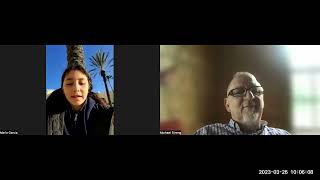
A 10-year-old works through a college Python course with his friend Colette, watching videos and debugging together. He uses ChatGPT for explanations rather than code generation, and describes a "click" in his head that tells him when he actually understands something. He's preparing for a regional coding competition.
Chapters
competition.
Thank you.
Where's this competition?
Uh, it's in Del Mar. Uh, usually it's either in Fullerton or Del Mar.
Got it.
Um, same place.
Got it. Um, and do you usually compete against the same, uh, other kids, or is it different all the time?
Um, I think that sometimes it's the same people. Um, but usually It's same but added a few new people added in because sometimes people don't always compete.
Yeah, no, it makes— that makes sense. I think it's nice to— it's nice to have rematches against people, you know, but it's also nice to have new, new people to compete against, wouldn't you say?
Yes, definitely.
So I wanted to check in, how is Python going?
It's going good. Um, I'd say that we're progressing. It's getting harder. Um, yeah, we're learning new things. There's a lot of information, uh, at this point.
What are the— what are the latest lessons you've studied or latest skills you've learned?
Um, the latest things that the teacher online has showed us is network programming, so searching through the internet. I'm not that great at it yet. I didn't really understand most of it, so I'm going to have to go back and watch some of the videos. Um, but I think that I'll get, I'll get better.
Um, and are Colette and Margaret both there still?
Yes, Colette is there. Margaret usually comes late, um, but sometimes we get to hang out with her a little bit.
Got it. And are they at the same place as you are? Are you a little bit ahead of them?
Um, Colette and I have really always been in the same place as each other, so we help each other out. Margaret has been ahead of us for quite some time now.
Okay, well, of course she's older, so that's fair. Um, so when you, when you're trying to learn something, um, so I actually don't know much about the network programming, so this is something I don't know about. So how do you usually watch the video again? Do you ask Zulake? Do you and Colette discuss it? Do you try things and so forth? How do you— what's your learning process?
Well, we watch the videos. That gives us some code and a basis for understanding. And then we have to do these assignments and quizzes, which help us actually write code and remember it, practice it. Usually, Colette and I discuss it and then try, attempt at it. We didn't. And if you know, if we don't know something, we can go back to the videos and look it up. If we need help, then usually we invite Brock and have him help us. Yeah, that sounds pretty much how it goes.
That sounds like a great process. And when you and Colette discuss it, would you say she understands part of it, you understand part of it, or that you ask each other questions? I'm very interested because, you know, conversation, Socratic conversation is my thing for learning. And of course, I've seen you discuss with me and then discuss in Karen's class, but I have not seen you and Colette discuss. So, So I'm interested in the process that you and Colette use to learn. What kinds of things? Is it you asking questions, her asking questions, coming up with ideas? Tell me about how the two of you learn together.
Well, usually both of us ask questions, the other one tries to answer. We discuss it, we think about it. If we're both confused, we just, you know, try and either figure out or look it up. Um, yeah, learning. We both watch the videos on our own, so we have to talk about it after, um, attempt at the assignment, things like that.
I think it's wonderful. I think it's wonderful the two of you are helping each other learn. Would you say that, um, she has— like, I think of learning as partly concepts. So would you say that she understands part of a concept and you understand part of a concept? And the two of you talking about how you understand the concept helps clarify the concept for you?
I think— or I think that the state in which we're in right now, it's pretty confusing for both of us, but we do understand some small details, and I think that does help. Yeah, maybe she understands one thing and I don't really understand that, so she helps me and I help her.
When you go back and watch the video, do you watch the whole video or do you realize, oh, I need to, I need to rewatch this one explanation and you just focus in on one particular explanation?
If it was in a class, I would probably just watch that one snippet so we could go back to trying the assignment. If I needed to watch the whole video, I could. It's always there for me. It's on YouTube too.
Mm-hmm.
I don't necessarily have to go to the website.
Do you ever Google terms to see, to get additional help from Google?
I do. And then again, sometimes it's helpful and sometimes it's not. But most of the time I find something out of there and it helps.
Got it. And when you Google, you like, there's a term you're not sure what it means and you Google the term and see if one of the Google answers helpful?
Yes.
How can you tell if something is helpful or not?
Um, well, at first glance, you could probably read— usually there's articles or on different— on other websites about the term you're asking for. Usually there's just a description and you can just tell off of that. Sometimes it has an example, and that's always really helpful. If it— if you know it relates to the video that we're watching, then it could probably be helpful. Um, simple basic things like that.
Got it. Have you heard about using GPT for learning?
I have. I don't— I haven't really explored that yet. I don't have it installed anywhere. I don't know if you have to install it. Uh, I just feel like if I use it, it's kind of a cheat code.
Well, I mean, Why do you think it's, why do you think it's a cheat code?
Well, maybe not, maybe cheat code isn't the right word, but it's an AI program where you ask it questions and it gives you some kind of answer. Um, and I guess it's the same for Google except you have to explore and search different articles. Um, with ChatGPT, it just gives you an answer.
—from my understanding. So I've just played around a little bit with ChatGPT, not a lot. And now there's GPT-4, which is even more powerful. But one way to think about it is GPT can write code, by the way. And I think if you used GPT to write the code for you, then that would kind of be like cheating because then your mind doesn't have to figure it out. But if you used GPT to explain a concept for you, you know, network programming, or what are some other concepts you have to learn in order to do the network programming piece?
Just bits of code that I need, I guess you could say that, or how to— or I could ask it to explain how this bit of code works, maybe.
Aha, I think. Well, so one version of ChatGPT I read that I liked is it's like autocomplete for everything. You know how, you know, with autocomplete, like when you're typing and it does an autocomplete for you? Yes. So in some ways, you could, in some ways it just gets to the answer faster. So if Google, I think it is an interesting question because Google does provide us with lots of things, lots of information, and I could, I think you could use ChatGPT as a tutor and have it give you additional information so it's maybe more effective than Google. How about if you thought about it as a more effective assistant or tool than Google?
Well, something, or maybe if you compare it to Google, to Google in a way that, or maybe if it's even if it's just I don't know the quality of the answers. I haven't played around with it yet, but maybe some people think that ChatGPT gives better answers. Maybe it's a smaller answer. Maybe Google gives you all of these articles and all the different options that could mean different things. ChatGPT might be easier to read or understand.
See, for me, what really matters is that you understand it, that your mind understands it. So the way I would think about it, and I do think at some point you should try ChatGPT as a learning assistant and think of it as a learning assistant. And so if it is just writing the code for you so your mind doesn't have to think about it, that's probably not good because your mind does need to understand. I think the more your mind understands, the better. And so at some point then you're not understanding. But if it just helps you give an explanation and it explains it and then you put that explanation in your head, and then you use— your mind can solve the problems, that doesn't seem like cheating at all. Does that make sense? It does. Would you say that you're pretty good at knowing when your mind understands something and when it doesn't?
I think I can tell when, uh, I get something or not. Um, usually there's a click in my head and I'm able to say it and write it over and over again.
I, I actually think that that is a superpower. I I think, and it sounds strange that I think some people are not clear when they understand something or not, but I think that click in your head, and I love that metaphor actually, I think if you get that click in your head and you're pretty sure you've understood it, again, sometimes you think you understand it and then you do the problem and whoops, maybe I didn't understand it. But would you say usually when you get that click in your head, then you usually can solve the problem?
Yes, if I understand it and I remember it. Sorry. And I remember it. I get the click, then I am usually able to solve the problem. So, whatever the problem is.
So fantastic. Well, I'm delighted at how capable a learner you are and are becoming. So, learning for me, do you know what an autodidact is?
Can you say that again, please?
An autodidact. A-U-T-O. Okay. An autodidact is someone who can teach themselves. And my goal— does that make sense that some people can learn on their own? They can teach themselves. Yes. So my goal as an educator is to help everybody to become an autodidact. I feel like I can learn anything on my own. And you are learning how to learn things on your own. And the fact that you and Colette are going through this college course at the age of 10, I think is super impressive. So if you need ChatGPT or if ChatGPT can help you learn it better, faster, more deeply, Go ahead and use it, and I want you and Colette to be kind of rockstar 10-year-olds learning Python. Okay? Okay. All right. Well, go have a wonderful tournament, and I hope you do well. Okay? Thank you. You're welcome. Bye-bye.







