How Top CEOs Build Elite Teams (Most Get This Dead Wrong)
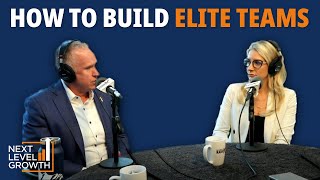
Michael Erath and Jackie Lord explain how to build elite teams by matching people to roles using data and accountability frameworks. They use Culture Index assessments and outcome-based coaching to identify A-players and have honest performance conversations. Most leaders skip the diagnostic work upfront and pay for it later.
Chapters
Broadcasting live from the Business Radio X studios in Phoenix, Arizona, it's time for.
Phoenix Business Radio, spotlighting the city's best.
Businesses and the people who lead them.
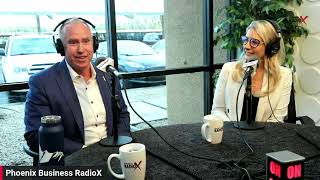
Hello and welcome to Phoenix Business Radio, broadcasting live from the Max 6 Entrepreneurial center right here in Tempe, Arizona, where we help build businesses and connect you with the right people. And today is that such conversation. I'm very excited to be joined with both Elevate Consulting Group and Next Level Growth with Michael Erath, who is the founder and CEO of Next Level Growth, and then also Jackie Lord, who's the CEO and executive advisor for Elevate Consulting Group. Welcome to the studio, both of you.
Thanks.
Thanks, Karen. Glad to be here.
Yeah. Happy to have you. And I feel like we have Kendra Maples to thank. Jackie. Yes. For coordinating and saying that you've got to be on with Business Radio X. How do you two know each other?
Yeah, so we were introduced through another culture, first contact. Really a large. A large part of what I do is prioritizing culture and people. You'll hear that over the next hour. For me, pretty obsessively connected with Kendra. You know, just a great spirit, great mission, great alignment, great values, and really just on a mission to help as many people as possible. So we've kind of hit it off and really, really appreciate her reach and her work in that and that she's doing and that she's included me in that as well.
So glad that she said, you've got to have Jackie on. And when she said that, I know that she does a great job when she's referring folks to my show. She also does a great job of saying to you, who do you need to bring that can accentuate your success story? Who do you run with that also has a powerful mission in person. Excuse me, Mission and purpose. And you thought of Michael for this. Can you tell us a little bit about how you two connect? And then I would love for Michael to introduce himself as well.
Yeah, absolutely. Without hesitation. The first person I thought to join me today is Michael Erath. Their business really cannot operate. Really. I cannot be as successful in the work that I do without the work that he does. It's really a type of alignment at its core, with purpose, with process, and with people. And so a lot of the work that I do is as successful as the amount of work that he does with the client as well. So it's really, really getting those two in alignment. So I'm always highly recommending him to my clients on saying, hey, this is one half of the equation, we really need to tackle the other half. So he was the immediate first person I thought to really complement kind of what we're talking about today.
Excellent. Well, do you have to say anything else?
Nope, not really.
That's it.
If you did say anything else, Michael, introduce yourself, please. And really who and what is Next Level Growth?
Sure. So Next Level Growth is a kind of business guidance and coaching organization I started back in 2015. We've got right now, currently five guides based out of the Phoenix Valley. We've got clients in about 25 different states currently. And we really focus on an outcomes based approach to helping what we refer to as helping entrepreneurial leaders build elite organizations. And to do that, we have five specific areas that they focus on and we help them implement tools and concepts to drive what we call the five obsessions of elite organizations. The first of those is great people. And that's where I got connected to Culture Index actually, through a client, Sergey Gook of Restoration hq.
Sergey was just on. He was just on last week.
Okay, fantastic story.
And he had. No kidding. Sorry to interrupt. And he had been on with us two times before, but Client shows Tycoon's a small biz. And then I can't remember the other one. My, my significant other introduced us because he's a, he's a business buddy of his. I was blown away. Do you know Sergey as well?
I do not. I knew him. I know, I'm kind of like that introduction.
Right. So he, he got me turned on to Culture Index. And when we think about the things we do to help entrepreneurial companies really advance the percentage of great people they have in the organization, much of it is based off of what we think and what we feel about the things we observe. And with Culture Index, it really added a whole nother layer of data and fact behind what we were trying to ascertain. So we got connected with Jackie probably a little over a year ago.
Yeah, about a year ago.
And it was a great fit stylistically. We work really well together. So we probably right now have about 10 or 12 companies, I guess collaboratively we're working with. And it's been fantastic value, great introduction.
And great explanation around how the two of you work together. And I'm really anxious, Jackie, to hear about how you came to be than the role in which you're playing. Because not everybody. To your point, Michael, not everybody really focuses on data and the true numbers. I'm a relationship girl. I was an assistant principal and third grade teacher for the big part of my Career and relationships and emotions. And in those moment, experiences were everything. And yet, as I grew in leadership, both in the classroom and as administrator, I quickly found out that we've got to have the hard numbers and we have to know what. What we're asking for to keep track of that data. Right. So what is your backstory and what is this wisdom that he's speaking of?
Absolutely. So I call myself a recovering corporate executive. I was completely successful and completely miserable. I was in operations and finance, and I quit everything one day five years ago because I knew I was obsessed with people as much as I was obsessed with growing businesses. When I actually first started out with my own consulting concept, it was around operations. So a little bit of a light structure of what Michael Erath is tackling on a very small scale. And what I found is that you cannot make the change that is capable without the right people in the right seats. I always say I wish I had a different hobby, but I am literally obsessed with people. I'm fascinated by them, I want to help them. And I really have access to the tool and data that allows me to provide that kind of change, not only on a personal level, which I've kind of inadvertently uncovered through my work with business owners and business leaders, but really able to change either the team or the self awareness of the leader to then therefore build the business. So a lot of what I do is I am 100% numbers girl. I majored in statistics. A lot of people will go in the fetal position when I mention that. But really all I'm doing is I'm combining statistics to people. And it really is the core of how I think, how I operate. And really a lot of what I'm passionate about. And I've kind of lived the story right. I was the right person in the wrong seat for 17 years. So this is a little bit of a personal story. I know the pain, I know the path. I know how this feels. I know the frustration, I know the stress. I know the disengagement. And if I have the opportunity to have data in front of me that allows to help somebody to that kind of level, I think I feel pretty blessed.
I can see why you two are connected. Tell us about your background a little bit as well. Michael, we got to hear you kind of dote on what Jackie's up to, but how about for you?
Sure. So I. I never thought I would be in this line of work. I grew up in a family manufacturing business back on the East Coast. We manufactured hardwood veneer for the furniture Industry, kitchen cabinet companies. And one of our challenges, I took the business over in my mid-20s, and one of our challenges was sourcing raw material. And so through my journey as the CEO of the company, I took us through a vertical integration and I brought in a partner and we created a subsidiary business with where his background was in timber merchandising. And so to expand our ability to source raw materials, we would buy standing timber. We would manage that. We would buy larger parcels of hardwood logs, we would take the veneer logs we wanted, and he would merchandise everything else. So the business worked really well. We grew from about 8 to 45 million, had about 200 employees, and he and I became great friends. We vacationed together. I was the son's godfather. And in 2008, when the housing market started to collapse, I found out he had been committing bank fraud and embezzling. So he had embezzled over half a million dollars in 18 months. And as a result of the fraud that he was committing, both of the entities banked with the same lender. So I had the pleasure of one specific day going to the the bank that we dealt with and also going to the U.S. attorney's office with everything we had discovered. So it took about four years. He ended up being prosecuted on two felo, two years in federal prison. But it caused both businesses to. To collapse. So I navigated that outside of bankruptcy and restarted a new business in 2010. And it was going through that that I came across the EOS system, the book Traction, and I started self implementing that. But through my prior career, I had also brought in tools from top grading, from. From Rockefeller habits and a number of different sources. And so where I felt like there was a better tool or approach to attack the same concept, I would make some substitutions and really customize the system to fit my company and what I needed. And it worked really well for us. But in 2015, one of my colleagues in Columbus, Ohio, where we were at the time, asked if I could help his leadership team implement the same system. And I did. When I started doing that work, I just fell in love with being on that side of the table and being more of a coach and mentor and a guide. And I really kind of looked at it at the time. I was in my mid-40s, and I kind of looked at that as almost a halftime of my life. And I don't know if you're familiar with the book Halftime by Bob Buford, but it really resonated with me. And I looked at that as an opportunity to take Everything that the first half of my life had given me and share it with others and in doing so, try to give it all back. And so that's where I started on this journey as a business guide and a coach. Broke away from EOS in 2020 and started working on building out my own. That was much more outcomes based and about the client and their needs versus kind of a one size fits all approach to a business operating system.
I'm really appreciative of that backstory. That's a powerful story and one that just had. I had a lump in my throat. Right. I have a different story, but one with great shock and with my former husband. And we both own our own businesses or did own our own businesses, and I had put all of my wealth into both businesses only to discover that things were happening that I wasn't aware of. So when we talk about people, these are real experiences, right. And real experiences, life experience, happen to anybody. And really, I think everybody, whether it's an illness, a terminal illness, a loss of a child or a family member, whatever, a big move, whatever it is, these things come into businesses. Right. And then as leaders, we have to navigate how to help people feel valued and how people can actually get their job done when sometimes there's this background noise. So I'm kind of looking towards Jackie, but I want both of you to jump in. Is the work that you do when you talk about company culture, how do we help people be the best version of themselves, especially when there's things going on that. That sometimes are out of our control. I just want to open it up to go there for a bit.
Yeah. So what I focus on initially is understanding each employee as their own human being. A lot of time we will put, as Michael has already alluded to, we'll put emotion or personal bias or we'll treat everybody the same or cannot understand or fathom how people will be successful in a different alternative method or complement method to us. So my definition of really making somebody happy and engaged is aligning them with who they are. I call it their superpower. Everybody has one. So understanding what their value is, not only do they bring to the business, but also what they bring to the world. And how do you align that with their work? How do you communicate to them so that they can hear you? How do you. How do you align their work so that they are living in their utmost confidence every single day? At the end of the day, the data that I have on people, I do use it to build businesses. But however it is a Communication appreciation tool. So a lot of what I teach my leaders is that every single person needs and wants to be treated according to their needs. And without data, that's really impossible to do. And so understanding what motivates someone, what their strength is, how to complement any shortcomings, how to maybe align them to their utmost, give them the highest success rate to be to, to live their best life, to produce their best work, and to, to bring that value to the business. That's kind of that win, win, win situation that I try and tackle. So a lot of what I do to maximize culture, which is, comes all the way down to individual employee engagement, is to really understand who that person is and what's best for them, not what you want for them.
What would you add to that, Michael?
You know, I think something I, something I realized early on in my, my career is that I say this often. I believe that when it comes to our frustrations, the underlying cause of the majority of our frustrations, especially with people, is a result of uncommunicated expectations. And so a lot of how we've built our approach to great people is around clarifying expectations, both culturally in terms of behaviors. It ties right back to core values and, and really getting clear on what the behaviors are that we expect out of people. And then from an org chart or an accountability chart perspective, really giving them significant clarity on what's expected of their role, what successful performance looks like, and what's been really valuable with the partnership with Jackian Culture Index is that when it comes to addressing people issues, I think because there's so much emotion involved in dealing with people and their livelihoods at stake and families their consequences beyond just the individual. We tend to get wrapped up in what I call the storytelling trap. When people are not performing or they're not meeting expectations, and we can often get stuck there for a significant amount of time. And I think that's not fair to the individual, it's not fair to the team or the organization. And with the way we collaborate with Culture Index, it provides a layer of data that helps reinforce what we're seeing and what we're feeling. And it gives us more clarity in what the right action is to take. It's not always that somebody needs to be exited. It could be that we've got somebody wired for a specific role, We've got them in the wrong role, as Jackie said, kind of right person, wrong seat. And this data helps us see where would they be really strong and if they're a great culture fit. I think we owe it to them and the organization to try to find a right place for them. And it gives us just one more kind of leg of the stool to really complete that.
Mm.
I actually just met with one of my CEOs this morning. Local CEO, a large tech firm with about 2,000 employees globally. And he's having just one specific challenge with an employee not being able to present or communicate the effectiveness of the product or the project that she's working on. And he's like, you know, this isn't going to work. And I said, hold on, this is a powerful profile. We just need to hand off, you know, she needs to stay in the analytics and we hand off to her manager who has the ability to communicate, persuade, influence, has a way with words that can then translate all this beautiful behind the scenes work that she's doing and can effectively explain it. And so he was like, wow, we probably just saved that, that person and their job. And we're now we're maximizing everybody's strength. So it's a lot of compliments. A lot of times I'll allude to. This is kind of like a money ball for teams, Moneyball concept for CEOs and how do we complement our work and kind of divide and conquer? Not everybody turning to everybody else to be successful, but or hiring all of the same exact person to be successful. It's how do we create this dynamic team, but then how do we understand how this team is going to work now that we are so different from one another?
When you, either of you begin working with the C suite and business owners, what are some of the comments or the revelations that they have like you've just shared? I mean, I would imagine when you marry this combination between best practices, personality profiles, or whatever the right term would be for these assessments and tools, in addition to the overall organizational goals and the performance indicators, they've got to be blown away. Can you think of someone, you don't have to name names, but what are you listening for when someone says, oh my gosh, this is it? I didn't even know I was missing this. What are the kinds of experiences that you're witnessing your clients are experiencing?
So it's interesting. I think different people respond at different rates. So I've had. So typically what happens is when we start to lay out how we approach the underlying foundation to building an organization around great people and what you've got to clarify and what you've got to be looking for tends to resonate. And most entrepreneurs agree that it's a great approach the challenge becomes when we actually start putting people into the equation that they know and now they have to balance what they're feeling emotionally versus what they know they need to have if they're going to truly have a team of people that perform to a high standard consistently all of the time. There's a great, I've seen this in a Nick Saban video where he talks about the fact that high achievers don't like mediocre performers and mediocre performers don't like high achievers. And if you, you don't have an organization where everyone aspires to the same high standards and the same high expectations, you'll never truly have any culture. And so we, I'll go back to Sergey. One of the things, he won't mind me sharing this, I'm sure one of the things he said to me after our very first meeting together was, oh my God, I'm going to lose half of my team. And ironically, and I think he was thinking company wide, which to some degree did happen eventually. But six months into the process, half of his leadership team had turned over and been replaced. But fast forward, you know, another six months, a year beyond that, when he started to see the value of getting people in with clear expectations, really knowing what they were going to be held accountable to and then integrating concepts from culture, index and data and making sure there was one more lens to look through to make sure we were getting that those decisions right. He was thrilled with where he ended up and he's significantly leveled up his team. His life has gotten better. He's got more freedom, he's got a more self managing team and business. And that's ultimately what we want for entrepreneurs, is to get some of that freedom back.
And sometimes that means either different people in different seats or perhaps different people altogether. But you wouldn't know that until you take some of the emotion out of it and stop circling the drain. That's what I thought of when you talked about that. Right. Some of those stories that we keep saying, I always use the, the language that we're just circling the drain. Let's step away from it long enough to see really what this is. And we're not going to find the right answers unless we start looking at a different set of questions. Right. Yeah.
Again, very blessed to just have access to the power of the data and the tool. When I meet with a new company, even just the first hour with them, what I do, really a large part of my process is I collect data up front. I'm able to see what's going on. So really, you know, 10 to 15, or at least the leadership team, if I have that data, I can see everything that's going on. At first I was like, hey, we're going to use this to build business. Maybe, you know, insert X C suite. At this point in time, what I've come to find out is I can find with the data and I'm speaking kind of with a large amount of passion and confidence because at this point I'm, I'm able to, to kind of back that up. What I'm able to see is, are we going to hit revenue this year? Are we going to hit profit this year? Are we going to have turnover? Do you have people at flight risk? It's really incredible what I'm able to see. When I go in with a, When I, when I kind of show this information to a CEO, I will tell you every single time. They already know this information. They feel the pain. They know what problems are. They don't know the exact reason why there's a problem and they definitely don't know how to solution it. So a lot of what I do is people like, I know, I knew this was a challenge. I didn't know why, I didn't know how to fix it there.
Maybe didn't know how to articulate it either.
Exactly. It's all intuition. I'm just prying. I always tell I'm only providing clarity to your intuition and now that's actually solutionless. So every single time. And it confirms the validity of the tool because it is exactly what they're already experiencing and what they already know. So a lot of times of what I'm doing is again, just providing clarity data to their emotions, data data to their intuition, and then using that to provide a game plan going forward on how are we going to get to the next level. Sometimes it requires drastic change and that's hard. Right. But to me, that's also an exciting phase of growth of business because what got you here isn't going to get you there. It's a very exciting. And people are like, oh my God, I'm overwhelmed. I'm like, I'm excited that you are actually at this point. Sometimes there's small tweaks, sometimes the leadership team is rounded out, but our revenue team is, is not kind of on par to be able to hit goals. And so it's just kind of a matter of tailoring and customizing to every single business as needed.
Yeah, you know, a couple thoughts to follow up on that. So you Know, I really think that organizations need to take a people first approach, kind of a who first approach. Because without the right people to execute and operationalize what you want to do, the rest of it doesn't really matter as much. And I think Michael Gerber started this thought process with E. Myth. And more recently Dan Sullivan's published a book called who Not How. And I think most organizations and most entrepreneurs, probably because of the E Myth where they were the technician in the business, they were the ones who had all the answers and solutions. But that starts to break down as you scale. They tend to see things as a, as a how problem, not a who problem. And so they're constantly looking to the people they have or to themselves for the solutions. And oftentimes what we find is the problem is that you don't have the right who. It's not that you don't know how. And so getting people to think about how do we get the right who's in? And that's something again with the data. Sometimes it just becomes crystal clear. And that's been a big epiphany for me is rather than us having to suppose what we think is going on and what we think is the right direction, we now have an additional set of data points to look at to help reinforce are we really making the right decision. And it I find that the companies that embrace this really have a higher level of confidence in the people moves that they make.
Yeah. So I can imagine sitting with an employee and having this conversation around best fit and the right role for them if the one they currently are in isn't high performing. And being able to have that as a data rich conversation has got to be powerful not only for them on the receiving end of it because it takes the, it's no longer personal. Right. And so I can see it from that lens both as the employee and the teammate in an assessment where it's data based and also from a leadership perspective. How much coaching goes into those kinds of conversations. When you're working with leaders, do you find that you have to kind of coach and guide folks into healthy conversations or does that data just give them an opportunity to step right into that?
Yeah, I will say that I kind of notate this tool as the most simple, complex tool you'll ever come across. I learn something new every single day. After three years adopting the tool. Some of the other advisors that also do what I do, after 20 years, they learn something new every single day. It's a really beautiful tool. We're still dealing with human Beings. And a large part of what I do is when I do onboard a client, anybody who has any influence and leadership, influence in people or payroll, I teach them how to be me. I teach them how to use the system and the data to empower and align their people to me. That's actually a sign of a true great leader, is how do we make sure this person is set up for success and then how do you maximize and retain them? So I actually teach every single leader and manager in the business to think and operate with the data in mind, to have data based conversations, to make decisions that are not emotional and personal bias, to make decisions that are based for the employee and then how to effectively communicate with us. I say this is one of the most powerful, you know, tools we have. I tell folks that you'll never look at people the same again and that we want to use this to empower people. Right? We want to use this to empower people. We want to use this. It accelerates the conversation, it changes the conversation. A lot of times I'll be going around again in the storytelling type of concept and it really changes the conversation. It really hits home and it really makes positive change.
And I think to your point, anybody who is, is, is leading others, the single greatest thing they can focus on is being a coach and a mentor. And I think you've got to be able to. Some, some people will be self aware and they'll see the data, they'll understand it and they can, they can connect the dots themselves. But others really need some coaching to help them see why they're struggling to perform, why they're frustrated, why things are the way they are. And I think one of the challenges to understand is when we have someone who's underperforming and we avoid the conversations and we don't do the coaching that we need to, we're not just doing the company and the team a disservice, we're actually doing that individual a disservice. Because when somebody's in a role and they're not performing, they feel the weight of that, they feel the frustration and the stress of it. And I like to tell people that you're kind of robbing some of their lives from them if you don't either move them into another role where they can be successful or free them up to go somewhere else where they could be more successful. Sometimes we've just made a bad hiring decision and we've, we've let somebody into the organization who ideally would have been a better fit somewhere else. And we've got to be bold enough to coach them through that, but also have those tough conversations ourselves.
I would imagine too, with that kind of guidance and coaching from folks like yourself, me the leader, when I can gain that skill set, it's no longer, it's freeing for me as well. I can just elevate everything that I'm doing. Right. So it's a win, win, win, win, win all the way around. Yeah. Can either of you speak to. Because I've seen it in both of your information what an A player system is and how you guys utilize that with your clients. Michael, you want to.
Sure.
Yeah. That's, that's something that culture index is a, is a key component of the way we approach the A player system. And so what we teach as an A player system is very clearly communicated and consistently reinforced core values and behaviors. We have an evolution to the accountability chart we call the next level accountability chart that creates a clear. We call it a mission. So a clear mission for each seat in the company. It's typically one, one high level sentence that defines the consistent deliverable expected of somebody in the seat that they're in. And then we also focus on what we call a most critical outcome. And so at the end of the day, to be successful, every business has to generate cash flow and make profit. Right. And most people aren't taught that the business depends on them contributing to doing those two things. So when we understand what a most, what we call a most critical outcome is, it's an outcomes based measurable, that's, that's very binary. They've either met it or not. And it not only defines success for them in their mission, but it also would answer the question if I were to challenge you on take a specific employee, are you getting a return on investment for the fully burned human capital cost? You're investing in that to be the person in the seat. What would you measure and report back to me to prove you're getting a return on investment? And I think most organizations look at return on investment. They think about it in terms of product and services and they can speak to it, but they can't with people. But people and fully burdened human capital cost is typically the highest line item on a P and L in most companies. But we don't know how to speak about it in terms of return on investment. So this is something that we clarify and we want to make sure everyone in the organization, frontline employee, through senior executive leadership, has a single most critical outcome. There are key drivers to those that are More the leading indicators that we track on a daily basis and track on scoreboards and scorecards, but getting clear on that and then classifying just a handful, 3 to 5 of obsessions of what they have to obsess about on a daily basis to be successful in the role and achieve the most critical outcome. And back to my statement about clear expectations. This I have found as a, as a very good evolution from the accountability chart to create even greater clarity of expectations. So when we have that, we can now start to provide quarterly calibrations or coaching conversations with individuals where we can start to use empirical data. And based on having a clear mission, most critical outcome and obsessions, we can score people on a 1 to 5 or 1 to 10 scale of how consistently they're doing great work or how consistently they're behaving in alignment with each of the core values. And so when we start to actually put numbers to it, we can have more acute conversations about areas where people need to improve. And so putting all of those components together with a way to progress into coaching plans, if we have to get to corrective action, we do that. That's all part of what we consider our a player system. And adding culture index to that, where we have cultural misalignment or especially performance issues, again, it just gives us so much more clarity into what the underlying cause of that is. So that it takes more of the guesswork off of the leader, which again, as you pointed out earlier, means that the conversation is now less emotional and it's more logical and intellectual based, which while sometimes it still stings to receive that feedback, it's, it's less, it's less subjective.
Yeah, you mentioned the obsessions. Are there specific obsessions? If I were to use your terminology of an elite organization, I think regardless.
Of the industry, there are several that, that tend to transcend different industries. So for example, one of the five obsessions is also optimized playbooks. That organizations really need to have optimized playbooks. So people know in various situations what's the play. I run just like a sports team, they're going to obsess about their playbooks, they're going to train and practice on them. So one of the obsessions that I think, and I'm a big proponent when we're working with clients on this, is that every seat in the organization needs to have one obsession that specifically tells them or clarifies how they interact with our playbooks. So for example, a leadership team member on a sales team, sales manager, chief revenue officer, they might have an obsession to own the sales, playbooks, execution and outcomes. So in the original kind of accountability chart language, when I first read Traction for that seat, it just said sales. One word, two words. It was less clear. But if a chief revenue officer or sales manager owns the sales process, playbooks, execution and outcomes, if those sales playbooks aren't getting us the results we want, they own them. They need to be the ones to go fix them. That sets a much clearer expectation. And if they're not capable of doing that, they may not be in the right seat. They own the execution and the outcomes. And so then you might have someone who's a frontline salesperson. Their obsession relative to playbooks might be to follow the sales playbook, period. Right? So now I know my obsession to be a successful salesperson is not to go off and do things however I want to do them. We have a process. We have a sales playbook. My job is to obsess about learning it, following it, and executing that. And so that's how we start to kind of create more clarity across multiple roles within an organization around that.
So Jackie, at the beginning of our conversation, they mentioned that she's always been a numbers girl and a statistic girl. Has that been a part of who you've been as well? Because clearly both of you have taken all the knowledge and wisdom and some of the heartache and the pain or maybe a lot of it with you and become a force for good and the work that you're now doing on behalf of many companies. But I'm curious, with your background, Michael has the data and the numbers always been a big part of how you think and how you operate?
Not always, no. So I grew up in this family manufacturing business, right? So I kind of learned it from the inside out. But when we were living in Virginia, I was a member of YPO, this Southern 7 chapter there. And through my form group, that's when we got into top grading. We started implementing some things from Rockefeller habits. Really did some deep studies on a lot of Jim Collins work. And I became a really big fan of understanding profit per X and. And spent a lot of time going deep on that. And a lot of the work that I had done with my own leadership teams on profit per X is what led to understanding this idea of most critical outcome and how it ties back to ultimately what drives the economic engine of the business. And so if every role within an organization can have a single most critical outcome, that is how they, in their role, contribute to driving the economic engine of the business. That creates a significantly more financially stable and successful business. So that's it. More came about organically over time and through some outside influences and peer groups.
That I was in Love it. Well, you're paying enough attention to say these things matter and how am I going to incorporate them and bring them into whatever is that I'm doing next? Jackie, let's go back to you. I want to hear if you would share a little bit more about the knowledge and tools that help you hire an A player.
Yeah, absolutely. I'd like to touch on kind of a two layered definition of a player that I operate off of. A lot of times when we define a player, a lot of folks are going to think proactive, visionary, strategic problem solving. And there's a lot of value to that in business by far. So that is a large part on how I do define a player. If you need that at this point in the organization. How I ultimately look at A players, which a little bit of, you know, it's a complete alignment with Michael's explanation, but it's a little bit different on how I like to kind of help businesses grow is an A player is actually when you have the right person in the right seat. If you need 100% execution, right? Just loyalty, rinse and repeat, whether that's AR, AP, accounting, what, whatever task, all the way from an internal to your coo. My definition of a player is that you have the right person in the right seat to achieve success, highest ROI and productivity in that role. If that role doesn't require it. We're not going to put this big personality, this big person in it because that's not going to be successful. That's actually going to blow up the system. So my definition is actually that kind of right person in the right seat, regardless of their superpower or their traits or their personality or their behaviors. What I have found, and I just even had a conversation this morning again, is when we don't have the right people in the right seats, we have to hire more headcount. We become a very bloated organization. And what that means is instead of hiring A players which are the right person for the right seat, we have to hire twice as many B and C players to accomplish actually a little bit less than what a team of A players would do. So right now, even this morning, we had a hard conversation on, you know, we've got 40 employees in this org and we are extremely bloated. You know, their goal, because a profit is an initiative at the corporate level, is to reduce this in Half. And I told him we can reduce this in half, automate some aspects, and still increase our revenue on half of the headcount. That's the power of the right person in the right seat. And then on top of that, a lot of these folks are unhappy because they have to turn into somebody else because they're not hardwired for the role. We're giving them an opportunity to maybe find something that. That aligns with them, putting that person's needs first. And so this really, again, is a whole concept. Steve Jobs, Jim Collins, everybody talks about it. This is about building a team of A players that can run circles around.
B and C players and hiring with that in mind to begin with, instead of those costly decisions that don't make sense down the road. And then we're left scratching our head or laying awake at night. Yeah. Really forced to make decisions that we shouldn't even have had to make from the beginning.
Correct.
And I think having having the data makes it easier to identify right hires. It makes it significantly better. A good example. And Jackie pointed this out to me. So our controller, Valerie Mulford, is. She lives in Rhode island now. She was my controller in my last business in Ohio and is still with us today. But she's one of these people that she almost will finish my sentences. I'll reach out to her and I'll need something done. And half the time she's already started working on it. And it was. It was interesting because she's a tech expert, correct?
Yeah.
And. And Jackie was. Was pointing out when I. When she was. When Jackie was training me on Culture Index and understanding the assessments and the profiles, how that truly is a perfect complement for my persuader profile. And it's just. It's very interesting to see that because before I was of the mindset that Valerie's great. I love her. I'd love to hire more Valeries, but I didn't know what that meant. Right. I didn't really know how to. How to look for that. And so having the data to supplement the core values interviews and the specific skill sets interviews just provides so much value. And as Jackie said, you know, right people in the right seats. I think the A player concept, there are frontline employees that are A players that are all about execution, that it's rinse and repeat, and they just do it really well. Right. And those are A players, and we need those in organizations. It's not that everybody has to be some big powerhouse with lots of ideas.
And creativity, and we might be inclined to go for those Big thinkers, those big personalities, and miss the importance of the folks who can just rinse and repeat.
Great. There's everything I met. A lot of what I measure is a proaction and a reaction. And everybody will prioritize as, oh, proactiveness. That's better. That's great. That sounds amazing. That's who I am. But every proaction needs a reaction, or else we have all these ideas, and nothing actually gets built out and executed. So it's a beautiful system. It's the money ball. It's an information exchange system. And without that, we're not going to capitalize on ideas or we're not going to drive profit to execute on those ideas. So it is a beautiful system. And even tagging onto what Michael said is a lot of what I do is, hey, what is working? Right? We've talked a lot about maybe what doesn't work, but what is working? What is working? How do we take a Valerie and rinse and repeat this? Right? If this is what you need, how do we rinse and repeat this? I'm working with over a dozen businesses right now. Expanding locations, opening more locations. How do we take that model and kind of just rinse and repeat and drop this in so that it's successful? We can be proactive in a streamlined path to success instead of, whoops, we opened this new plant in Phoenix, and we just lost $3 million because we. We dropped somebody in that we thought could. Could handle it based upon a resume.
Or even the accidental manager that. That we. We say, hey, you're. You're determined or you're destined for it to open this plant here because of your track record here, and they don't know how to manage. Yep. Right.
And, you know, what do they say most job interviews are? Two people sitting across the table lying to each other. Right.
Never heard.
You've never heard that.
And it's so true.
It's very true.
True.
Right? Oh, the culture is great. You're gonna love it here. And you get in there and it's terrible. Or I'm so great at this, and here's all my experience, and the resume's half plagiarized. And I think that's where the data becomes really, really valuable and helpful. And even with Culture Index, and Jackie can speak to this much more intelligently than I can, but there's a process. Like, for example, the companies that I work with that have brought Jackie in as well. They will actually go through a process to predict the types of profiles that they need for certain roles within the organization before they start hiring for those. And so that's built into culture index approach. And it's very, very, very powerful to look at that way.
And I will tell you what drives that conversation is a lot of Michael's work on what does it take to be successful in this role? I will tell you the single hardest answer for any leader and manager that I've ever worked with is how do you define success and measure this in this role? How do you define expectations in this role? 95% of leaders cannot answer that. And so a lot of times I'm like Michael, right? So really the compliment, because I cannot put the right. I cannot recommend the right person if we haven't actually defined the seat. And so a lot of the foundation is, yeah, we got to get the right person in. But in order to make this successful, how do we understand what we need? How does this fit into the business model, the accountability chart? And really understanding what, how, what do we actually need in this role? We think of a lot of leaders and hiring managers will think of as, oh, we have these tasks to do. Right. Instead of what actually are we going to hold accountable to this position and what actually is going to be successful? How can I say, yes, this is working or yes, this is not working? When I'm talking to a leader, I'll say, how's John doing? And they'll say, good. And I said, where's good on the piano? Yeah, where's good on the P and L? What. What makes this, what makes John best better, the best on the team or compared to what are you measuring? And almost every single time, we cannot.
Answer that question until what? You can't answer that question until what's.
In place and until the org structure, the business model as well as the accountability chart and really understanding, and I always will harp on this, this is a big one for me, is what is the most critical outcome in this role? How are we actually going to apply some KPIs and measure performance rather than getting back into a subjective outcome again? Because now it's your word against my word, and now it's storytelling and now we're, we're really letting the conversation and the performance go off key without being able. Again, coming back to data, what are we measuring from a numbers perspective to say, not only for the employee, but also for the leader? This is working, right?
And I think it's, I think it's a mindset that's required as well. I think what most organizations do is they teach people what to do in an eight hour workday, right? This is what you do all day long. We don't spend time helping them connect the dots to how what they do affects other teams within the organization, how it contributes to advancing our flywheel, and how it's part of a bigger picture. And ultimately how it, and this is something Jack Stack talks about in the great game of business is how it connects back to helping us make profit and generate cash. And sadly, I think most employees don't know the difference between the two either. But creating some financial literacy, understanding the importance of successful outcomes, how that ties back to a strong and healthy company from a financial perspective, all of that creates the ability to provide top of class pay, creates a more sustainable organization. And if you really believe in the purpose of the organization and you invest in the right people and those people are focused on generating cash and making profit, that gives us more fuel to accomplish more of the purpose that we believe in to begin with. And I think there's, there's another great quote that I like to use a lot that I think is part of that mindset shift that has to happen is that your A players are free and they come with a financing option. And so what I mean by that, most organizations I know you've seen this as well, is there's a, there's a fear, hesitation to invest in a true A player because it's a little more expensive.
Right.
And so it's not in the budget. We can only spend $100,000 on this salary, but for 1 25, you could go get an A player.
Right.
And if you think about, in most organizations, anytime an organization upgrades a key seat from a B or C player to an A player, the marginal value that, that A player brings is always greater than the marginal cost. And it's usually by 10 to 100x which makes them free. Right. So for the $25,000 of additional salary, that's what, maybe $2,500 a month, fully burdened, you think that person's not going to bring 25,000 or more of value each month in terms of your margins, increased sales, increased efficiency, whatever the case may be, and you get to pay them over 24 pay periods, 0% interest, you're financing them. So sometimes we'll actually, and we did this, we were working together with a client last week and one of the things that I drew on a whiteboard. So in this particular case, they've been working with Jackie for like six months, give or take.
Yeah, almost a year.
Almost a year already. God, time flies. I Know, and so I've been working with them for about five years. She's been with them for the last year. So in their two day annual summit, she came in for two hours on the second day and we kind of parked all the issues that we wanted to get her Insight Culture index. And so we were able to kind of tag team the approach that day, which was fantastic. But I drew a graph on the whiteboard showing the linear 24 pay period, one year cost of the upgrade to the A player, but starting to draw what does it look like in month two and three when the value really starts to take off and you create this delta between the investment you're making and the value you're getting and what's important for people to see. And as part of that mindset shift is the delta between those two lines. That's all the upside, that's the value that you're investing in getting when you upgrade to an A player.
And you know, when we go into businesses, whether it's through data and people recommendations or position recommendations or even Michael's implementing playbooks, I mean, we are introducing some radical change, right? And that's, and that's what needs to happen to get to the next layer. To me, the next layer is not only P and L, but ensuring you have happy, engaged employees because without that, you're never going to get to the P and L numbers. And a lot of what we're doing is we have to, people have to see some of the proof in the pudding. A lot of what we do is we're, you know, we, we've experienced so much. We've just, you know, being professionals in our field and how much experience we have and sometimes it's playing catch up with some of, with some of the clients. So a lot of what we do is in art to walk people through, understand their concerns, understand their fears. We were actually, I think the month before I actually joined the same team and I'd been working right almost a year and the leader out of the founder and CEO out of nowhere blurted, holy, this stuff works. And so a lot of what we do is not easy. We're changing the way people think, we're changing the way you lead and manage people. We're changing sometimes large aspects of the business. We're bringing in new teams, we're changing or adjusting or building out new leadership teams. So a lot of what we do is tough, it's tough work, it's tough conversations. And a little bit of what we're doing is we've kind of seen the proof in the pudding. We've seen where the rubber hits the road. And so we're having tough conversations, but we're able to navigate it and eventually allow them to get to where they need to be. Some of my cos I work with, we're off and running, we're making changes, we're growing right away, Some take time. And we have to understand what is. The trajectory to success is different for each business owner and each company. And I think that's an art that is learned and that's how you make true changes. You understand you just can't brute force and understand what you're working with, where people are at and allowing to adjust to their needs. And Michael has a gift, a complete gift in art, and then that's why I admire his work so much, is because we have to work with the owner and the people on the leadership team in order to make this effective. And it's tough, it's an art, it's tough conversations. It's a lot of all the way from strategy to therapy to coaching. And again, we sometimes even care more about the businesses than they do. That's why I really, really enjoy working with them because we operate with the same values and core systems and it's, it's been pretty successful.
Yeah.
Thank you.
And you're right. And you know, the radical change is very true. And what's, what's interesting is some. So in the, in the discovery process, when we're talking with, with prospects, I think there's actually a fair amount of unselling that we try to do.
Unselling, unselling.
Because if, if we're pushing for the change that needs to happen with an entrepreneur or business owner who is not willing to embrace that and push it forward and operationalize it, we can do more harm than good. And at the same time, in both of our cases, kind of our calendars are our inventory, so we have capacity constraints and it's for people or companies who would like to have access to our capacity. It's not really fair to them to be engaged with someone who's not willing to do the work. And I think that was going back to Sergey and I mentioned the first day that we worked together, at the end of the day, he stayed after and he said, yeah, I'm going to lose half my team. But what was interesting is in his case, and I've had several entrepreneurs like this where they've said, this is going to suck, this is going to hurt, and let's go.
But I can See the rainbow on the other side of this.
They're willing to go through that because they know that it takes that to go through transformation.
Right.
Caterpillars get really uncomfortable when they cocoon to become butterflies. But it's. It's that process you have to go through and confronting those things and being willing to deal with them.
Yeah. I'm so thrilled that we're having this conversation day. If you could be in my mind here, which I'm sure you, you, you have been as you work with all the leaders that you work with. I'm thinking about my administrative days in the Kyrene school district and how we had to reorg and have these really tough conversations around measuring outcomes and how to hold teachers accountable in addition to. As teachers held students accountable. And I'm grateful for the tools and assessments that we had back in the day. And I'm so grateful that there's people like you who are here to help us up, level everything that we're doing in business and caring for all of our stakeholders. That's really what we're talking about. Right? Succeeding and not leaving people in the wake, having people run alongside us so that we can really stand proud of the products and the services that we offer.
I don't. I don't know if I. I didn't tell you yesterday, but when we were sitting with our last group last week, I was sitting there and we're. We're continuously. We're continuously having this conversation on, we need to hire this. This guy. This has been the missing piece for a while. I almost blurred it out loud. I will give you my consulting fee just if you just hire this guy.
That's how serious.
That's how serious is. I don't even care anymore about a retainer or being paid.
Right.
And I think Michael even operates that same way. We are just relentless in helping and caring for our leaders and our companies and our teams. And I think that's how you make change. It's not brute force. It's not just P and L. How you make changes. You care for them and you give them tools and playbooks to. To succeed. And it was funny, but I was like. I was like, just take. I don't even want to be paid anymore. You guys need this profile. You need this person on the team. I saw it since day one. I will. What do you want? You want the car? Like, let's go. But I am that passionate and that confident in what I really think they could use to get to the next level.
Oh, my. Gosh Such a great conversation, Dave. We're getting towards the end of the hour, so I would love for each of you to share how folks can stay in touch with you. Are you on LinkedIn? Does that make sense? Sometimes it does for people. Sometimes it's a waste of time. And if there is a business owner, an executive leader listening and they're really curious and yet still I'm not sure this fits for us. How would you recommend they begin to get engaged with you? Jackie, Would you start for us?
Yeah. The easiest way to find me is on LinkedIn under Jacqui Lord. And the best way to really understand how this would even apply, what this even looks like, what this feels like. A lot of what I'm talking about sounds great, but what does this actually mean? What does this mean for me? What does this mean for my business? As I always recommend, we start with a single survey. Takes five to seven minutes. Let me walk you through what I'm doing. It also explains the data. I always say I'm kind of a wizard behind the curtain, so to speak. I can't tell you what I do. I could be on my soapbox. I just sat here for 60 minutes on my soapbox. But until this, it doesn't really, really translate and show its value until I can show you what this tool does. So I always recommend an intro call, 30 minutes and completing a five to seven minute survey. And I will be able to provide a lot of insight specifically not only to them as leaders, where they may have some gaps already just by a single survey and what this looks and feels like relative to their customized needs to their business and their industry.
Thank you. And then the website where we find you is Elevate Consulting.
It will be cultureindex.com. okay. But the easiest method will be Jackie Lord under LinkedIn.
Very good.
Okay, Michael, Conversely, please don't send me a message on LinkedIn. I'd love for you to connect with me, but I get like 99 junk emails. Right, yeah, right. With the bots.
I know, right?
But no, I'm on LinkedIn. Feel free to reach out there. I will try to filter it from all the bots and crap that comes through. But our website is nextlevelgrowth.com and so you can reach out to me or one of our guides there. As I mentioned, we've got five other guides right now in addition to myself, my plan is to try to grow this to at least 10 here in the Phoenix Valley of truly elite business guides we've got on the website, there is A page called Our Approach. And that will provide a high level overview as well as a deep dive into each of the five obsessions of elite organization. So if someone's not sure, they can read through those kind of at their own pace and get a really good feel for how we're different, what the value proposition is, and if it is a good fit, we're always happy to have discovery conversations to help in that process. And then in addition, you know, I shared a little bit of my story early on. I've got a book that's on Amazon that came out in 2017 called Rise the Reincarnation of an Entrepreneur. And it's, it's a very vulnerable.
Book.
About my story and my journey. And then in July of last year, I co authored with a really dear friend of mine, Greg Cleary, a book called the Path to the Pinnacle, which is more of a collection of stories around companies that have used these five obsessions and some unique ways that they've implemented things and come up with ways to drive these concepts into the organization. So it's a read like short stories around each of these areas. So it's an easy, quick read. But those would be two ways to learn more as well.
Love it. Where can we find those books?
They're both on Amazon under those two names, so you could search Rise, Michael, Erath. There's also in our resources tab on the website, there's a link to both of the books.
Fantastic. I could have another hour long conversation with two of you and still feel like I'm not quite saturated yet. And I. And I need more. I'm grateful for the introduction and again for Kendra Maples with Culture Crush Business for saying to Jack, you've got to be on with Karen and for Jackie saying, michael, your F has got to be on with us. Right. The power. Yeah. The power of the invitation. The power of really collaboration and really valuing the work that we bring into the world and knowing that sometimes we don't have all the answers. Right. And powering up and partnering up with people like the two of you makes great sense. So again, I'm grateful for your time today and look forward to our next conversation.
Likewise. Thank you, Karen.
You've been listening to Phoenix Business Radio broadcasting live from the Max 6 Entrepreneurial Center. Some media leans left, some lean right, and we lean business. Until next time, I'm Karen Nowicki. Thanks for listening, Sam.
More from Michael
Ep 191: Building a High-Performance Culture with Clear Expectations - Insights from Michael Erath
Take Your Business Growth Next Level with Michael Erath #entrepreneurship #businessgrowth