Take Your Business Growth Next Level with Michael Erath #entrepreneurship #businessgrowth
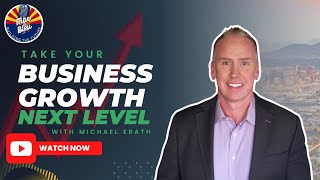
Michael Erath built and lost a manufacturing business in the 2008 collapse, then rebuilt smaller before moving into coaching. His firm Next Level Growth uses five principles: great people, inspiring purpose, optimized playbooks, performance culture, and profits. He walks through profit-per-employee analysis and how to pick suppliers and customers.
Chapters
Welcome to Mac and Blue, the cutting edge podcast for the nation's builders, merging the realms of construction with exciting advancements in technology. Join us on a thrilling journey where we delve into the dynamic world of blockchain AI, the metaverse, virtual and augmented reality, and their transformative impact on the industry. Our engaging discussions span a wide spectrum, covering not only construction, economic development, supply chain and market segments, but also exploring the vibrant tapestry of diversity within the construction landscape. We shed light on the intersection of local politics, its profound influence on the construction sector, while championing the remarkable contributions of women and minorities in construction. For all things Mac and blue, head to www.macblue.com and don't forget to subscribe on YouTube. I'm your host, JJ Levinsky. Now let's get into it. Hi everyone. Welcome to another episode of Back in Blue. I'm your host, J.J. levinski, president and co founder of BlueWave. I'm fortunate enough today to have Michael Erath from Next Level Growth on a little background because this is what's one of my favorite topics holistically, about everything that Michael will be talking about today. But we were fortunate enough to meet at a vistage, I think it was the annual, the summit, the actual summit, about a year, year and a couple months ago. And it was cool in that Michael was a guest speaker I think in one of the breakout sessions. And it was basically. And we're going to get into it, but for all of you that have heard me talk about EOs and all those kind of models, we'll go a lot deeper than that today. But with that, today's really about hopefully Michael will offer tremendous insight about, I would call it the entrepreneurial leadership kind of kick in the butt. Well, how do you get over those precipices, all those different things? And so with that we can dive in. First of all, welcome Michael.
Appreciate it. Thanks for having me.
Before we get into the context of all this gory data and fun stuff, if you would, we don't want to spend a whole bunch of time on the background.
Sure.
But I think your story is very compelling.
Sure.
So if you can go back, talk about 09, 10 and how are you sitting in this chair today as someone that is sought out, you speak all those kind of things because it's a cool story.
Yeah, no, I appreciate that. Excuse me. I never, never really expected I would, I would be here.
The man, the man, the legend.
Yeah, well, I don't know about that, but I.
So I kind of grew up in.
A family manufacturing business back on the east coast, we were closely tied to the furniture market. My father bought the company in 1968, so before I was born, so I was second generation, we had a manufacturing facility in Virginia. Our sales offices were in High Point, North Carolina. And we manufactured hardwood veneer for the furniture industry, for millwork companies, kitchen cabinet manufacturers.
So you weren't importing. You were actually correct.
So we. Yeah, so primary business was we manufactured. So we would buy round logs off of sawmills. Oh, wow. Timber cutters and landowners. And then we had a facility in Virginia where we actually processed the veneer. And so we would slice the veneer sheets and then we would sort and grade and sell those primarily in the domestic market and company. So all through high school and college, I worked summers and holidays and things like that in the business and was kind of being groomed to go in that, on that path. And when I got out of college, my father was quite a bit older than me, so when I graduated, he was mid-60s. So in my mid-20s, he was starting to kind of step out of the business from a day to day perspective, really fill more of a board role. So I. I was living in High Point, North Carolina. My wife and I got married, didn't have any kids, and we had a. We had a leadership change at the manufacturing facility. So we decided to pick up and move to Virginia and kind of settle there. And once I got out of sales and got into the manufacturing side, I just really fell in love with all aspects of manufacturing, really kind of taking a raw material and creating something out of it that is not what its original state was. So I was fascinated by that. And we were. At the time, all of our business was domestic, and we were about 8 million in revenue. We had about 75 or 80 employees. And that would have been. So that would have been 95, 96. And that was about the time that the furniture manufacturers in the US Were beginning to move offshore and set up facilities in Asia, primarily China. So what ended up happening is all of the customers that were in North Carolina, Virginia, South Carolina, the manufacturers that were right in our backyard, they all started to close their facilities and leave. Um, so we had to make a massive pivot and become more of an international business in that time. So we got through that. We got through that stretch. And as we were going into the early to mid 2000s, one of the challenges that we had as we were growing was accessing raw materials. We were sort of in a place in the industry where our finished goods product was somewhat oversupplied. And the raw materials were undersupplied. So we were getting squeezed on both ends. And so one of the things I had joined YPO at the time and one of the things that I was learning about, especially through some of my form mates who had vertically integrated their businesses, I got pretty, pretty excited about the opportunities there. So I brought on a partner and we started a separate business kind of under the same umbrella, where his background was in timber merchandising. And so he had been working for a company where they didn't produce anything, but they were all different qualities of hardwood logs. They were harvesting timber and then they were selling everything off. So we kind of built a vision and a model around marrying these two businesses. And in order to not be stuck in such a competitive environment for the raw materials, we would start buying standing timber. We would be able to go to landowners, timber cutters, sawmills, and buy really large parcels of logs with lots of different qualities. We would select out the logs we wanted to produce into veneer and he would merchandise everything else through our sister company. So that worked really well. And over about a 10 year span, we grew to 45 million in revenue, 200 employees. We had offices on six continents. Oh, yeah, we were shipping about 200 containers a month of hardwood logs and veneers. So it was a, it was a substantial business. So throughout that whole time, my business partner and I, he was a few years younger than me, but we got to be best friends. I was a son's godfather. We vacationed together with our families and got really, really close to a fault. And so as we got into 2008, 2009, and the housing market started to, to slow down and the collapse started to happen. One of the things that. Excuse me, one of the things that uncovered is that he had been, for about 18 months, he'd been embezzling to the tune of about half a million dollars. But more importantly than that, he was the managing director of our trading company. And we had a separate controller who was not directly accountable to my CFO that was on the manufacturing side of the business. They had two sets of financial statements and he was committing bank fraud. So I found all of this out through my cfo, who was kind of digging in and trying to help them through some cash flow struggles they were having. He uncovered all of this. I was actually on my.
You remember that call?
I do. I was driving to Washington dc. I was about an hour outside of dc. It was my year to be the incoming moderator of our forum. So I was going to for moderator.
You mean nypo?
Nypo. Thank you.
Just wanted to qualify because there's so many people that have EO vistage.
Right.
Blah, blah, blah.
Exactly. So, so that was around 4 o' clock in the afternoon. So I immediately, I got the call from Bob, our cfo. I immediately hung up and called my attorney and I was like, I don't know what the hell to do with this information. Right.
And yeah, it's not like everyone should be experienced in this.
Yeah, it didn't, we didn't really cover that in when I was in college. Right. As with a lot of things you learn as an entrepreneur.
No kidding.
Right. And so, so he said, you need to cancel what you've got and turn around and come back. And he said, just come straight to my house and I'll. This is the attorney. This is the attorney. Okay. And he said, I'll call Bob and we'll figure out what the hell's going on. So it's about 7 o' clock that night, 7:30, I got back to Roanoke, Virginia where we lived, got to my attorney's house. He was gracious enough to have a nice bottle of wine and we, we started to unpack what was going on. By noon the next day, he had helped us engage a former FBI white collar's crime forensic accountant who was now doing private work. And he came in and spent about two days with our CFO to really kind of get his arms around what was going on. And on one day that I will never Forget, we had two appointments back to back. One was with SunTrust bank, who was the lender that we were working with to let them know what we had uncovered. And then the next stop was the U.S. attorney's office in Roanoke. So the way, the way we had managed our lending relationships, both entities banked with the Same bank, with SunTrust, we were kind of maximizing that relationship. And about two years earlier I had gone through a process, a CAPEX project to rebuild a lot of our factory. New equipment and some upgrades on the manufacturing side. So I had taken out a $6 million term note with SunTrust to finance that.
So let me interject because I know a lot of people that listen to this and I'm glad you're kind of qualifying this. There's both a capex and I guess, did you have a lock or an LLC too for operations? Or were you, you know, like most people, it's like, hey, we got a conventional loan over here or some sort of capex and then we're still operating a line of credit for obvious arbitrage.
And things of that. Right. And there was. So there was a line of credit for the manufacturing business that we would dip into through seasonality curves, typically, which makes sense. Pretty typical. And then there was a line of credit with the timber trading company.
Oh yeah.
As a separate entity, which that gets back to the bank fraud and how we figure that out, which I'll mention in a minute because it's interesting, I think, from, from a listener's perspective, to understand what happened in my case, because there were a lot of things, a lot of clues that I didn't pick up on that I think are important for people to learn. And that was one of the things in the first book that I wrote, Rise in 2017. I went into a lot of detail about that because I wanted people to be able to learn from the lessons that, that I learned the hard way. But to that point, my father had passed. He passed in oh three. I had taken out this, this capex note with the bank. My mother unfortunately, was stuck on the guarantee with me and with my wife. But I had. Since we had transitioned her out of the business, I had bought her shares. So now she no longer has equity in the business. She's hung on the guarantee. Just found out my partner's been committing bank fraud and the bank decides they're going to freeze all of our accounts.
Ouch.
So $45 million business, 200 employees, we are insolvent overnight. So.
What a feeling.
Yeah, right. So I was, let's see, this was 08, so I was 37 at the time, trying to figure out what to do here. And unfortunately my CFO at the time was in his late 50s, very seasoned guy and was. Was very, very helpful.
Like a sound of reason, if you will, or a voice of reason.
Right. He was able to be very helpful with that. But so as we started unpacking things, the, the bank fraud issue that we uncovered because we had a line of credit in the timber trading company, part of the embezzlement was my partner putting an addition on his home. But he was running all the invoices for the contractors through the company. And because as I mentioned, we're shipping 200 containers a month of product. So we had bills from our freight forwarders where we constantly would send them ten $20,000 checks. Yeah, it does. What he was doing was he was having the controller in that business recategorize those as freight forwarder invoices. So I wasn't. Here was one of the mistakes I made. I was getting they were having some cash flow challenges in that company as revenue was slowing down in the, in the financial market collapse, which is common. So I was, we were using Peachtree for our accounting. I was getting a copy of the Peachtree register every evening, just trying to help them kind of figure out like, you know, how do we better manage cash flow and trying to give them some high level guidance. So I would see 10 or $20,000 accounts payments going out to the freight forwarding companies. Many of those actually were to the contractors working on his house. But she was reclassifying them before I could see him. So I was letting them handle the bank reconciliation with the actual checks and I was just using the register. But because of that level of deceit, I didn't see it happening. So they uncovered that. And what ended up happening, what was the flag for my CFO was our controller had been signing the borrowing based certificate. So every 30 days we had to certify our accounts receivable in our end.
Pretty standard.
And so we were, I believe, getting 85% of AR and 25% of inventory. So as revenues are declining, AR is declining, the available amount under the line of credit should be coming down. Cash is getting transferred back to the bank, deleveraging their position. So what he was doing was he and our controller were actually falsifying invoices to create accounts receivable out of inventory that wasn't actually sold so that they could get the 85% versus the 25% to keep the line of credit availability up so he could continue the cash flow that he was pulling out for himself. And what happened was probably about three or four weeks before this unraveled, he started signing the borrowing based certificates instead of the controller. And so when we first asked about it, she was, she had recently started working remotely in Georgia. She and her husband were going through a split up and so she was splitting time and she just said, well, since I'm not always here, Matt's decided to sign the certificates. First blush that, okay, fair enough. But as a few more weeks went past, we began to realize something was off. And that's when I was on the road. And our CFO figured that out. So a lot of stuff, a lot to unpack, a lot of lessons.
Okay, so.
There comes a time when dreams become a reality. When you see your vision materialize into a true work of art. And the only way to get there is to choose a general contractor who shares that same vision and knows how to bring it to life. At Blue Wave, we aren't so big that we've forgotten where we've come from and we aren't so small that we can't care for your projects or regardless of their size, when your vision deserves safety, perfection, timeliness and expertise in order to become a reality. Trust Blue Wave to get it done right the first time.
So again, we, we probably need four hours on that alone.
Right?
What. Before we go to the next chapter, what were the lessons that you consistently. Let's say it's in the book, right. Which we'll give kudos and call outs to the books at the end of the episode here. But go back and maybe you summarize this a lot in Rise, because I can't remember, but what were the takeaways and lessons that you would love to share with the audience in that the.
Biggest thing was we still hadn't really systemized how we operated as a business. Um, so it was, it was still very much a reactive seat of the pants way to run a business. Which is.
Which, hold on, let me go to your new, your new, your new profession.
Where you're at.
What's a comfortable percentage of what companies are really operating in that model? Is it 90%?
In terms of what model? The. Just wing it.
The swag.
The wing it. I think if you've, if you've systemized, well, 50, 60% of your business, the rest of it's pretty much a swag. Yeah.
And I would even expect higher because I'll sit here as an entrepreneur and say we're constantly trying to systemize and get better and get better and think of the people that you and I run into in our community and how we met. It's. Why were we all there? Because that's what we're seeking. We're seeking betterment in our organization.
And I think, you know, to your point, that's the difference in many ways. And this was a big epiphany for me, kind of going over the last nine years of my career, that when you, when you focus on a system for the business, that's different than having an approach, kind of a principled approach. And there's a difference that I'm, I come to realize between something that is prescriptive and something that's principled. And so fast forward. So we, we ended up, took about a year and a half with the, with the two businesses. When all of this unraveled. One of the things that I did at that time. So if you think about going into that era, the, the financial markets kind of collapsing and resetting, most companies that were having challenges, were throwing the keys at the bank and letting the bank figure it out.
Right.
I had my mother hung on this guarantee. I needed to figure out how to protect her and her assets. And so I went to the Special Assets Group and offered if they would give me just enough liquidity to take the business through an orderly liquidation to maximize what we could, what they could recoup out of it, that I would stay on and do that and not just throw keys at them, which at that point, it was one less fire for them to fight. They were happy to do that. And with all of that new equipment, millions of dollars worth of new equipment, they would have gotten nothing at auction, which would have been their alternative. So I had a few really fortunate events happen over the course of 18 months. We got the bank made whole, we got the creditors made whole. What we did is my wife and I decided to take the haircut so that we could avoid bankruptcy and essentially was lived to fight another day, which we were able to do. We restarted a smaller business in 2011. 2010. 2011. And kept two key employees, moved to Ohio and found a contract manufacturing facility and outsourced our production.
I assume in the same business, same industry.
Yeah, I got it. New entity. And we just kind of rebuilt from the ground up. Got that to a $7 million business. Through my time in YPO and then later EO, we had implemented, you know, bits and pieces of Mastering the Rockefeller habits. We had implemented top grading pretty well. We were doing that well. We had implemented some concepts from Jim Collins, but it was all kind of, you know, make it up as you go. Yeah. And that's. When I was in EO Columbus, I read Traction. Our form group read it together. And I was like, okay, somebody kind of put their arms around this and created a more comprehensive approach, filled some gaps that I still had. And so I decided I was going to get on that path. And so I'm an admitted self implementer of the system.
Admitted, but you said committed.
Well, that's coming. But, you know, one of the things that, that I. So I've always been wired as somebody who likes to take things that exist and find ways to make them better. Okay. And so I really, what I. What I loved about traction in the US and what Gino had written about was not specifically the tactical tools, but the intent behind them.
Kind of back to. I think you're going to get there, but the prescriptive versus the principled.
Right.
And we'll dive deeper.
Right? Yeah, okay. Exactly. And so I really Liked the intention behind what EOS was and the model. But there were certain areas where I felt like whether it was through Top Grading or through something from Vern Harnish, and then it became scaling up, where at least for my company, I could get to the same intent and outcome with something that was going to be better for us, better suited. So, for example, this comes out of Top Grading, but then was developed further by Vern Harnish and scaling up this idea of an A player system. And so we've kind of customized that. But instead of using the people analyzer and that approach in eos, I adopted a different approach to accomplish the same thing. Right. And so what I started to realize was the path I was going down was based more on a principled approach to these intended outcomes versus a prescriptive kind of paint by numbers. You have to do it this way, in this order. And so I think that's for a lot of organizations that really don't have anything in place, any systems or structure, that's a great place to start. Yeah, because it's simple, it's easier to follow, it's easier to implement and get your head around. But I don't necessarily think for a fast growing organization that really wants to scale it in and of itself isn't going to get you to the top of the mountain. That makes sense. Right. And so as I started looking at that, I think, you know, as I said, a prescriptive approach is, it is limiting, it lacks flexibility, but as a result, it's easier to teach, it's easier to embrace, it's easier to get started with versus a principled approach where you're thinking much bigger, much more expansively, and you're agreeing to and committing to a handful of principles. We call them the five obsessions of elite organizations. And it's, in our case, it's five specific things that I believe if you're truly going to build an elite organization, not just a good one, these are areas that you have to obsess about on a daily basis. And so that's kind of led to that really that shift for us, the difference between prescriptive and principled.
So before we dive into all of these kind of topics, then, Michael, if you can, and if I've been a good listener, hopefully I have been, will you help bridge the Ohio thing to next level growth? Like, what was that transition like, when did you, hey, honey, we're dumping this and moving to Arizona and next level growth is my new baby.
No, I appreciate, I appreciate asking that. So so my wife and I now. So long story short, we met when we were 4, started dating at 15, got married at 22. So we've done our entire lives together. After we got through everything with losing the businesses and having to restart, move to Ohio, she had seen the toll it was taking on me and just the. The wear and tear of the industry and everything we'd been through. And in all honesty, that move to Ohio and starting the new business was more because I needed to ensure I had a job, and I knew I would be a terrible employee, so I didn't want to work for somebody else.
At least to be honest with you.
So I kind of built a company that created a job for myself. Right. And we were successful and we were growing. We made the 5,000 in 2015. But it was really at her encouragement that I looked for something else to do and. And I had a really good friend who's actually still a client today. But in 2015, he asked me. He was an EO member as well in Columbus, had a custom furniture manufacturing company, and he was trying to self implement EOS as well and really struggling to do it himself. And he had seen the success we had had with it and asked me to help his team out. So just on the side, I started helping them kind of figure it out and work through it. And I realized not only was this something I enjoyed significantly more than this industry that had kicked my teeth in for 20 years, but I had read a book by a guy named Bob Buford about a year earlier called Halftime.
You love that book.
Yeah, yeah. And it really resonated with me, this idea of spending the second half of your life taking everything you learned in the first half and giving it all back. And so it was really that kind of that purposeful introspection, together with my wife's encouragement, that she really felt like I was suited for something else that caused me to make that change. And so I became an EOS implementer in 2015, spent six years with EOS. Well, you did.
I didn't realize it was that long. I know. I've read your story a hundred times, and I never knew it was that long.
Right. And what was interesting was I was fortunate to grow really quickly in terms of my own book of business, because my story resonated so well with entrepreneurs. If you want to, you know, if you want to be an MMA fighter, you're going to work with the coach that's got the cauliflower ears and crooked nose, and, yeah, you're not going to work with the guy that read about how to fight in a book. So well stated, Michael.
Well stated.
So, so, so that was great. But I got to a point where I really wanted to branch out. I had clients that have been with me for years, and they had mastered the system and they were. I was getting a lot of people asking me or clients ask me, like, so what's next? Yeah, right. And that's when I branched out. I decided I wanted to get certified in scaling up. I wanted to immerse myself in as much other content as I could because I wanted to be able. I was developing great relationships with clients, and I wanted to be able to stay with them on the journey and continue to add value beyond just the blocking and tackling fundamentals. And it was at that point that I decided to part ways with EOs. They were moving down the franchise path and our values kind of went in different directions. Perfectly fine.
The typical maturation cycle.
Exactly. So I. So I started Next Level Growth. I was originally one of the co founders of Pinnacle Business Guides, together with Greg Cleary and Dwayne Marshall.
Yeah, again, I don't want to take up too much time, but just give. Give just a broad perspective of that.
There comes a time when dreams become a reality, when you see your vision materialize into a true work of art. And the only way to get there is to choose a general contractor who shares that same vision and knows how to bring it to life. At Bluewave, we aren't so big that we've forgotten where we've come from. And we aren't so small that we can't care for your projects regardless of their size. When your vision deserves safety, perfection, timeliness, and expertise in order to become a reality, Trust Blue Wave to get it done right the first time.
So Greg and Duane and I, all within a couple of months of each other, had left eos, and we're trying to decide, like, what's. What's next. We had been part of a mastermind group that Greg had started and had been very, very valuable. So Greg and Duane, it was November. Detroit and Minneapolis were cold as hell. So they flew out here.
That's why we moved out.
Right. So. So they flew out for a long weekend, and we literally had a portable whiteboard. We're sitting by the pool, having cocktails. We pull this whiteboard out and we're just trying to mind map, like, what the hell are we going to do now? Like, we're on our own. We got to figure something out. And that's where literally out of that mastermind group and the three of us sitting in the Arizona sun in November of 2020 or 2019, I think it was the end of 2019. That's where the idea of Pinnacle Business Guides was really born. So originally I was going to be one of the three partners, and I was going to more or less be in the finance seat we had that year. We had a family tragedy that kind of pulled me away and consumed a lot of my time. And I realized I was not going to be able to be as committed as I wanted to. So essentially, I agreed that I would forever be a Pinnacle Guide and be part of that organization. I'm actually member number one, and I've been with them ever since. All of the guides we have a next level growth are members of Pinnacle as well. But because then they had kind of started down their own path, I did not want to be in a situation where I was building a brand that I wasn't an owner of. And so we agreed more or less that the kind of Phoenix market is going to be next level growth. And we're supporting in part of Pinnacle. We're very similar, but it also allows us to do some things differently again and continue to evolve the way we want to and build out our own little kind of bespoke firm here and in the Phoenix market. Good.
Okay, now let's get into some meat and potatoes. Let the audience know I'm just. I'm a role player and just give you hypotheticals. What was next level of growth like with those first few clients? In other words, if I came to you, what was I coming to you with? Pretend that I was that one of those first clients. Michael, I need help with my business. I'm a struggling entrepreneur.
Right.
What did that look like?
So a lot of where that conversation started was I wanted to differentiate our approach and what we were doing. So I always start with kind of a. A clarifying or clarifier that we really are focused on working with entrepreneurs that truly want to do the work to.
Build something elite versus what?
Versus I just want to. All of my buddies are doing this system. Got it. Right.
I'm baiting you here because.
No, no, no. Right. My Vistage group's doing scaling up, so I want to do scaling or whatever. The insert your business operating system. And if that's what they wanted, I wanted them to go do that. Yeah, right. So, yeah, yeah, that's. That's a great thing for you. Fantastic. But that's kind of checking the box because that's what everybody else is doing. And so what we really focused on was, in that case, do you. I would ask things like going through our five Obsessions model, Do you feel like if you were able to truly obsess about filling your organization with great people and do that to a very high standard all the time, would your business be more valuable and would your life be better? The answer is almost always yes. So I would go through that. I would go through inspiring purpose, optimized playbooks, culture, performance, and growing profits and cash flow with that same question, and then talk about where they wanted to go as a business. And so let's say, for example, somebody had a $5 million business. They wanted to get to 20 million. I tried to get them to focus on what's the marginal value over however long it's going to take you of being a $20 million business versus a $5 million business, and start thinking about that in terms of enterprise value for the company. Right. And what would that be worth to you? And are you willing to do the work? And we would talk about what that really looks like.
That's the key question right there.
Right, right. I saw a great quote just a day or two ago that I think the way the quote was written was, the magic you seek is in the work you're not willing to do. Right. And if you think about that, how true is that? For most entrepreneurs, the dream we have, the. The summit of the mountain we want to tackle, is primarily limited by the work and the decisions we're not willing to do.
Let me ask you. Let me interject and ask you a tough question, but I'll fall on the sword here.
Sure.
Guys like me that come to guys like you.
Sure.
How often do you have to tell a guy like me, you're the problem?
My hope is that they come to realize it through the questions and that I ask and the challenges. Sometimes we have to say it.
Yeah, Right.
And it's. I mean, I think it wasn't that specific instance, but I remember on your podcast, Sergey, talking about a conversation we had early on where I told him that I didn't work for him. I worked for the bhag. I worked for the vision they had for the company. It's true. And he was really pissed off at first because he's like, I'm the one signing the check, Sergey.
Don't worry. It's tough love.
It's tough love. He knows that. But it was cool because he started to realize that, no, that's what I need. I need somebody who's invested in where I want to go, not wanting to keep me pleased, to keep me as a client.
So I don't know if that, it answers the question. It, just because I, I, we say it all the time. But does it really sink in?
Right?
You know, anytime we, anytime, whether it's on this podcast or in any of the groups that again that we associate with or this audience does, how many times do you sit there in that audience and go, he's talking about me, right? He's talking about, or she's talking about me.
I'm the problem.
I have to, I have to find the principled approach to get to the bhag or the dream or the vision or whatever those things are.
You know, that's, I think that's, that's so common with entrepreneurs. And we tend to be our own worst enemy. But we put so many expectations on ourselves and we feel like we have to have all the answers.
Right.
And the, the beauty of peer groups, which I think is, I think there's, there are a handful of things every entrepreneur needs. I think one is some sort of, of a principled approach to how they operate their business. I think the other is a peer group. Whether it's Vistage, eo, ypo, things like that, there's huge benefits from being in a peer group because it helps us kind of challenge the voices in our head, right, by being in a peer group like that. And then a third is, I think as a coach, if you really want to be elite, think of, think of a golf example. If somebody's a golfer and they're, you know, they're a 20 handicap and they want to get a little better, they'll hire a pro for a little while and they'll take some lessons and that's kind of it. And they'll get better. But the tour level players, they have two or three coaches, right? They have short game coaches, long game coaches, mental coaches. They have all these different coaches around them, but they're trying to perform at such an elite level that that's one of the legs of that stool that they want to make sure they always have.
What's your feeling? And hopefully this doesn't cross a bridge of too awkward of a question.
Those are the best.
How do you feel, Michael? Because I know we're going to get into the weeds within some of these things, but where do I go with this, the interpersonal part? So I love what you did. Okay, I need a peer group, I need a coach. But I also see a lot of people that I would describe in the entrepreneurial space of. They're very guarded about their inner. Call it their spirituality, their connectivity. Do you call that what you want, the soft skills or kind of addressing, maybe the emotional intelligence and eq, that kind of stuff. How do you feel about that? Like, how do you coach and how, how in next level growth do you approach that whole sector of the person or the entity or the bhag.
Sure. It's so. So a couple of things. Number one, I always try to take a who first approach. Okay. Okay. And that's around core values. That's around your. Your, Your purpose as a human being, a purpose within your business and, and your skill sets and performance and things like that around the job. But one of the things that I feel many people lack as they, as they grow into a business is exactly those soft skills. Soft skills of leadership. I think I see this a lot with leaders that are developed and promoted in companies. We take people who are really good at a task, and because they're really good at it, we put them in charge of a team. Right. But we never spend time investing in them, learning the soft skills of leadership and connecting on an emotional level with people. And I think that that has to start with the founder and with the founding entrepreneur. We teach this, this goes into a little bit of the weeds, but we. For example. And did you guys run on eos or quasi.
Or quasi.
Okay. So, you know, there's the quarterly coaching conversations. I think they're all right. Or quarterly conversations. We just. Because I believe words matter, we call them quarterly calibrations. And the idea is more about just getting calibrated with the person to whom you report and. Or with your direct reports. But those conversations, I believe, are really, it's, it's more important to connect emotionally as any leader with your direct reports. Excuse me. Yeah. Bless you. To, to connect on an emotional level and help them understand that it's safe to come to you. Right. That you've got their back. You're there to help them and support them. And a lot of times we'll come, you know, and I've had, I've had clients that I fired and I've had prospects that I won't work with because the, the founders aren't willing to kind of look in the mirror and, and challenge themselves to grow emotionally. They either believe, you know, one of the ones I come across all the time is like, the guy that I don't give tens.
Right.
It's like, how long? So I'll usually start with like, well, why don't you give tens, like, to your employees. Why is a 10. Why will you never give a 10? Because they can always do better. Like, okay, I get that. But do you think that if you never give them a 10, if they really have done well and deserve it, do you think they're going to keep trying harder, or do you think they're eventually going to just throw in the towel and just phone it in? Right. And so sometimes leaders just. That's their mindset, and they feel like I have to grind on everybody. And I just don't think that works. For sure. Doesn't work anymore. It might have worked in the 60s and 70s, but it doesn't work today.
I don't know. Let's navigate this next part together. I'm going to kind of open up some options, and you tell me how you want to go down. Do you want to focus on. Does it behoove us to go on the five obsessions, or do we want to go more in the role playing of sharing with the audience, maybe without mentioning names, more of, like, the testimonials of how customers come to you and what you've been able to produce for results?
Sure.
I almost think that the second one would be a little bit better because I think we'll get to the five obsessions in that dialogue. Is that fair or not?
Yeah, absolutely. And I think the five obsessions, I mean, just go on our website. You can read about that.
Well, if you want to just summarize them quickly. Again, yeah.
So again, the five areas that we believe entrepreneurial organizations and entrepreneurial leaders have to obsess about to truly build an elite organization, number one is great people. And yes, these are people who share your core values. Their behaviors are consistent with the core values, but also from a performance standpoint. And I'll get into this just a little bit in the weeds. We can come back to it if you'd like to. But I'm a big believer that when it comes to people and issues and frustrations, most of our frustrations in relationships with people, whether it's personal or professional, are the result of uncommunicated expectations.
Uncommunicated expectations.
Correct.
So it's not. It's not where everyone says it's communication. You're being more specific. It is uncommunicated expectations.
Right. If, for example, preparing for this podcast. Right. If. If we had spent half an hour to sit down and really discuss expectations of one another, and we align to those expectations, we understand one another, we have a de facto agreement.
Yeah.
If we have A de facto agreement, and I violate that in the course of this podcast. It's much easier to course correct me because I've already agreed to that with you. Does that make sense?
Yeah. For the record, Michael did an awesome job of prepping for this, and I sucked. But now I see why. This is why. I'm the student, he's the teacher.
I don't know about that.
That was good. No, but again, I'm willing to fall on the sword because I will tell you that now that you've said that and I listened, it's like, oh, now I see why Michael was sending me the emails that he was sending me, and I didn't reciprocate that. So this is good.
Okay.
This is good.
Perfect.
All you leaders out there, there's a purpose to this.
So, like I said, I like to take things that exist and make them better. And so I felt like the. What Gino did with the EOS accountability chart was a big step up. Over or agreed, right? Oh, absolutely. And I feel like it's still left too much margin of interpretation when you, for example, you take an accountability chart seat and you have a director of operations, and one of their roles is make the product. Okay, okay.
That.
That leaves.
I'm sorry, I'm laughing with you, not at you.
Right? No, it's. It's. I mean, it's. There are different ways to approach that. And so we've come up with what we call mission most critical outcome and obsessions. And so it's three components of an accountability chart seat. I'll dive into that later if you'd like. But that's all part of great people. If we can set better expectations with one another and essentially get to agreements around that, it's much easier to hold people to a high performance standard and to coach them where they need it with regards to that. So kind of. That's a little bit around great people. But I also think, you know, in Jim Collins talks, right, people write seats, which. Which I think was. Was kind of transformational in the early days when he started bringing that up. But I think there's a little bit of a third leg to that stool, which we address in our second obsession, which is an inspiring purpose.
Okay.
I could come to work for you at bluewave, and I could. I could absolutely be aligned with your core values and behave consistently with them. I could be a high performer in my role, and I'll be a very good employee. But if. If you can get me to emotionally connect to an inspiring purpose behind what we do and really take that seriously and take that responsibility seriously. I will show up more creatively. I will put more effort and energy. I will fight harder for everything that we do. And I'll be that much better of a, of a team member and part of the organization, which.
You just validated my previous question.
Well, back.
You know what I'm saying? Like back to the EQ and, and how just so many entrepreneurial shops are just. It's P and L imbalance.
Right, Right. But if you think about it in human history for thousands of years, we're storytellers. Yeah. Right. That's what we are as creatures. And so most companies, when you think about their marketing budget, 100% of it is spent in external marketing. Zero is spent internally marketing and communicating to team members. Right. And I just, I feel like there's a percent of that. You have to, you have to have an inspiring purpose and a way of communicating that to employees that gives them something to buy into. And I've even got clients in very commoditized businesses where maybe it's not a big save the world, external inspiring purpose. It's more about the team members within our company and the people within our care. How do we see the business responsibility? Yeah.
Like you're saying though, Michael, a community can be this big or exactly this big.
Right, Right. And it's just gotta matter to the people that are part of that right now. So how do we better obsess about an inspiring purpose? Third is optimize playbooks. Right. How do we really systemize the business well and give people those playbooks? Think about any. You know, one of the examples that we write about in Path to the Pinnacle, the book I wrote with Greg, is you can take an NFL all star team, right. And put them on a field, don't give them playbooks and don't give them practice schedules. Put them up against a college team that's got playbooks and practices how to run those plays and executes them. Well, I'll bet you the college team wins every time. Right. Not because they're better performers or better athletes, but because they know how to run the plays. They know when this happens, when this is the situation. Here's what we do, here's what this guy's going to do, and here's how we work together. Our businesses are no different. Right. When you, when you get a new rfp, right. There's a play that a project manager should run. That's the right way to do it. The way that you guys have kind of Made it your own, made it on brand for you. But if you don't have those playbooks, you might have five PMs in your company and they're doing it five different ways. Well, as a result of that, you get chaos. You get a different customer experience. You know, it's, it's not, it doesn't feel as on brand. And so you've really got to obsess about those optimized playbooks. The fourth is a culture of performance, and it's really about understanding the right data points. The example I often like to use here is if you think about watching any basketball game, every time there's a timeout called, one of the coaches goes to the scores table from the statistician, gets the stat sheet, comes over and they're looking at the stats. Right? And so every week your business is on the field playing the game. And if you've got a good cadence of weekly meetings, those weekly meetings are the timeouts. Are you looking at the right stats and are you making game time adjustments based on what's happening and what the stats are telling you in order to continue to optimize and improve your performance? Are you holding people accountable to the expectations? Right. The communicated ones, the communicator ones? Right. Are we, you know, are we, are we tolerating things? Are we buying into the storytelling trap of why somebody's underperforming, or are we really, are the leaders we have really spending time being coaches and really working with and developing people who have the abilities and just need more coaching and time invested in them, or are we kind of leaving them on their own? Right. I mean, I talk about onboarding processes. One of the things I love to ask clients in the early days is if I were to ask the last 10 employees that came to work for you if they had a good onboarding experience or if they got waterboarded, what would they say? And they are like, oh, God, we waterboard our employees. Right. You know, and it's common. Well, it is, right. But if you imagine an employee with a great onboarding experience within the first 90 days, the boss should know that I got a great hire here or they've been exited. The employee should feel like, my boss has my back, this company has my back. They're giving me the resources I need, they're giving me the things that I need. And more importantly, this is back to your comment about the soft skills. They should feel like I now have a relationship with my boss where I can go to him or her with anything. Yeah, anything. That I need anything that's challenging me or frustrating me, I've got an advocate in the person to whom I report. So it's really about instilling a culture of performance, always coaching people up or out if they're not meeting expectations. And then lastly, I think a lot of organizations view profits and cash flow as a byproduct of everything else. And I think in theory, that makes sense. But I think to truly build an elite organization, you have to be intentionally and consistently obsessed about how do we. How do we grow our margins, how do we improve our net cash flow? Because it's the oxygen and the fuel we put back in the business. And if we allow that to be a byproduct, that's exactly what it will be.
Extremely well stated. What with all your clients, can you think of a story or a test, again, without mentioning names, where you saw an aha moment of someone breaking through on combining those two.
Yes.
Can you share?
So one of the things.
Because that's your nirvana. I mean, sitting in your shoes as next level growth, you get to go ring the bell going, we got them. We got them to the finish.
Right.
Or at least over that precipice.
Right? Yeah. It's interesting some. Sometimes these things I like to. I like to kind of jokingly tell clients when we have one of those breakthroughs is like, all right, so the next couple of years I'm free because of this. Right. So, but, but. So one of those things is go back to Jim Collins. Good to. Great hedgehog concept. Right? Yeah. That was the original source for core purpose in us. But profit per X was removed from the hedgehog concept. Okay, Right. It's. It's your purpose and your strategic niche. But Collins also talked about profit per X, what drives your economic engine. So in my manufacturing business back in Virginia, prior to the collapse in 08, one of the things that my, My YPO form got into was really trying to understand our profit per X as a business. And once we understood it, how to analyze data through that. So that two. Two specific examples I'll share. One was in my own business. So manufacturing hardwood veneer, we had about eight species that we produced. So think of each species a different product line. And then within those, within those product lines, there were different grades that we. That we produced. There were different suppliers from different regions. So lots of variables that went into.
So you had a lot of SKUs, basically, right?
Think of it that way. Exactly. And so one of the things we realized, it was very capital intensive to grow our business. In terms of expanding production capacity, if I wanted to add, we had. We had four production lines. If I wanted to add a fifth production line, it would have been a 3 to 4 million dollar investment. So equipment, yeah, it was very cost prohibitive to grow that way. And we were a smaller player in a big market with a lot of really big competitors. So we wanted to maintain our flexibility and not be a slave to that. So one of the things we started to realize is in our business, we had our monthly nut of all of the overheads, all of the burden we had was about a quarter of a million dollars. So until we. And most of it was fixed, there were very few variable costs within that. So until we crossed the $250,000 threshold of gross profit dollars, we weren't making any money. And so we had a limited production capacity. So I look at this as kind of a. When you understand your constraints as a business, you can begin to understand where your profit per x lives. So what I mean by that, for us to grow our profitability, our real dollars of profit, we could either expand our production or we could improve our gross margin. Okay. Okay. So what we started realizing was if we could focus on our gross profit dollars per board foot produced, because board feet was our common unit of measure, if we could analyze that and everything that we did, then for the same operating expense dollars that we're investing, we could generate more gross profit dollars, which made us more financially efficient, which would make us more profit. So once we realized that, we started to really obsess about how to analyze different things in the business. So one of the first things we did was we said, all right, let's look at every species we produce, and on whole, what is the gross profit per board foot of cherry versus maple versus red oak versus walnut, white oak, ash, you know. So we started to compare that across the different species. And one of the things that became very clear very fast is we were allowing our sales team to dictate what we produced based on what they could most easily sell and what customers were asking for. So back in the 90s, early 2000s, red oak was one of the most popular species in the US in terms of volume, and it was completely commoditized. When we looked at and without referencing the spreadsheets, I don't remember the exact numbers, but I believe that it was somewhere around $1.80 per board foot that we needed to generate in gross profit dollars to be profitable. Red oak was contributing, I think, $0.50. So it was cannibalizing so much Profit, but it was 20% of our production because that's what our salespeople could sell. That was driving volume. And we started looking at that and we thought, oh, my God, like, why are we doing this? So we essentially said, we're going to stop producing red oak completely, and whatever customers we lose, we lose.
The math doesn't lie.
It's there. Right? Then we started looking at, for example, so if $1.80 was the threshold, we might have, you know, I think Maple was around 250. So it was significantly a positive contributor. But we weren't really aggressively going after maple. So we increased our maple production. We essentially told the salespeople, you guys want to get paid? Go find us more. More options or opportunities to sell maple. Same thing with birch was another species. Ash was profitable. Walnut was good. White oak was good. So we started to change our specie mix.
Would you call that. I mean, don't we call that loss leaders in.
In today's. Right. The challenge was the loss was so great that, you know, now if we had been a. A production company twice our size, our unit costs would have been much lower and we could have made sense of it. But the Delta was way too big for a company our size. Makes sense. So we, we got away from that. Then we started looking at by species. So cherry at the time was very popular. We looked at all of our cherry suppliers and we had at the time, five different log buyers out in the field running around buying logs. So we looked at how do each of our log buyers buy each species, how do they stack rank in terms of the gross profit of their purchases per board foot versus everybody else. And so the guys at the top of the list got the budgets right. And then we started looking at suppliers the same thing. We had some situations where a log buyer was buying from a very large supplier because they could go in one day and buy half of what they needed for the week. But those were often the least profitable suppliers. Yeah, right. And so we started telling them basically, like, we're, you're not going to that supplier anymore or we're cutting them by 50%. Different things like that. And so we started to manage all of those things. We looked at customers and how do the customers rank by specie? And so all of those allowed us to make small adjustments. And the net net of that over about a two year period was we grew our monthly gross profit, monthly gross profit by about $100,000 on average. We did that without spending any additional operating expenses.
But just by focusing on that, just.
By making different decisions because we were more informed. Yeah. All of that fell to the bottom line because we weren't spending more money to go get it. We were just being smarter about the business. And that's one of the things like when, when you think of profit per X and somebody says, oh yeah, we've got ours figured out as profit per employee. Bullshit. Yeah. That means either you don't understand the concept or you're intellectually just being lazy about it. Or both. Or both. Could be both.
Or all the above.
Right. And, and now one of the things now in a, in a, in a people intensive business, which is we transition more and more to a service based economy. That's. Yeah. Typically what we become. If that's what you think it is, I would challenge people to consider profit or gross profit, whatever's the right, the right level to measure that per human capital dollar. Because if it's per employee, well, you might have a $20 an hour employee and you might have a $200,000 employee.
I'm glad you define that.
You can't make that an even playing field and say per employee. But if you make it fully burdened Human capital dollar. Yeah. Now we start looking at what's the ROI on different employees based on what they're fully burdened, are fully burdened. Investment in them is. How do you talk about, if you were to talk about Blueway, for example, you're debating buying three different pieces of equipment for one job. Right. We're looking at three different options. You're probably having intellectual conversations about the return on investment, the payback of one piece versus another.
Be careful. You're giving me too much credit on the intellectual part. That's what my CFO is for. Well, there you go.
Right. Some. Somebody's doing it. Right. The challenge is, I don't think we do that with employees.
We don't.
Right. And so.
Well, I shouldn't say we don't, but you know, generally.
Correct. And so I think in most cases we need to look at the people who fill the seats in the company through the same lens. Yes. If, if I'm a project manager, I'm just pulling that as an example. Right. And there are four other project managers. If we're all in essence being compensated roughly the same, what's the actual return on investment that the company gets for the money you spend on me versus the next person? And so, you know, it's profit per project or things like that. And that we can start to look at and you can at least establish a standard that if we're going to spend X fully burned with benefits and taxes and everything else on a project manager, we need them to return at least Y in terms of profit back to the business to justify we're getting a return on that investment.
But back to what you said before. Communicate the expectation.
Right.
100%.
So once you get this figured out, everyone that's listening, there's your implementation. Now that I realize we shortcutted everything here and there in our quick dial. Sure.
Michael.
If you can see, we've already almost blasted through an hour. So I want to. And take a time out because we could talk forever. Sure. Let's go back and focus on. I would love for you to describe to your own words for the audience, go through your books and then do a little pitch on kind of what next level growth is. I know it's going to be hard to wrap up in four minutes, but just kind of what you're looking for so that the audience out there, whether it's them or people they know, that would be a perfect match for you guys. So if I could flip that. Go ahead.
Yeah. So next level growth. What we really, the way we try to differentiate ourselves is we are an approach, not a system, and we are fully focused on the outcomes that our clients want to achieve. And so if you imagine, and I know Vistage uses the mountain climbing analogy as well for your. For your Vistage listeners, if you and a team were going to go summit Mount Everest, you're going to hire a Sherpa who's been up and down the mountain to help you get there. Right. You're not going to read a book about it and find your way. We are much more a team of Sherpas that are there to help you get to the top of the mountain. In order to be a guide at next level growth, you have to have been an owner or a CEO of a company with at least 10 million in revenue and 50 or more employees, which is kind of the old YPO qualifying standards. Makes sense because when you've gotten to that level of scale, you've encountered most of the same issues and challenges.
You've seen some landmines.
Right. So you have a little bit more experience to draw from. So nextlevelgrowth.com you can learn more about that. You can reach out to any of us for a conversation there.
And I will qualify again. I'm, you know, in my space, but having been in your office, been to, you know, things that you've spoken.
Sure.
Or shared, you cover all verticals this isn't just construction, so I want to be clear about that.
Yeah, absolutely. We've got wealth management clients, we've got rehabs, we've got manufacturing businesses. It runs.
You're agnostic.
Exactly. We're very agnostic to that as long as the leaders truly want to build something. In terms of the books, in 2017, I published Rise, the Reincarnation of an Entrepreneur. So that's the deep dive into my story and background lessons learned. That one is also available on an audiobook. I was the narrator of that one. And then last year, Greg Cleary and I wrote the Path to the Pinnacle, which is a collection of stories. And there's. There's so many parallels between the way we operate and the way Pinnacle operates. It's a collection of stories around the approach that we take and different things that our clients have done to truly make it unique to them and their businesses and some of the successes that they've had as a result of doing that and the freedom and the flexibility that that. That allows for them. I am just in the early stages of a process now to release what will be my third and, God, I hope, my final book, which is going to be.
Come on, Michael.
Oh, you have no idea. It's. But it's going to be called, I believe the. At least the working title is 5 Obsessions of Elite Organizations. And it's going to be a deep dive that. That really provides a. Here's how it's done. Here's some significant details around things you need to be focused on, things you should be looking out for and working on. All to kind of summarize what it is that we've. We've learned and done over these eight or nine years.
Well summarized, look at, even finished early. Minute to go, you're organized.
What do you want to do?
Because you had communicated expectations. It was good.
Thank you for that.
I am looking. We do have a minute or two left. Michael does have a field guide book. Oh, yeah, They've published right here. You want to just talk through that a little? Yeah.
So it's, you know, again, take things that are good and make them better. So one of the things that I found a challenge with a lot of the operating systems is the materials that you get as a user are somewhat sparse. And so in our basecamp field guys, this is what we give all of our new clients when they come on board. There are pages of context and examples. So for one example, accountability chart, we take a very different approach to that. And one of the things we wanted to do is instead of just having an example that's a template that just says, you know, function and roll, roll, roll, roll, roll. We wanted to have examples. So we have a manufacturing company's example, a professional services and a home services business type example. Not only leadership seats, but all the way down to frontline employees. And we specifically call out what we think are some optimal missions, most critical outcomes and obsessions. So our clients have significant detail to follow as a guide when they go to roll this out. Because that's where a lot of these things fall apart is in the operational, operationalizing them throughout the business.
Well stated, Michael. I can't thank you enough for coming on again today. For the audience sake, reach out to him. Next level growth, all of his associates. I will tell you that I've personally been at their office and gone through their, their onboarding process. It's phenomenal. And I, I mean that we did, for the record, we did not sign up at the time because I wasn't ready.
Just not yet.
Yeah, just yet. Yeah. But the. I just can't say enough good things because I know a lot of our friends and colleagues that are, that I know that have gone through your system, your guidance, your advocacy, if you want to call it, they've come out the other end better. So kudos to you. So thanks again.
Awesome. Thank you. I really enjoyed it. You've been listening to the Mac and Blue show brought to you by Blue Wave General Contracting. Be sure to subscribe to the Mac and Blue podcast on your favorite podcast platform. Follow JJ Levensky on LinkedIn and Instagram. Tune in every Monday.
More from Michael
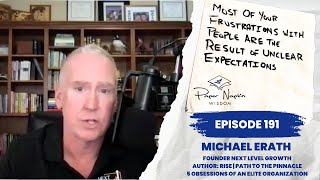
Ep 191: Building a High-Performance Culture with Clear Expectations - Insights from Michael Erath