How He Launched a NYT Best-Seller as a Teenager
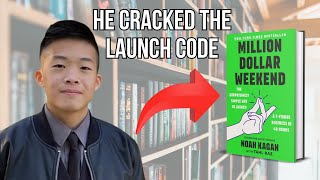
Jay Yang discusses launching his book You Can Just Do Things and helping Noah Kagan's Million Dollar Weekend hit the New York Times bestseller list. He breaks down his social media framework (hook = benefit × relevance × credibility / perceived effort) and a three-phase launch strategy: whisper, tease, shout.
Questions this video answers
You Can Just Do Things
Million Dollar Weekend (Noah Kagan)
Head of Social at Alex Hormozi
Beehive
Chapters
Welcome back to another episode of beyond the Book podcast. Today we have a very special guest in Jay Yang, who big congrats to him, just got a job as the head of social at Alex Hermosi, who's literally one of the biggest business creators online. Jay knows what he's talking about and he's literally just a teenager when he actually did everything we're about to talk about in today's podcast, which is he helped Noah Kagan launch his New York Times best selling book Million Dollar Weekend, which I'll link to Million Dollar Weekend below. It's an awesome non fiction book on how to grow business and start it in 48 hours. And Jay just, he gets how to write on social media in a way that grabs people's attention and builds a brand. And he shares so many incredible insights about how he landed this gig and also about how you can do things that are wild out of the box to be able to work with people.
Who might be out of your league.
Working with best selling authors and also going viral on social media and building a brand. He's just one of the smartest minds out there. I think you'll love this episode. All about, you know, going beyond the book and growing on social media and also just unique partnerships because Jay's done now multiple different partnerships starting in high school with some of like the biggest companies out there. And I think thinking about beyond the book, there's a real opportunity for companies who want to work with writers. Imagine if you had a tech company who wanted a sci fi writer to write a blog for them or a newsletter or a chocolate company or maybe.
A flower company that wants a romance author to write short stories.
Them there's opportunities here to take your storytelling and what you're good at and work with companies that could be really big even if you're just getting started because you can ride with them.
Cool.
Great value.
And that's why I'm with Jay, someone who was just getting started who's able to work with some of the hottest companies in the tech world and ultimately provide them a ton of value. So your stories have value and we're going to today hear all the value in Jay's story. Now before we get to it, one thing I want to share is that we have beyond the Book retreat coming up in Vegas in November. It's three days inside the Barbie House. If you'd like to come, we'd love to have you. It's only, I think three spots left at the time of recording. Might be less, could even be Sold out by the time you're listening to this. So if you want to join, just hit the link below. It's retreat.authorsidek.com it's right before Author Nation, which is the largest indie author commerce in the world. And we're just bringing a group of 12 storytellers together. We have folks ranging from vertical movies, folks building communities, folks building cocktail mix drink brands. It's awesome. Some authors are just getting started, some are making seven figures a year. But we all come together and we have weekly zooms leading up to our retreat. So it's a ton of fun. I'm personally running this retreat at cost. So the payment that you make is just to cover the cost of the Barbie house, because we literally rented a Barbie house in Vegas. It's epic. So, yes, we'd love to have you.
It's the first ever beyond the Book.
Retreat, and if you want to join our virtual mastermind, we might be opening up slots there.
I haven't figured out if we're going to charge for it.
If so, how much we're going to charge. I'm just kind of like, this is a great community and I kind of.
Want to start sharing with people now.
Because I've been keeping it behind closed scenes now for nearly three months. So if you're interested in joining that too, you can just send me an email. I'll put my email in the description hellothorpsidek.com and then maybe eventually we'll do like a more formal launch of the community again. That's something I'm like, too pressed about or too stressed about because I got enough on my plate. And we just went into beta with creator Wood yesterday, at least at the time of filming this intro. So there's a lot going on and I'm just super excited to go be on the book with all of y'.
All.
Okay, enough of me talking. Let's get into this episode of the podcast.
Jay, it is super exciting to have you on. Not a lot of people break into the industry in the way that you did. And I want you to share, like, how did you get started creating content online? Because as far as I know, you took the third door, which if anyone's never read that book, I guess I'm already recommending book in the first minute of the podcast. But tell us what third door you took into content creation.
Yeah, my content creation journey started during COVID actually. At the time I was playing video games five hours a day. It was fun at the time, but, you know, over time I Realized, you know, I remember one day looking in the mirror and not feeling proud of who I was and not feeling proud of the person I was looking back at. And so I remember on that day, I literally googled how to make money online. And one of those was start a YouTube channel. So I started a music promotion YouTube channel where every day for the entire summer, I posted a underground artist song to help them get exposure. And, you know, it didn't really go anywhere over the summer, but at the end of the summer, one of my videos popped off, got a million plus views, skyrocketed the channel. But what really stood out to me was I was scrolling through the comments, and I remember there's a comment that said, I don't know why, but this song motivated me to get out of bed and take a shower. And that just hit me. It struck me so deep because this was during COVID and a lot of people were down and depressed. And it just made me realize that little old me from this exact bedroom, this childhood bedroom, could impact and inspire people. So from there, I got into what actually. What did it mean to inspire somebody? How do you actually influence or change behavior? And so I dove into psychology and copywriting. I fell in love with online business. I tried a bunch of different ventures. A clothing brand, several Instagram theme pages. None of the ventures I took really stuck, which led me to. Which, you know, I know what you're referencing now is the third door. My first win or breakthrough in my content creation journey was this following summer. I interned at Beehive. And the way I got that was untraditional, to say the least. I checked their website and I was like, hey, maybe they have, you know, an internship opportunity. But alas, there was none. And so instead of waiting for an internship opportunity to come to me or emailing someone at the company and saying, hey, can I please work for you for free? What I did instead was I did research on the company. What was their history? Who are the founders? What were their goals? What were the things they're currently working on? And I sent a pitch deck over to Tyler Dank, the CEO of Beehive, actually, with three summer project ideas I could do to help them. And I sent it over to him, and he loved it. And so that's the approach that I recommend to other young people, or even authors as well, is like, how can you do the work upfront to show your value?
Yeah, no, that's. I mean, imagine reaching out to a huge bestselling author and saying, hey, here's the collaboration and how I can help you and just reaching out immediately with that. That's so epic. And I know what you did specifically at Beehive, which, for those who don't know, it's a really awesome newsletter company. I actually wrote about Beehive in my top five newsletters for authors of 20, 25 articles. So I'll link to that down below if you'll want to read more about my thoughts on Beehive. But they're, they're positive. I. I think it's a great company, also has great social media and you helped a lot with creating that and architecting that strategy. And I'd love to hear just how you approach social media strategy specifically when a lot of times, me coming from the world of beast, a lot of other content creators, I really focus just on views.
Right.
How can we get as many views, as many eyeballs as possible? I imagine, just like with authors, the goal is actually to inspire and not just get a lot of views, but contextually build trust and sell something. So essentially, how did you develop a social media strategy? They didn't just get views, but actually like grew the brand of Beehive. And I know you've worked with some other awesome companies and authors as well.
Yeah, the strategy with Beehive was it was founded on this idea that people don't follow brands, they follow people. And so even if you have a company brand like the Beehive social strategy, it's about how can you make that more personal and more engaging. And so the two frames I like to say is like, you can either create content for tourists or, or you can create content for purists. And so a lot of authors, they will get stuck in the creating content for purists. They'll think, you know, everyone knows as much about this specific topic that I've been researching for the last 10 years of my life, and they fail to bridge the gap between what they know and what their audience knows. And so my encouragement to authors is to think about, you know, what's obvious to you is amazing to others. And so how can you not only simplify your message but. But also make it more easy, easily understood for the beginners who are just getting into whatever industry you're writing about.
Huge. Yeah, totally. And you're talking about simplifying things. I think a huge part of that process is the hook. And I know whatever platform is, whether it's TikTok, YouTube, X slash, Twitter, I oftentimes, especially on the video platforms, will look at people's retention graphs and I See this huge drop off immediately precipitous. And that's a signal to me that the hook just didn't resonate. And it's easy to say, like, create great hooks for your content and you'll get more eyeballs. It's a lot harder to do it in practice. What are your thoughts around creating hooks that go viral? Because I've seen a lot of your personal content. You have hundreds of thousands of followers of social media and you, you've had multiple pieces of content, like multiple multiples, get millions of impressions. How do you manage to do that? How do you manage to hook people in?
Yeah, there's a, you know, I've written thousands of hooks for myself, for clients, for, for all sorts of people on different platforms, Twitter, Instagram, YouTube. I've boiled down a viral hook into a simple equation which is benefit times relevance times credibility, divided by perceived effort. And so benefit is why should people care? Relevance is who does this apply to? Credibility is why listen to you. And the perceived effort is how easy is it to not only read but also implement into your life. And so an example of a hook that I did for one of my clients, Noah Kagan, here's a hook that he wrote on Twitter. He said, I was employee number 30 at Facebook. Then I got fired. For a long time I was bitter that they let me go. But the lessons I learned from Mark and Facebook helped me build a hundred million dollar a year company. 10 lessons I learned from working directly under Mark Zuckerberg. And so to break this down a little bit further, the credibility piece is I was employee number 30 at Facebook. No, it's hard to copy. No one else can say that. And so what we do with the credibility test is like, I call it the name test. If someone covered your name and your profile picture on your social media post or your video, would they be able to copy, just copy and paste your content onto their page or know it was you? And so to, to succeed in a name test, you want to write content that only you can write using your own credibility. The benefit. But the lessons I learned from Mark and Facebook helps me build $100 million a year company. Again, when people click on a video or a Twitter thread or an Instagram post, everyone in the back of their mind, consciously or not, is thinking, what's in it for me? And so being very clear on what you'll get out of this video or this piece of content is incredibly important. The relevance is 10 lessons I learned. So this thread specifically was designed to reach as many people as possible. Everyone can learn from 10 lessons, whether it's me, it's you, it's grandma. And so specifically for this piece of content, it was about being broad. That may be different for whatever piece of content you're creating. And then the perceived effort is working directly under Mark Zuckerberg. It is almost impossible to work directly under Mark Zuckerberg. And so the perceived effort is like, okay, I'm going to learn a lot and I don't have to do all this work to learn those lessons. And so that's, that's what I think about when I think about hooks is how can I increase the benefit, increase the relevance, increase the credibility and decrease the perceived effort?
That's, I love that framework. I've never heard it put into those words and that's fantastic. I think that's something we can all learn from. And I know when you're developing, you've, you've said thousands of folks, you not only manage your own social media, you not only write books, which I'm very excited we're going to talk all about your new book and the launch because it's super exciting and I think will help a lot of people in the community, but you also, like we mentioned, work with other top creators. It's a lot to manage. And as far as I know, you're in college currently as well, right? Is that correct?
That is correct.
Wild. I absolutely love it. How do you manage to create social content and achieve this virality and impact without spending like, you know, how do you fit it into the day? How do you do it efficiently? Especially as well, it's not just you, but you're working with these like successful entrepreneurs who basically have zero time. So how are you able to grow on social media without spending all this time? Because I think that's one of the biggest fears anyone has when trying to actually market themselves online is I'm not going to do it. It's going to take way too much time.
The advice I often give people who are, I wouldn't say hesitant, but fearful that creating content will put them onto a never ending cycle of always having to slave for the algorithm is that it's actually a lot more simple to create content than most people think. And so my advice to them when getting started is what I call the three Cs consume, curate and connect. So step one, consume. It's very hard to create not only social media content, but social media content designed to go viral if you don't know what that looks like. And so step one is to Log into these platforms. How are you expecting to create a viral Facebook post if you're not on the Facebook platform? So step one is familiarizing yourself, scrolling the feed and paying attention. This is the most important part. Paying attention to what you pay attention to. What specifically about this hook made me stop my scroll from my thumb from scrolling. Step two would be curate. After you've identified these types of posts or these types of hooks that captured your attention, maybe create a swept file. You can open up a Google Doc and just keep a running file of every piece of content that stood out to you. And then step three is connect. How can you find the patterns between all of the things that caught your attention? And then after you've created those patterns and identified them, now you can duplicate and now you can create your own social media posts.
I love it. I love it. Swipe file approach too is like so important because you need to have a running list of things that you're looking over continuously so that when it comes time to create, you have you just reduce the friction not only to like creating great content, but for you to even start. So like, I love that. It's incredible. And when it comes to tools you use in the content creation process, what tools you use, what tools you recommend others use, that helps you make not only better content, but also make it faster.
I would say for inspiration, one of the tools I like to use, I don't know if it's actually still called Tweemex, but it's just Twitter advanced search. You can go to someone's profile and you can type from at their username and then do min underscore phase and then the two dots and then you can type a number, say 200. And now it'll only show you tweets. That has over 200 likes. And so then you can start to, instead of scrolling their entire timeline, you can filter out their top posts and then you can start to find the patterns of why. So that'd be number one. Number two, in terms of the actual writing, 99% of people on social media are beginners. And so I like to try and keep my writing underneath a fifth grade level. And so I use Hemingway app. After I write a social media post, I like to simply copy paste that in the Hemingway app and it'll tell you which sentences are hard to read, which words you can swap out. And it's a completely free tool. Um, so those I think would be the two most important tools. Obviously there's ChatGPT or Quad if you want to get super fancy. And that can be a whole nother podcast episode. But those are the three tools, I'd say.
Okay, no, that's really, really cool to hear. And keeping the language simple. I've, I've also found, like, certain things can just lead to so much drop off. But with that as well, there's the different kind of, I don't want to say rules, but the different algorithms on the different platforms. And sometimes I like, often hear from people like, you know, I'm really good at like X platform. Or that could literally be X. Excuse me. I should be careful when I say X is a as a variable now, you know, or you're, you know, they're really good at LinkedIn or they're really good at Instagram. You seem to be really good at almost every platform you touched. What makes it so that you're able to identify what's working on a platform quickly? How do you approach a new platform, learn from it, and then are able to get the algorithm working for you? Because, I mean, every platform I see you have an account on, you practically are crushing it.
Yeah, I think a lot of it comes down to, again, the three C's method. I'm just familiarizing yourself with the platform, I would say, because I've studied so deeply into psychology and copywriting and been on Twitter or X or whatever you want to call it, a lot of the content that resonates on X is also content that will resonate on another platform. Because the truth is, platforms come and go, but human psychology rarely changes. And so if you can tap into the emotions of someone else or there's a sentence that I love that I try and apply on any piece of content that I write, whether it's Twitter or LinkedIn or Instagram, no matter what platform it is, the fundamentals of content stay the same. And it's actually on my wall, so I'm going to read off of it. That's how much I love the quote. And it says, people will do anything for those who encourage their dreams, justify their failures, allay their fears, confirm their suspicions, and help thr rocks at their enemies. And if you can align your piece of content with one of those things, encouraging your dreams, justifying your failures, allaying your fears, confirming your suspicions, and helping throw rocks to your enemies. If you can align one of your pieces of content with those, chances are it has a higher likelihood of reaching more people. Because it resonates. Yeah.
Yeah, I love that. I also want that on my wall. So I'm going to ask you where where you got that from after this podcast. I love it. I think we all need as creators, like, the reminders in our wall or like the sticky notes to create, like, what are these top reminders we need in our wall? That's a good. That's a good post. I would get hooked into reading that. These are the things you need on your wall that'll make you change your life. But when it comes to not just now thinking about reach on social, but converting it to book sales, I know you have quite the experience in that and I know you helped Noah Kagan launch a New York Times bestselling book, which is wild and amazing. Tell me what you can about the launch in terms of what did you learn in the process? And I'm also most curious to hear what you're taking away from that launch and applying to your own book launch, because I imagine the best things you're trying to apply to your own launch. So walk me through that.
I have to say, first off, Noah is my guy. I really appreciate Noah Kagan for giving me the opportunity to help out with the book launch. It was a career changing opportunity. And since then I've gone on to help several other authors launch their books. And now I'm launching my book. And so the lessons I've learned from that have been instrumental, to say the least. I would say if I had to boil down a successful book launch into one word, it would be intention. There's just Noah started marketing the book eight months before it was released.
Eight months.
Like, I mean, that's insane. And so a lot of authors think like, hey, if I write us, you know, a high quality book, I'll just let it, you know, let it do its thing and people will naturally find out about it. But the truth is the launch is part of the book. It's part of the craft of being an author. And so that's not something you can neglect in terms of like, what specifically worked with Noah. There was a lot of. And it's similar to the way I landed my role with Noah and landed my role with Beehive. There's a lot of upfront work. It's about one of the things that Noah did was he created a launch team ahead of time. And so early people who got access to the launch team got behind the scenes access to how the book was written and how the book cover was made and how the marketing was going to go. And the way you access that book launch team was by buying two or three copies. And so he already knew ahead of time that, hey, I'm going to get a thousand or two thousand orders before the book is even launched. So I think that's one of the biggest things I've learned from Noah is intention and realizing, hey, my goal is a thousand book orders on launch week. How can I now reverse engineer that goal and then take the exact actions to make sure it is a absolute no brainer, like it's going to happen? And so on launch week, Noah, one on one texted every single person on the book launch, hey, can you leave a review? And so now that not only did he have book sales that he knew was going to happen, now he had reviews and that just pushed the book out to further and more people.
Okay. Amazing the doing things that don't scale comes through there, especially the individual texting. Love that. I would love to get a text from Noah. I would probably be more inclined to review the book after that as well. So that, that's incredible. And with orchestrating these large social channels and these large followings, I know he also has a massive email list. And I'm curious, in a book launch, so many authors are talking about social and email, all these different channels. What channel do you find is most effective in marketing a big launch and actually driving book sales? Because that's, that's the thing we're all after. It's like, how do we, where should we be channeling our energy into? Yeah.
So Noah brought me on several months before the book launch and my number one goal was to grow the email list. And the reason for that is because on these different social media platforms, you know, algorithms change. You might be able to reach your entire audience one month and then the next day, you know, you reach, you know, gets cut in half and now you can't reach your audience and they don't know that you have a book out. And so we spent a lot of our time pushing people to the email list because we knew that we'd get a certain open rate percentage and that we would be able to confidently reach a certain number of people. And we actually found that to be true of all of the social media platforms that we thought would do well. We thought YouTube would be a big driver of book sales because Noah has a million subscribers on YouTube.
Yeah.
But what we found was that actually wasn't the case. And YouTube was significantly underperformed our expectations and our email list significantly overperformed our expectations. And so, you know, it's kind of cliche these days. Everyone's got to have an email list, everyone's got to build A newsletter. But it is true because people are opting in to receive notifications and updates from you. And so that, that bond, that connection is just a lot stronger.
Yeah. Wow, that's. That's really wild to hear. And you know, when it comes to like the actual launch, like, and that email list, I think a lot of us as authors, the instincts just to be like, okay, books ready, I'll just hit send on the email. I know that great launches are a lot more than just hitting send on one email. And if you can walk me through, like, how you approach email strategy, because I know you as well have, I think, what, close to 10,000 email subscribers now on your own mailing list. Yeah, you've got your own list. How are you thinking through your strategy at launch? How do you think through other authors email launch strategy? Because, yeah, it's more than just one email on launch day. I'm pretty sure about that.
There's a method that Alex Formosi talks about, which is the whisper tease, shout method. And I think that is a fantastic way to start your email launch, which is the months leading up to your book launch. Just whispering about your book. Little teases here and there. Hey, I'm working on a project in the dark. You know, I'm working on something exciting. I can't wait to share it with you guys. Right? Just little things in the PS section or fun fact, the PS section is the, the number one link that gets clicked in email. So if you want someone to click on something, put it in the ps. And actually that's kind of what I'm doing with my email list now is I added that and the PS section always has a link to a funny, funny meme or, you know, a piece of content that's. That sparks positive emotion. I'm slowly training my audience to associate clicking that PS link with a positive emotion. So that on launch week, when I launch the book and I put that link in the PS section, more people are likely to click and go check out the book. So that's a little fun fact there. But yeah, the whisper tea shout. I'll just skip to the shout because tease is very similar to whisper. Well, we could talk about tea. So tease is basically, to me, it's building in public. So it's what I'm doing on social media now and on the email list now. Hey, you know, the book cover is finalized. You know, here's a little sneak peek. Or hey, Noah Kagan just wrote the forward to my book. Or hey, this meme went viral on my book or, you know, things like that. Hey, I'm have a website that's going to come out soon. I just bought a domain. Things are getting real. And then the shout. Yeah, the shout. There's a lot of different elements that go into a successful launch email, but I think the biggest thing is it's not about you. It's about your reader, your readers and your subscribers. And so a lot of authors will say, hey, you know, my book is finally out. I've spent the last three years of my life and I've worked really hard on this, and I would love it for you guys to check it out. That's okay. But what you really want to do is you want to relate to the reader. So we did with Noah's email is the subject line was 2006, and the first part of the email was his story as a cubicle monkey, right? His story at intel and how miserable he felt and how, you know, he got yelled at when he all he wanted was to eat a taco for lunch and, you know, he had to get back to work. And that story resonated with his audience because a lot of people in his audience, you know, were stuck in a nine to five in a job that they hated, and they wanted a method or framework to. To leave and start their own business. And so instead of saying, hey, I wrote this book the last three years and me, me, me, it's I've been where you're at, and I know how you feel. And this book is the culmination of my life and my methods on how to go from where you are to where you want to be, how to go from hell to heaven. And if you can make that bridge, I believe that's a successful launch. Emo.
Love it. The story behind the story is so important. There's a great book, I believe it's by the author Kendra hall, but the title is called Stories that Stick. And it's about the four kinds of marketing stories that sell any type of product. And it's really, really important. I recommend reading it. And if not, the four kinds of stories are the founder story, which is like your story behind creating it, the customer story, which is obviously like the reviews, the testimonials which are important to bring in. Inspired reviews matter a lot, but then it's the mission, like the impact story, like the future. You see what you're trying to create, and then it's ultimately the team story, if it's a bigger company, an actual employee sharing their story. That's not applicable to all authors but it's definitely applicable to something like Beehive or obviously Appsumo. But yeah, the founder story, the creator story, the author story, Very important, brilliant way to frame it. Now. Now let's talk about your book, because I'm already itching to read your book and by the time this is out, this should be coming out probably like on your launch week. Will. Will be when I come out with this, but at the time of recording, it's not out yet. So I'm very excited to read it. And it's called you can Just Do Things, which I already love the title. But what inspired you to write this book? Tell me the story behind your story.
Yeah, the story behind the story is I grew up in a Asian household. My parents weren't tiger parents by any means, but they did have clear expectations. Follow the rules, get good grades, get into college, and potentially get a good job. And I was a straight A student. I played varsity sports in high school. I was succeeding by traditional means, but the more I stayed on that path, the more confined I felt. I felt stifled. I felt like I couldn't be myself and be creative and do things that I wanted to do. I wanted to sit and so you can just do things is the culmination of my journey. Taking the permissionless path. After Beehive, I cold emailed Noah Kagan and I sent him a 19 slide pitch deck, deconstructing his entire social and email funnel, listing ways he could improve it. And also I sent him nine ready to be published pieces of content. All he had to do was hit publish. And so I did the work upfront. I landed that role. After that, I started my own marketing agency from scratch. I was in high school. Clients were flying me across the country. I was working with my heroes. And a lot of people ask me, like, how did you do that? And my answer was obviously like, you can just do things. You know, it's possible. But a lot of people bridge that belief gap. And so this book is 20 Timeless Stories from people throughout history who took that permissionless approach, who realized they could just do things. And this book is hopefully will be a book that inspires more people to realize that they're more capable than they think and that they can just do things. There's an analogy I use in the book, which is most people walk past the door, assuming it's locked. They never try to handle. And the difference between those who get what they want and those who don't is that those who get what they want try the handle. They just have the courage to start. And so that's what this book is about.
Oh, I love it. That's. It's such. Such an important message. And, you know, it's funny, I was actually this week with one of my really great author friends, and when we were talking, the theme kind of kept coming up around. She's got all these great ideas, amazing things to do, and that you can just do things. Point. The belief in herself being able to do it was what was holding her back. And it's hard. It's a really hard thing to get over or really to overcome that belief gap. What's helped you do that? And in the 20 stories that you've studied throughout history, I imagine we're not just born confident world overtakers. Like you have to become it in a certain sense. So what's helped you and these other folks become the folks who can just do things?
There's a story that I talk about in the book. There's this. This author, actually. Derek Seavers. When he was 17, he was an aspiring musician preparing to attend Berkeley College of Music. And a few weeks before school began, he had a question on typesetting, and he saw an ad in a local paper about this artist in Chicago that was also a Berkeley school alumni. And so he. He saw the number, he called him and he said, hey, you know, I have this question on type the typesetting. Can you help me? And instead of giving him the answer, the musician on the other end, chemo, said, hey, I won't just answer this question. Come by tomorrow and come by my apartment tomorrow and I'll teach you the entire curriculum. And so Derek, obviously, why not? And so the next day, he did it. And Kimo went on to teach Derek the entire curriculum. The entire semester's worth of material in four hours. Wow. And when Derek reflected on that, he said, most people don't realize that the traditional path is meant to keep you safe. And it's not. It's designed for the average person. And when you realize that there's no speed limit, you realize that a lot of these things that you call rules are actually just suggestions. And that story stood out to me because a lot of times we think that we shouldn't do things because those in our life also haven't done things. And so we prevent ourselves before we even start. And so that mindset shift, that there are no rules, there are no speed limits, that a lot of the things that we think are rules are suggestions. And if it doesn't defy the laws of physics, then we probably can do it.
I love that. And I personally completely agree with it. But I also know or have a sense of what some folks listening may feel like. And I think we've all been in these shoes. But if you're listening feeling like I get that, that it's possible, I understand it's possible. But you're brilliant, you're young, you've got incredible talents, and so does Derek, and so does insert X name and Y name and Z name. But I don't believe I do. What do you say to that person who believes that it's possible but not possible for them specifically? That they, they can see it happening. They can see all of it, but they're like, yeah, but I'm not good enough.
We often think that success is reserved for others, that the people who have gone on to achieve great things had this uncanny ability or incredible talent or skill that we don't have. But oftentimes that's not the case. Taylor Swift was not Taylor Swift. When she was 14, she was a young teenager who wanted to, she dreamed of having a music career. You know, Derek Sievers wasn't this super talented, genius whiz kid. He was, he was 17 and he had dreams and he didn't know if he could do it. The advice I give to somebody who believes they can do something but don't know how is do so much work, it's unreasonable to fail. Do so much work, it's unreasonable to fail. And so when I applied with, when I cold emailed Noah, the thought behind my going on in my head when I applied was, how can I make this a no brainer for him to say yes to me working with him? And so instead of hoping that I get it or relying on talent or skill or luck, I did so much research up front, I dove into his past podcast conversations, I googled his name and I said, noah Kagan, young career. And then I went to the second page of Google and I found a story that helped me relate. And I put that in my pitch deck and you know, I explored the archives of YouTube and you know, I leveraged my network. I asked people around, hey, what do you know about Noah Kagan? What does he need help with? What are things he likes? And I did so much work up front that it was unreasonable for him to say no. And even if he did say no, the act of doing this research, the act of doing this audit on his, on his work built my skills. I like to say the work works on you more than you work on it. And by going through this project, I built the skills in the portfolio that even if he said no, I could take these skills and apply it to something else.
Love it. I love it. I have one last question on social media strategy, which I'll save for the very end. But before we get there, can you share with us where we can find your book? Because I want to read it. By the time this comes out, I probably will have already read it, because I'm that kind of guy who just reads a book or two a week. But why don't you share with us where we can find this book and where we can find you online?
So this book will be available on Amazon. You can just do things. It'll also be available on the website that I'm creating right now, which is you can just do. You can just do things. Book.com.
Love it.
And you can find me on social inspires, Twitter, LinkedIn, Instagram. Shoot me a connection and I'd love to follow you back.
Amazing. Amazing. I will link all that in the description so you can find it whether on YouTube or Apple, podcasts, Spotify. And to end it off, I have one final question for you, which is, you're a very inspiring man. We talked about all the things going right, great book launches, viral social media posts, incredible deals. But we know it's not always that way. What have you done to troubleshoot? Whether it's a book launch or specific email campaign or a specific post or set of posts not going your way, essentially. What do you do when things aren't going as you planned? How do you shift course? How do you iterate? What's your approach?
Yeah, the. The approach I like to use is something I learned from Noah Kagan, which is test, then invest. And it's about viewing a lot of your projects and activities as experiments. And so, for example, let's say we put out a social media post and it bombs. Now, we knew that was a test, and so we won't invest any more resources or time into creating a similar post. And so instead we'll look at it as if we were scientists. We'll have an hypothesis on why it failed, and then we'll test the hypothesis on another post. And over time, just like a scientist gets better with their hypothesis, we get better with our social media posts. We test, test, test, and then invest and double down on the things that are working and cut the things that aren't working, which is this very oversimplification. But a lot of it is in the data and analyzing what's what's worked and what's new did amazing.
I love it. You are incredible. I'm so grateful that you came on to beyond the Book podcast. You are an inspiration. And yeah, as I said, find the link description to read. You can just do things. And thank you so much for your time, Jay. Thank you so much for coming on.
Appreciate having me on Michael.
And that was it with Jay Yang.
You gotta read his book. You can just do things.
It's awesome. It just came out, like, shortly after we recorded, so it's live now and.
You can read it.
I think it's super inspiring to just see what's possible.
And I'm really grateful for Jay being on the podcast.
So thank you for listening.
We'll have another episode next week.
We got a few awesome interviews that are recorded, so I'm really, really excited. If you have any guests you'd like to come out of the podcast, let me know. The whole goal of this podcast is to share insights that help you grow your publishing career, that help you turn your stories into an empire and succeed in the future of publishing. So I'm just grateful I get to.
Learn with all y'. All.
I have some pretty exciting stuff coming up.
We'll be launching the Readers first challenge.
Soon, which will be coming out of beta. It's basically a course designed to help.
You sell your book before you write.
It and go through a process that helps you build an audience, build a community so that you can write the stories they love without wasting tons of time, tons of money, and getting super stressed. So it should be a great program. It's coming out six, seven weeks, so stay tuned for that. But in the meantime, thank you so much for listening. Hope you all have an amazing rest of your day. And as always, don't forget, together we are boundless.