How to Get Your Book Into Walmart, Target, and Major Retailers
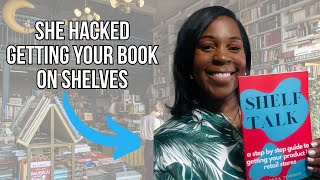
Roberta Towns explains how indie authors can pitch their books to Walmart, Target, and other major retailers. She covers pricing strategy, packaging that catches buyers' eyes, and how to build relationships with retail decision-makers. The conversation includes specific tactics for getting past gatekeepers and finding unconventional retail opportunities beyond bookstores.
What if you didn't need a big traditional publishing deal to break in and even dominate in retail stores? It's kind of odd when Amazon is like infinite shelf. It can store, you know, tens of millions of books to be thinking about. But wait, what if I got my book onto the shelf at my local indie bookstore? Or not. Even as we'll talk about any bookstores, but any kind of store, the truth is that retail still drives so much of the consumer economy. And even when it comes to books, so many books are bought and sold. And what I love about it is actually what makes it challenging. Yes, limited shelf space can be tough. It's not easy or overnight to get into retail stores. But once you're there and once you build those relationships, it's a moat. There can only be so many books on the shelf, which means that for the readers who are there, it's actually a bit easier to find yours versus Amazon or online. You're having to compete with endless new books flooding the shelves. That just can't happen in an in person retail store. And as we think about beyond the book and the future of publishing, these sorts of relationship oriented moats that intersect with the real world are going to be more important for authors like you to grow your business, whether you're just getting started or maybe making six figures a year. As an author, I think that you need to be really carefully thinking about your retail strategy over the next couple years here because there's going to be a lot of authors, indie authors in particular, who do really well in retail. And I brought on maybe the most accomplished and brilliant person to actually speak about this. So essentially Roberta, she wrote this incredible book called Shelf Talk. If you haven't read it, just read it. The ebook is like very affordable. And what makes it awesome is it's a crash course on how to break into retail. Like it covers everything, everything you need to know. So Roberta Towns is just brilliant. She has years and years of retail experience at a senior level. She knows what it's like to be a retail buyer, and she knows what it's like to help entrepreneurs starting all different kinds of businesses break into retail. And with Shelf Talk, her book, she helps you do exactly that. So the link to Shelf Talk is down below. I seriously just could not recommend it more. Today in this podcast, we're going to dive deep and apply what Roberta wrote in Shelf Talk specifically to authors and get her thoughts on creative ways you can break into retail and how you can structure these deals that you can get more sales and actually make Retailers love wanting to work with you because the more retailers love working with you, the more books they'll buy from you, the more shelf space they'll give you and the more retailers who will eventually come knocking on your door. So this is a great, great podcast. I hope you enjoy it. Let's dive into it. Roberta, I am so excited to be here with you today. I read Shelf Talk and was like, oh my God, this is just such an incredible book. That felt like it gave me a crash course on how to get any product into retail. For folks who maybe haven't read the book yet, and also for folks who might be confused about what retail is, could you first just share why retail matters in this age of E commerce and your experience, your background in it? Because I know you've have just incredible experience doing this.
Yeah, I mean, definitely. We're at an age where E commerce is super important for consumers. That's where they shop, that's where they explore and learn. But retail is still important because it's a place in which consumers already trust that they know that when they're going into these retail stores that the product on shelf is something that is actually going to work, that actually is a stable brand. You know, online there's a lot of fly by night brands. There's products that say they're going to do something and they actually don't. So it's place in which consumers can trust and it also validates your brand. So it allows that, hey, if the retailers and the buyers trust that this product is actually going to work and provide value to my life, then you know, I'm going to trust that I can have that as part of my routine also. It's just, you know, opportunity for when it comes to a brand that's selling online from an E commerce standpoint, you're gaining your profits based on every unit sold. So as a consumer goes online and shops, then you get paid for that actual unit. While in retail for the benefits of a brand is the fact that you're going to get an influx of cash based on that full order that the retailer purchases right independently. You're selling online, you sell 10, 10 re 10 consumers in a week, you're going to profit off of that. In retail, they may place an order for 5,000 units and you're going to get paid up for that prior to it selling on shelf. So that's also an added benefit when it comes to a brand actually being on retail shelf.
Oh wow. Yeah, that cash flow is huge. And I think the trust component you mentioned is so important. And when it comes to the retailer perspective, like, if I'm going to make a purchase order of, like, 5,000 of a product, what do retailers care about? And how do you know if a product's actually good for retail?
Yeah. So what they care about is that it's a product that fits the consumer's need. Right. The consumers that are already shopping their stores or consumers that they are looking to acquire, those that major in understanding if your product fits retailers and how somebody that has a brand can determine if your product is right, is actually going to the stores and looking in the section that your product would be sitting. Your competition, you know, what does that look like? Do they have products that are like yours? And then how is your product going to be unique and different? Because it can't be a same Z. Right. You have to make sure that you have a point of differentiation that is going to drive new consumers into store to purchase.
Oh, yeah, that makes so much sense. I have a friend right now who does scare mail. And it's like these scary letters that you are sent over the course of a year now, which is kind of. It's weird, but there's an activation box that he's been selling in retail and trying and actually been starting to get some traction for it because people are like, oh, I can see the box in the store, and then I get my first letter, and then I can activate the QR code for future letters. So at least it's unique.
Definitely unique.
I really like the idea, too, of going to the stores actually, like, being a customer there. That's. I'm sure you've gotten plenty of people who've reached out to you almost, like, blindly and said, like, oh, this is great. But it's like, have you ever been inside?
That's important. Yeah. You want to see, like, does your product fit in? What is the price point? Does your price align with customers? Competition? And if not, like, do you have a. A compelling story as to why your retail may be higher? You want to check to see, does your product fit on the shelf? So there's just so many great things you can do by just going to those stores and seeing how your product would actually fit in. And the consumers that are shopping, do they connect with your consumer base? Because it could be that your product is something for a person that's 50 and over, and this retailer is more focused on millennials.
So it just all depends a hundred percent. Yeah. Traditionally, like, in traditional publishing, at least, this whole retail world has been something authors have been abstracted from. It's like, you know, you show up to a signing and here's where you go for the signing. But the actual idea of, like, I'm now going to get my book into, like, Barnes and Noble, for example, or local indie bookstores is not something authors have had to do. But now that's something indie authors are taking on. And I'm curious, as someone who is an independent creator, very small business, working with retailers, what are some of the challenges and opportunities that come with that?
Yeah, I would say one is connecting. Finding opportunity to connect with retailers is always a challenge, right? So that's where there's opportunity for you to lean into. Places like trade shows. Those are important places that buyers are already there and their mindset is about what's new, innovative, and different that they can put in their stores. So, you know, that's a great place. LinkedIn is another one. So, you know, you can go on LinkedIn and you can go and search for buyers that actually work for those specific retailers that are part of your kind of hit list of retailers that you want to be in. You can reach out to them. You know, I get messages all the time. You can reach out through messenger and pitch to them and talk about why your product makes sense to be in their retail store. So start to have that early engagement.
And conversation that's so interesting because when you. I feel a lot of times when you reach out to someone cold like that, this sort of instinct is like, they don't want to hear from me. And I'm sure you've gotten some good and bad pitches, but in general, like, what would be your advice to someone actually making that reach out? Like, is the message short and like, to the point, or do you build a relationship first, not even talk about the product as much? Like, what has typically worked when you're actually making.
Yeah, working with sellers, I probably say not super long, but focused on your story and the why it's unique and different to the set. Reaching out to say, can I send you samples? Attach some sort of picture or visual of what your product is too. For a buyer, it's an instant thing to look at to say, does this even make sense to continue conversation? So I would recommend that sometimes I'll get messages in my den. And for me it's like, what's the story? What's it about? You definitely want to have some sort of early connection and story alignment versus just sending a picture of your product.
Imagine you go into the store and there's an empty shelf Space, just slide it in, take the picture and then obviously pull it off. Yeah, I've seen that. Oh no, that's awesome. So when you are actually getting these messages or at a trade show and different places you'll be interacting with solid as a buyer. When do you go? We have to stock. This is great. Or I guess vice versa. Why don't you like. No, not this one.
Yeah. So traditionally what happens is that you have your first interaction with a buyer, whether it's through trade show, whether it's LinkedIn, whether you can also go on retailers websites. And if you scroll all the way to the bottom, a lot of times there'll be a place in which you can submit your products for consideration. And so the next steps off of that, if a buyer says, you know what, this makes sense, I want to learn a little bit more about it. You'd have like a formal pitch. And what that looks like is basically it's either going to be a virtual pitch or you come to the retailer's business and you talk, you have a formal pitch. You're going to talk about like your product, why you started it, marketing, so how you're driving consumers today and most importantly, like how you're going to drive consumers to these retailer stores. Right. Your assortment and of course providing samples. And then from there they go back to say whether it makes sense to put in the assortment or not.
Yeah, that makes total sense. And when it comes to actually determining things like price point and even things like packaging, oftentimes we're like, we know what the product is, especially as creators and start with our stories. But the packaging and price point could be like really difficult parts of it. How should we go about that?
Yeah, I mean, for pricing, like I said, it's definitely important to go to the stores to understand what the price point and ranges are that already exist in the store. Because that is consumer mindset of how they like what they've already focused on spending. For a product that falls within your same similar products. If you are already selling online at a higher price than what you see online, you're going to want to be able to speak to why consumers are going to buy your product that is priced higher than everyone else in the set. Whether it's because you already have a huge consumer base that you know you can drive to stores and they're used to spending that amount. Maybe you have a unique ingredient or a product that is truly different and sets it apart. And then you want to have confidence that if you price your product higher that you're actually going to sell it. Right. So you want to look at those and really understand where you fit in and feel confident with whatever retail you're suggesting is going to be good for consumers, but it's also going to be good for you and your profit.
Yeah. So interesting. And it's funny because the retailer seems much more aligned with the consumer than maybe one would think at first instinct, it's like, oh, well, they just want the most expensive thing to throw in there. But it's like, no, you're really thinking about what's going to be the best price point for the consumer. You have to win out competition over other retailers as well. Thinking customer first is the way I love it. So a lot of authors, we have physical books and products that could be sold, but there's also digital things that authors do as well. Whether it's art, I've seen so much character art that people do. Could be an audiobook as well that goes along with the physical product. I'm curious if you've seen these sorts of physical plus digital bundled together, if that's something that folks are open to that might actually increase the perceived value and price point. I'm curious what you've seen in terms of creative things in there, or even if you haven't seen it, how you think a retailer would approach that.
I have seen, for example, where a consumer can buy a product in store and then buy book via an E book that supports it once you get home via like a QR code. So I have seen that opportunity. I think the most important thing is, like, if you have this bundle in which you want to pitch that it's clearer in the consumer's understanding of what they're getting. However you communicate and showcase that, whether it's information via QR code or opportunity to add maybe a sign in store that sits next to your physical product that talks about the support that they're going to be getting from an external standpoint. You just want to make sure that you're clearly being able to communicate that and define that for the consumer.
It's so interesting because I feel like a lot of the sort of interesting retail opportunities that I get excited about for authors are, you know, when we think about retail, we all know bookstores, you know, if you're writing romance, are there like candle shops you're able to be in? That's like a whole segment of stores that you might have, like, less competition in, but also, like, could be very valuable to the consumer. So thinking about how you can, like, almost even Two is along those lines maybe even work with the retailer to say, hey, like, could there be a bundle with like existing products and a book? Because a lot of times the book is like kind of can be like an add on to a different experience. Like in horror. I know, like there's a lot of horror shops. There's escape rooms for like mystery. Retail's like a lot bigger than. I mean retail is almost everything. Yeah, right. Like it's wild. Okay. I love it.
Yeah. No, and to that I think that's. I love that you said that because I think that, you know, a lot of people when they think retail, they want to be a big box immediately. But to what you're saying, there's so much opportunity to find maybe more local places, smaller retail chains that you can start in to understand like how your product fits in within that set, how to drive consumers to those stores. Understanding logistics and like really figuring out how to win in retail before you look to expand in a bigger play.
And is bigger plays? Cause I mean, everyone's dream is like to, you know, be in like, you know, whatever Walmart. It might not be literally Walmart, but like, you know, to be in the stores that are everywhere. Are they looking at like sales history in other stores? Like the bigger you get, you know, are there like other requirements in addition to just like the product and the price and all that?
Yeah, I mean it honestly, it depends on if you are selling D2C and you're performing exceptionally well there and you have a strong community that you can talk about that. It's going to, of course again, drive consumers to store. You don't necessarily need to have like smaller. You don't necessarily have to have sales and smaller retail channels to support that because it's all about your product and you being able to speak to how it's going to be incremental to their set. A lot of times when it comes to bigger retailers, they actually want brands that aren't in other retailers chains like big ones like you can be, you know, like I said, it's great to start with smaller ones, but it's opportunity because retail is competitive. Their most competitive place is E Commerce. And so the goal of having brands in retail stores is that you're attracting those consumers to come into store. And retailers are selfish. They only want people to come to their store to get your product. That's actually a win. If you're not in, you know, a lot of stores before you're. You go into maybe a Walmart because you know that's actually a added bonus if you can say that you're going to have exclusivity to sell your product in store.
Oh, that's so cool. Yeah, that's such a. To see the retail buyer mindset on that because that's not, I think someone's instinct is an entrepreneur. You kind of go into it and you're like that FOMO or like imposter syndrome. Right. Like, I don't belong here.
Right.
But you're, you're kind of saying actually the fact that you're not here or anywhere else by proxy is, is actually an advantage. That's a really cool takeaway.
Yeah.
Now when it comes to actually thinking about the partnership you make with the retailer, I know in shelf talk you dive in a lot into like how to think about. You walk. I was very helpful thinking about, like what can go wrong. The contract. I think about it, it was really, really great. But at high level, what actually makes a good or great partnership between, you know, a supplier and a retailer?
Yeah, I would say one is making sure that once you are on shelf that you have a strong marketing plan that starts from day one. So you don't want to believe and trust that all of your sales and consumers are going to come from the people that already shop those stores. Because again, like you even mentioned, there's everything in those stores. Right. How are you going to actually drive consumers. Consumers to your product that's on the shelf. So, you know, a lot of people believe that, oh, I'm in Walmart. I'll just take Walmart's consumers and I don't have to do anything. But you actually still have to really have a plan on how you're going to attract the community that already shops you, that you already have a relationship to now come into the stores. So that's number one. You don't want to sit and wait a couple of months before you have a plan for that, but yet you're implementing it from day one. And then I would say just making sure that you have communication so you want to be able to talk to your buyer, give them a heads up if there's any challenges like you're going to be delivering late or you have a new flavor that's coming or a new product launch that's happening, a new book that's coming out, give them early awareness and let them kind of follow up on the journey with that. So just consistent conversation and communication, knowing where you are from a sales perspective and following up to say if you're not hitting the mark what can you do? Ask them for suggestions because they have so many brands that they work with so they can give you some great insight. And then lastly, I would just say not over committing, so just making sure that the things that you're saying you're going to do, you really know that you can actualize.
Yeah. You don't say, hey, we're going to ship you 5,000 books and it ends up being 500.
Exactly.
Yeah. I can only imagine the disasters that on the retail side, that's like we have all this empty shelf space now.
Yeah. And for the person that's in for the actual brand that's shipping it, or you know, you're shipping your books, you're going to actually get charged. So there's a fee that's going to be assessed to that. If you say you're going to deliver something and you don't. Right. Because that's a PO commitment that you're going to deliver and you don't deliver on time.
Yeah. So very, very. You know, that's another reason actually starting small is probably a great thing for most people because once you get to the big purchase orders, big commitment, big responsibility, training wheels can be nice. I also am wondering when it comes to, when you are the retailer, like in addition to just driving traffic, is there anything else that you've had partners and suppliers do over the years that's just made your life as a buyer easier that'll hopefully make you want to buy more from us?
Yeah. I think the biggest thing is just making sure that you are aware of performance and driving that. So being the owner of driving your sales, whether that is thinking about things externally you can do to drive consumers in and things you can do internally like promotions, book signings, like you talked about in store opportunities that you are leveraging what you can from a financial aspect so that you're consistently doing things to drive sales.
That makes so much sense. I've seen, I don't know if you know the YouTuber Ryan Trahan.
I don't.
He's got this like. What is it called? It's. I'm forgetting the name of it. Oh, man. It's a candy he has in Target.
Oh, I know you're talking about.
He's done like these huge YouTube shorts around, like just driving traffic. He wants to become like the number one selling candy in Target. So he's been having the leader. I mean, it's been a huge deliberate push because Target's the one retailer there.
And.
And for a time when I was at Beast Feastables was a very similar thing where go back to kind of your earlier point on like the E Comm versus retail point. Feastables found that direct consumer literally failed for that product entirely. Because when people bought chocolate, their buying journey is not to go buy it online, it's to go to the store and buying other things. And then you go, oh yeah, I'm hungry. Like, the chocolate looks good. So you're not buying it online, you're buying it only in person. So then it's like the whole buying journey changes. So there's some products that are really built for in person retail and aren't even designed for E Comm. And that's actually like, it's a really good thing authors can think about. Then is there something that you're able to create from a format perspective where it's more attractive for it to be in retail versus being sold online at all? Because then you give customers like the like right now you can't buy Feastables online. Really. You have to go in person. And that obviously makes the marketing so much easier because I find a lot of authors, they'll be like, oh, but I want to sell. I'm already selling on the other online retailer, Amazon, right? They want to eat away the organic discovery there. But it's like also, if you're not driving traffic to Walmart or wherever else you are, you're also going to be losing out on that channel. So like, how do you split both? Whenever you split customers between places, you just cause confusion. So there's, there's a world in which you think about like truly product first. How do you create a whole new marketing channel for yourself around retail? I don't think there's like an easy answer, but it's interesting to see what some of these top creators are doing already. And I think it's a lot that can even be adapted by smaller folks, like, oh, well, if you're in town. And I mean like a simple thing for books is like retail is the only place to get signed books. That's super simple, but also like valuable. Like, okay, I'll go to the store to get a signed book versus buying online.
Or if you think about how like a lot of, you know, like Taylor Swift, where she has, you know, specifically at Target, an extra thing that you can buy in addition to the album, it makes you go there to purchase it. So thinking about what are those added items that you can put in that retail store, that makes it a different experience for consumers, but also makes them drive to go get that versus buying it on a website or an Amazon platform.
She literally, as the day of recording, has all of her music and everything that's hers now. She bought it all back this year. So I'll great for her. Hopefully no artist has to go through. She's hopefully setting a sort of new, new precedent there.
Yeah. But I do love how they create like these moments that are different in regards to your experience. And I feel like that's easily translatable when it comes to books and how you create that added value that's going to drive consumers to that specific retailer as well. It gives that opportunity like I kind of talked about earlier with an exclusivity message when you're pitching. So you have the book, I have this added value target. You're. I'm only going to give that to you and you can give something similar to someone else even and plan it out accordingly, but have a different kind of experience per retail channel.
It's genius. And you know, I'm thinking for authors, like one of the sort of things that makes a lot of sense is special editions. Like on Kickstarter, people are selling these special editions after they do the Kickstarter. A lot of authors I know, like, okay, I'll do the next special edition. But it's like once you take that product, you can now show it's had sales, have the print run and now you have this print run that you can now take extra books from the print run and say, okay, this special cover with the hard foil, like beautiful book is like only going to be in retail and only in these book retailers. And you could do different special editions retailer. That would be very attractive, I think, for like everyone. When you get to see the product in person that's special, it makes you more likely to buy it versus online. Like an image only does justice so much to when it's like you feel the COVID and it's like embossed and has like the gold on it.
Yeah. What's cool about that too is that like for some people, they're going to want to collect all of them and.
Then that becomes a sort of like other thing you can do, which is you reward people. Like take a picture with all of them and you know, whatever you want to do, send them an extra postcard or. I'm already reimagining how authors could approach retail. If we do this right, it could be really fun.
Think about what are those places outside of traditional retailers that your book can be sold and adds value. You can have less competition in Space. And you can test out all of these cool things to find out what really works for your brand and your consumer base.
Yeah, like you could do a candle making book night in collaboration with a candle shop. And you could do even art. There's art. I mean, there's. So, yeah, when you think about it like that, it's like, oh, everything you. The next time you gonna drive, I guess my challenge would be like, what's what? What's one store you could find in every drive you go to? Because I bet, you know, you go to the store, you go to work, whenever you're gonna pass something that's like, oh, wait, I wouldn't have thought that was a place in my book, but if I change my mindset, it actually could be. And actually, this is kind of weird, but let's say I actually am driving in my car, listening to this podcast, and I. I turn and I look and I see a store. And maybe not in this moment, but you might have some free time and be like, oh, they're open, I'll run it. You talk about trade shows is like just walking in person, especially if it's a small shop. Is that like wild or. No, that's allowed.
That's completely allowed. And that's a great. What I love about that too is that, you know, trade shows, you're definitely going to be able to connect with, you know, those bigger retailers and people that have chains, you know, in a bigger way. But the opportunity when it comes to local and driving by and seeing that store is you can go in and have like that immediate one on one connection and conversation. A lot of people that, you know, start off and getting into local retail, that's what they do. They go into the store with their product, with your book, and you ask for a manager and you just start pitching right there. A lot of people, especially, like, I know with Whole Foods and they have a lot of regional assortments and they'll go into regional stores, I mean, and just ask for a manager because they actually are part of the decision makers. But yeah, I would definitely suggest that, you know, have your books in your car at all times and when you're driving by, go in there and pitch your idea. And if it's something unique and different, like we just kind of brainstormed on, I think that's even more compelling.
Yeah, and the why, too, like, that's so important. Like your why, your story. Is there actually any, like, insights you have on, like, you know, sometimes. Sometimes we have a strong why, sometimes we have a Strong why but can't see it or don't know it. Is there any like sorts of tips or tricks you have when someone's trying to like distill their story to someone?
Yeah, I mean I would probably just say just really sitting to understand why you wrote the book, what was the reason as to why, what is the motive and consumer that you're trying to reach and what are you trying to say? It really just starts with that. It's honesty, it's transparency and it's the core of why you even wrote it.
Yeah. Because ultimately you, the retailer, build trust, consumers, you have to build trust with the retailer. That has to start from an authentic place. Yeah, I love it.
And that's what makes, honestly, that's what makes retailers want to have indie brands in their stores, is because everybody's story is different and it brings a certain connection for consumers versus big box brands or bigger products that don't have a real connection piece to them.
Yeah, because the retailer is going to. You get connected to a product and a retailer, the retailer wins because you're now more connected by proxy to the retailer and you're going to want to come back to discover new things. That is so awesome. And the incremental point too, which I know you highlight in your book, it was one of like the sort of takeaways for me. I was like, wow, is really important. Like not being competitive with something else too is like mind blowing. Which. Let's talk about your book because I absolutely loved it. How did you come to write Shelf Talk? What inspired it? Because it feels like kind of the. I looked up books on retail, like this was like the best one. There was nothing else even.
Thank you.
I swear I'm buying this. It's great. How did you come to write this book?
So I've been in retail in some capacity for over 20 years and in buying specifically for over 15 and what I've seen over that period of time is really a big difference between indie brands connecting with retail buyers, getting on shelf, winning and being successful versus like the big box brands that already have a strategy. They already know how to win. They know how to get in front of those buyers. And so with that big difference, I've thought about how can I help those indie brands to get a little bit more equal playing field so that they're educated and really understand all of those things, how to find retail buyers, how to connect, how to pitch properly and then once you're on shelf, like how to actually perform well and be successful. I thought, well, Let me write a book. And just from a buyer side side of view, which I didn't see a lot of that out there, like really showing from a buyer's perspective, like, what are the things that make a winning brand? And really just talking about and giving some insight, some tips and steps that can help indie brands create a proper retail strategy.
I love it. And honestly, like, there's no reason why if you've listen to this podcast and you're like, this is really interesting. If you want to dive into retail more like before you stop and walk into this, the next store. Although that's great too. Just read the book because it's really one of the most actual books I've had in a given topic. If anyone really listens to the podcast, you know, I read a lot and it was just like one of those things. You're like, oh, I understand this so much better than when I just, when I, when I picked it up. That's really awesome. So you also have a podcast, right, where you also.
Yeah, so. So after I. So I wrote the book in 2019, published, self published in 2020, and then just over the course of the couple years, I'm like, what's a bigger way that I can communicate and teach people what's in my book? If I'm showing the side from a buyer's perspective, it would be cool if I could get founders to tell their side of the story on how they were able to build a brand and get in retail stores. My podcast is called Shelf Talks and it's where I interview female founders that have not only launched a brand, but have successfully gotten their brand into retail stores. And it's just another great place to get a lot of tips when you're building your retail strategy.
Love it. No, that's amazing. And I. A challenge for folks listening. There's so many incredible women authors I know listening. You, you will be a future guest. You listening because you're going to, you're going to crush in retail. I, I love it. That's. It's so great. You've carved out a really unique space. And seriously, I've listened to a lot of industry podcasts in our industry and I'm really grateful for you bringing your perspective to us. Now before we end it off, I'm curious if you have any like, last tips and insights for folks who are looking to break into retail. If there's anything quick that we didn't cover and then of course share with us explicitly just so everyone can hear it. The URL of the book at the website so we can head on over there.
I think the biggest takeaway is like, don't think because you're a small, a small brand and just starting off that you can't be in retail stores. You just have to make sure that you have a true plan and direction strategy on how you want to get there. Some people think, oh, well, you know, I have this book. People really don't know me. Like, I'm never going to be in stores. But there's always opportunity and people are always looking for differentiation in their assortment. You just have to make sure that you're choosing stores that make sense for you and the consumer that you're trying to reach and that you're able and ready to support them from a marketing perspective, from a replenishment perspective and all of that.
Absolutely incredible.
Yeah, yeah. And then for Shelf Talks, the Shelf Talk book is of course available Amazon as well as you can go to my website, shelftalkswithan s.com and you can support. You can see the book and purchase. It'll actually just link you back to Amazon. But there's also some blogs in there on people that I've interviewed on the podcast if you want to read and you're not a podcast listener, which everybody on here is a podcast listener. But if you wanted to reach and get some tips, it's on there as well.
Amazing. That'll all be linked in the description as well. Which, by the way, Shelf Talks is such an incredible domain. I'm glad you got the dot com there. I have a guy who appreciates a good domain. Oh, that's great. Especially because, like, obviously Shelf Talker, right? Being the sort of. I'm sure you're playing on that. It's perfect. Great branding, everyone. Good product titles to go a long way. Well, this was. This was amazing, Roberta. Thank you so much for your time and yeah, no, this is great.
Great. Thanks so much.
And that was it for this episode of the podcast. Thank you so much for listening, Roberta. You're amazing. So thank you for coming on. Seriously didn't check out Shelf Talk. I mean this like, so genuinely. It is a great book. You need to check it out. And if you want to check out more books from me, I actually created a list. It's called Michael's List and it's a list of 30 books that I think you should read as a storyteller. 30 great books. You can find that list and also the top tools I recommend to indie authors. You can find all that linked in the description below. I hope you all have an amazing rest of your day. Seriously, just so grateful to be able to do this. I love this podcast and I'm excited for more great episodes to come. If you can, I'd love if you rated it on Spotify, rated it on Apple Podcasts, or subscribe to the YouTube channel. And in the meantime, don't forget, together we are boundless.