How to Scale Your Superfans without Selling Your Soul
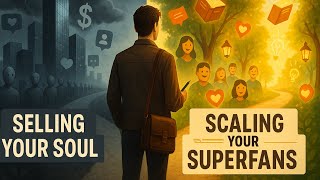
Michael Evans talks with Johnny Truant about building a devoted reader base without chasing algorithms or burning out. They contrast rapid-release strategies with deeper fan relationships, exploring how indie authors can stay true to their work while still reaching people who actually want to read it.
Grow your superfans without selling your soul. It can sometimes feel like an impossible proposition as an author. The hustle and bustle of needing to write a new book every month, to constantly be at the top of the charts, to be doing all the different promotions, to be doing Amazon ads and Facebook ads and social media and the truth, There's a better way. Or maybe a better way. It could be a better way. It potentially might be for you. And that way that we're learning about today is called being an artist and author. Johnny Truant is coming on to chat with us all about it, and Johnny is amazing. I have been listening to Johnny now for the better part of a decade. I was listening to his podcast back when he was doing it with Shawn Platt and Dave, and I just. He was one of the people who got me into independent publishing and one of the people who showed me this is possible and completely changed my life. So I want to just, first of all, say what a cool moment. And he came on the podcast. That's like a geeky, cool moment for me. And second of all, like, I hope you enjoy our conversation. He currently has a Kickstarter going on right now all about being an artist and author. So you can check out the Kickstarter be linked down below. And I'm super excited to get into this pod. This conversation will be a lot of fun. So, yeah, let's just dive in and hopefully by the end you'll learn something key, which is how to approach the author world and your author life in a way that works better for you. Johnny, I'm. I'm very excited to be interviewing you because I wasn't that long ago. I mean, maybe it was close to a decade ago now, but when I was, like, listening to your podcast with the guys and actually like, getting into self publishing, and you were one of the people who I looked up to, still look up to, and who helped set me on this journey. So I, first of all, just want to say thank you. Yeah, no, like, you're one of just the sort of really great souls in this industry, which there's plenty, but there's also not enough of. So we're. We're very lucky to have you. And for those who might not be as acquainted with you as I am, tell us what has been your journey here in this storytelling world, because, I mean, you have done. You've had many arcs at this point.
Yeah, I have. So first of all, thank you for that wonderful intro. The thing you said about being a good soul is like, the Best flattery I've ever gotten. That's very kind to give people the rundown on what I've done. So, circa 2012, I was. I had been a writer almost my entire life, but that meant that I was putting down words on paper or later on, you know, hard drive. I did literally write on paper back in the day, and I've always wanted to do that. This was something that I came to very joyously. Like, I just wanted to create it. And there was no thought of money at the beginning. And then I started to get to the point where, like, oh, I could maybe try to pitch a novel. And I did all this Writer's Digest sort of stuff that, you know, you get an agent, you send query letters, and you had to physically print a letter and sign it. And I won't go into all that, but I did go down that path for a while. And it was before digital self publishing was a thing. And so it was very, very difficult. And people do break through, but I never did. I just collected a bunch of rejection letters and then started a degree in molecular genetics, of all things. Nothing related to writing. Right. I have degrees in molecular genetics and philosophy, and I actually started a PhD in genetics before realizing that it wasn't for me. And that's a whole story too. But I realized, okay, well, let me go back and find something to do. What can I do? I can write. So I wrote articles and things that people would pay me for, But I eventually wanted to write a novel. And that's when I ran across my oftentimes partner, Sean Platt. Cause Sean and Dave were writing their series Yesterday's Gone in the new digital self publishing world, which was pretty new, you know, this was Hugh Howey was still super active at the time. He's disappeared a little bit, and good for him. It was the days of John Locke and Amanda Hawking. And when I saw that you could make this system work on your own, I wanted in. And so we started the self publishing podcast, which ran for 10 years in various iterations. And that's when you ran across us. And we wrote a book called Write, Publish, Repeat that attempted to codify that into some logical form. It was super verbose, but people loved it. We also ran a Smarter Artist Summit, which was a conference for four years in Austin. And we did a bunch of stuff in the field. So anyway, I was kind of known early on in that way and wrote books, just a ton of books. So I used to publish a million and a half words a year, which is why today and I know this is skipping ahead a little bit. Like people are kind of like, oh, you don't like rapid release. I thought you were in rapid release. And I said, no, I released rapidly. That's different from the philosophy of rapid release. Fast forwarding through all of this. Do you want me to get into where the story really begins? Because I'm just monopolizing the mic.
No, no, no. Actually, let's get into. Story begins in a moment. But I think there's something to parse out here. The difference between rapid releasing the mindset and releasing rapidly. You hinted at what the difference is, but be explicit. What is the rapid release mindset in your eyes and understood that that's something that many authors follow myself. I did and it burned me out. So I'm fully on board with that might not be the way for everyone. What do you see the rapid release mindset as? And then what is this notion of what's the nuance in rapid releasing or re. Releasing rapidly? How is that different?
I'm trying to train myself to give a caveat before I do this because I don't like rapid release at all. And so if I don't give the caveat, then it looks like I'm crapping on people when I don't mean to. The problem that I have with rapid release, capital R. Capital R as a philosophy, as a way of releasing, and I'll explain the difference in a minute, is that it's usually given as default for most people, when in fact a small minority of people actually suit it. And even those people, it's hard to keep up the pace that it requires for a sustainable period of time. It has to kind of be a flash in the pan for a few years maybe, and then you have to do something else because most people can't rapid release for like the rest of their lives. So the difference that would be that rapid releasing rapidly, like what I did just I published a lot of books, is. Was an attribute of and a consequence of the way that I write. I am naturally in flow when I write fast. I fall out of flow when I write slowly. And so because I do that, and because I was working mainly with a partner with Sean Platt, is how I've written most of my fiction. We just, we had a lot of books and we wanted to cover a lot of genres and tell a lot of stories. And so we put them out quickly. And rapid release is more. Is like a philosophy. It's like this is the way that you play the Amazon algorithms, which are what's going to do the majority of your book selling for you. And there are rules that go with rapid release. It isn't just releasing books quickly, you need to release similar books. If you write a space opera with a grizzled captain and a rowdy crew, you'd better release another space opera with a grizzled captain and a rowdy crew. Because you're serving the exact same section of the audience and the machines are able to better serve the better you match what you've already done and the needs of a specific niche in the market. So it tends to be a written to market, very quickly produced methodology that puts quantity first. Now this is where I gotta be careful. I don't mean that there's no quality. I mean that quantity comes first because it has to. If you don't release a book every three or four weeks, that system breaks. And there are so many people that naturally go slower or want to go slower or want to write in different genres or whatever and they can't. So even if you can produce quickly like Sean and I did, we didn't write in different, all the same genres. We wrote weird books like Unicorn Western, which. What is that? That doesn't conform to a market niche. So it's more of a philosophical difference.
Yeah, no, no, it makes total sense to me. It reminds me of. I'm sure you've, you've gotten this before, but there, you know, when you Google Johnny Truant, there's a, there's a musician Johnny Truant as well.
Yeah, it's a British hardcore band.
Yes, I'm. I'm sure you, you know that whenever you Google yourself, it's like, okay, they, they are tailing some of this space. It's no way. But why I bring them up outside of just that one note is there's this sort of music industry dichotomy that we don't really have in how we think about indie authorship that I find very interesting. And it's exactly what you're describing. And it's the difference between the industry musician and an indie musician. Which industry doesn't necessarily mean you're published by the record labels. Think of indie as more grassroots. So the industry is basically doing everything to optimize for Spotify streams. And when I say Spotify, technically that means all the different apps, but Spotify is the biggest, just like Amazon or maybe not good friend, but our acquaintance. So yes, you know that group. And they're really trying to climb the charts to eventually sell out. The only way you get it in that game, it's not necessarily a rapid release of song. It's having a huge hit that you can sell out big stadiums, which is a different but similarly brutal game. But then you have another group of musicians. What are in the framing that I've heard it described as indie, but I think of it more as grassroots. It's just because indie's confusing, as we call ourselves in the opposite, to think of it as industry versus grassroots. And they're selling albums direct on their site. They're not worried about the Spotify streams. They're playing in the small venues. And they can still be doing really, really well. They're not going for the top the Spotify charts. Not that anyone's gonna deny it if it happens. So maybe that analogy is helpful for folks because we all kind of know that grassroots band that plays in front of maybe a thousand people at a local venue. And I think that I see your sort of. I see the ethos change. If that band happens to. Or in this case you as a storyteller happen to produce a lot, so be it. But there's a difference in terms of the intention that's really important.
And it's not better. I like my approach for me and for people like me. And I think there are a lot of people like me, but I gotta be careful. I don't want to imply it's better, but I almost think I'm glad you made that comparison because I feel like they're almost two entirely separate disciplines. It's like. And I don't. Again, I don't want to intention unintentionally disparage, but like Pulp has a proud tradition, right? It does. Like, that's a lot of great stuff came out of Pulp, but Pulp is like different from. I don't know what you like high, not high literature. Because I don't really. I'm not really into that either. But like the bigger books or whatever, the ones that are just a little less churn and burn. I'm be trying to be careful here, but it feels like what we're doing, what a lot of the industry is doing right now, is kind of akin to that. That they're solving a puzzle and they're. They need something. They need fuel for that machine. But it's really like they're trying to solve the machine. They're like, how do you know if you go. If anybody's gone on. On YouTube and looked up videos on how to rapid release or just be an author, he. You'll get things on the sidebar that are like, how to make a bazillion dollars on Amazon selling widgets.
Low content books, right? Low content, or not even books.
They'll be like, you know, anything, like affiliate things. And what that says to me is it reminds me that that approach has gotten conflated and mixed in with you can sell anything. You can sell anything. You can be like somebody who works on Arbitrage or you can be a creator who's just like firing out stuff. Nothing wrong with any of that. But it's fundamentally different from what I think most writers get into the game for, at least traditionally. Traditionally it was like, I have a book, I have a story I want to tell. I want my kids to be able to read this. I want people to fall in love with my prose. Not I need to work algorithms in order to play this very specific mechanistic game. So I almost feel like we should be going to two separate pools. Not that either is preferable, but they're different pools. So I feel like rapid release people should be going in one direction and the people who want to do other stuff should be going in the other direction.
I couldn't agree more. And I super appreciate the nuance that you're adding and being careful because there is no one right way or wrong way. But I too have seen in the YouTube ecosystem, quick parallel because it will help people. When I was at Beast, the paradigm there was views maximization. That's literally the paradigm. So it's like, how do we maximize views? But that doesn't mean maximization of fans. That was one of my biggest problems when I was there was understanding that because we're maximizing views. There's a con to that philosophy is that you're playing a short term game and the long term game of actual fan retention isn't necessarily what you're optimizing for. And that's something the biggest creator in the world overlooks and was something that I like tried to drill home when I was there. And I think we see this in our souls for some of us, some of us are very happy doing that. I mean, you can be unbelievably successful and make great impact. There's nothing wrong with what someone like Mr. Beast is doing or the Mr. Beast equivalents in the author world. Because we're not going to call anyone out in this industry. Totally everyone's wonderful, but obviously that's not the path for everyone. So describe to me this whole notion of, okay, there's this sort of other path we could go down that has been not talked about a lot that you are here talking about. What does this path look like? How does one begin to approach it? I'm guessing step one isn't spinning up the Facebook pixel and running Facebook ads. But, like, what?
You're right, it's not step one. I think one of the things that I like to say about this is that I am not. There's nothing groundbreaking. It's not like I've discovered a new thing. I've run across nonfiction books where they come up with, like, a very simple principle that they're kind of owning, and then they capitalize it and make trademarks and call it a system. And I'm kind of like, that's just a fact of human nature, dude. Like, you can calm down on that. And that's kind of what this is like. I call it the artisan author. But I've heard Joanna Penn has been using artist and author, and I don't think she got it from me. Right. Like, I think that's just something that's out there. Kevin Tomlinson talks about being an artist and author. So it just means. And the ideas behind it are not groundbreaking. Like, you could put it on the back of a napkin. If we were hanging out together and you were like, okay, I'm not going to talk to you again for a while. Tell me everything you know. But I only have the back of a business card. I could write the important stuff on there. And it's basically, you write the books. You write good books that you want to write that speak to your soul, and you sell them to the right people who appreciate them and are willing to pay a full price and a fair price, meaning you don't have to give it to them for free or for 99 cents. Like, they're willing to pay what the book is worth. And when you look at it through that lens, I think that this process of, like, if you're in rapid release, if you think that's the only way to do it, if you're feeling burnout, the process is not learning, it's unlearning. It's saying all the things that I don't have to pay attention to so that the rock solid, sensible business principles that have always applied since the dawn of business can kind of come back to the surface. Does that make. That's prelim. That's not really an answer.
It makes sense. And now I want to go back to where we started with this, which is we were. You were talking about this sort of moment where you went from. Right. You will you release, write, publish, repeat. Obviously this is something that it's almost, you know, one of the canonical titles, especially at the time in the indie community. And it's something that I think many, many folks listening have potentially read. And now from there, what happens next in your arc to bring you from write, publish, repeat now to artist and author. Not that wasn't always who you were, but what happened because you weren't articulating this sort of mindset in this language back then. You had it, but you weren't using these words. So what happened in your journey between then and now?
So I kind of think I've always been an artist and author like you indicated, because if you look at my history, my first three books were basically autobiographical. Clerks in a bagel deli store story that was just funny. And then fat vampire and unicorn western. Like none of those are genre conforming. So that was kind of how I always operated. And because we were able to produce quickly and we wrote a book called Write, Publish, Repeat, which by the way was meant to say persist, keep at it, keep publishing and build a catalog. Not abandon everything just to get as much as you can out there. But then I kind of disappeared from the public facing spotlight for a while, for about five years, ending in about 2023. So I would say 2018 to 2023, I was just quietly writing. I wasn't being an authority. And then I went back to 20 books, which was where we met, and it was like so much had changed. It was kind of like when you don't see somebody who's like a teenager for a few years and then suddenly they're huge and you're like, who? Time has passed because I'm not seeing you every day. And that's the way I felt about the industry. Whoa. A lot has changed in my absence. And it felt like everybody was just a little afraid and a little nervous and a little overwhelmed because they hadn't figured out the new system to, you know, work the algorithms just so or what was the new advertising platform of the day? And oh my God, I'm going to be left behind. And by the way, can we mention the tacit assumption that you need to be a six figure authority to be valid in this world and do you know the stats? It's gotta be like 0.01%. Yeah, it's insane. Like most authors don't make any money and yet this is positioned as like the thing you need to get, otherwise you're pointless. So while I'm in this atmosphere, I'm Going, man, I don't know that I want to be here anymore. Like, this isn't my environment anymore. I don't know that I want to keep publishing books. And that's when I actually talked to Joe Penn and she was telling me about some of the stuff she was doing. And I started to realize, like, oh, so there are some of us who don't want to go in this direction. And meanwhile, there are readers. I don't know if any of you have talked to readers recently who are like, man, I just. I'm not looking for that same old stuff. I want something new and interesting. And I think these are the people who buy vinyl records. I think these are people who shop at farmer's markets and get their beef locally or whatever. And it's like they have this artisanal mindset where they want to know the creator and they want something that's different and they want something that feels kind of handmade or special. And so the more I thought about that, because I do have a little bit of people know me a little bit in this business that when I came back next year, when it became Author Nation, I pitched a session called the Artisan Author. And they must not have thought that it was going to be that popular or that I'd been out of the spotlight for a while because they gave me just kind of an average sized room and it was stuffed like they were. They were sending people away at the door and it was all about this. And I had people for the rest of the event thanking me, which was very gratifying, but also saying I needed to hear that. I kind of didn't know that there was an alternative. I kind of didn't know there was another way to do it. And so after getting that reception, it was like, yes, I want my book to blow up. Yes, there's a Kickstarter. I want to make a lot of money on that Kickstarter. Let's get that out of the way. But that said, I want to be able to help. Like, I have a little bit of responsibility. I wrote, write, publish, repeat. And I feel like I want people to know that there is another path if you don't resonate with the way things are going.
Yeah. So when it comes to that, those fans you're talking about and these people who are. Because it almost goes, there's this sort of. To be an artist and author, there has to be a sort of people who want to invite artists and authors into their life. And you kind of started to profile who these folks are how do you start to find people like this? Like in essence, to be an artist and author, you have to first accept that it's possible. And accepting it's possible almost first means like, oh, there's people who are willing to pay us for things that aren't just like free books in ku. Right? Where are these people? How does one find them?
They're everywhere. And that, that's part of. So I talk about this paradigm shift. I wrote it up in the book, but I've talked about it in an article. If you go in saying, okay, well I'm ready to do this, I'm ready to be an artist and author, I'm ready to charge more for my books, I'm ready to get crazy. But you don't shift. The paradigm in which you're working will not work if you just say, oh, I'm just gonna charge more and you just go to Amazon and price your books at 99 cents. Or you say, I'm gonna go wide and I'm gonna get out of ku. By the way, KU and rapid release, not the same thing. You can be in KU and be an artist and author and vice versa. That said, the reason I say they're everywhere is that we as a community of self published authors have myopically focused and this is a generalization, but I think that it's a generalization for a reason. On Amazon ebook American buyers in Kindle Unlimited usually. So there's a lot more out there. You guys like, it's so weird to think that if you combine Amazon only a lot of people don't shop on Amazon. I have talked to authors who don't even know that self publishing is a thing. I don't even know like those people are out there. So believe me, the readers are like a lot of people only go in person to buy books. A lot of people only go to conventions to buy books and they don't buy anywhere else. Off Amazon buyers definitely a thing. Away from America buyers also definitely a thing. Guess what? America isn't the only country in the world that reads English. There's a lot of other people out there. And then the way that most of us focus on ebooks only, and I get it, it's the lowest hanging fruit, but if you combine all of those things together and you say, okay, so is there anybody out there? Because the sweet spot for the target of rapid release, since it's Amazon algorithm driven, is an American Amazon ebook buyer. That's the sweetheart. So how many buyers out there are not American Amazon ebook buyers Primarily. And the answer is most of them, like each of those individually may be the largest slice in the pie, but all the other things combined are actually larger than that slice of the pie. To get a little bit more specific, there are many, many ways to do it. My favorite is to connect with people one on one. And that can happen through your email list. My number one tip for building true fans, which I know we're going to talk about, true fans, is to answer your email. Oh my God, it drives me so nuts because I will get emails from readers. Maybe you've had this experience and like you'll answer them and they'll go, oh my God, I can't believe you answered me. And I get that so consistently that the only thing I conclude is that most authors are not answering their emails from readers. So you treat people like people and suddenly they value you. So you can do it that way. But my favorite ways are actually in person. And I know that all the introverts just tuned out right now. But if you want to make a genuine human connection and you're looking for a reader who isn't looking for that big box, mass market sort of appeal, those people are going to look for more one to one connections. That's kind of the nature of the beast. So it's everything from going and selling at comic cons to just letting the people around me know that I'm a writer. Like you can do that. And I don't mean selling to them, I don't mean selling to my friend group. I mean just they're aware I don't get up on a soapbox and talk about it. They just happen to know. And what happens is you start to get people telling other people about it. Or they'll say, I had somebody tell me about as I know I'm doing live sales. They'll say, oh, there's this huge market that you should definitely apply to. And by the way, I know the person who runs it and we'll give you a free table. Like that sort of thing happens if you just make yourself available as a person. And this is why I say it's about unlearning. Like, how do you be a person? You just be a person. How do you treat people like individuals? Well, you stop treating them like they're not individuals. Things that work are so simple and so straightforward. It's like if we just open our eyes, these people are everywhere. It's like you can pluck fans out of the ether who don't even know that they're in the market for a book.
When you begin to like, not treat yourself like a machine, then you could start to not treat others like they're part of a machine. And there's something beautiful to that. So I'm following you and I think that you're right. There's another way of looking at it. It's like thinking about, we've kind of hyper focused on whale readers who are binging like specific series and genres as sort of a sort of zeitgeist of our industry when there's a lot of casual readers out there that can support a lot of us. And someone should still keep serving the whale readers. But there's a lot out there. So with that, you're talking about responding to these emails, connecting people one on one building, like fans, right? Because it's these fans who trust you that are going to be willing to experiment with you when you go write your next maybe not unicorn Western. When you kind of go off into a new land, the fans who will follow you, right, Those are the people we all probably secretly want for you just to be able to kind of wake up and go, all right, I just wrote this random book. It's good. Like, I know I put my soul into. I am the market. So how do you do that? How do you define that person? Like, what are the principles of a fan or a fandom broadly? Tell me more about, like, what makes a fan. They.
Well, okay, so the one thing I would say is that there's no consistent threads. And I think that this is. We want to put things in boxes, which is what we have done as a community over the past eight years or whatever it is we've said. Okay, can you boil this down for me? And it's everything from. We used to get emails all the time on the podcast saying, well, how many words should be in a serial? You know, it's wanting to know exactly what the steps are, but it's also what is selling right now. What is. What does this reader look like? How do I. There's no single answer to almost any question you can ask in the world. And so the. The idea of what makes somebody a fan is kind of like, ironically, it's that there's nothing clearly that defines them. And I know that's not very helpful, so let me unpack that a little bit. So when I sell books in person, one of the reasons I love it is that I get to have direct interactions with people and see things and learn things that I never would learn otherwise. So when I ask my readers in person. What kind of books do you read? The most consistent answer I get, and it is by far. It's like 90%. They say everything. They don't say, I read one specific thing. They say, I read everything. And they'll gravitate a little bit, but they'll say they read everything. And the other thing that I get is I've been doing this live sales thing for, like, six months now, and so I'm starting to get people coming back finally. Right. Who've read a book, and they come back. Cool.
Yeah.
And what they say is the most consistent thing I get is, I love your voice. I love that your books feel like I'm just talking to you. Noted. That says nothing about the presence of a unicorn or aliens. It's just. It's me. Like, I'm the core. I'm what they want.
Yeah.
And I'll add one more anecdote before attempting to answer this. This unanswerable question. And it's. I'll play a little game sometimes when I'm out there just sitting by in a booth or whatever is. I'll try to kind of profile people, kind of be like, that guy's gonna stop. That girl's gonna stop. And I am wrong all the time. Like, the people who.