https://www.youtube.com/watch?v=ZJxPu43fL_I
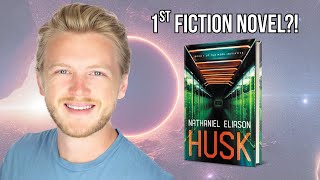
Nat Eliason talks with Michael Evans about his indie fiction book that made $5,000 in preorders in a single day. They cover his shift from blogging to novels, the differences between writing articles and books, and how he built a sustainable author business through self-publishing.
Imagine making $5,000 on your book creator as a first time fiction author. That is what our dear friend who's coming on our podcast today, Natalia, accomplished on his new sci fi novel, Husk. You can read Husk now. It's very cool book. I personally am a sci fi geek myself, so I was like, dang, I love, I love Nats joining us and he's writing sci fi. But regardless of what genre you write, whether it's romance, whether it's horror, whether it's thriller, mystery, you're gonna be learning a lot today from how Nat's built his audience, from how Nat has been able to not only sell $5,000 worth of his book in pre order before he's launched, but also what he's learned through publishing another book traditionally published through his nonfiction and now why he's transitioning to to indie publishing. His fiction and his goals and where he sees him going as a fiction writer and an author over the next 10 years. Because Nat's run many online businesses, he's a very successful entrepreneur, but he's really going long on being a fiction author and creating stories with all of us, which is what we do and beyond the book. So super excited to have him. It was great having him on the podcast today. I hope you enjoyed this interview. Nat, it's so great to have you here. I think every writer has a particularly interesting journey, but maybe it's just the sci fi writer in me loving almost every stage of your journey. But I'd love for you to kick it off and share how you got into blog writing online, because I know now your blog is generating something like hundreds of thousands of new viewers each month, which is wild. So how do you get from here to where you started?
Yeah, I mean, it's a long journey. I've been doing this. It's funny saying that I don't. It doesn't feel like it's been that long, but I've been doing the blog thing for a while. I started my blog when I was in College in 2013 and I was. I had heard about blogging as a skill set to get into marketing and I was a philosophy major. I wanted to work at a startup. I didn't have any technical skills, but I thought maybe I could get in through marketing and learning content marketing specifically. And so I started my blog really just to learn how to do content marketing, which back then was heavily focused on creating blog posts and then either trying to get those blog posts to go viral on what means we had for that to happen. At the time, which was basically like Reddit and maybe Facebook pages. It was easier to do stuff on Reddit back then with articles. And then SEO was the big driver. You know, so much of content was focused on getting those rankings on Google to bring in traffic that way. So I started off just trying to learn how to do that. I didn't have any aspirations back then to write a book or even to be a full time writer. It was just kind of a way into entrepreneurship and I done a lot of different things for work over that past decade. I ended up working at a couple startups. I started and ran a marketing agency, I opened a tea shop. I've done a few courses on my site over the years. I've just kept the blog going that whole time and it's never been hyper focused on one niche. It's just been whatever I'm interested in, which is not a great way to grow in the short term. But in the long term it creates very durable readers in the sense that they're more there for you and for what you're interested in and what you're talking about than if they're just there to solve some very specific problem. I. I had this kind of crazy journey through crypto a few years ago back in the 2021-22 cycle. And it was a pretty crazy experience. Ended up being a relatively profitable one. And as it ended I sort of had this sense of, you know, I really enjoy writing. I really want to try to make writing the thing like I want that to be what I'm doing for money, not this thing on the side that I'm always trying to fit in. And decided to really go after it. I got my first book deal to write about that time in crypto. That was Crypto Confidential. It came out last year and after working on that I got pulled towards fiction writing. It's a narrative non fiction based on my story and in order to write it, I had to study storytelling. I had to study writing as if I were writing a novel with all the plot points already laid out for me and ended up enjoying that so much and ended up feeling kind of tired of the non fiction self help genre. Didn't want to go down that route. And I was like, well, maybe I'll try writing a novel and just see if I like it. And ended up loving it. And now I'm basically all in on that path for the foreseeable future.
Wow. No, that's incredible. And I'm going to link down below because it was probably, probably it's tough to say if it's my favorite blob host. You have a lot of great ones. But I'll specifically link to 43 things I learned from my insane 2 years of study on writing better. I found that to be incredibly insightful. And I know that you studied the greats at a sort of depth that I think very few writers do. I think a lot of people just jump into it almost blind, or like, I'm gonna go write a book. It felt like you were very strategic about it. What was your process? Like, how did you decide to go, I'm gonna go learn in this way. You didn't get an mfa, as far as I know. You could have gone and done this. Like, what made you choose your specific learning path through writing?
Yeah. So a couple things. One, I. I mean, I've never been much of a student. I don't like school. It just doesn't work with my brain. I was kind of always trying to figure out how to get out of it or do the bare minimum to get the B minus so I could skirt through it. And I went to good schools despite that, I went to Carnegie Mellon and ended up studying philosophy there. But, you know, I was really just always trying to avoid school as much as possible, because I just always found that if I was interested in something, I could figure it out much faster on my own. And the thing that I got really into in college and just after college was this kind of, like, rapid skill acquisition that, you know, Tim Ferriss really first made this popular. And there's a lot of other people downstream of him who talk about it, and there's a good version of it, and there's a hack version of it. The hack version of it, which most people unfortunately focus on, is that, yeah, you can kind of like, cobble together the 8020 of a skill and, like, fake it and do this sort of magic trick as if you know what you're doing, but you don't really know how to do the thing right. But you can take some of those same techniques, and instead of getting to this, like, fast mediocrity, you can keep running that flywheel. The breaking the skill down, figuring out the components, identifying which of them you're weakest at, attacking that, creating really structured practice around that thing, getting to the next skill plateau, and then running the flywheel again, figuring out what your weakness is now and going to attack that weakness, and you can get very, very good very quickly. The problem that most people run into is they're not honest with themselves about their weaknesses, or they're not willing to do actual practice, Right? So there's this great book called Peak by Anders Ericsson and Robert Poole. And they basically wrote this book because Anders Ericsson did all the original research that influenced what people know as the 10,000 hour rule that Malcolm Gladwell wrote about in Outliers. And Gladwell just got it completely wrong. He misread the research and misrepresented it, and it really pissed off Erickson, at least from my read from the outside. So Erickson wrote this book to explain, no, here's how this actually works. The 10,000 hours rule is nonsense. It's not about how many hours you do the thing. It's how many hours of a very specific kind of practice you do the thing. And so he lays out exactly how you do that kind of practice, which people have heard deliberate practice before. Most of the time, it's not actually deliberate practice that he talks about. It's something called purposeful practice, which kind of differentiates it from naive practice. And naive practice is like you're playing tennis with your friends, right? You're all around the same skill level and you're playing. And if you do that for 10,000 hours, you're not going to get any better. But if you do very purposeful practice, where, again, you're figuring out which part of your swing needs to be improved on, you're hiring a coach, you're drilling it, you're creating success criteria, all these things you can learn really quickly. Once I read that book and really got into the habit of it, I started to build my own frameworks around being able to learn these things quickly and was able to apply that to learning programming. When I got into crypto learning marketing, when I was doing the SEO work, and when I decided to write the first book, Crypto Confidential, I was able to use it there to learn storytelling. And probably the benefit that I had was that I had a book deadline. And when you sign a nonfiction book deal, you pitch them an idea. Basically you say, here's what I want to write about. Here's all the people I can sell it to. Here's a table of contents and a sample chapter to prove that I'm not a completely terrible writer. And then if they accept it, then you go write the book. You don't write it first, which is very different from fiction. You know, fiction, you have to have a finished manuscript. You send it in and hope somebody picks it up. In nonfiction, they give you the money and then you go write it. But I only Had a year. And so I was like, okay, well, I better figure this out really fast because this thing is due in a year. And that's what led to just really, really intensely trying to study storytelling in long form to make that book compelling. Because I wanted to write something that would explain these core concepts of crypto that most people didn't know or didn't understand, but do it in a fun, fast paced, exciting package. So. And this was like a terrible first book to do because I had this dual mandate of write an exciting thrillery book and explain these very complicated technical concepts that like most people can't get through. It was like one of the hardest first books I possibly could have chosen to write, but I learned a ton in the process. And, you know, it was, it was very cool getting the book out there and getting. And I still, I got an email about this today from someone who, you know. So, like, I, I picked it up and I read it in a day or I read it in a weekend. You know, I just flew through it. Which is really one of the best things you can hear as a writer that somebody flew through it or it changed their life. Those are the two best kinds of feedback you can hope for. And it really paid off. Looking at the first stuff I wrote for Crypto Confidential two and a half years ago versus my writing now is night and day. It's two different people. And it's very satisfying to see, oh.
I have to read the book Peaks because that's like, I read Outliers in high school and I believe that thesis a lot. And I think a lot of my early learning style as an author was just like, okay, each month I'm going to pump out a new book. Pump out a new book, right? But it wasn't having the process of, like, it's not just about doing the thing. It's about having the practice of learning built in, which is so crucial. And I'm curious, from like draft one of Crypto Confidential to now, I'm assuming you're basically at the final draft of Husk, because I know it's coming out in a couple.
Oh, yeah, yeah. Husk is done. Husk is done. I can actually send you an article after this if you want to read it.
I would love to. I mean, you're writing my favorite genre, so I personally would love to read that. You know what, what have been the big improvements in your writing from, again, draft one, Crypto Confidential to now final draft of Husk, which is novel two of yours, or I shouldn't Say one book, book, two book.
So I came up with this idea for the, this world, which I love this premise of, okay, we actually figured out consciousness transfer into machines and basically at the same time a massive plague hits. And so really everybody transfers themselves into the machines to escape the plague, but some people have to stay behind on the outside to make sure the servers keep running. We would probably never be completely comfortable with there being no human redundancy on the outside. So what does this world look like when the vast majority of humanity is living in, you know, digital heaven with no mortality, no hunger, sickness, anything. You know, you can do whatever you want, be anyone, and then you have this like quasi slave population on the outside who has to keep the servers running. And so I, once I had that concept, my first instinct was to write the story of the collapse. So this, this kind of like dual story of this plague hitting and where it came from and how it happened, and this guy figuring out transference. And I wrote that whole novel, 120,000 words. So, you know, good length, did a round of editing on it and sent it to my agent. And he was basically like, it's okay. A mix of the writing wasn't that good yet. And the thing he said that I thought was really helpful is he was like, you know, this world is very interesting and where it's going sounds very interesting, but this is maybe not the best point in time to focus on because it's, because it's starting in the normal world. There's not this like novel scientific world that people are dropping into and are curious about. And somebody working on transference and world ending plague are both stories that are pretty played out. But where this is going, you know, this world that you've described, I haven't really heard that kind of story before. Like there isn't really somebody who's done that kind of sci fi world yet. You should just focus on that and tell that story of like once it's already established. And I was a little pissed at first, obviously, you know, I spent nine months. Words. Exactly. Yeah, I was like, took a long time, dude. And I was like, you know, one, you're right that that will be more interesting. And two, you kind of got to get the first novel out of you because you're just like figuring it out and you don't know how to do it yet. And as soon as I started, sat down to write what became Husk within the first couple chapters, it was very obvious that it was right to start over. My writing had improved a lot. I Had a better idea of how to plan it. I knew the world and the characters really well at that point. It just made it a much better book. And, you know, so going back to your question, like, what were these things that I had to figure out? Really, the first big challenge was just the length. Like, I'm somebody who's been blogging for 10 years, and so I've written a couple 10,000 word posts, but most of my articles are one to 2,000 words. You know, that's a length that I know very well. And to go from that to the first draft of Crypto Confidential was a hundred thousand words. You know, that's 50 times my normal length that I'm working with. And so learning to think about story arcs and characters and settings and conflicts and subplots, and really recognizing that when somebody sits down to read a book, they're looking for a very different experience than when they read an article. Because the point of an article is usually to deliver information or make an argument relatively quickly. And so an article needs to be very concise and very focused and written, like good marketing copy, almost, for it to be compelling. But when somebody sits down to read a book, they want an experience. They want to go into a world, they want to be told a story, they want to get lost in it. And if you're too concise and just always like rushing to the next thing and not pulling stuff out, it is harder to get lost in it. People want the extra description, they want the interiority, they want the senses. And so in the beginning, everything, you know, everything that I was writing was. It was like almost entirely dialogue and action because I felt like anything else was a waste of time because I just wanted to get to the next point. And so I had to learn, like, hey, this thing that has served you really well for online writing is actually hurting in your storytelling. And I had to retrain myself to write for this longer format. And now I'm kind of having the opposite problem where it's very hard to go back to articles now. It just feels kind of dissatisfying and shallow. And so I haven't really figured out how to balance that yet.
No, that is such a amazing point because I think so many authors are part of, like, why marketing our books becomes like a pain is because you mentioned, like, articles similar to marketing copy. And it's concise and almost. I mean, I'm using boring in quotes. It's entertaining, it's engaging, but in a very different way than, you know, a novel would be. And now you're writing novels and getting deep into bringing out the emotions and everything that goes into that. And then it's like, well, how do you transition between, I'm going to write my novel now, I'm going to market my novel. Are you trying to bring over that same storytelling instinct into how you're marketing it, or is it like going back to how so many authors think about it? The marketing copy, the Facebook ads, all the stuff that makes people's eyes water. People typically think about sharing their book with the world.
Yeah, you know, I'm not heavy into the marketing side of it yet because husk isn't out. But as I'm thinking about it, I'm basically just trying to practice switching off that part of my brain and going back into marketing mode. Because, yes, it's romantic to think about the idea of the old Stephen King life where it was either the 90s or the 2000s, where he was getting a $5 million advance for every book and he could just sit in his house in Maine and write it in six to nine months and cash his check and go back to his life. He wasn't doing an email newsletter or any of this stuff. He just wrote the book, got paid, wrote the next one. And you can get to a certain point where that's possible today, certainly. But you do kind of have to figure out all this marketing stuff as well if you want a shot, I think, at succeeding, especially self published. Right. If you get a big enough advance in trad, they're going to make the book work, you know, come hell or high water in most cases. But it's really kind of on you. And so, yeah, I am kind of excited, honestly, to figure out the Facebook ads and Amazon ads and get my newsletter reoriented around the books I'm publishing and just really dialing that in because it is important. Right? Like, it's. It's something that you have to do if you want the book to succeed. And I'm also good at it. Like, it's not the work that I want to do. I want to just do the writing. But if doing the marketing means I can eventually get to the point where I mostly just do the mark, the writing, then that's a worthwhile investment. But it is funny, like, figuring out what you focus on when you talk about your book. Because I think authors often run into this challenge of they want to explain everything. Right. They want to tell you about all the world and the characters and the technology, and you want to really lay it on because it's so big in your head and so important to you. But you really have to figure out, okay, what are those, like, little hooks that get somebody interested? Because you don't need to tell them the whole story. You don't need to sell them on the whole story. You just need to make them curious enough that they go to the Amazon page and then the Amazon page does the next step for you. Right. And then they open up the book and then your first chapter has to get them to the next chapter. Right. It's just like all these little steps that you have to have down. And so, yeah, I'm excited to try to figure that part of it out too, because I don't want to rely on entirely on my existing email list because most of them probably aren't interested in my sci fi novel. And that's fine. You know, they signed up because I was talking about productivity or talking about entrepreneurship or talking about, like, one of these other things. And so I'm not going to have nearly the same conversion from my email list as a fiction author whose entire email list is people who signed up after reading one of their fiction books. And so I don't want to rely on that. I need to figure out how to reach new audiences as well.
Yeah, no, a hundred percent. And actually speaking on that, I find it very insightful. A quarterly, like, book update, which I think is a combo, kind of combo of the business side, but also the writing progress you're making. And I read your most recent one. I read a few past ones, but speaking to the most recent one as well, you mentioned two things that caught my eye. We'll get to Husk in a minute because that update that you've had recently with Husk is incredible. But there was something that caught my eye with Crypto Confidential. I'm aware that you got that, Trish, which is awesome. You said this publicly because I found it. But tell me if I got this number wrong and I can edit it out if you don't want me to say it publicly. But I believe you got like, a $275,000 advance for that. Is that correct? That's amazing. Well deserved, but that's amazing. You noted that sales of Crypto Confidential in your latest quarterly update had. Would the word be stagnated or slowed that, like, it hadn't?
Pretty dramatically. Yeah, yeah, yeah.
Is that. Does that correlate? Because I know you wrote like, three months ago or four months ago about, like, another bull runs here for crypto, because for those who aren't familiar, the crypto Market, it goes in massive winters and then massive bull runs. I guess talking about the longevity of a book we've had now, like this new bull run and this book being out during it. What have you learned during that? And what are you kind of learning about the longevity of a book? Because I guess the whole goal is, or the dream is for a book to sell past when we die. And I'm sure that'll happen for even Crypto Confidential. But I guess the level of sales is. Is an open question. So I'm curious how you're thinking about that now that you've kind of gone through this last quarter.
Yes. So you know it. The sales have pretty closely followed the market. They were going up quite a bit at the end of last year when the market was rallying. And then this year as it's really fallen off and gotten quite bad now, the sales have declined as well. Right. So that's not terribly surprising because it is a book about working in and living in a bull run. And that's kind of like the main narrative thread. But the main thing I learned, honestly, and this is very common knowledge in the fiction world, is that books have a longevity to them, but a lot of their longevity is determined by how much you keep talking about them and how much else related to them there is for people to discover. Right. So if you think about the books that you read that you pick up, you probably almost never pick up a book. Right. When it comes out, unless you've already read something from the author. Particularly if it's a book in a series. Right. So most people will only ever pre order a book if it's a subsequent one in a series they've already started. And most people don't get into a series until book two or three or four, whatever number I just picked up. Dungeon crawler Carl, have you read this one?
I have not yet, but it's. I love Matt Dinnerman. He's an incredible human being.
It's so fun. I've loved it. I've read the first two and half of the third in the last, like, week. Right. I'm just obsessed with them.
Yeah.
But he's already on book seven. The first one came out in 2020 and I'm only really just hearing about it. And it takes a long time for books to get out. And a big part of how they get out is you're either releasing subsequent books in the series. So anybody who read the first one is reading the second and the third, and they're slowly telling more of their friends over time. And it's getting out that way or you're releasing other books, and those are naturally pulling people into your orbit. And once they're in your orbit, they find your other books. Right. And so books compound over time. James Clear talks about this where he has the biggest email newsletter in the world for an individual. And every week he's talking about something related to atomic habits. And so every week when he sends an email to the two and a half million people who are on the list, that's going to drive some book sales because he's still talking about that topic. The book is evergreen in that sense. I kind of wrote Crypto Confidential to be done with crypto because I didn't want to be in the industry anymore. I had this good story and I wanted to tell it, but I'm not really talking about it to my email list anymore. I'm not really posting about it on Twitter anymore. And so it's not continually getting remarketed the way another nonfiction book might. And that's probably having an even bigger impact on the sales because unless people are, there isn't some like, ongoing marketing engine and there's never going to be a crypto confidential 2 and 3 and 4 to like bring people back to the first one. And so as I'm working on Husk and thinking about fiction writing, I'm thinking a lot more about this longevity of each book idea. And I think it's such common advice for a good reason that you kind of want to do series, because series are their own best marketing and they make your ads more effective because you know you're going to have read throughs to the subsequent books and all of that. Working on a book that I'm not working on from the perspective of I want to be done with this topic, but from the perspective of I'm like just starting on this topic and there's going to be another book in this world coming out every six to 12 months for the foreseeable future. And every single one compounds on the previous ones and they can grow into this pretty incredible asset together over time.
And if you kind of think about every business, like across any industry, it all kind of goes back to one thing that you keep marketing in unique ways. Like software is like you've got the core product and then all these new features that come out over the course of years and decades, or you've got Coca Cola, all these different marketing campaigns that go back to the same drink, even if the color of the can changes. It's, you know, you're giving the readers the same sort of emotional arc with the same sort of characters in a similar world, maybe the same world over and over again. And when it comes to husk, I know when you first announced it, you took an interesting approach. So you traditionally published your nonfiction, you self published here, and you did a pre order direct on your Shopify store, which is very, very cool. Tell me about why you did that and how it went.
Yes. So, you know, part of why I didn't want to do TRAD again, you know, one was the timelines. Two was the lack of control and the profit per book. Three was just the marketing options. And the big problem with a TRAD book is you make so little per book, you know, typically like a $50 to $3, maybe 4, 4.50 on a hardcover. And you know, it could be less than a dollar if you're a mass market paperback. And you have no visibility into what's driving sales. Right. Like even self pub, you don't get any visibility on Amazon, but you get a little bit more insight into what's going on. But with trad, you just have no idea. As I was thinking about self publishing, a big thing I was focused on was like, okay, how do I really build a cool marketing engine here that can grow over the next 10 years into a very like, successful and profitable business so that I can keep doing this? One thing that was obvious right off the bat was like, well, I need to be able to talk to the people who are the most excited about the book. And when you sell a book on Amazon, you don't get email addresses, so you have no idea who's buying your book. You have no way to follow up with them, no way to contact them. You basically have to hope that when your next book comes out, Amazon recommends it to them or that they hear about it some other way, because again, you have no way to get in touch with them. I was very excited about the idea of trying to sell some books directly on my own store purely to get the email address because that can just pay dividends over five, 10 years, you know, in small.