The Tropes Behind $1M+ Books
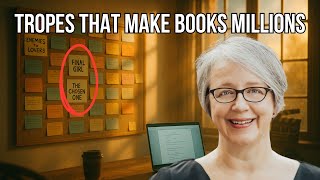
Jennifer Hilt, author of the Trope Thesaurus, explains how tropes work as mental shortcuts in storytelling. Found family, forced proximity, ticking time bombs, and character transformations show up across books and film because they tap into something readers already understand. Twist them instead of copying them straight.
Chapters
The tropes behind $1 million story. Look, books. When they succeed, when we all start buying them, or whether it's a movie or a television show, there's usually a reason why. And oftentimes those reasons go back to the tropes in the story. Tropes are like cognitive shortcuts. They allow us to understand something about a story and what it's going to give us just through the trope, Right. Like, it gives us this understanding that it's hard to do without it. Tropes are a really interesting concept. And saying that before this podcast, I felt like I knew, but after this podcast, I feel like I'm ready to apply this superpower in a whole new way to not only my writing, but also my marketing. And that's because today we have on Jennifer Hilt, who is the author of the Trope Thesaurus. And honestly, like, just is an incredible person, knows so much about not only tropes, but writing and this business of publishing and such an honor to have her on to talk about not only how tropes apply to books, but also how tropes apply to movies and film. Because for those who don't know, I've been building Creatorwood, which is a platform that helps anyone turn their book into a movie or television show in less than a day using AI. And what I want to understand is how does the same storytelling trips that we know in writing apply to this new world of film now that writers are really able to go and break into this new world? So that's we're going to talk about. I'm super, super excited for the podcast and in the links in the description, you can find one how you can join Creatorwood and actually turn your book into a movie or television show today. And to the link to Jennifer Hilt's books and all for other awesome stuff because she just has so much amazing resources out there for writers. But that said, let's dive into this episode. Jennifer, I am so excited to have you on. You're actually our first official guest Girl Movies podcast. Yeah, first ever. Which I don't know if that's a trope, like, first guess. I don't think that's a trope, but.
No, but I guess it'll prepare me for when, I don't know, it's. Who's the new one now? Not Kelly. Kelly and her husband or something like that. So this will prepare me for some big thing like that, right?
Yeah, you will be ready. It's so interesting because I want to hear about your story and have the audience learn like how you came around to writing the trope thesaurus and developing I think probably like the best body of knowledge on tropes out there. But first I feel like there's a fundamental question we need to answer, which is what is like the basic definition of a trope? Because we throw that word around a lot, but I'm not sure all of us know what it actually means.
Great question. That was the thing that I spent a lot of time figuring out myself. The first and foremost thing about tropes is that it's an easily identifiable concept. So when we talk about bride, love, love, triangle, revenge, really Most of the 40 tropes that I think are like the main meaty one. It's something that anybody with a 6th grade reading level or above can identify and they know what it is and it's not some fancy term that they feel lost or they have to look up. I've even had. It's been interesting to see that my 9 year old nephews instinctively use tropes when they make up stories. And so I think it's just part of our human connections. But it's just really. So that's like the first important thing I think people to know. It's just that and it's a general concept that's like easily identifiable and relatable to humans. There's a couple other things that I've come to understand with tropes. And one is that I feel that they're, they don't have a judgment. It's just an idea. So when we say something like, like loner, it could be either somebody who's a quote unquote good loner or a bad loner. It's just like this idea of a person who's isolated and it's going to go on a search for community. And then really the other thing that I think is important is that tropes are about relationships. And that's what I think. That instinctiveness that people are drawn to them with is that, oh, we all want stories about relationships, but tropes give us like a vehicle to do it. So those are like the things that I think about with tropes and that I hope people can. If you come away with anything with this from me, it's oh, okay. It's like something that I already know that's out there, but maybe I haven't thought about using it in these ways.
Love it. The relation. Thinking of tropes as relationships is really interesting. And I know that you have the framework GMC Right. That you really hammer home, which I love about, like, how to actually use tropes productively. Because I think I see this.
It was neat that I had. It was during the pandemic that I had time to really was. I was teaching students to realize, oh, I don't really understand what a trope is. And I was trying to use it and teach. We were talking about building characters and people would say, I want to write a story with this and this. And I was like, oh, okay, so you're talking about a best friend forbidden love story. And they'd be like, oh, but I wanted to write a good story. And those are tropes. And this was like during the pandemic where we were not quite as excited about tropes as we are now. And so it made me like, as a linguist go, yeah, but why. But yet why did we need this as a common language? So then I just went through and read like all kinds of cool stuff from like literary fiction to genre fiction, movies and things really looking and seeing. Oh, they're everywhere. It's just a matter of how you develop them. So that's been exciting and fun for me to do.
Follow up question related to that. So in literature, you categorize tropes into person, place, object, secrets. How does this translate into visual filmmaking?
I think it would. It's. It was interesting. So I was thinking about that because I watched some of these drama box things you guys were talking about. Yeah, One thing that I thought was really interesting with those was there's a couple things, but all that is like, what happens next. And tropes are really. I feel like it doesn't matter what kind of story you're telling. That's like what it boils down to, whether it's visual or on a page or auditory or whatever. And I thought, oh, that's what they're doing in these. And they are heavily, obviously using tropes to do them. I think that's like the important thing to think about. The degree of development is something that's up for debate or grabs for how people want to do that. But I guess basically I would start with that and then I feel like you're just going to try to. You're just trying to show as much as possible with. I guess I was just trying to think of really secrets, I thought, are the way that we see that the most with the visual storytelling. Because it's like we see the characters meet and they don't. They're like a lot of these are like mistaken Identities or hidden identities. And so then we peel back a layer and, oh, they're this. And then we peel back another layer. So I feel like there's a lot of secret use of tropes with those.
Especially when you're jumping back and forth between, like, multiple character perspectives. Like, you've got, like. I was thinking of one where it's like the. You have the tension of knowing the main character is in Hooked up with this hockey player, but that at her job, they're saying, hey, if you can't get an interview with this hockey player, you're going to get fired. And it didn't exactly end well with that initial interaction. So there's that sort of tension and it's. Yeah. Want to keep watching. Just because that secret. Which is huge, because I know you boil down tropes until they're going to create conflict and with either through, like, secrets and change, which is very interesting. But you said something, because I'm. I also. I didn't study. I'm not a linguist. Like, you are the expert in this. But I'm fascinated with words as well. I think we all are. And I'm also fascinated with intersubjective realities. Like, when we begin to understand that something is true. Oh, like, what is enemies to lovers? We all now have agreed this is a thing. And this is like a very foundational, kind of weird question. But it's something I nerd out about. And I know you've thought about it, which is, when does something become a trope? Like, how do we know? Cause it's not. It's not like these tropes, they feel like so primordial, like they've existed since the beginning of time. But a lot of these feel like they've come into popular understanding maybe more recently or some. Maybe have been around forever, quote unquote. But, yeah, what begins to start to cross something from just being an idea to now being a trope, at least in pop culture.
I think, honestly, it's more. I think all these tropes can really be traced back to fairy tales, and you could probably even go farther than that. But I really feel like almost. I almost feel like every romance is some form of Beauty and the Beast. Right. He's like your. He's like your original grumpy hero and all this. So that's just my little thing about that. But then I feel like Beauty and the beast turned into Mr. Rochester and Jane Eyre, and then we see it again and again in various things. So I think that the tropes are just there. But I feel like we talk about them differently now. And I think it's because. Honestly, social media for sure. But I also think it's because of. Hollywood has been much more upfront about tropes. Tropes for years than ever. Like, writers have. Like, I make every Julia Roberts movie almost has a trope in the title. Or I think of things of the stepbrothers movie or 40 year old virgin. There's really. I feel like Hollywood really did a very good job of understanding. I talk about in the book this one quote that the Give me the same thing, only different. That's, like, totally true. And when I figured out that the thing was tropes, it made a lot more sense to me when I looked at stories. So anyway, it was just something in the. If Save the Cat, which everybody should be. Everybody should read by Blake. Yeah, there's a. There's that quote in there which I just loved for years and was always like, what's the thing? What's the thing that this producer told him? Give me the same thing, only different. And that was when I was like, with the tropes, it was the light bulb. But yeah, something like 40 year virgin fascinates me because I think. I think it's a great example of tropes. Because for one hand, okay, I think this. It was written. It was a while back, but like the virgin trope, how in our culture could we do anything interesting or different with the virgin trope? Right. But yet. And the goal, motivation and conflict with both the characters with that. And then it's really about relationships. It's not just about the sexual act. So that to me was like, oh, really? Showing that. Tropes have been around for a long time. But I think Hollywood has been really great about using them more than for writers. We're just indie writers or filmmakers or whatever. Indie filmmakers. You're, like, catching up to it now and then. That whole TikTok thing with where you put your tropes and all in the books have just made audiences more savvy about them, but I don't think they're really new. I just think we're, like, talking about them more. More upfront.
Okay, yeah, it sounds like you're emphasizing twisting tropes to avoid cliches. How might a filmmaker twist, like, classic visual trope? Like maybe the monster in the house in a horror movie, for example?
I think the important thing to know about twisting tropes is, like, everybody wants to twist them, but the important thing to know is you need to understand what the trope does before you twist it, because I think we can be in a hurry to. Oh, I want to twist it. I want to twist it. What's the next new way to twist it? But understand what the issue is before you start playing with it. So I feel like at the bottom of supporting all the tropes is really the question of power. And I always think, oh, that's going to sound like a women's studies lecture or something like that. But you think about it, in relationships, there's usually some kind of power and balance anyway in all our relationships. And so to twist a trope, you need to understand, okay, what is that relationship? Like, what is it straight up? So if you're like a monster, I guess a good example of trope twisting would be the woman in peril trope, which is like this idea of the final girl. She's the thing that's being hunted. And like, a great straight up example of it would be something like Silence of the Lambs, right, Where women are being hunted and then this female is out to be part of the justice committee to find the killer. But now there's this whole genre of what I personally enjoy is, like, domestic horror, where you have the woman as the monster. And a great example of this that I've talked about is a book called Sundial by Catriona Ward. And in it you're like, oh, you're not expecting the mother to be. Your understanding of mother is there, nurturing, supporting everything. And then to find out, oh, she's actually not a great person. Or the idea of Gone Girl was like, I think, a really great trope twisting because we're just like, oh, this poor woman dealing with her philandering husband, blah, blah. And in the end, you're just like, oh, total gut punch. So those you have to understand, like, what the power structure is to be able to twist it with tropes is, I think the important thing about that, and I think a lot of interesting things happening now are with the formerly vulnerable characters like women or children. There was a murder Hereditary, I think, was one of a horror movie that was out a while ago that I think one of the things that was interesting about that had involved a child and people were not expecting that to be evil in cool Cleo terms.
So, wow, okay, that is amazing power. And analyzing that. It's so cool, I think. I mean, that's very important. The power dynamics in a story, too, is what creates conflict when you're conflicting over something, right?
Absolutely.
Yeah. And you have to get someone to want something. If there was no power imbalance that you could get any desire you have, theoretically.
Right.
If the character was God, then God would get everything they want. So I think that's. Yeah, it's very foundational. It's an incredible way of looking at. Leads me to start to think, okay, when we're looking at stories, whether we're looking at a film, which you speak of many films in the trope, the source book, which I love. I loved hearing, like, your own personal anecdotes of watching this and what it made you feel because it hammered home the points. More. And also, of course, reading how do we train ourselves to not just be consumers of film, consumers of story, which, of course, that's super fun, but then also start to notice these tropes, these power imbalances, so that we can learn what's working for someone else. How do we, like, be good? I guess trope noticers, Trope silence.
I think of it as a form of critical thinking, but I feel like in some ways people think, like critical thinking is just like, ripping things apart. And I almost feel a good story.
You can think trope noticers, trope sightings.
I think of it as a form of critical thinking, but I feel like in some ways people think, like, critical thinking is this, like, ripping things apart. And I almost feel a good story you can think of as, like, critical appreciation. And so I personally enjoy doing it. But it's. I think it's a muscle like anything else that anybody can learn to use. I think you. There's a couple ways you can take a story that I think it's always easier to not look at your own work, first of all, because it's just, like, really personal. So I would take, like, a book or movie and just, like, when you watch it, think about, what are the tropes in this? How are they working? If you're, like, brand new to tropes, something pretty straight up, like a Hallmark movie is a great way to do it. Or like a Christmas holiday, any of those. Because they're very, like, in there. Also, just something. I think it also helps sometimes to look at a different genre than the one you work in. Say, for example, like the Fast and the Furious series, which I always laugh about when that I saw the first trailer for that years and years ago, and I turned to my husband. I was like, who is ever going.
To want to watch this?
Oh, my God, I would have made so much money if I had been able to invest in that. But you want to look for found family. That's all. The Fast and the Furious. That's what it is. I at the time thought, who wants to watch a stupid movie about cars? It is about cars, apparently. But it's really about, as he says, it's all about family. So this is. If you watch that movie, you're just going to find tons of. Or something like that, tons of tropes in it. So you just get used to looking at it and then you'll start finding them everywhere. And everything is how it works. I think it helps. Something like the Witcher has tons of like pretty much every trope in it, but I think done a really great way. So if you're wondering about tropes, you could check that. You could check out something like that. So it's just more like starting to look at things and then your brain will start to think, oh, yeah, they used it that way. But I could. What if I like that? But I would do it a different way. And then you. I think it's a good exercise for us as creative people to have that experience.
Yeah. And it reminds me a lot of the takeoff of like, when like tropes become genres because you have obviously the harem trope. And then reverse harem becomes not just a trope, but like entire sub genre of romance defined around it. And there was something about that subversion that especially initially because I remember witnessing like the explosion reverse harem, like maybe around I think six years ago is when it started to really seven years ago, maybe now. And now it's like a huge kind of category of fiction. And it's interesting too, because you mentioned Drama Box and I know in our notes and we've even been. We've been encouraging people to look at these short drama apps for two strategic reasons. One's because with where AI Filmmaking's at right now, producing shorter episodes, a lot of these episodes are like one to three minutes long. Is just like way more achievable. And then also it's just an incredibly fast growing market that is really big. But a lot of these titles, like, I have it pulled up right now and I just. I. These titles always amaze me. Spoiled by four Billionaires like you. You immediately, immediately know what that's about. Genre, but also like, most importantly, trope. Like, we're gonna get the billionaire trope. The Bad Boy who Ruined Me. Okay, I think I know what we're getting there. So they just nail this marketing really well. And I'm curious, like, we've all seen the classic again. As I mentioned, the graphic and the tropes around it, you've been talking about how, like, Hollywood's been nailing, like, tropes in their title and doing really well. Because again, 40 year old virgin. We get, as storytellers thinking about, like, our primary tropes. How do we highlight our primary tropes in our marketing? And also secondary tropes. Like, should we be highlighting those as well, or. One thing I was thinking about is if we highlight a secondary trope too much in our marketing, do we risk upsetting our readers if they're coming and expecting it? I'm curious for your take on that.
Yeah, I used to. I've come to really feel like there's four tropes that are pretty much in every story. Found family. We already talked about that. Force, proximity. So we have to have a way that the characters interact. Oh, they're in the office together. Oh, they're in a school. I think that ticking time bomb, which I think is so important, we haven't got to talk about that, but having some time element. And the last one I think of is ugly Duckling. And I think of ugly duckling as basically, like, character transformation. So our character at the beginning is not the same at the end. And if we wanted to talk about Hollywood, one. One thing I thought was really interesting is basically the Barbie movie to me was one big ugly duckling story. But it's, like, ironic, right? Because she's Barbie, so she's, like, gorgeous, but she really. It's really a Pinocchio story, right? Cause she wants to be a real girl. So anyway, those are like the four that I. When I read a blurb, if there. If you can. If you can put those in a blurb with your tone and your voice and your storytelling elements, then it signals to the reader, oh, I want to read this. Because characters happening. There's urgency. They want something. So those are like the. Those are really like the four tropes that it doesn't matter what genre you're in that you see again and again, but used in different ways. So I wouldn't worry so much about, like, secondary tropes, because I feel like those are like the great little. I'm thinking of many things, but basically those are like the great little, like, secondary, sassy characters we like or things that make us go, oh, I wasn't expecting that. So I think it's more like trying to make sure you have enough conflict and enough character development that people are, like, interested in it. So those. That would be like my Take on that.
Right, to subvert expectations. Okay, how about this? Highlighting specific tropes, maybe in a trailer. How do we do that? Is that even recommended? Are there any tropes that are unique to cinema that don't translate into prose? Yeah, no. It makes me wonder, like, how do writers learn more about tropes and genre from filmmakers?
Because we see Hollywood do them all the time. I think you're trying to again go to what the source of the conflict is and what the imbalance is. So I was thinking of. I started to watch something in this drama box that you were talking to. I don't remember which the title is, but basically they started out with a girl gets on the elevator and her skirt is unraveling. And the this. The hero comes in and gives her his jacket and then gives it to. He shows up later. It was Asian market, I think maybe Korean. And it was like in the school and all these kind of things. But I was just like, oh. In that, like first few minutes of it, there's so much visual conflict, right? So they are in. She's in the elevator. He steps in and brings her the rest of her skirt that's caught on something and unraveling. He gives her his skirt. They're in an elevator. He doesn't. He actually somehow in the process swipes her badge so he knows who she is to give it later. He acts all mysterious somehow. She doesn't know. He's like this big famous guy. So they introduce a. You're getting all that. And I don't know, maybe that was like a two hour thing or something. But I watched the beginning of it and I was like, oh, okay. They're accomplishing a lot in a really short period of time. So I think one thing is like there's not a lot of talking just to talk. We see a lot of. If you're doing visual storytelling, things are happening. You guys probably know Donald Moss. He's does. He's a New York agent who's written some really great books about storytelling. And I love his write the breakout novel workbook. And it's just because it really gives you actionable things to work on with your manuscript for like how to make things tighter and clearer. But one thing he says in there is you don't have. You don't have characters drinking tea and talking about drinking tea. And it's. Oh yeah, that's. This is exactly the opposite of what is popular now. Like things are happening and physically there's a lot of action in the stories we have now. They're not characters, like, sitting around, even something like Bridgerton. It's like, there's a lot of action in those stories generally because it's not like a be like a bec thing. So I guess I would say to focus on the. Those four tropes that I talked about and then just try to keep focusing on the conflict of secrets and unveiling the thing you don't know and what's going to happen next. So the girl gets out of the elevator with his jacket and she tries to give it back to him, and he's, oh, I'll get it later. So already I know, right? And you've seen him swipe the thing. More is gonna happen. So I think it's just. And viewers are very savvy to that. And so they're just, like, leaning forward for how, okay, they're gonna meet up again and how is it gonna. How is it gonna be?
Oh, yeah, the viewers are so smart. I always like to say, the sort of saying we had at peace was that, like, the viewer is, like, always smarter than you. So you just have to like that and play with that. In a sense. It brings me to this interesting thing that I've been going through my mind listening, which is when we are pantsing a novel. There's a sort of easier way to. To go back and make changes compared to film. Even in the AI land of film, you have to go back and regenerate. And there's an expense to that, of course, because compute for everyone. Listening is not free. It's not nearly as expensive as filming. Oh, my God. It's a thousand x cheaper to oftentimes 10,000 x cheaper. But it still, it'll add up. A lot of folks who are listening are going to be taking their stories and then bringing them to film stories that they've already written. And it's gonna usually start with the writing. But regardless of that, you're writing this story and this story that's going to have, you know, this set of four foundational tropes in it with forced proximity and all. And do you recommend going into thinking? Because even if you're panting, there's still a level of thought that goes into it. Okay, I have an inkling. Do you recommend going into it and being like, okay, here's what I think the four foundational tropes are that I'm using and, like, they'll somehow make it through the story? Or do you think, like, more structure than that's helpful or is going through with less and just Being like, you know what? I instinctively know tropes. As a storyteller, I'm glad I listened to this and know what I'm doing. But I'm not actually going to consciously think about it. Like, I'm not sure there's one right way to go about this, but I'm trying to think about now, applying this right. How do we take this and then supercharge our stories with it?
I don't think there is one way. I think what the thing about tropes that can be helpful is if you're stuck. So I think if you're an experienced author or you're just somebody who has a good level of self confidence and you're like, I can pants my way through this story. I know I'm going to find, I'm going to. It's all going to come together in the end. Then do that, because it works for you. But I think most of us at some point run into a wall about something. And that's when I think tropes can be helpful. Because then you're like, okay, what's really the conflict here? What does this character want? Where do they come from? How is it hard for them to get it? And those are ways, I think that tropes can be helpful to think about with who those characters are. Because I think using tropes to inform characters in a very well rounded way gives. Will give you lots of conflict. But I don't feel like. I never want people to feel like, oh, there's one way you have to do it. Because you could use tropes to brainstorm. You could use tropes to revise. You can use tropes at the very end to go back and edit. I think a lot of storytellers obviously just use them instinctively until they'll be like, all people say, oh, I have two tropes in my story. And I was like, tell me your story. And then of course they have a of tropes in there, but it's just they're not used to thinking about them. And so I'm like, okay, that's fine. Then just pull them out when you want to do the marketing. But you don't have to. As long as they're generating enough conflict, you don't have to do something different about that now. So I can't give you like a hard and fast rule. But I think the thing is just to like when you're stuck to trying to. To try to figure out another way to keep going. And I feel like they can Be helpful with that.
You know what's super interesting is what we found is that sometimes if you don't know the trope in your story, and this isn't for everyone, but if you're comfortable using AI tools and Creatorwood does this literally, we ingest a story and then run it through like a set of programs and prompts where we take out the key places, characters and their transformations and objects, and we are bringing those out. And I think that can be helpful. If you write something and you're like, I'm completely lost. I know half the time when I finish writing a book, especially if it's a book that like, I wrote like any length of time ago and I'm already writing the next one, I've low key forgotten a little bit of what's happened in it. It's like I have to read through this to get my vibe in. What are the scenes that could be pulled out in marketing? What am I trying to emphasize here? Where could the problem be? You know, tool. The. These sorts of tools can be actually really helpful in helping bring that out. They're not 100% all the time, but they're really good. And in creative wood, we do that for you. And I think that whatever tool you use that can be interesting to have a part of your process. I don't know what tropes I'm using. It's actually there's an intuitive sense of what these things are. So if you go and ask someone else, and it could be a human being too. It doesn't have to be. You can ask a reader, a viewer to be like, hey, what is sticking out to you here? That. That can be another way to get going.
Absolutely. I think that's. Yeah. So don't get hung up. Like, I don't know what my tropes are or I need to. Before I write this story, I need to identify these. I just think it's good at the end of the story to think. Be able to sit back and think of. I've got these four things going on. Right. Just to check, make sure, you know, that kind of thing. One thing I was going to suggest that's interesting is like, there's some really good, like Gone Girl the book super different than Gone Girl the movie. And the writer did the screenplay so you could read that book and watch that movie and see the choices she made. Because that's an interesting way that she did that. The other thing is there's a couple other interesting Slow horses on Apple TV is like a fantastic spy series McCarran. And it's really interesting because that's a series of where I love the books as much as the show and I feel like they're very interchangeable. And I'm always thinking about, oh, wow, like, how he did that. Because usually there's a pretty. There's a gap between the show and the books. So it's kind of interest. There's just like interesting things you can self study to look at how people have done those kind of things. I just read the first Lawnmire book and after I watched the series and those are totally different. Like they clearly took the I. The feelings of the books and put them in a very different TV show. So it's. I think there's like really interesting questions and fun things that can be done with the adaptations that you guys are talking about. I'm trying to think about that. I really don't think so. I think we haven't talked about genre. And I think that's super. That's like kind of the other super important part of tropes is knowing what your genre expectations are. So I think, for example, enemies to lovers, everybody wants to talk about that with romance and everybody wants to put it in their thing. And I always tell people, for the love of God, make sure you actually have an enemies to lovers. If you're saying I have an enemies to lovers in my story, don't just put it in there because everybody has one. And then people get all upset. But that trope of enemies to lovers we're seeing a lot in mystery, but as lover, as lovers to enemies. So the two start out and then all of a sudden in the end, oh, he or she is a serial killer. We see that a lot. Or like the detective sleeping with the suspect and she turns out to be the killer or something like that. So I feel like it's really important to know what your genre is to work with the tropes. And we hadn't talked about that, but I don't. Keeping in mind, as long as you're keeping with the genre conventions, I think you can do a lot of different things with the tropes. So I can't really say that there's a trope that I wouldn't. That I don't think really works. It all just depends on like the genre.
Yeah, there's gonna be like a sort of. It's gonna show up differently visually than it will in prose. But yeah, a lot of it translates. Now on the genre question, because genre is like something like tropes, right? That can get muddied. What is your view of A, what a genre is and B, like, it can feel like they're infinite genres. But in the trophthosaurus, I think you do a really good job breaking down, like, here's like the core overall main genres and their expectations. So what is a genre and what are the main genres that most stories fall under?
Yeah, great. Yeah, I think that's really super important. Basically a genre is reader expectations. So when you pick up a romance, you know that somehow or another you're gonna get a happily ever after. A happily ever after for now. Nobody's gonna die of cancer and she's not gonna run off with his best friend. So you can write that. People say, wanna write. Say you wanna write a story where, you know, somebody runs off with somebody, you can do that. But for the love of God, don't call it a romance. That would be a fiction story. So obviously romance is the romance genre. Happily ever after. Happily ever after for now. I think these are just the main, my main things. Mystery I think of as justice served. Thriller, have the character survived or not. So high stakes women's fiction is like, what is her journey identity? Sci fi, fantasy are really blends of the other genres, but like, very heavy emphasis on, to me, world building and horror I think of as who is the monster. So those are like, I think the. This super broad. Right. And a lot of really good stories have. They're not just one element, they're not just one genre. Like my favorite ones will have elements of mystery and romance and thriller and if it's sci fi or fantasy. So I don't think, don't want to be too broad about it, but you also want to make sure that you're answering those questions in those genres. And so that's why I think those genres are super important. You see those in this, like these visual things of. Okay, the romance ones are pretty. It's gonna work out okay. You're just not sure how it's gonna work out. That's the kind of. That's the kind of journey that the viewers want to go on.
Yeah, no, 100%. You see it like the few times when a storyteller brands something as romance that doesn't end in an HEA or hea for now, it's like an uprising. And rightfully so because it's like you get off the roller coaster but fall off halfway through. It's like, whoa, that's. It's not what we asked for.
Right.
And you, you talk about mashups and you just brought it here. And I think it's interesting because it's. You came to a similar thesis point that I don't know if you've read the book Anatomy of Genres by John Truby. It's a good book. It's a good book. I think you'd enjoy it. It gets to this like, interesting thesis in the end, which is he wrote it, like, shortly after a lot of these, like, AI writing tools came live. And there was. And I totally empathize with this because I have these same questions myself. There's a sort of like, existential. What does it mean to be a writer in this day and age when you could just ask, hey, or hey, Claude, like, here's my tropes, here's my thing. Pump out a story. And what he posits is that the place for humans in storytelling is all about like, these unique mashups. And he talks about Star wars, all these other things. What are examples of a great mashup, whether it's in film literature that you're like, oh, they did this great.
Oh yeah, I got a great one for you. Steph Green, she writes Stephanie Holmes and she's this off awesome New Zealand romance author. She loved cozy mysteries, but she also likes spicy. She calls why choose romance? So we think of as, yeah, reverse harem. And she had the genius idea of what if I put those two together? And she is like killer. Yeah. So she's got. So she's.
Yeah, I. Posy mystery. Because I. That normally doesn't get oh, so interesting.
And it's so popular. She's very successful indie author and now she's got a trad deal and they. And so I think she's a great example of two things that you would think, oh, you can't put those together. And there are actually a lot of people who want to read that. So she's a. So check out Stephanie Holmes. Like I said, I really enjoy this domestic horror lately, which I think is like a cross of like women. Like, the one of the examples of that I was thinking of is the movie Night Bitch that came out that was. It was based on a book and turned into a movie with Amy Adams. But that's again, it's like women's. The kind of women's fiction story that you're not expecting. Oh, that takes a horror turn that's like totally different. I think that's a really great mashup. But it's some. But on the other hand, that goes back to Shirley Jackson and she's American short story author in the mid 20th century. And she was writing like, great, scare your pants off stuff at the time and now. But we're able to see things visually too. But it's. I don't know that these things are. Are really like brand new. It's more just like they're having different coming back and having different iterations or new lives. So anyway. But Stephanie Holmes and the domestic horror things I really like. Oh, I know another mashup that I think is great that I. Is this idea of the be heroes. So you definitely see it with Slow Horses, the Nick Heron, where they're like the spies who are more disgruntled or failed spies and things like that. Oh, we've had all these years of James Bond and these super competent people. And what if we have like the ones who are full of shame and the ones who are drunks and drug users or gamblers and stuff like that? So I think there's this. And then I think there's also some sub superhero movies that focus on the kind of less popular character, the less kind of heroic characters. So I think there's different mashups that are definitely out there and coming. Oh, and then the other one that I'm seeing a lot of now is like older characters. Right. Everybody and their brother wants to have the Octogenarian Retirement Home sleuths. There's the Richard Asmon series that's turned into a big, black, big thing. And there's the Ted Danson series and of course, murderers. Only murderers in the building. So those are taking like cozies and that idea. They're not like graphic mysteries, but you're still having a lot of elements, but just with an older crowd than we're used to seeing. I think really watching and thinking about it, watching stuff and thinking like, how did this. How did they put this together? And how would I have put it together? You guys probably have this, right? You watch a movie and you're like, oh, it's so good. I love it, it's great. But I wish they'd done this. And I think we as storytellers do that instinctively and it's helping us train our storytelling muscles when we do that. I think that would be this consuming story. But in there's. When you have a hard day, you just need to watch a movie or read a book. Absolutely. But it also helps to be like thinking about what you're doing at other times too.
Yeah, no, 100%. It feels like too like my big takeaway from this is tropes are ultimately psychological shortcuts that are signaling to a viewer or reader, anyone experiencing a story. It's like a huge, like, signpost, as you'd say. Right? Like in academic writing. Like, hey, this is coming. Like, you're. There's tension here. There's conflict that's coming, and there's all these things that we innately grab onto because of the human experience. But I think you made the crucial point, like, right up front, which is that we want the same thing, but a little different. And when you're able to take, like, you're mentioning, like, that culture goes in cycles, domestic horror, is it, like. Is it entirely brand new and novel? Like, they invented, like, an entirely new thing? It's like, yes, kind of. No, because you've got the Shirley Jacksons, as you mentioned. But there's something interesting because you put it in the culture and context of now characters that might be in slightly more familiar situations to people now thinking of, like, setting tropes, object tropes. Oh, okay. Now we put a slight spin on something. And that slight spin is actually everything. And I think that's such a fascinating way of looking at it, because I know. I think some writers can feel trapped by tropes. I've heard, like, conversations with, oh, my God, all the viewers, all the readers want is just tropes. And it can feel, like, formulaic. Right. I have to put XYZ in my book to get this type of sales. I have to put this in my film. And it's. No, that's not what you're saying. What you're saying is that actually, first of all, use your instincts. Right? And then, second of all, fall back on if something's not working. There's these really important trope structures. But innovate, get creative and try and do something that hasn't been done before. But that still hits these core structural trope points. I think that's so empowering because it's like, there's literally infinite combinations of these core tropes.
Absolutely. I totally agree. Yeah. I think of tropes are really just as. Depending on how much you study writing. You think of them as archetypes, but actual, like, everyday people don't think of that word. They are familiar with tropes, so. So just use. Tropes is a word when you're talking about it. It's okay. I feel like an improperly developed trope is where you get a cliche or you get something bored or people. But if you, like, push it further. One thing I wanted to mention is severance.
Severance is great. Yeah.
I am like, I just love it so much. But one thing I wanted to mention is when I saw the trailers for it originally, I was like, oh, what is that? I want to know. And then it took. I was like halfway through the first season when I was like, this is an application of the amnesia trope. I did totally did not get that. And I'm like, oh, my God, this is my job. But they did such a terrific. They did such a terrific job of it that I wish more people would watch it because of the way they use the amnesia trope, because it gets used a lot and I've used it myself this way as like the bonk on the head. And then they regain their memories later. The interesting thing about amnesia is that it's about power. It's about relationships and power and some. And if you see that, then you see all the different ways that show is actually about that and about taking somebody who chooses to separate those things. So I just think it's a great example of a trope that people are very quick to dismiss. But it has so much storytelling potential.
Especially when you combine it with the unique in that context, like place all.
The other things, the genius in that.
And yeah, and then, yeah, even it goes into the marketing too, because you had Apple, because Apple TV produced Severance when their recent season, they did a massive marketing blitz for it and they had. In Grand Central Station, it went super viral. They had the place and setting ingrained into it in the middle of essentially. And then they also decked out like Bell Labs where it's filmed, actual office space. So that's also fascinating. Like you could technically go work in Bell Labs right now. And Squid Games did this too. Their marketing, they. And also obviously the storytelling of Squid Games is just like the. We talk about conflict, right? It's like such a clear motivation and conflict. Motivation is like to make money and get out of debt. Conflict is you die if you don't win.
Right? Absolutely. It's super simple, but yet tight.
Super tight. And it's, oh, okay. And then now you can do all these different. Like they had a VR game. Like the number one VR game in the world is the Squid Games VR game, which VR is like a very interesting platform, but that's the number one one. They had 10 billion views on social media on 30 in person activations where they're able to like have the fans be part of different races, different competitions. They did different boats with the guards because the character trope there like, just wild stuff. And it's like, yeah, like, they. Netflix too is like, probably the best at marketing, I think. Like, they're better than any traditional publisher. They're just like, next level in terms of, like, how they market their shows. So it's really cool to study what they do. And Squid Games is like an absolute masterclass, especially for season two. Season three is like, kind of happening now, so maybe in a couple months we'll do analysis on it. But yeah, it's like, this is simple stuff, right? Like, we're just taking a game show and putting it on steroids effectively. And to show you how, like, effective that is. Like that. Like, still to this day, the most popular YouTube video Mr. Beast has ever produced is the Squid Games remake. And like, his channel is all about essentially, like, game shows with stakes. And it's like, yeah, but Squid Games hit that hard.
Yes. And again, like, Severance Wood games had such a great sense of visualness. Oh, so Nick mentioned, like, twisting something. I'm like the murderous little girl in the school where you were the red light.
The young Z doll. Yeah, and the music too.
Yes, and the music. Yep. And those jumpsuits. And so there were so many great things they did production wise that made it like that stairway that I love to watch them have to go up and down all the time when the series. And so there's a lot of really cool stuff. But even if you think of, yeah, I didn't realize that doll had a name. But if you made that like a machine gun, a man with a machine gun, with this really stern expression, yeah, it would be scary. But it's worse if it's like a pigtailed little girl in a dress.
Totally worse. Totally. Like, subverts expectations. And also talk about power. You're now giving power to this imagery of a young girl rather than the man that we traditionally expect to have the power or the masculine figure. And there's something like, interesting too, in terms of the music that they do, because the music is all about reinforcing the psychological tropes like Pink Guards. Like, it's like iconic. And now what's so amazing is like, regardless of whether you're watching this as a writer and you're like, okay, I want to go produce films in something like Craterwood, or you're watching this going, I'm gonna stick to my books now, you can use things like Suno and literally make soundtracks in seconds. Like if you listen to the intro podcast song here on this podcast, we made it using Suno for $10 and you can make 30 or 40 songs on Suno commercial rights. Use it for whatever you want. So we live in a crazy age now where like you can take and rip the best marketing that Netflix is doing and you don't need to spend millions of dollars. You can spend 10 bucks and get your soundtrack that reinforces all these things. Because again songs and you mentioned this songs are storytelling and have tropes in it. Right? Every song you've got. Country is just trope filled. All of country.
There's the character who played Laszlo in the what we do in the Shadows which is a great example of mashup. He's a musician, right? That character. I can't think of that man's name. Anyway, my son was listening to some YouTube and I kept hearing this. This same music thing and I'm like, where, where? What is that for? He's oh, it's just a music thing they play. It's a music thing he wrote for a show that got ripped off of that show and it's just in YouTube now. But it's. But people like my age who recognize it generate. Then it like makes us go look it up and file says, oh really interesting of how things. Of all the different ways to get people's attention.
Jennifer, this was incredible and I know, yeah, you're amazing. And I have a feeling that folks are going to be like, how do I dive deep into tropes? And you've. You are the creator of trope the sources that span many genres. So I'd love for you to share a little bit more about your work and where we can find you.
No thanks. Yeah, the best way to find my about my work is to visit my website@www.jenniferhilt.com and my books are available on Amazon and wide. And the books are like they're not all the. I don't want people to think they're all the same. Like I talk about different genres because I talk about what the expectations are in those genres and I use different examples.
It's huge. It's so great. It's so needed. And yeah, I encourage everyone to do a deep dive into it. You'll probably walk away with a hundred different story ideas by the time you get to the end of it.
That's my thing is that I hope people feel like excited and enabled and not like afraid.
You're taking a sort of simple yet can feel complex topic and making it ultimately fun.
Good, good. That makes me happy.
Yeah, no, it's great. So yeah, those links will be down below as well. And Jennifer, thank you so much for coming on today.
Thanks for having me. Super fun.
Thank you so much for listening to this podcast. It was a ton of fun. I what a cool thing. I get to talk to some of the coolest people on this show and then share it with y'. All. And I'm very lucky. I'm very grateful for all of y'. All. And if you have anyone cool you'd like me to talk to, anyone who you think you could learn from, who you think the industry needs to hear from, and even if that person's you, feel free to reach out. I'm always happy to take guest freeze and guest recommendations. And with that said, thank you for listening. Definitely subscribe on YouTube if you haven't, or subscribe to one of the podcast feeds. Whether it's Apple podcasts or Spotify podcasts. It really helps out. The more people who listen, the more sustainable it makes it for me to do this. So I'm just very grateful for you hopping along this journey because it's just the early days. And as always, don't forget, together we are balanced. I'll see y' all soon. Hey all. Just as a quick little note, we had an issue in recording with some of the questions that I were asked. They just didn't make it into the final version, so they were re recorded later. So if you hear like an audio difference between some of the questions I ask and then Jennifer's responses, just know that they were recorded at different times. But don't worry, you have all the information and the full conversation in one place.