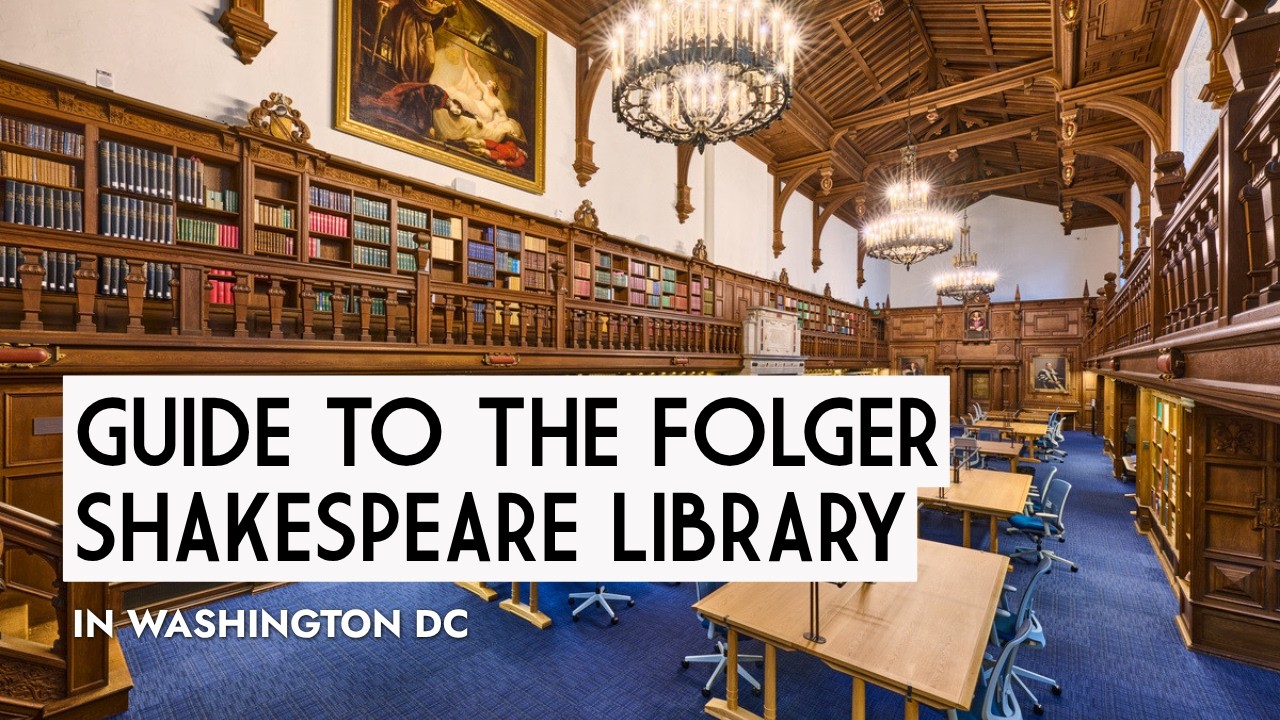
The Folger Shakespeare Library in Washington, DC just reopened after an $80.5 million renovation. It holds 82 First Folio copies, the most anywhere, collected by Henry and Emily Folger. You can see a working 17th-century printing press, explore how actors like Ira Aldridge performed Shakespeare, and visit free.
Chapters
The world's largest Shakespeare collection isn't in London. It's not even in Stratford-upon-Avon. It's here, right across the street from the Library of Congress in Washington, DC. And I'm about to show you why the Folger Shakespeare Library is absolutely worth your time. Folger reopened in 2024 after a massive $80.5 million renovation that completely transformed this 1932 building, and you can now see its treasures in a whole new way. Here's something most people don't know: this collection exists because of a couple, not just one guy. Henry Folger was a Standard Oil executive who spent decades quietly buying up Shakespeare materials, but his wife Emily Jordan Folger was just as much of a driving force behind it. The centerpiece of their collection is the First Folio, the first printed collection of Shakespeare's plays published in 1623, 7 years after he died. Without it, 18 plays including Macbeth and Julius Caesar would likely be lost forever. I actually saw a First Folio in England during my Stratford-upon-Avon visit, and I was thrilled by just one, but here there's a whole wall of them. 82 copies, more than any other collection in the world. What I love is how they're displayed, grouped by categories like earliest bindings, most expensive, and owned by women. It gives you this window into 400 years of individual history for each book, not just, "Here's an old book, don't touch it." Beyond just looking at rare books, the Folger gives you a hands-on way to connect with Shakespeare's world. There's a working replica of a 17th century printing press where you can actually try typesetting. It sounds simple, but once you try it, you realize how difficult it was because they had to do it backwards. There are also interactive digital experiences where you can create your own dialogue with a friend using Shakespeare's own words. What really struck me on this visit was how much of the exhibit focuses on how Shakespeare's plays have been performed and reinterpreted throughout history. Sure, I'd heard Orson Welles was a fan, but what about Ira Aldridge, a Black actor from New York who couldn't get cast in the US, so he built his career in Europe instead, eventually becoming the first Black actor to play Othello on the London stage. Then there's Charlotte Cushman, who defied every gender norm of the 19th century. She played Romeo, and the critics said you genuinely couldn't tell woman was playing him. Offstage, she was openly in a relationship with another woman for over a decade at a time when that was almost unheard of. There's also a whole section on conservation. They treat every single item as a puzzle, as the goal is never to change the book, just to preserve what's already there. One of the most special rooms holds 14 surviving paintings from the legendary Boydall Shakespeare Gallery, a massive London project from the 1780s. After going bankrupt, these paintings scattered to collections around the world, and this is the first time that many of them have been reunited since 1805. If you head upstairs and pass through the Great Hall, you'll find the Reading Room. It's gorgeous, historic space where Shakespeare scholars have been doing research for nearly a century. And yes, you can actually visit even if you're not a researcher. It's stunning and boasts a bust of Shakespeare that's a replica of the one above his grave in Stratford-upon-Avon. I'll link my full experience there below. Then grab an Ophelia's Bloom Latte at the Quill and Crumb, their signature drink of espresso, lavender, elderflower, and pistachio milk. It's the perfect way to end your visit. If you have time, make sure to check out a performance in the Folger's Elizabethan Theatre. The Folger is free to visit, but there is a suggested donation of $15. And it's easily worth 1 to 2 hours. My advice: book the final tour of the day at 4:30 PM so you can check out the reading room, grab an Ophelia's Bloom latte, and then stay for a show if you can. My full written guide is linked in the description. Let me know in the comments if you've been to the Folger or if it's making your DC bucket list now.