100,000 SUBCRIBERS - Episode 035
Mike Andes and his co-host mark 110,000 subscribers by discussing what it takes to scale a franchise business past $200k annual revenue. They break down YouTube's role in growth, defend their 30-day North Carolina challenge as a real playbook, and reflect on when businesses need leadership versus coaching.
Questions this video answers
Mike states the main channel reached about 110,000 subscribers.
He says he took the screenshot at 3:40 (AM).
He references a short with roughly 12 million+ views.
Approximately 114 million active YouTube channels (as cited in the conversation).
Reported range: ~300,000 to 360,000 channels have reached 100,000 subscribers.
Chapters
What's up, man?
What's up, dude?
We're back.
The pod is back.
Apologies. We took, like, a week off. Schedules didn't line up.
What happened? Oh, no. You had a week off. What happened? Oh, I was gone. You were gone?
Yeah, I was out of town doing turnarounds.
Yeah, you're doing turnarounds. How was that?
It was good. Next week, the first one will come out, and then, like, we're taking our time on it. Slash, Zach and Steve are gone for this week, so it's delayed a little bit, but it's gonna be super good. I saw what they were working on the day. They just, like, put it together. It's fire.
Nice, dude. Yeah. I want to talk about, obviously, when the. When the video is released, so that way people have more context. But you went to a couple of Augusta locations and helped those owners turn around their business. Yeah. So give me one word for that.
One word or something.
One word to encapsulate those turnarounds. One or one word for each. How about that?
Oh, man. Like what? Like, you want one word?
One word.
Not like a sentence?
No, sick.
Because if I could say a sentence.
It'S a good thought exercise.
Oh, you know what? Okay, here we go.
I'm gonna say first one, but it's gonna be the first one that comes out because it's not actually the sequence in which I went. So the first one that comes out, I would say coaching. Okay.
The second one that came out. No, actually, take that back. First one that comes out is leadership.
Okay.
And the second one that comes out would be coaching.
Oh, okay.
And that is the first one. Like, leadership is required to grow your business past a certain level, and that's going to be the skill they have to learn. And they learned the first part, sales, very, very well. Now they got switch gears. Like, this is a different skill set. The second person, if they would have had coaching, most of their problems would not have happened. And even the day I was looking at another. Another franchisee, and they hadn't had a franchise call or a coaching call since February, I was like, it's kind of why there's problems that are very easily fixed. Yeah. And so anyways.
Yeah.
So leadership coaching.
Leadership coaching. I think those are great, though. So for the small business owners that are gonna check out the main channel. Yes, those are good. The intangibles, as it were.
Yeah.
I had two coaching calls today with franchisees. And, like, I say this, like, in a positive way. You. You. You will receive it positively. But they're they're boring. Yeah, because it's a boring business. Like, it follows the systems. They treat their employees right, they treat their customers right, and it's just like, yeah, we're just getting more profits and like, yeah, should I. What should I do here? What should I do here? It's like very basic stuff, which is great. Yeah. But. Yeah, well, I. I haven't.
The problem is the people who need it the most don't reach out. And that's the problem. Yeah. So that's why, like, we've been trying to normalize on the group, like, reaching out when you need help, because the people who need it most aren't. And what people fail to realize is that it is a causation. Right. Like, the reason that the calls that you have are boring is because they've had calls every single month for three years and they've made sure they never got off track. And they were put back on track before it ever became a big problem. Yeah. So it's just. It's a bad time to be thinking about your diet when you are dying of a heart attack. It's a bad time. And so, like, that analogy. It's like, I shouldn't have had that cheeseburger for the past four years. Every day. Bad time to think about that, dude.
Yeah. So it's interesting that you say that because I've getting a lot of clips of this guy and I wasn't planning on going here, but we're just going to go unfiltered and I'm going to put myself out there. Because you said at Augusta, we have been encouraging sharing the negative, share the burnout, share the frustrations. Like, don't feel like just because you're part of Augusta and it's this from the outside looking in picture perfect world of like, great business owners, which they are great business owners, but it's not picture perfect. And I've seen a lot of clips recently of Andy Elliott.
Yeah, dude, I know.
And they are getting progressively farther and farther.
The other day, like, if you don't get a six pack, you're fired. And then the other one was, you know why you're seeing that is because I shared a video with everyone that had him in it. Oh. And.
But I've seen him for years.
Oh, you have? Yeah.
Because I've always watched, like, sales guys and that kind of content and hormozi.
Yeah.
Bradley, some of his stuff is good.
But dude, man, he is rough, or not rough around their edges. It's like weird. Dude.
He literally said, we Don't. We don't have anyone on our team that doesn't have a six pack. Like, what if they have like a medical condition? Like, what is that? What's going on here, brother?
He had made the guy take his shirt off.
Yes. Yeah, he's getting out there, but hey gets clicks and we're talking about it. So if sales works. But I looked him up.
Yeah.
The Elliott Group, he had another one too. And this one where. This is where it connects in my mind from Augusta. Hey, let's. Let's open up. Let's be more vulnerable. Right?
Take off your shirt.
Let's be vulnerable in a positive way, not in a public, shameful way.
Oh, man.
But he had this clip that I saw that he was like, I don't get burnt out. If you get burnt out, you're not doing right. You're not doing it. You're not, you're not doing something right. It's your problem if you're burnt out. I've never been burnt out. I love what I do. I'm like, yeah. You know when people talk about like toxic masculinity, that's. They picture you yelling at people about burnout, like in your extra medium and.
His little suede shoes and like jacked out of his mind from Roy's.
Yeah. Like, I don't like, whatever. Like, hey, if it motivates people, that's cool. Hey, if you're says it's good. Yeah, I agree. We're picking the bad clips.
Yeah.
But just very aggressive, man.
Yeah.
Well, I haven't formally congratulated you, so my formal congratulations because I was doing it every 10k but you had 100k on your main channel, so congratulations.
Thank you. Thank you. We're actually 110,000.
I know.
We got like 5,000 yesterday and a few thousand a day. So we have a few videos popping off already.
Old news. Like, you're just blowing up. That's awesome. It was 3:40am yeah.
When I, when I, when it crossed and I took the screenshot.
Yeah. So I saw that. So you, you said it was 3:40am you had 100k and then you had this. Nice. Like, here's what made it happen. 11 bullet points, if you will. Was that pre typed?
No.
Or is that in the moment?
This is what happened. So I went to bed early that night, which is like, if I go 4:12, that's an early night. So went to bed early, woke up at like 2 and was like, okay, I'll. I'll do some work. So pull up My phone. And, like, I knew you're close to it, so that's. I don't ever check my analytics for that sort of thing. But, like, definitely the guys that night had been like, hey, I think we might pass it by tomorrow. Yeah. So I checked when. Then there was Friday night and then going into Saturday or whatever it was. And so sure enough, we were like, within a couple hundred. So I'm like, oh, man. Like, I could go back to bed, but there's a good chance when I wake up, we're already past it. Yeah. So I'm like, okay, great. I was work. So I just worked and then at 3:40, took the screenshot. And after the screenshot, I typed it all up. And then you saw probably like 4:40 when it went up. It was like, right away. Like, I basically. I did take probably 30 minutes to write it.
Yeah. Yeah. It wasn't. It wasn't short by any means. Like, you did have to spend some time on it. So I guess. What was the initial feeling? Like you saw the hundred.
It's the same as, like, everyone says, like, everyone, like, puts it up on this pedestal and like, oh, if I can only get there and then you get in there, it's like, okay, like this, that's cool. But like, also, also when you're coming so close to it for so long, it's not like it's surprise. Like, yeah, just a number. So I just feel good. It's validation, I think, partly for the team. So, like, some of the stuff I wrote in there was specifically for the team. The fact that, like, it took us five years to get to 10,000, and one more year, we got to 20,000, one more year, went to 100,000. Like, it is a very good chance of one more year at 500,000. Another year in a million. So, you know, I don't know how that works. Like, in my mind, I'm like, that's no way like that. Like, I do the math in my head. I'm like, that would mean we're have to do like X amount subscribers day. That mean X amount of views. Like, there's no way in the world we're doing.
Yeah.
So that's how my head works. But I also thought the same way at like 20 and 30,000 where I'm like, dude, it just seems like so far away and I'm getting, you know, 20, 30 subs a day.
Yeah. Would it be like 1500 subscribers a day to get like half a million in a year?
Something like that?
Math off.
Yeah, yeah, yeah. So that is like.
But just to like conceive that seems like how.
Yeah, I know.
Even when you told me like just now, first time we've talked about this together, you were like I was a few hundred away. So I thought maybe if I stay up, I'm like, so just a few hundred people in the middle of the night. Click. Subscribe.
Well, yeah, like that's what I'm saying. Like three hours ahead of us though too. So it's like that morning.
Yeah. Still.
Yeah, yeah, yeah. You can see it live. You can see the numbers going up and up and then, you know, down. Like it's pretty cool.
Yeah. So no, no major feeling, no like come to Jesus moment.
Didn'T beat.
I never thought we'd get there. Like I honestly it was just like dud were going to be forever. And it's funny, it's because we had recently the pop of a couple of videos, but literally just a few weeks ago I was like, man, I hope I get it to 100,000 by the time you have expo come.
Yeah, sure enough, just cut a couple of videos that popped one a short that is really on brand and it's not like just a customer complaint, it's like really on brand with Augusta and it has like over 12 million views or something like that.
So yeah, I feel like you kind of hit. I mean you would, you would know the graph better than I obviously. But you feel like you were floating like mid-80s for a while. Like you really quickly escalated.
What happens is like, so when you do, if a short blows up and it's off brand, which means it's not in alignment with what you mostly do, what's gonna happen is you're gonna spike. And then as you post more videos, you actually, your subscriber count goes down because those people just leave. So when you get a post that, that crushes ands on brand with all your long form videos, that's when we see really, really positive. So we did this kind of like switch when we went away from like customer complaints and things like that. That took us a little bit of time to like get rid of a lot of those people had joined for drama. Yeah. And then like recalibrated on business a little bit more.
That makes sense.
So it was good. We just learn a lot and like I'm not like judging what we've done or what we're doing now. It's like, hey, like we know what like the end goal is and like we can always adapt and change. Like right now we're like, very much like, shorts and long form. We're going to take our time on them. We're not going to worry about quantity. We're going to really make them good. Because, like, one good short that does 10 million is a whole lot better than, like, 40, 10,000 views.
Yeah, that makes sense.
And then same thing as the long form. Like, you know, Marcus's last video is really well produced, I thought. And we take. We take our time on it. And, like, these ones we're doing, these turnarounds, I also got to take my time on, because if they do well, we have some really cool plans. Yeah. And that is really to basically take what the profit was doing with CNBC and Marcus Monis and turn it into more of. That's what we do. We go back to the location and actually see what happens, like, complete the loop of the story. These ones that we did were just two days in and out, but it'd be really cool if we went back in two weeks and we went back in two months down the road, Right?
Yeah.
And then made that one episode. It wasn't episodic. It was just, like, one.
Oh, okay. It's one episode, and then it's just black. Fade to black two months later.
Yeah. Just one video showing up again. Yeah. Cool. I like, that's what the profit did they. Over, like, six months. Even if we did over two or three months, we'd be able to see, like, did they listen to what I say and then what was the result of it? And, like, get a little more closure to the story.
Yeah. And I think that was one of your frustrations creatively with Business Bootcamp. It's an awesome concept, but it's four weeks, and it's a zoom. It's zoom calls.
Well, the challenging part with Business Bootcamp was we were reliant on them to produce video, and it was, like, so hit and miss. You're always asking them for content. They're not great at angles. It's very hard to create a linear story, and you're taking a whole bunch of random clips and trying to piece them together versus what we can do is go into a location and generally know what we want to do and say and then just execute on, like, a production plan. And, like, we have questions, we ask the employees, questions, we ask the owners. Like, we can build the story in, like, a way better way.
Yeah.
So I really hope they do well. So, like, people listening, like, promote these bad boys.
Yeah.
It's. It's. It's. It is, like, I will push Them hard. Because if we can make it work, like just from a view, attention and like money standpoint, I'd really like to scale it to where we go back, but it's expensive. It expensive to fly out the team. Then me, I have to go back again. So we've kind of, we kind of think what we could do, like logistically to make it work is like the media guys go there a day before.
Me get all the shots.
Yeah. And I just come in for one day, do like the pre. Like this is what you need to do. And we kind of know already what that is based upon their, you know, their pre submission video. And then I come back and say a month and same thing. The media guys would go the day before, they'd ask questions, the employees get B roll. And then I just come in and like just execute it. So we'll see. But it's expensive, man, to make one video and have like two fly outs and hotels and airfares. So like it just gotta make. It has to make sense. So we'll see.
Yeah. That's interesting. I'm excited. Well, yeah, everyone make sure you comment like share those videos.
Share is the big one.
I'm not even promoting this.
I'm promoting share on Facebook channels. It'd be very helpful.
Is that, is that the most advantageous to grow your channel? Just sharing?
Yeah.
Yeah. Cool. So I did, I looked up some numbers. I don't know. I know you're. You practice what you preach. You know, stay in your lane, put your head down, work on work and perfect your craft.
Yeah.
Don't listen to the noise. How many active YouTube channels do you think there are?
Whoa. Well, active. So like, what's the definition of that?
I. That's, that's. It was obscured. So I did a little bit of research. This is, this is, this number seemed to be a general consensus. Active. I don't know how they define it.
Active YouTube or active creator. Accounts like that are actively posting videos.
Active YouTube channels, not accounts.
Okay.
So they have to have a channel.
Oh man. I'm gonna go with.
Because accounts is like 2 billion.
Right? Okay. That's literally a quarter of the world posting videos. At least a quarter of those. No.
A tenth. So let's just go with 200 million.
Yeah. No, you're a little high. 114 million.
Not bad.
Active. I mean. Yeah, it's quick math. That's good. 114 million active YouTube channels. How many do you think have reached the 100k mark? And subscribers?
I'd say a million.
There was. There was different answers. There were different answers. So I gave a range because I looked at multiple sources. 300 to 360,000 channels really have only reached the hundred thousand subscriber mark.
Really?
So that is. Oh, yeah, I got it. I got the math now. I know you're a numbers guy. I got it all written down. That's a 0.2% chance.
Really? Yeah. That's pretty.
So you should feel good about it.
It really depends. I mean, it hinges on what active account. What? Active.
Right. But okay, there were other ones that said, like. Like, there was one that said like 50 million. So, like, okay, whatever. So 0.4% or whatever, right?
Yeah.
So congrats.
Thank you, man.
That's cool. That is really cool. Less than 1% of YouTube channels will ever do that.
Let's go.
So what. What do. Is there a goal, like, you want to get half a million in a year? It's just kind of like the numbers roll with it.
Like, the bot. The media drives everything, right? It drives top line for everything in the business, all the businesses. And so it's just a big engine. The more we get in there, it just like. It just like. It's like the flywheel. So you got that?
Yes.
So I drew up, like, the fly love of the media of kind of like how that works from a financial perspective. And so, yeah, the more we can make on all these, like, it'll just keep accelerating because I'm just kind of putting it all back in.
I think one of the most interesting points that you said going back to your post, essentially saying, like, this is the journey. This is how I got to a hundred thousand subscribers and obviously thanking your team, your staff, the viewers. But one of the interesting points that you made was, like, do it by yourself. Like, don't sell out. Essentially, that's my reductive version.
I just said warning of sponsors, Warning of sponsors.
But my reductive version is don't sell out.
Yeah, yeah. Like, we're in a different spot though, right? Like, financially, we don't need the sponsorship money. I would really understand if someone had. It was their business and, like, a big part of making money online is sponsorships. But like, ultimately, every time that you do a sponsorship, you're renting out your brand, and if you rent out something a whole lot, the value of it comes down, right? So, like, if you have a. A whole bunch, like a real estate, a neighborhood, a whole bunch of homeowners, very different valuation than a neighborhood of renters. And the reason for that is because renters usually don't treat it as well, they misuse it. It brings down the price of that asset. And so when you look at your brand as an asset and if you're allowing everyone just to rent it out, then the value of that goes down. And so there's a lot of intention behind it. And it's not easy to say no because I have offered, like, ludicrous amounts of money. It's like, dude, just a minute.
Yeah, You've told me a couple of numbers in the past.
It's nuts. Yeah. And so I understand why people do it, especially if, like, that's their primary thing. The bottom line is, in my opinion, like, what we've done with the media team is building out products and service underneath that to drive attention to you. You just get way more money if you just spend that one minute doing your own thing. But that's difficult to have that long term because, like, three years ago I didn't. I would be lucky to make $1,000 or $2,000 a month on for all the media stuff. But, like, I just knew, like, the power of the brand was going to be so much more important.
Yeah. So did YouTube email you? When are you getting the plaque?
I know, right? I suppose you get multiple. So I'd like to get a couple given to the guys.
That's cool.
Hanging fist, stuff like that.
Really cool. Yeah.
Mr.
Beast will drop it off. Did you see there was a clip of him with his like 100 million, 100 million. And he. Someone was interviewing him. I don't know if it was Graham Stephan or it was some other YouTube personality. And they were like, did you. Did you see the note? And he was like, he didn't.
What?
No, he didn't know that. Like the CEO of YouTube made a handwritten note for him and he was like, oh, I just thought it was like a generic, like, thank you for using our platform type of it.
That's funny.
He just doesn't care. Like, he's so locked in.
Yeah.
So, yeah, it's a. It's crazy. And then the million. To get to a million viewers. It's like a zero something percent. A million subs or not. A million viewers.
Sorry.
A million subscribers to an act.
So how many. How many active channels are above A million?
Oh, well, let me see. I would guess I didn't write those numbers down. Yeah, yeah.
So you said 115,000 had. No, how many thousand?
115 million active YouTube channels.
Yeah, but how many had over 100,000? 300,000 to 360.
That was kind of the range.
I'm guessing then for a million would be like.
20,000.
I think it's somewhere in there. It's like the. It's in there. It's tens of thousands.
Tens of thousands. Yeah. It's interesting, man. It's crazy.
I can add the.
This.
Because I want to know.
There you go.
Okay. A million or more. 35,000 channels.
Oh, that's cool. Yeah.
And then a hundred thousand or more it says. Yeah, around 350.
Cool. We'll get there.
Yeah. Dude, that's gonna be sweet. Two million or more or no. Sorry. Oh, no, no. Okay, that's. Never mind.
Who's who, who's the top? It's not Mr. Beast. It's someone else.
No, it's Mr. Beast.
Is it?
Yeah. Oh, well, it just depends. Like Taylor Swift's Vivo account, for example. I think a couple hundred million.
Well, there's like PewDiePie.
No, but PewDiePie is under him.
PewDiePie's under who?
He's under. He doesn't have as many subscribers as Mr. Beast.
Indian Record label T series is the most subscribed channel. As I was gonna say, Mr. Beast is number two. There is something else that's more than him.
Oh, he has two. Oh. T series. 246.
246 million.
Interesting. And then he's 176. I don't even know what T series is, to be honest with you.
It's Indian record label, dude. How is that? That's nuts.
No idea, man.
Bollywood, dude. I don't know. Are they on strike?
I don't know.
50 votes. Okay, now we're in the rabbit hole. We got to do this. T series is number one. Mr. Beast is two. Cocoa Melon, number three. It's like a kid show.
Yeah, you know.
That is creepy. Sony Entertainment India is number four. Well, I guess. Okay, this is just a very broad strokes observation. Is streaming as common in India or is it like, is that their main source of entertainment streaming?
And then music videos are kind of like. Is kind of skews a lot of that, right? Because music isn't like a super high value watch or.
Listen, dude, I don't know like any of these. I know Mr. Beast and PewDiePie.
Dude, WWE is huge.
WWE is number 10.
That's crazy.
Yeah. Oh, five minute crafts. That's horrible.
Yeah, but they don't aren't doing it get anymore.
Justin Bieber, 17. Yeah.
This is crazy. I don't know like any of these. Okay, dude, perfect 27. I know that one?
Yeah. 60 million.
Are you recognizing any of these?
I know. I know quite a few, but I watch. I also watch a lot of these type of videos.
Oh, yeah.
Like when I'm. When I'm like, on the kick of figuring out.
What we're doing with the media, like, these are the type I got.
You go and watch them.
No, I don't watch them. I watch people who analyze all like, oh, right, right. Like how to improve and stuff like that.
All right, well, there you go. Congrats.
I'm in this juxtaposition now of, like, trying to become. Trying to learn more about media software and home services. That's my. That's where, like, my world kind of blend. I know, dude. That's really what it is. Like, I'm listening to this one book right now, literally about Lean product and Scrum. It's called for software development. And then I get the same token. I need to figure out media stuff. So very much thinking about how do you develop a media company, a media team, distribution mechanisms, retention graphs, all that garbage. And then I also need to think about, okay, lawn care and mowing grass. So it's interesting. It's just fun. Fun.
But the, the, like, the, the lawn care side of it, I feel like the basics is. What more can you learn at that point?
Yeah, but it's a matter of looking at those as, like, first principles and then tying into especially technology and AI. But you still have to, like, keep. Stay on. Stay on top of it.
Do you think, Augusta, this is a tangent. Will ever get to the point of too many res.
Yeah, 100.
Like, it's like, it's almost overwhelming.
Yeah, no, 100. You will. Because even at any time, Fitness, for example.
There are too many resources. I don't tap into half of them. I don't tap into a tenth of them, probably.
So is that a bad thing?
I think this needs prioritization of resources. It's like, I think we do our best at command at Augusta. Be like, hey, look, your number one priority is make sure you do a coaching call every single month. The second, like, listen to masterminds. They'll take you 10 to 15, 20 minutes a day. You'll stay in track of everything that's happening, and you're not going to miss anything. You're getting all the latest and greatest right away. If you do those two things, you're probably going to get like, 90 benefit of the quote unquote resources or at least making sure you don't miss out on anything. I really Wish Anytime Fitness. They had something like that. We have a quarterly call that's recorded, but we don't ever have, like, outside of, like, annual conference and quarterly video recording, we don't get any communication. And then, like, their call. Coaching calls are. I've had now 10 new coaches in the past. No, not nine new coaches in the past three years. And so, like, I don't even know who my coach is now. So it's pretty bad. I wish they did what we do. And I was like, you have options. You can choose who you want. So that way they can come and go. But then I get to choose, like, which coach fits my needs the best.
Yeah.
That's kind of what we do.
That makes sense. How do we combat that having too many resources? It's because I'm just devil's advocate. It feels like a bad thing.
Yeah. Right.
You go into a library, you need to write a book report. Right. Transport back to high school, and then there's a million books in the library. And you're like, I don't even know what to pick.
Yeah. But, like, Google solve that problem because you can search in terms of what book to go pick up. And so I think for us, like, prioritization of the resources is the important part. Like, it's the Google search. It's like, okay, I know that every day I need to watch the Mastermind. I know that once a month I need to do coaching calls. If I can do that, I'll have read 90% of the books in the library or at least pointed in the direction of where to go. And so all the other, like, you know, templates. And I know it starts to get overwhelming with all of it is you find out where to go. Look in the library, if you just talk to a coach, they'd be like, oh, so on the dashboard, here's, you know, the librarian.
Which. Which, yeah, as a. As a librarian, as a coach, it is. It's. It's challenging, though. So, like. Well, I know Mike said this one time in a Mastermind, or was it on the public channel? Or was it a document he uploaded to the dashboard? It gets to a point where. And I'm not even talking personally, but it just. It's overwhelming.
Yeah.
There's so many resources.
Yeah. So it'll happen.
Categorization, I think, is important.
Yeah.
Our categorization is a website built by you.
Yeah. Yeah.
Which isn't bad.
Yeah. We can improve it.
Like, that can be invested in.
Yeah, We. The dashboard is actually a really tough thing to build.
Yeah.
Oh, yeah. I can only imagine it does, like a bunch of different things for us or no. So, yeah, down the road we will improve the dashboard for sure.
We would need like, in the dashboard, we have the Academy, but we would need like a separate URL that's like Academy.
Yeah. In a way, I'd like it to be where like you actually have to go in there to like log in and watch the mastermind. You go to like a specific URL, for example. But the problem with that, it comes less accessible. Like right now it's nice because you go in the Facebook group, you tap on a link and boom, like, you're live.
Yeah.
So I want to make it accessible too. And that's where I think the Facebook group is. I think it'll eventually be where, like the Facebook groups can get to a size where you have to do that because, like, you can't see, I can't see all the questions every day and things like that. But I still think we're probably a couple hundred locations away from thinking, having to think about that.
Yeah, fair enough. I have a. I have a question for you. Totally off the wall. I don't know if you read it in my notes, but I'm just going to come out and I'm just going to. I'm just going to shoot from the hip.
Okay.
Was the 30 day North Carolina challenge worth it?
Oh, it's an open ended question.
Yes, 100%.
You can defend it in any way, but I'm here to poke holes.
Yeah. Okay. I do think it was, I would say half the benefit is from the franchisees. Well, the reason you're asking is because you want to poke holes on it. So you poke holes in. And I'll give you.
No, I don't. No, no, no. I'm just saying I, I will probably want to poke holes, but I literally, I was just thinking about it. I was like, you spent 30 days in another state, like away from your core team, your core businesses, whatever. Like, obviously now business is virtual. You can do it anywhere. But it was. You took one of your team members with you. You went to a state, you didn't know anybody. You were there for 30 days. Like, was it worth it? From a big picture perspective, small picture perspective, short term, long term, was it worth it?
It's definitely worth it. Like, that's where I need to be spending my time on. And for two reasons. One, there's two things that are most important right now in terms of reaching the mission of Augusta, and that is, number one, we have to scale, location, size. And so over the past year especially we've been focused on how do we create the systems and the infrastructure to allow for that hockey stick growth. And so I think we're achieving that state now to where like, okay, if we got 100 locations that wanted to join tomorrow, we know what we would need to do to make that work. And so the media, although it is a time suck and it is a money suck and like that trip costed tens of thousands of dollars and it's gonna cost a lot more because of an accident that happened.
Right.
Because of that. Like that is the most, the best use of my time in terms of like reaching the ultimate goal of having Augusta change the level of professionalism in the industry. It also feeds on all the other businesses. And so media is the most important thing that I should be spending my time on right now. It also forced me to do that for a bit and like pull me away from the office. Like I saw where all the cracks where they came when I wasn't in the office. Like it also gave me the confidence like I could absolutely, like if something crazy happened, I could move and like everyone would do just fine. People would lead just fine. We grew and all the rest of it. So it stress tested the businesses without me being there. They all did fantastic. And then like what little things that they did come up is like, okay, I just need to patch those certain things. But the biggest point is I need proof that is recorded on tape for franchisees and I need to be able to tell them when they leave training, like watch these one day at a time and then watch the one that's behind the scenes that I did for the franchisees that I break things down a little bit more. It's not like it's fun and flashy to watch, but it's just this is what's happening and you know, the systems. And here's what I'm thinking, it's the grind. Yeah. So.
I needed that. I needed it to be more than just the five page document with the five stages of growth. That's what we consider the bible. I needed to go live it and I needed one in stage one and two because we have lots of evidence of stages three, four and five. A lot of people join when they are in stage three and like you know, Connor stead the likes of them at the joined and then now they're like the success stories of Augusta. They fixed it, added systems. You know, some like Kevin Cohen joins like now he's doing way more in revenue like, those are great stories, but they join in like stage three or four. And so I needed to go in from zero and prove it and show what it feels like in week three when you're like, man, I don't know if I'm going to make it. But then all of a sudden, within a week and a half, you hit momentum. And that's what we just like this elusive thing we talk about is real. Yeah. And so it was the most unscripted thing like that we've ever done. And I could have really set me up for failure. And the way that we shot it, it makes it very clear, like, we could have failed and it would have been publicly shown.
Yeah.
And so the fact that like worked out well and everything, exactly how we talk about the systems was like, is a blessing. Minus a car crash. Yeah. But it was good. It was good. I think it was worth it.
Yeah. What percent did you do it for others? And what percent did you do it for yourself? And by doing it for yourself, like to prove it to yourself. Oh, to have, to have the ammo.
Very load.
Okay. I'm just, hey.
I would say like less than 5% of that was like, I'm gonna prove everyone. Like, that's how it was initiated a year and a half ago. I know everyone's saying I was like, not a lawn care person or whatever, so I was like defending myself. Like, I'll show you.
Like, watch me spend all this money.
Yeah. But the thing is, is like, you want, you do it so many times, like with the locations of the franchise. Like, okay, like, I'm not questioning whether or not this works, but I'm going to go do it so I can record it all. Because most of the locations that like even do the videos for the media team, they're established, they have experience.
And it's a little different. And they're not seeing the day to day. They're seeing like little snippets of videos over the course of a couple of months. Like, Marcus videos are great, but like he recorded that over the course of three months and it's like here and there and snip and snot. Like, you don't really get a linear storyline and the highs and the lows in sequence. In sequence. So that's what I wanted to record. We got it. Nailed it. Super happy. And I think what's cool is it lives on for a long time. Right. Like, I think like from a money standpoint is a lot of money, but, you know, you sell several franchisees and then more Importantly, once they join, they have a much better roadmap. I would have paid. I would have paid someone personally to go do. Like, I would have given them, like, $200,000 to go do what I did. It's like, hey, I want. I want you to start a location, and I want you to get a couple employees at the end, and in 30 days, I want every single day recorded, and I want the videos. Like, I would pay someone 200 grand to do that.
Yeah.
So I think it was worth it.
Yeah. And. And just a real comment. Quick comment. Not to break the. The fourth wall for anyone, but, yeah, Marcus's videos were, like, months old by the time they got out. And all the comments like, man, hope your finger gets better soon. I'm like, it's fine.
It happened months ago. You're fine. Marcus, don't. Don't listen to anyone in the comment section.
Yeah, well, they got all the video dumped, and then they. We spread it out. Right. Right. Like five more weeks. So his spring rush is, like, what he's showing, but it's, like, in the middle of August.
Yeah. Because he, like, let me know, like, right away when it happened, and I was like, dude, anything I can do for you? Like, let me know. And. And I'm, like, waiting for the video to come out. Two months later, video drops. I'm like, oh, here's the story. Okay, cool, Cool.
That's gonna be the same way when it happens when we drop these turnaround videos, though, even, because, like, you're gonna kind of know already what's happened to these locations and, like, whether or not they turned it around or not.
Yeah.
So it'd be nice to be able to record that part and get it on video.
All right, I'm gonna keep pushing on the North Carolina thing, get back into it. Why wouldn't you just like, to use a political term, rally your base more? Like, why wouldn't you just invest in. In the people that already support you? Like, why not spend 30 days. You could have spent one day with 30 different franchisees and made them, you know, rally to the cause even stronger. Support you more. Support the brand more. Be disciples of the brand, if you will. Ultimately, you could have done that instead of done 30 days just by yourself reproving something.
Yeah. No. And, like, from a net positive for the franchisees that would do better. Like, me visiting a franchisee is obviously a huge lift in terms of, like, they're just emotional, and, like, they want me to be there, and I like to be there too. But the thing is.
Ultimately, look at Augusta and our need to have a thousand locations to achieve what we want.
That is going to require people saying, like, you have to be out of your mind not to join. That is the benchmark for which we will grow. So when we can achieve that, that's when we'll grow really quick. And so the only reason you get. Only way you get to that point is when you can confidently say, and, like, the proof of people talking is that literally no one fails. And so we always see failure within not the first month, but getting to where I got, which is, like, a couple employees and things are rolling, and you've got momentum. Like, we see most of the failure in the people who fail in the first two stages of growth. They're making 100, 110, 120,000 revenue. They never get to, like, that second employee or the second or third truck. And so I needed to prove that. And that will dramatically increase our retention. Yeah, if they can just follow that, that. That roadmap and that blue book, that. That playbook. Like, the people who join, they have, like, three or four hundred thousand dollars. Like, as long as they follow the systems, like, we know what. What happens. And typically, they've beat their head against the wall long enough to know they need the systems and they're willing to embrace it. The people who don't are the people who've never done it, and they're like, they're starting from zero, and they go off in 100 different directions around the systems and trying to make up their own stuff and listen to other, you know, harebrained ideas and playing with it for a year, and then they're just out of cash. They haven't hit momentum. They only have 30 or 40 customers, and I can solve that. And if I figure out how to make it where, like, literally no one ever quits on Augusta because it is, like, everything is bulletproof, then we'll be able to sell cats and dogs out of these things in terms of, like, franchises. That's why it's like, I'm not really concerned about promoting Augusta and things like that. It's like, look, if we build a business model, we're, like, literally 99 of people are successful, and 95% of them can grow past 500,000. And, like, it's just like, cookie cutter, and it's literally rated. Like, this is what you do every single day for the first 30 days. Like, there'll be a time where it's like, okay, do we go out and film or do a check in? Where it's like, okay, from 30 days to 365, like, here's exactly what you do. Then it just becomes where. It's like, why in the world would you not join? And so we haven't got there yet. And I think, like, with technology as Gusta will get there when technology catches up to the point where, like, our software is at a certain spot that no one can touch. Command center is in a spot where no one can touch. And then when robotics come along, we're, like, ready to embrace that and we can beat out everyone else's margins, but, like, we're a long ways right. Then we have a lot of work on all those fronts. Software, command center, and then technology side. So it's just a long game. But, like, I truly believe there'll become a time. I've said this to you guys a lot. Like, there'll be a year. We'll just, like, we'll sell hundreds of these.
Yeah.
And I think that happens at the intersection of, like, all the preparation infrastructure we build around the software and AI, but then also Command center, like, making that, like, bulletproof. And then when robotics come along, we'll be the only ones, like, ready and able to take it, implement it, and have a backup, like, with Command center and AI that can control it, and then we win.
Yeah.
That was a long version, but basically, to summarize, you're saying the North Carolina for 30 days, that's what we started on, is like, point A.
It's where everyone fails.
Yeah. You're showing them point anywhere.
200,000 in annual revenue and having systems in place, and they're following the Systems and they're 200,000. Like, very, very few locations have failed. And actually, I mean, like, quit.
Right.
A lot of times they'll have to, especially their second spring rush reset team. You have to figure out leadership, that sort of thing. But to my knowledge, as I'm thinking about it, there's been no one that's gone, like, past 200,000. I'm trying to think now.
I think you're right.
I don't think anyone's gone past 200,000, then we had to, like, close the location down.
I think you're right.
Yeah. So that's why it's so important, because if you ever got everyone past 200,000, like, as like a bookkeeper, like, it was like, it's going to happen no matter what, then you would basically have. You have a hundred percent. Everyone would succeed. Because if you get past 200,000, it's just a matter of Time of figuring out leadership before they get 500,000. And then just a matter of time of them being extremely profitable. And it's just a matter of time before they start investing in other industries, franchises, real estate, whatever. Multiple locations. Like, it just starts making sense. So, like, all of our failures are at 0 to 200,000. Like, that's where all of my time should be focused on if we're trying to make a franchise that from the outside looks impenetrable.
Yeah, Well, I mean, I. I pulled it up, but.
Oh, is these one that failed?
Yeah.
Or closed.
These are closed locations.
That was probably 170. That's probably.
That was verging. I was thinking that if that one.
You know, hardly even started.
Yep.
Yeah, they're all under.
That one's back.
Yeah, they're back. They're back.
So nice. They did it twice. Yeah. No, you're totally right. That makes sense. I do feel like it's. It's just tough, though, for entrepreneurs because it's just like, we tell them the same thing over and over, but, like, now they have the proof that you did it, and it's like, yes, focus on your close ratio. Sell, sell, sell. Momentum will get there. So.
And I'm really happy about. Because we didn't script it, so, like.
I know.
Well, I'm so happy that it wasn't easy. It was really, really hard from, like, an emotional standpoint. And, like, we didn't get traction right away and. But we did without spending a ton of money on marketing. It was like, okay, that didn't work. Like, we got to go all in on Grassroots. So, like, it was like, the perfect script if we would have wrote the script minus the crash.
Minus the crash.
That is still haunting me.
But, yeah, I love that. All right, well, we told the people we would do this.
Oh, yeah.
But it feels a little old news at this point because we took a week off. That's on us, folks. But the Barbenheimer reviews.
I didn't watch Barbie. I watched Oppenheimer. I went long.
Dude, I went and watched Barbie. I did not watch Oppenheimer. Still the list. Still on the list.
Dude, it's long.
I haven't had time. I haven't had time. I. It's long, so I have not had time.
This is one that you just probably wait until you can 2x speed it, bro. Yeah, but, you know, from a creative element, I thought it was good. I obviously enjoyed.
Like, the history side of things.
Yeah.
Bringing Albert Einstein. There's got to be cool.
Love that.
Love the Recall of some of the things they did in there. The thing that I thought was interesting. Wait, before I go off on Oppenheimer, you talk about Barbie.
I'm pulling my notes. Well, you want me to do, like, all my notes? Like a little back and forth?
Dude, just give us the highlight. Give us the highlights, please. I'm so over Barbie. We were in. We were in Idaho, Terrell and I on this media thing. And we're walking away. We're in this, like, outdoor mall, right? Had dinner, walking through all these girls coming like pink heels. Like, oh, Lord have mercy, it's fire. But okay, so my main takeaways from Oppenheimer was.
How brilliant people typically do have something they really struggle with. So for him, like, his downfall was he was a womanizer. And so like, that really, if you actually dissect what kind of happened in several different instances, he had to, like, really.
Which I say, like, compromise, because he made bad decisions with women, whether it be his wife and, like, cheating on her. And then, like, just like his whole perception and thought process, he could get distracted. So I think it's interesting how, like, people at the highest level, they still have vices and things that they have to deal with too, and it can be lead to their downfall.
Yeah, Interesting.
That's what you got, dude, I guarantee.
You there's nothing better than that coming from Barbie.
Dude. No, I agree.
Dude, your IQ probably sank 50 points. No.
Okay. In the theater, watching Face Value. Face Value. Let's give you the face value. All right? It. It's. It was fun.
Okay?
At Face Value, it's a fun movie. All right, here's.
Then you watch Ben Shapiro and yeah, just like down over there.
Chill out. Then here's my honest takeaway, okay? Because you know people, you know you, Ben Shapiro, freaking out, and then you got people on the opposite side of the aisle from Ben that are like, yeah, praise women. They're the best. Like, femininity, you know, all good things, right?
Did you wear anything pink?
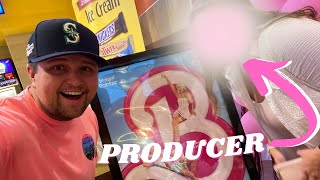
I did. Oh, you took a picture?
I took a picture.
Or I going to be the thumbnail Pink kind of orangish. It's pink. It's.
Bro, that's a fire shirt.
It's a good shirt. Got it in Oregon. So here's the thing. Wherever you stand on the aisle, if you are like on the left side of the aisle and you're like, yes, let's push this, like, feminine agenda. Like, toxic masculinity means you're a male, right? It didn't do that well. It did not Push the left agenda. Well, it didn't. It was disjointed. It relied on grotesque jokes, and it wasn't well put together of an. A political ideology. And if you're on the right and you're like, this is just saying how bad men are, you're just sensitive. Chill out, bro. It's a funny movie about guys and it's a Ken doll. So if you're upset about it, like, really chill out. So I think. And because it didn't do that well, it also didn't do the entertainment well. Like, the story was very boring. Yeah, it was a very boring story. Like, it was fun because of the colors and the sound and the. The scenes. And, like, some jokes were okay, but it was like half trying to push a political agenda and then half telling a story, and both of them flopped. In my opinion. I would have rather been a crazy leftist film. At least it would have been entertaining. Or take all the politics out of it and just make it entertaining and just make it fun. That's kind of my take.
So what you're saying is this is a binary decision. You cannot have a leftist entertaining story movie.
No, no, that's not true at all, though. That's. No, no, it's a good point. That's good pushback. I. I disagree with that.
You just feel it takes away from the story when they have a political agenda.
Yeah, I agree. I think movies. Movies are escapism for most of us. We want to be entertained, entertain us. Definitely.
Mine was three hours. It was too long.
Yeah, I'm trying to think. I do have a lot of notes here, but let me.
Did you take notes during the movie?
Yeah. Yeah. So the typo.
Did your wife hate you?
No, I. Brightness all the way down. Black. Dark mode coming on co pilot now. Dark mode. I was typing in copilot. But here's the thing, okay? Ruth. I don't know if this. This is a character. So Barbie comes to the real world, right? She meets Ruth. Ruth is the creator of Barbie. I don't know if this is like the real creator or just an actress. Okay. She takes Barbie on a walk. They're in this. This is. These are my exact notes, all right? They are in an existential space outside of time and reality. Ruth tells Barbie that all humans die. I. All humans die, but ideas like Barbie live forever. Okay.
Note the lighting in the scene. Ruth and Barbie are circled by fading light between pale lifelessness and vibrant pink life blood pumping into your body. Honestly, great scene. Barbie's left standing by herself, reading into every part of this, Ruth fades away. Interesting finish to that scene. So, like, I think it was kind of cool because they're like, okay, so what was the idea of Barbie Ruth was like, it is about, like, women's empowerment and making a cool toy for girls and not making baby dolls because that's all girls had. And so I'm like, that is women's empowerment. Like, you can be whatever you want to be. It doesn't mean you have to, like, reduce men to something less.
Right.
Like, I don't know. That was the most powerful scene, I think, to me, whether it was a real creator or an actress, I was like, that's this. That's the story of Barbie. Like, she wanted to make an icon for women. And then, like, the whole story of Barbie is like, well, Barbie's fake. And, like, it's unachievable as women. It's hard to be a woman. And Barbie sucks and, like, toxic masculinity. I'm like, I don't. It doesn't make sense. It didn't add up.
Yeah.
That's all I'm saying. But I didn't hate it.
I won't be watching it. So thank you for that diagnostic.
You're welcome. I. Yeah, like, honestly, I didn't hate it. I thought it was fun. I just feel like they missed the mark. If they were going for an agenda, they missed the mark.
See, I probably missed a lot of stuff on Offering. I'm not, like, a movie person, so, like, I don't know the actors. I don't. I don't get a lot of stuff when it comes to movies. So, like, the most movies I ever watched was an elective I needed in college just to finish out my degree. And like, dude, you can take this one class. It was, like, super hard for writing, and it was like. Or you can take this theater class and you just, like, watch movies, write reports. So, like, movies like the 30s and the 40s and the, like, diagnosing things.
Casablanca.
But, like, yeah, like, nowadays, like, I don't know any of the actors or anything like that.
Yeah, I did that too. I took a writing. It was like an English credit, but it was a film class.
Let's go.
It was actually. This is like, one of my coolest moments in college. I was. You know, because college is when you peak. But it was the. The. The teacher, professor made us go around and say what our favorite movie is or, like, at right now. Like, what's your favorite movie? I said movie. Like, that's like the finals on that movie. And I was like, well, just give me an A now. Like, if I. If my taste of movies is that good for this class, like, just give me the A now. I don't even need to sit through this. So that's hilarious. Yeah. So, yeah, Barbenheimer. There you go. There's our honest reviews. All right. Not financial advice. Yeah, I do.
Okay, Go for it.
I do. So I went out of town to a friend's wedding. Eastern Ohio. Yeah. You know, if any of our listeners are in eastern Ohio, I just want to let you know, anytime I told someone I'm going to a wedding, they're like, oh, where are you going? I said, eastern Ohio. They were like, oh. So that's the reaction to eastern Ohio, at least from people I interact with. So this cool thing that my wife and I just decided, it's. I'm making it a rule now. This isn't like, official, but we were like, okay, if we're going somewhere for a weekend, we have to get a rental car. What's like a reasonable distance to drive? Right. You go for the wedding. Well, that's only a few hours, right? So, like, what else are we gonna do? So if I came up with, like a personal rule now. If we get a rental car, three hours. If something cool is within three hours, you just go see it. You just do it because you have the rental car. Most of them come with unlimited miles. You get a hybrid, it's got great gas mileage, so we went to Niagara Falls. So that's why not. Financial advice. If you get a rental car, three hour rule. If something very cool is within three hours, just go do it.
Okay.
You got one life. All right.
My, my not financial advice is.
This is the new band that I'm wearing, right?
Oh, all right.
This is the new version because I had my other one for three years and it used to be $36. We got inflation, so it's $48, man. But the Xiaomi X I A O M. I. Smart Band 7, it now offers many more capabilities. It tracks your O2 levels.
Okay.
It has a much better notifications. Yeah. So it's now like my calendar. I've synced up with it so pretty good. So I definitely would highly recommend it for all that you get. The sleeping. The best thing, alarm clock on your wrist, vibrating on point.
No tone, no tone, no sound. Just more natural. Wake up.
Very nice.
Oh, I like.
It has the whole thing where, like, it tracks your sleep pattern. So, like, it'll wake you up within a period of time. Which is best for like, what optimal wake up time or wake up during your sleep cycle is. So yeah, a little. It's very nice. And what's further better for someone like yourself is if you're sleeping with someone, they don't have to wake up. Like, you just.
Oh, yeah, yeah.
You get a buzz in your wrist. So. But no, definitely highlight is just better O2, O2 tracking of blood, better sleep tracking. It's great.
O2 tracking. Explain it to me like I'm a fifth grader.
In your blood. Well, yeah. Blood transports oxygen throughout your body. Obviously tracking that is an important thing, especially if you are doing cardio respiratory exercise or if you're older and struggle with like lung stuff. It was a big deal like around Covid in terms of seeing what your O2 levels were and everyone was like, oh, 92 or below. You should go to the hospital and all the rest of it. It's a good thing to track.
Good thing to track. All right, well, that's a pod.
That's a pod.
Like, and subscribe.









