15 year-old owning a $10M lawn care business?!?!
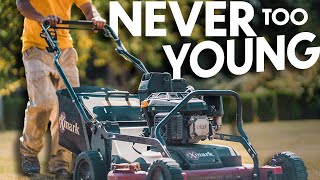
Mike Andes interviews 15‑year‑old entrepreneur Caleb Conger about scaling a lawn care business. Andes emphasizes focusing on short-term, controllable goals (next 3–12 months), stabilizing one location until it runs without the owner, hiring full‑time employees, and implementing systems before expanding. Equipment choices (Isuzu flatbeds vs. pickup+trailer) are less important than leadership and employees; trucks won’t be the limiting factor. Hiring minors raises licensing, payroll, and insurance issues. Meeting cadence: daily informal contact with 1–2 employees, move to scheduled team meetings when you reach ~3–5 employees. Operational question remains about best practice for handling "yellow slips" (work orders) across crews.
Chapters
Hey, what's Mike Andes here And today's special episode because we're actually play a bit of a call in show that was last weekend and today's specific question from a caller was from a 15 year old that is trying to build a $10 million business. And I really tried to encourage him to stop focusing on a 5, 10 year projection building 20 locations and really focus on the now. And that is what does your business need in the next three, six and 12 months? Because that's really all you can control. Anything beyond that is just a wild ankle guess of what's actually going to happen. So regardless of what your age is, I think this is important when it comes to goals, what you want to grow the business into and really making sure that you're focused on the right things in your business. Without any further delay. Let's hit it.
Hey Mike, it's Caleb Conger.
Hey, how you doing?
I'm doing very well.
Good, good. What's your question, brother?
So my question for you was we're trying to grow. I'm 15, I actually talked to you in December and at that point our goal was 100,000 this year we did about 16 last year. So we've raised that to a quarter million and then have a five year goal of 10 million in revenue. And so I'm looking to do 20 locations at a half a million each. But my question for you is kind of what should I make that process? My process that I was looking at is next two years kind of focus on this location and then three, three years after that other locations. But I mean right now we've got a truck, dump trailer, maintenance trailer and then two full time guys, me and like three part time guys. Should we look to do all, I mean should we buy more trucks first probably or new hires or I mean what's your opinion?
You know, first of all, you're crushing it at 15 to be doing what you're doing. I'm going to talk to you like I would any other person because When I was 15 I wanted people to talk to me like a real business owner, not like I was 15. So I'm going to talk to you that way. And that is you really want to lock in and focus on what you're doing now. Don't worry about the five year plan, don't worry about $10 million in revenue, don't worry about 10, 20 LOC, none of that matters. The only thing that you want to focus on in the next six to 12 months of growing your current location hiring Employees getting them full time, implementing systems. Focus on that only right now. I know it's easy to get wrapped up into how many locations you're going to have or revenues. That's very cool. And hey, you crushed it. You know, we planned for 100,000. You're shooting now for a quarter. That's awesome. But just focus on that one location and just keep tweaking it, making it better till it can run without you. Then start focusing on the next thing, which is what your second location. Right. Like that's the only thing you need to focus on. Don't worry about getting wrapped up in the numbers or things like that. Like you don't hear me talk a whole lot about like even how many locations we want for Augusta and things like that, because it doesn't really matter. I'm focused on like the next few months. These are the operational things I'm trying to get done. And for you, I would stay within 12 months. Anything beyond 12 months is a wild ankle guess in terms of what's going to happen. And you know, things happen in life, things have economy, things happen with employees. So don't, don't put too much emotional.
Investment into what the future is going to hold past 12 months.
Yes, sir. Do you suggest looking to do like more. More trucks? I mean in our market, the lawns that we're regularly servicing are about 3/4 acres and it's common to use like your turn. I know y' all use the trailerless setup and we normally use 60 inch zero turns. Is it a good idea to do what's called like an Isuzu truck where it has a flatbed and you put a lamp on the back? Or is it a better idea to just do pickup trucks and trailers or. I mean what. Have you seen markets like that?
Yeah, yeah, it definitely depends on the market. I've seen some people that swear by this use. Other people say they're too much maintenance. Personally, like I'm horrible mechanic. I have nothing, no idea what I'm doing. So if I was starting out, I wouldn't want to buy a piece of equipment that I have no idea how to fix and potentially could be very expensive to fix or hard to find people that can work on them. So I would definitely look at landscape business course, the Facebook group. There's been some really good debates about Suzu and what people's opinions are. I have not used them personally mostly because I feel like it's one of those things if you're going to buy them, you kind of got to keep Buying them. And I would rather take an interchangeable piece which is more like a pickup style, something that is easier to find and get more of instead of something I have to lock in myself into a specific type of truck. And that's typically why people have to start buying things new because the only way they can find that specific type of truck they've locked themselves into. So I'm not against them though. I think they're great. I really like the driving experience, honestly from Isuzu. It's like from a safety standpoint and just, I really like it. It's just a matter of maintenance things. I have no idea. Sometimes hard to find dealers that will work on them, mechanics that will work on them, or they can be expensive. So I would just look on landscape business course, Facebook group, see if that's something that when you look at their debates kind of between people who have actually used them, if it's worth it or not. But again, I would just really, really zero on the fact that your limiting factor. Was it Caleb? Right? Yes, sir. Caleb? Yeah. Like what's going to be your limiting factor is not going to be the trucks that you buy. Right. It's going to be your employees, especially your age. The thing that's going to keep you from growth right now is going to be your ability to lead. And so the trucks, you know, I, I really, I really think you should flip a coin in terms of if you need another truck, what you want, which one you should buy, because that's not going to be the determining factor of whether or not you get to what your goal is, which you just said is $10 million. It's going to be whether or not you're able to lead an organization, learn how to have managers underneath you and doing it at a very young age is no, no easy thing to do. So I would be really focused on spending your time on that, not, you know, spending hours and days trying to debate what type of truck you should buy.
Okay, so for, for the process of truck right now we have an extended tab, but we've got at least two full time guys in it all the time. How many? I mean, I should be looking to purchase another truck, right? Or should I?
Yeah, especially if, I mean by the.
End of the month we'll have three full time guys and that's a small truck that we squeezed in. It's kind of, kind of uncomfortable.
Yeah. Even at 3/4 acre of an average lot size, anything above 2, 2 people and the truck starts to get wasteful. Right. It's really Going to come down to whether or not you have the cash, the cash and you have the aspiration to grow. I would go ahead and buy the truck for sure. So, you know, especially the rate that you're growing, you can definitely afford to get another truck. And again, assuming you can find those employees, I would really bank on employees when, once they're full time, not necessarily when you have a bunch of part timers, because at your age, that's usually the, the, the, the mistake I see a lot of young entrepreneurs making. They're hiring friends, high schoolers, part timers, and then they fail to make that step to getting a whole bunch of full timers. And it's mostly because it's easier to find part timers at our age. When I say our age, I mean, I know it's like to be that young and hiring people. And so I would really focus on honing your skills of leadership, hiring full timers and lock that process in. What type of truck you buy, honestly, is not going to make a big difference in five years. It's going to be those other soft skills.
Okay. So, I mean, right now, another issue I have is like you were talking about hiring friends. I have two guys that asked if they could work with me, and they're younger, so I can't run payroll for them. Is it. Should I continue to have them work or can. I mean, I. Because I hate to break that, like, one of them hasn't even started yet, but he's going to be doing full time. But I mean, I'm going to have to pay all of his taxes. Is that worth, what's your opinion on that?
Yeah, first off, you're going to talk to a bookkeeper, potentially even talk to, you know, what's the work kind of in your area of the labor sort of department, and see what's regulated. Because first of all, you're hiring minors. So that's a different license that you have to do in your business licensing. Furthermore, it's going to affect insurance and a whole lot of other things. So again, running your business that way before doing that and then taking a step toward your hiring people above 18 that have driver's licenses, that you can get a regular business license that you can run payroll for, that's a whole different step of business. Right. So that's what I want you to focus on over the next couple years, doing that and then focus on like growth and expansion and more trucks, all that down the road.
Okay. All right.
Because I know, I know there's like an unlimited supply of, you know, 15, 16 year olds that are willing to work for you part time, but they're not that you can't build a really good business on part timers that are 15 and 16. They're usually less reliable in terms of showing up. They're typically, they don't need the money. It's just, you know, side cash they're trying to make. And so building a business that is sustainable and, and you can promise to customers you're going to get jobs done and know it can be done and you can schedule things out in advance. You're going to need full timers and you're going to want people that can drive, people can insure, people that can run on payroll. You have a legit business. And so that would be what I'd be really pushing towards doing. And that's not easy when you're 15.
Okay. And then I had one other question for just culture and everything. Should I do weekly team meetings or I mean, how often should I do those and how should I kind of like y' all do two team meetings a week and then off site meetings, all that stuff? Should I be worried about that as much? And I mean, yeah, I don't know, what's your opinion on kind of passing the vision along to others?
Yeah, when you have a couple, a couple, only a couple employees, a little bit weird sometimes to have meetings in just like literally every single morning you're seeing them already. Now if you're new, working part time, doing like school things, you're going to need to make sure you actually do have in person meetings. But I'm assuming that you end the day started with them and so you're already kind of connecting with them every single day. What gets really important, starting at 3, 4, 5 employees, is having dedicated times on a couple of days a week where you do have an actual meeting time to talk about specific things, safety, callbacks, a training, and that becomes more important. It's a little bit strange when you only have one or two employees just because you already are talking to them every single morning. But the sooner you can get into that habit of making those regular meeting times and have a specific day or two a week where they know first thing you're doing that morning is a meeting is a good thing, in my opinion.
Okay, and then for yellow slips, how should that, I mean, because don't y' all kind of pin up your yellow slip? If the crew is out working and I'm working with them, do I just say, hey, we got a yellow slip and go do it or do I actually write out a yellow slip or do I wait till we get back and then pin it up on the wall and that seems kind of dumb. I mean what the best if we've got like two crews, what's the best way to do that? Just to call them and tell them.
Or yeah I think the best way to do that is going to be still even though if you're with the crew make a yellow slip, write it up, put it on the wall and then that's what you're going to go over at a meeting is making sure that you actually go over what happened, how it was resolved, what what we could have done to improve that and resolve or circumnavigate making that mistake altogether. It's a great way to start with your meetings is just using those callbacks as a way to kind of kick that off. So I appreciate calling in Caleb. I'm going to go ahead and go to move to the next caller.









