15 Year-Old Owns 6-FIGURE Lawn Care Business | Which Mower is Best?
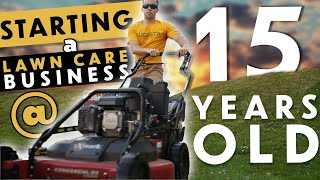
Transcript of a YouTube interview between Mike Andes and Caleb about Caleb’s youth-run lawn care business. Covers business scale (about 12–13 regulars), operations (homeschooled, morning schedules, limited driving until age 15), constraints (time, transportation), local marketing strategies (Nextdoor, door hangers, knocking), pricing ($45–$90, typical $45–60), finances (reported prior-year revenue ~$17,000; ambitious goal of $100,000), and operational advice on insurance and payroll (recommendations on timing and costs).
Chapters
How's it going, Caleb?
Sorry about that. I didn't realize I'm not very good with technical things.
You're good, man. That's awesome. So I got a little bit of information. Looks like you've been crushing it. You got how many lawns now?
12 regulars. I have about five that I do property maintenance for, such as hedge trimming and just. I kind of maintain the whole property other than mowing. And then I had another one that I got yesterday, so 13, I think now.
Very cool. And then you just do that on the weekends and, like, evenings after school or do you homeschool or kind of. What's your situation now?
I'm homeschooled, and so in a perfect world, I would get up real early and get it done before I started working. Sometimes I oversleep, though, so it ends up being some afternoons, but in a perfect world, I try to do it in the mornings.
Okay, cool. That's awesome. Yeah, that's kind of how I got started, too. So when I was 11, we had. I did one year at home, and that's when I got started with the lawn care business. So good to see you, man. It's awesome.
Okay, cool.
So when did you start? Was it last year that you started?
I want to say a year and a half to two years ago? It was in between that range.
Okay. And so right now, is it basic? Like, what's kind of the constraints are, like, keeping you from growing more? Is it more mostly just your time being able to go do it? And what's kind of your plans for growing this year?
I would say that my main constraint would be time and transportation. Just because I'm 14, I can't drive yet, and so I currently pull trailers around the neighborhood on lawnmowers. I have a brother who's 12 who helps me, and he helps me kind of Thursdays. He helps me on Thursdays. He starts around 10, but he really only works four or six hours a week. And then I have another guy who helps me just on projects, and so. But I'd really like to get some help and.
Be able to get around. But so I'm looking to kind of expand from the neighborhood maybe next year sometimes.
All those lawns currently then are inside your neighborhood?
Yes, sir.
Got it. And then when are you allowed to start driving in your state? Is it 15 or 16?
15.
Okay. So when. So when?
No, I'm allowed to get a permit and start driving at 15. I think I told you I was 14. I'm not very good with numbers. I'm actually 15 and I forgot, but okay, so I have that 11 months before I can drive.
Got it. So this would be your last season basically though, where you can't drive then?
Yes, sir.
Okay. Yeah, because like the challenging part is if you found someone that even say they were 16 or 17, then you're really relying on them just for transportation. And that can, that could be tough because then like if they call out or they're not there, you literally can't do the work. Right. So, you know, this year I think, you know, the best thing would be just try to stay in your neighborhood and just really develop as much as you can. But it sounds like to me like you, you just don't have the time because you know, obviously you're in school and things. Do you try to do more projects in the summertime though? Like June, July, August?
Yes, sir. And normally right now it's kind of started picking up actually we have weird weather here and so I think the lowest it got was probably 40 degrees here this winter. And so I try to pick up as many projects as I can. I got a couple this weekend and things. But the project side of it is more out of my control when they come and I would like to gain more control over that to be able to get more leads for projects.
And how are you going about getting those leads now? Are you just mostly going door to door or door hangers or what's kind of your strategy right now?
Thus far I've done no marketing other than word of mouth and I recently, probably five days ago, I started putting some ads on next door neighborhood, but that's been the extent I wanted to kind of wait and see your opinion on this.
Okay, cool. Are you just posting on next door or are you actually running ads?
I. I'm running one ad and one, one ad to posts and a discount.
Okay. Okay, cool. All right. So you're. So you are doing. Did you do a sponsorship or not or the local deal?
I did one of those.
Okay. Okay. Typically we've seen the sponsorship not work super well, but the local deal typically does pretty good. But that being said, I agree with nextdoor stride, like what you're doing because nextdoor is so hyper focused to just your one location, your one neighborhood. Right. So that's, that's really a good, a good strategy. I would really recommend using the posts because it's going to come across less commercial and literally just introduce yourself. If you just introduce yourself with a picture of you mowing lawns, said, hey, I'm 15 years old. I'm trying to grow my business. I'm only servicing this neighborhood. You will get a lot of work from that. The typical post that comes on there that is promotional, people don't typically like it a whole lot. However, when coming from a 15 year old and you're saying it just for this neighborhood like you're going to get a lot of work, like how many people are in your neighborhood that you think you'd walk to like 3, 400 homes or how many do you think.
I can get to 75 in our neighborhood. That's the extent of our neighborhood and I can reach all of them.
Got it. Yes, you might be somewhat limited because you might only get to say 20 lawns before you kind of hit capacity. But just in terms of like the other people doing their own lawn for example. But you know, I think you know that next door strategy would be really good. I, you know, if there's only 75 homes, I would knock on all their doors and do a door hanger as well.
So like the instant quote door hanger would be the best thing or yeah.
Like if you're trying to get lawns. Right. So what I would do is you know, have some of the instant for instant quote door hangers for the mowing and the mason for property cleanups or mulch. Like those are the three that we usually use and.
And then try to use all three each year because it's only 75 customers, even potential. You know, I would just really be hyper focused on the fact that like basically once a season they're gonna gonna get a door hanger from you. They're gonna see you on next door introducing yourself. Like everyone in your neighbor should neighborhood should know who you are. Right. And so I would just really go after that strategy like Google, Facebook. It's not worth it. You know, usually I'd be saying hey, start a website. It's honestly not really worth it because the website encompasses the entire world when you're going after one neighborhood with 75 houses. Right.
So Google offered a free. I think it was a Google my business website. And so I created that just so I could kind of start getting reviews for when I was able to get out of the neighborhood. How do you feel about our reviews? Really important to follow up with customers.
Or yeah, they're going to be really important year after next when you start going outside your neighborhood. Right. So I'm not opposed to you definitely get on Google my business definitely get reviews. People will love to support you and put those on there. And you can ask at the end of each year or even a couple times throughout the year to send an email to everyone saying, hey, here's a link. Could you leave me a review? That'd be great. But I don't want you to spend like a whole bunch of time or money like building a great website now because for the next year and a bit we still just want to say zeroed in on that one neighborhood. And that's going to be next door door hangers. Knocking on doors. Right. And that, that doesn't cost a lot. Right. Like you could literally buy 500 door hangers for, you know, 250 for mowing 254 mulch, 250 for property cleanups. And you're looking at maybe a couple hundred dollars max. But that would set you up for an entire year and a half of, of marketing. That's all you need because you literally hit every single house like three or four times a year. And then if they're seeing you on next door to like they're going to know who you are.
Okay. And I have business cards, but I designed myself, so they're kind of a simple design. Do you think that that would be worth spending the extra 80 bucks to order more?
I don't think you need to spend 80 because if you go 40 or.
I think it's 40 to 80 or so on Vista Print.
Yeah. If you go to Vistaprint, maybe just wait for a deal. Typically they have them on there, but for example, you can usually get a deck of 250 for $15. So I would just do that. Like I own the business card is going to be the main thing, right? Because right now you just need people contacting you and that's going to be coming through the door hangers. And next door, like next door I would literally just do a picture of you, you know, maybe mowing a lawn. You'd say, hey, my name is Caleb, I live in X neighborhood and I'm 15 years old and I've been mowing lawns for the past couple years. I do 12 or 17 of our current houses in our neighborhood and I would love to service your property. And I'm always here, I'm always local. I can get to your properties as quick as I can. I really think that would be what you want to lean into for this year. But then as you think for the future, having the reviews, having Google my business, and then even potentially next winter or even if there's time that you have any time this year, if you have any Time at all. Create like a free Weebly or Squarespace website. Just put up your. A couple pictures, your service page, like really basic. But then it'll start gaining a little bit of traction. So that way, in like a year and a half, when you actually need to get customers outside of that neighborhood, it's already gained some traction.
Okay. All right.
So. But yeah, like, I would just say, you know, number one, next door, number two, door hangers, number three, knocking on the doors. Right. Like, at the end of the day, Caleb, like, you know, when I was your age, too, it's kind of tough because I wanted to be like, you know, Mr. Professional. But, like, the unique selling proposition that you have right now is that you're 15, right? And you're going to have that for about the next three to five years. And so, you know, I always encourage young guys like yourself, is like, just lean into that. That's why people are buying from you. They're not buying from you because you're the most professional. You have the biggest mowers. You. You have fancy business cards. They're buying from you because you are local and you're 15 years old. Right. And you're probably cheaper than everyone else. But that's not the reason why either, because there's plenty of guys that could probably even do it cheaper than you on Craigslist that are just doing it for cash, right?
So, believe it or not, a lot of the people in my neighborhood are more expensive than me. And so whenever I go to people, I think they're expecting more of the cheap. And so it kind of messes with some people, I think, in their heads. But I'm pretty close to most of the people in my neighborhood. There's a couple who are real cheap, and they're like 25 bucks a lawn. But I think they only have one or two yards.
Yeah, I'm priced about 45. I've got one that's 90, but I'm pretty well, 45 to 60.
Good. Really good. Yeah. So what's good about that is you're not going to have to restructure the business in two to three years. Right. A lot of times when someone gets started at 14 or 15, they're mowing lawns for 20, $25. And then they hit, you know, 17, 18, they realize, oh, I've got to literally double the price on all these lawns, so you're not going to have that problem. So that's good. Now it's a matter of, you know, conveying yourself in a way, like but still, like, let's say you're $45 and all of the competition is $45. The only reason people will buy from you right now is because of your age, right? And that's not. It's not to say you're unprofessional or like, you can't be professional because obviously that's the goal. But that's not why people are buying from you. So I would just lean into that. That's why, like on the next door, show a picture of yourself, tell your age. You only have a few years of that before when you're 20, 21, people like, hey, show me your business. Like, be professional. I want to have, you know, insurer and bonded in a wrapped truck and website looks good portal where I can log in and pay with credit card. Like, they're all going to expect all of that, right? And so lean into it now. And I only knew that when I was like 18, 19. Unfortunately, I looked like I was still 12. So I kind of leaned into it for a couple of years. They're pretty hard in terms of the advertising side.
Okay. And I try to, like, on the website, online, and on.
Next door, I've put pictures of my trailer and everything just because I do kind of want to embrace that. And so I meet with everyone and kind of explain my situation or where then it. I. I tried to embrace that while also being professional, where I don't mess myself up later on.
And if you get a really good professional picture of you in your uniform, you know, with your, with your mower and actually like posing kind of, that's going to behave. This is professional. But here's also, you know, a young man that's trying to make some money, right? And so I think there can be a good balance there. And, and especially if you're charging premium, not premium, but like regular pricing, you do need to have that level of professional. We're like, okay, like, I'm choosing this kid because of his age, but he's still going to do my job, the job done right. You know, it's not like I'm taking up an inferior product. And so, no, I think that's great. I think, like, when I got started, I was in a similar spot. We had 120 houses in our neighborhood, and we would push the lawnmower all over the place, but everyone in that neighborhood knew who we were, right? So we would knock on doors, do door hangers. Well, at the time we. I didn't even know about door hangers, so I did flyers but you know, just get everyone in your neighborhood to know who you are. And I wouldn't worry about like too much online like Facebook and things because you're going to get too many customers and leads coming from outside of your neighborhood. Right. The Google. My business is fine. Have a website if you want to create one. Just a simple like one pager, that's great. But most of the people coming that page will be outside of your neighborhood. So the main goal is like create that presence on next door and then make sure you're in front of them for every season of the year. Right. You come for mowing and then you know, a month later you're, you're asking for mulch cleanup and then come fall cleanup time, you're putting another door hanger on for all cleanup. And if you're doing instant quotes like, so you're going to get a lot of work from that.
Okay.
And I haven't pushed online really. I really just created it probably a week ago just to where I had somewhere where people could plug in some reviews just to kind of get a start and have a basis. But I don't think anybody could even find it if they look for it. So I just send them the link as a follow up.
That's perfect. That's great. I think it's still worth doing because you're playing the long term game and then a couple years that will really matter. So definitely keep doing that. Right. It's just in the short term, the next year, most of that, most your customers are going to come from than the more personalized local kind of marketing.
Okay. How do you feel about insurance? When would be the best time for me to get insured?
Yeah, like this year because like last year did 17,000 revenue this year you think, what are you shooting for? Like 25, you think?
I'm looking to. I'm kind of someone who just sets ridiculous goals. And so I'm going for 100 this year.
Let's go. So if you're going to go for 100, I would go ahead and get insurance. The bottom line is you're going to only pay about 50 bucks a month, maybe 70 max. Because you're going to say, hey, I do lawn care and that's all. And I'm by myself. I have no employees. And my revenue. You report your revenue from last year, so you'd say I'm only 17 grand a month or 17,000 in revenue. You will be the minimum of liability insurance. And I think you actually be at that minimum for probably another year. Cause usually until they hit like when I hit like 200, 300,000 in revenue, that's when that. The first time that ever bumped up. Right. So that's general liability. Yep. Go ahead.
And I need to be looking for insurance for just me, not. Not for the other people who help out.
I would start off with just by yourself on the insurance plan, mostly due to the fact that first of all, you're probably doing most of the work, but then secondarily, because as soon as you do add employees, now you're adding a whole nother layer of liability. But more importantly now I'm assuming you probably give them cash. They're not technical employees, which also can become an issue. Go ahead.
I'm putting them on payroll this year and I pay them through check and everything. So everything does kind of, for the most part, runs through the bank. And I record everything under QuickBooks and Stuff.
Do you run it through QuickBooks Payroll, sir? Do you run it through QuickBooks payroll or are you just writing them a check at the end of the pay period?
I am writing them.
They're going on a payroll this year, so I haven't started yet. I mean, how do you feel about that? Is QuickBooks Payroll hard to run or.
No, it's not hard to run. I'm just looking at the price. Right. So for example, you're going to pay an extra $40 per month for QuickBooks payroll on top of what you're paying now. Plus you're going to, when those, when you get those employees or they help you, they're now going to have to pay taxes, you're going to have to pay taxes, you're going to have to set up like unemployment insurance accounts, LNI accounts, labor and industries. So there's a lot that goes into setting up an actual employee. What I would recommend is if you have any of these employees that are going to be with the long term that are starting to work with you for like 20 hours a week. Once they hit 20 hours a week, that's when I think you should put them on payroll correctly. And when I say put them on payroll, I don't mean just, you know, calculating hours and writing them a check that's still technically paying cash. Right. When I say running payroll, I mean actually using QuickBooks Payroll, them having a deduction for federal taxes and for Social Security and Medicare and all the rest of it. And so I, I wouldn't play that game until you have an employee doing 20 hours a week just because otherwise the cost to you for having them becomes so high just to get all your accounts set up and run payroll every time. And then just paying for QuickBooks payroll, all of that is a lot of time. Then you got to pay payroll taxes. So I would just wait. Like, I know your goal is, hey, we want to get 100,000, which means you're probably gonna have a month. This, this year we do over, you know, 12,000 revenue, which is awesome. But the first few months, I would keep it where you're just writing them a check based on how many hours they work. And then if it gets to the point where you are hiring someone like 20 hours a week, that's when I would go ahead and get Quick Times payroll for QuickBooks. And you'll figure out how to do it. It's not that hard. You'll select your state. It will open up your accounts for all those different things. But you do have to do, like, quarterly taxes. Like, there's more to it. Right. And there's more cost. And what I don't want is you spending, you know, just for the. Setting up your QuickBooks payroll as well as your taxes. You might be looking at a couple thousand dollars, 3,000, maybe even $4,000 extra cost this year. And I don't want that. If you're only. Your total gross payroll is only going to be, you know, 10 grand. Right. You just inflated your labor expense by 40%. So I want, I want to make sure, like, you have someone that's consistently working 20 hours. That's when I would go and actually run payroll correctly.
All right. I received a quote for payroll filing. I can't remember the company for sure. I think they said It'd be about 600 a year, though. How does that line up with QuickBooks? Would it be better to go with them or with QuickBooks?
I would actually, if they, if they're actually do all your filing for you for that, for 50 bucks a month, like, I would go ahead and do that one. When you do start up with that payroll, because you're going to be looking at $40 per month just for QuickBooks payroll software. Plus, you still have to do all the filing. You have to file everything. So the big question we want to ask that company is, do they file your, your quarterly reports, your unemployment, do they take the taxes and actually send them to the IRS and all of that? If they do, that's a great deal, right?
Would you think do that now or still wait till someone's doing 20 hours?
I would wait till someone has about 20 hours. And keep in mind, too, your Employees aren't going to like the fact that they're going to have to pay tax now either, right? So you're going to want to communicate with them because you don't want it to be like, hey, you're going to be on payroll, it's going to be great. And then all of a sudden, they're going to see a third deduction on their. On their. On their pay stub, right? And if they're just used to working for you five, six hours here and there, and they're making 100 bucks, like all of a sudden that becomes 70, right? So I would definitely communicate with them and make sure they know what's coming down the pike. And especially what will happen is this is what. That's. This is when I switched, right? I had someone helping me, like on the weekend. He'd come out helping big projects when I was behind. As soon as I. He was committed to me and like, he quit his other job and start. That's when I started running payroll, doing taxes and all the rest of it. And so that's kind of what I would recommend.
Which I made them aware last year that I was planning on going on to payroll this year, and they're currently under 1099 contractors. And so that's why I was recommended to swap to payroll. But it was by the same company who would be filing it. So you never really know if that's a sales thing or.
Are they using your tools?
Yes, sir.
Yeah. And I'm assuming wearing your uniform and things, right? And you kind of tell them.
They have to.









