$1M Lawn Care Company SHOP TOUR: Reaction to @bblawncarekc & @itshisturf23
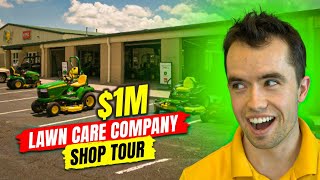
A reaction video/podcast episode by Mike Andes where he reacts to a shop tour of "It's His Turf" (Blake Hawthorne) conducted by Blake Albertson of BNB Lawn Care. The episode reviews shop layout, fleet and equipment (trucks, dump trucks, bobcat, ditch witch/compact loaders), operational choices (scaling back fleet, removing full-time mechanic), debris handling/composting, and trade-offs between equipment choices for landscaping vs. lawn-care businesses. Mike intersperses commentary about business strategy, equipment costs, shop location trade-offs, and employee-management suggestions.
Chapters
Hey, everyone, it's Mike Andes and you're listening to the landscape business course podcast. Today's gonna be a different episode. I'm gonna do the first time. I'm actually going to do a reaction video to BNB Lawn Care and their company wide shop tour of it's his turf. So really looking forward to today. I've never done one of these before. I love watching other creators in the lawn care and landscape space and seeing what everyone's up to, getting ideas, trying to learn from other people. And so a lot of you have asked me to make these reaction videos. Add my two cents to it. So we're gonna watch it together. Maybe you've already seen it, if you have, awesome. But definitely subscribe over to Blake's channel at BNB Lawn Care. That's where this is coming from and we're going to react to it today. If you don't know who I am, I'm Mike Andes. I'm the founder of Augusta Lawn Care services. We have 20 locations around the United States and Canada. That's a franchise. And also I teach a lot of my course material@landscapebusinesscourse.com. check that out. See if it's good for you to grow your lawn care business. Without any further delay, let's go ahead and jump right into the video. Join Blake on his tour of It's His Turf. So here we go. Let's see if we can actually figure out how to do this.
What's up, stripe nation? Blake Howard here with BNB Lawn Care. I'm here with my buddy Blake from It's His Turf. What's up, Blake?
What's going on, guys?
We're here in Hot Springs, Arkansas, at your hq, man. Your shop. Yeah, tell us about it, man. This is awesome.
We're out back. This is where all the junk gets stored so nobody see it from the front. And my wife doesn't have to gripe. So it all gets stored back here. But yeah, man. So this is. We moved from the carport you passed.
So I called this area of a landscape company the materials graveyard. And I think all of us know what it's all about at the end of lawn care jobs, basically, or, sorry, landscaping jobs. All. All the excess material, whether it be piping or pavers or wall blocks, end up in this spot. Ends up usually being a whole bunch of a mess. And you gotta clean up every once in a while. This is an area you definitely gotta keep a track of and keep a handle on if you want to stay maintained in like a really orderly fashion around your shop. Definitely a learning trailer.
That carport shed, that was our old headquarters. So that's where we ran like eight crews out of.
Okay.
And then four years ago we built this place. So 6,000 square foot shop and carport. So we a bunch of lumber back here. This is just for, you know, like forms and stuff for all the concrete that we do.
Okay.
And then over here, just pvc, wheelbarrows, rebar, you know, irrigation, concrete, landscape.
So one thing to take note of is especially as you add landscaping jobs, you do have to usually add more shop space. For a lawn care setup. You can run that out of a storage facility pretty easily because a lot of the truck has all the equipment on it. It's pretty self sustaining. When you start adding in projects, you need material. You need like she had forms for concrete. You're gonna see soon. I can see there's a bobcat in the back there. Trailers, a lot of wheelbarrows, equipment. So it's just one of those things to keep in mind. If you're wanting to go from lawn carrying to landscaping, you're probably going to need to invest at some point into some shop space just because of the amount of storage that is required to facilitate gaping all that stuff.
So that's sweet. I want to see the trucks. Man, these are sweet.
Yeah. So the fleet's a little bit smaller than the last time we talked over the winter, we sold like eight trucks, nine trucks.
Wow.
And we bought two brand new ones. So this is one of the brand new trucks we just bought. So one reason we did that is tired of breakdowns. The other thing was we no longer have a full time mechanic.
Okay.
And so we decided let's get a little less headache and grind and go make some money.
Yeah. So we did a video a couple years ago and I forgot to say, say this kind of in our intro about two years ago and we kind of went over your story. You guys went super, super big. Like 2 million dollar company then have been working to downsize and just be more profitable. Is that right?
That's right. Man. It's been good to us this year. Really good.
So this is something that I think a lot of people should consider and that is actually scaling back your business. This is something we did a couple years ago at Augusta Lawn Care before we franchised. We knew that I was not going to be able to be there on a daily basis. We, we would need to simplify the business model and had to cut out a lot of services. We didn't necessarily hire less people or get less trucks, but we simplified services. And this is something a lot of people should think about. If you're trying to systematize your business or make it more profitable. Like Blake here, It's his turf is doing. He scaled back his operations to make it more profitable by getting rid of a full time mechanic. That costs a lot of money. And so that's something they kind of almost need though. When you start getting, you know, 20 trucks, you kind of gotta have someone being a mechanic all the time. You can cut that overhead out if you've scaled it back, made it more simplified and like they've done, invested in the more expensive truck, but sold eight other trucks to get that one nicer truck. So something definitely to consider if you're trying to scale back and make it more profitable and streamline. Not always the best thing if you're trying to grow, but definitely if you're trying to scale back, make it more streamlined, make it more systems oriented and more profitable. That's definitely an option for you.
That's awesome. That's good to hear. Can I get in this thing?
It may be messy. The crew just rolled in.
That's okay. That means it's making money. Dude. This is sweet. And how many you fit five people in here.
Six people? Yeah. The guys complain when we push six in it, but it'll actually hold seven. But. Wow. Yeah. No, they probably quit.
That's awesome.
So, yeah, there's plenty of room back there.
Wow.
These things are huge.
They are.
Is this a diesel?
So now they're. They're gas. I want it all just lower maintenance. So my whole fleet is that we're switching from seven three diesels all to 6.0 chevrolets.
Are you trying to cover up all this grass in here? Is this a fire hazard?
That's hilarious. Yeah. Now we'll just. This thing actually dumps.
Oh, really?
Yeah. So the attachable dovetail and it dumps. But with that much grass, we'll just drop the side gate and blow it out.
Wow.
Yeah.
So that's sweet.
And right in here, it's just got a.
Oh, it dumps.
Just a little controller on there. This is sweet, dude. That's cool.
Within a few minutes, you can actually just drop the whole ducktail. If you've got it loaded down with mulch or grass or whatever.
Really all your tools and everything would be on the ground, so.
So something to take note of here. This is an Isusa or sorry, not an Isuza. It's similar to an Isuza truck. This is a Chevy model. This is. They brought this brand new with the crew cab like that. I'm going to guess you're running between 30 and $50,000, depending on the options. Now you have a dump on that. You got the crew cab. It's brand new. Probably more on the higher end of that, honestly, could be even more than 50 grand a pop. So do I think this is the best thing if you're trying to scale and grow out in terms of size? No, I think it would be more efficient to get three $20,000 pickups and be able to scale a lot faster and, you know, grow bigger. That being said, again, growth sucks, cash. And if you're trying to make your operation more lean by not having a mechanic and going from 20 employees down to 5, 6, 7, 8 employees, definitely this is a good option for you. This is something that we would never use at Augusta lawn care in. In our market this size of a truck for lawn care. We use bigger trucks for landscaping with a dump trailer, but we don't use the big flatbed dually diesels simply due to the fact that they cost a lot to buy. And then if I have six people in that truck on a lawn care, you better be doing commercial. You better be doing big properties where they're there for at least an hour or two apiece. If you're doing residential things, 30, $40 lawns, you should not be driving around five or six guys inside of a big truck like this. This is obviously the truck that they probably use for big commercial properties, I'm going to assume, as well as for landscaping projects, because they can carry materials like mulch, gravel, and soil in the back of that bed and dump it off.
Well, we would take it off, but then, yeah, we can dump it. So we just ordered a bunch of green touch racks. We've got four blower racks going on it. We got a four position that we're about to drop on it. And so we'll be able to just leave all the stuff on the. On the truck and trailer.
That's crazy. Now you have a few more trucks out here.
Yeah, we got a few more. So this is our 550. This is like our landscape. We actually use it for a lot of mowing. So we do a lot of push mowing big subdivisions.
Okay.
Do you have babies out here?
But yeah, so we dump all of our grass clippings in it. So we've got three dump trucks out here. Okay. This is one of them. And this one's the workhorse man. It's a tank. We haul our skid steer with it, all that.
So that's awesome. So you guys kind of have your own dump here, right? Just dump it down the hill.
Well, what's crazy, when we built the shop four years ago, the pad stopped at the edge of that sprayer tank.
Oh, really?
Like 13ft out from the edge of the building. Wow. And they we've just got free fill. I haven't paid for any of it. And every time we excavate out for a hardscape job, we dump it back here.
Really?
Yeah.
That's awesome.
And then just pack it down, stuff like that, go over the hill. And we do have a composting station up front. And so we're about to get. They open up our compost once a year. We'll haul in a bunch of free compost and then we'll start dumping fresh grass clippings, fresh leaf mulch, mix it all up, and then sell it to our customers.
So this is something that's really, really interesting. They actually sell their degraded materials, their lawn clippings and debris. That basically is composting. They would sell that to customers. We don't get to sell our debris. But this is really important when you're looking at a shop location is where's your debris going, Especially if you do bag clippings and especially if you're going to do trimming bushes and cleanups where you have a ton of leaves or branches or just a whole bunch of stuff that will come from a property cleanup. This is a really important thing to look at because you might have a big shop, but if you have 10, 15 trucks out on the road, you could literally be spending thousands of dollars a month in just dump fees to going to your local dump. Whereas if you can figure out a location like this where you have a drop off like they have, you have a drop off a cliff where you dump all your debris off and literally just keep building it out, you will literally.
Save more in dump fees than you would just on the cost of your rent. So keep that in mind. Some people say I can't afford rent, but they're spending 8, $900 a month in dumping fees when they could spend $1,000 a month. Get a piece of land where they could dump all of their materials, have it compost buy, level it off each year, compact it like they did here, and really make it a whole lot more cost effective.
That's awesome.
Yeah. This is a truck bed. So this is part of a truck build.
Okay.
Winter Project. We're too busy. So, yeah, this is going on a cabin chassis. Well, that's another video. Another time.
Yeah. That's awesome. Oh, my gosh. Dude.
So this is gonna be the leaf rig. We just bought a brand new debris loader, so. Wow. That's gonna be going on this thing. And then that thing is huge. F 657.3.
Okay. So we had a similar truck to this. We've actually had two similar trucks to this. One was an F700, and the other one was an L. Sorry, an L7000. The other one was an F600 that we've had. And very similar make and model to this truck here. I would not recommend getting one of these unless you're a very good mechanic. An older truck like this, it breaks down, it's very big, and it's hard to train people to drive these things. That's the hardest part. This thing, this size of a vehicle, make a lot of damage on someone's property. If they drive over a lawn, if they back into something, it's not like, oh, we dented it. It's like we smashed and obliterated it. So if you're gonna get a truck like this, make sure your guy, your crew is very skilled at driving and know that you're not just gonna throw people on. And then be efficient on their first week of work. Like, it takes a lot of skill to learn how to back these things up, utilize them, dumping them under power lines, et cetera. What I would recommend for starting out, if you don't have a skilled mechanic, if you're not mechanically inclined, if you don't have good drivers, or you depend on a lower level, skilled workforce. Because the biggest thing we don't like is where only five of our guys can use a certain truck because they're the skilled employees. Or if it's a manual, only some people can drive it. We don't like that. We like all of our crew. It's much easier, much scary, More scalable, easier to schedule. And so we ended up getting rid of these trucks, these big, big ones, because, honestly, a 350 or a 2500, they can pull a 7 by 14, 7 by 16 dump trailer. And that dump trailer with the truck is a whole lot cheaper than these in terms of maintenance. And, you know, just a tonnage on the licensing every single year for, like, the license plates because they're so heavy. Is it crazy? And so some states, you'd actually need a commercial driver's license to have this truck, this one, you probably Don't. It's a single axle. It probably doesn't have air brakes anyways. In our state, if we have air brakes, if it's a dually or if it has more than £26,000, then you have to have.
A CDL commercial driver license. So we went away from this and instead we went to dump trailers. Because you can build up the sides of a dump trailer with wood and, and get just as much if not more debris inside of it than this dump truck. Alright. So something that we really, really liked a lot more is the dump trailers. These definitely have a purpose because a dump trailer on top of a truck does get very long. This is gonna be a little more compact. But again the skill to drive this thing and the maintenance for these older dump trucks gets exhausting. We went through two of them. We went away with them. Now the biggest truck we have is an F450 diesel and dump and everything else is, you know, half ton or half ton. No three quarter ton or one ton trucks hauling a dump trailer foot bed on it.
What do you guys do with it now?
We haul mulch, rock gravel. There's no telling what's in it. Okay. It's clean. That's surprising. So. But yeah, so this we just haul anything and everything. Sometimes when other trucks are broke down or busy, we'll take it out to the subdivision and dump grass in it too.
My goodness. So man, you're gonna be able. If you build up some sides, you'll be able to hold a lot of leaves.
And that's what I'm hoping.
Man.
I'm gonna put my dad in it with the helper. A couple blowers. Yeah, do that. And then down yonder is our other little dump truck.
Okay.
It's got seven, three in it too. A little 97 dump truck. So.
Ha. That's awesome. So what's the majority of your guys's business?
Right now we mow a little over 400 yards a week. And then we do landscape, hardscape and irrigation.
Dang. Can we make our way over this way?
Sure. I'll follow you.
So I don't know where I'm going, man. You direct us.
We have a couple trailers. That 12 foot trailer over there, that was my original trailer I started the company with.
Okay.
Yeah.
So how many years ago?
Started in 2008.
Okay.
Yeah. And so then this is a 16 foot trailer. It's just like the one we're giving away next week. And so.
Yeah, that's awesome.
We downsized from 18 and 20 foot trailers to the 16. And we just liked it because a little more compact, a little less curb checking and you know, stuff like that.
Oh, my gosh. I just got excited because I saw the boat. I got excited because the bobcat and then I saw the boat and then like, whoa.
Which one makes you more excited? I mean, this one.
That one makes money, that one spends money. But that looks fun.
Luckily. Okay, so disclaimer. That's my brother's. I just letting him store it up here. Yeah, yeah. In return I get to go out on it, Right?
Well, hey, that works. You got the space. That's cool.
I kind of. We splurged. I've never bought toys till this year. And you wouldn't know it from what you see.
That's awesome.
This is where all of our heavy equipment goes. Just try to keep it out of the weather. This winter, once our pad's done settling, we're actually going to build like a 70 by 25 shed.
Wow.
On the outside for all of our attachments. And so we got like Harley Ray trencher buckets, all that over there. Brush cutter. We're gonna put all that stuff under the shed with all the heavy equipment. Wow.
So is this. Is this for the hardscaping stuff?
Hardscaping, landscaping. So we've got.
Oh, my goodness. Dude, this is awesome.
Look at that. That is a beast. So what do you do with this bush hog?
My property right now.
Okay. So do you offer it as a service?
No, we don't offer it as a service as of right now. So yeah, actually long term. Borrowing this from my father in law. Talk him out of it. Yeah, he doesn't use it.
Yeah.
And he's got a big debris mulcher.
Okay.
And so I'm trying to talk him out of this unit for. For my place. But we used to bush hog with this. But I've got a lot of rolling hills on the property. We got 40 acres here. Do you? Yeah.
Wow.
So I just. I wanted something that I'd enjoy using. I didn't enjoy the tractor, but this thing is fun.
Huge. Wow, man. I didn't know you had 40 acres. That's super cool.
Do you use the ditch witch?
So how much space you use for a shop in terms of acreage is really going to depend on where your shop is. Obviously. I believe this is in Arkansas. The land's pretty cheap if you're in the middle of a metropolitan area. For example, the shop that we have at our first location, the two acres that we're on. Oh, sorry. The eight acres that we're on is. Is worth over two and a half million dollars. And so for us to get 40 acres where we're at is almost impossible. However, we're right on a highway. There's lots of exposure. It's a little more central to where all of our employees work. So there's pros and cons to both. We're living out in the country, Lots of space, cheap land, and plenty of storage. Definite highlights, and definitely a lot easier to put your debris in spots. The advantage of having a little more centralized is better employee access. They're going to be closer to work. It's more efficient for your routes if you're closer to your jobs, as well as you're gonna get more exposure if you're on a highway or someplace where people drive by and can see your sign.
Or like the bobcat or tractor more.
We actually use the bobcat more. Okay. So the bobcat is what we use on projects, and then the tractor is what we use around the shop.
Okay.
So. But the two years to get used the most or the yammar, the ditch witch.
Okay.
Yeah, man. Just dynamic duo for any landscaping job.
That's what I heard. I'm like, everybody says, you know, you need to get a. Everybody calls it the dingo, but, you know, like a ditch witch.
Yeah. I probably called it a dingo by accident.
Yeah.
Something that size equipment I bought in, like, 2012.
Okay.
Yeah. To go in from wheelbarrows. And I wish I would have bought one of these first.
Really?
If I had to pick one out of the three, I'd go with that.
Because even I thought I've heard that quite often.
We do not have a ditchwitch or a dingo, and we've never bought one. We've rented them before. But I have heard that if someone had to choose between the two, they would choose the smaller one. I believe the same thing. The reason we had started with track loaders and skid steers is because we had material in our yard, and we originally were selling it to retail. We were selling it to the public, and so we had to have those loaders to load up people's trucks. However, if we were just doing services, I would definitely stick with the smaller, compact one. It does take more scoops. Because the scoop is smaller. It doesn't have as much loading capacity. However, it can go into the backyard of people's lawns through a gate because it's less than 36 inches wide. And so it's very, very versatile. It can fit on a Smaller trailer. You don't need as big of a trailer and as big of a truck to haul it because it's not as heavy. So definitely, if you're weighing between the two, go with the smaller one. I've heard that time and time and time again. And I've heard when companies have to decide which one to sell as they're downsizing, they usually get let go of the $70,000 bobcat before they let go of the $25,000 ditch, which. Or dingo. That's what I have seen historically about.
Like, getting a tractor.
Yeah.
So you definitely go with the ditch, which.
Yeah.
Okay.
And so another reason is, like, not only do I have the bucket, but if we go over here, like, we've.
Got all these attachments, right.
And so we've got the five in one bucket, we've got the Harley rake, the soil conditioner, and we've got the trencher and the forks all right here. Most of the time, you can put that on a flatbed truck and that, you know, 18 foot trailer, and we can go to town and, like, we can do any kind of job. Right. So it just makes it super easy.
Now, I would finish off with the toys, but since we're over here, let's. Let's just check them out real quick and then we'll go inside the shop.
Okay.
What is this, man?
That's my brother's new wake boat.
It's awesome.
Yeah. All the videos that was, like, on the today show from, like, the Trump parade and stuff, man. This was in it.
I apologize for whatever y' all may have seen on this thing.
Wow, that is sweet, man.
Is that your camper?
Yeah.
So some four wheelers?
Yeah, a couple four wheelers. Kayaks. Those are my brothers and my. One of my guys.
This is something I talked about a couple weeks ago on a video, and that is trying to keep separate your business and your personal when you have a shop. So if you have your home and your business at the same locale, it is good to try to keep it separate. And so you see what he's done here is he put it kind of in one spot. All his personal stuff, his brother's boat, definitely trying to keep it kind of out to one area. And even, you know, ideally, it's not even on the. Look on the property where, you know, employees drive in and they don't see family members and they don't see people, you know, maybe tearing around on a four wheeler, because it's your home and it's also the business. So there's something to be said about going to a place of work and having employees when they show up. It's not like your kids and your family showing up. And it's not like you're coming out of, you know, from breakfast with your coffee in the morning all the time, or that your kids are waiting out when they drive in to go to school. Like, there's definitely something said to be keeping it very separate. So I really like when people have separate entrances for their employees versus, like, their home. If you have a spot at your house where you are running your business from, try to keep it as separate as possible. You can see Blake's tried to do this here by keeping the rv, the four wheelers, the boat all separate outside of the shop, and then inside is really focused on the business. I like that. I don't like when people start merging everything together. The employees don't feel like they're coming to work. They feel like they're coming over to your house. And that's definitely some lines you don't want to cross, especially being to grow and scale. You want to be their friends, but you also got to make sure that you realize that their careers and their livelihood is the number one reason they're showing up to work, and you want them to put that as the priority.
Bought the wife of the family a camper this year on weekend adventures. Every weekend.
Yeah. Do you like it?
Oh, man, I love it. So just trying to be intentional with family time.
Yeah.
You know, that's why I talk about.
All the time, man. That's sweet. All right, let's go inside. Where the money gets made, man.
That's right. So, yeah, best personal truck. Guys been using it this year.
Okay.
So here I show the. Show the fleet of trucks.
Yeah. And then do you use that trailer down there?
That trailer? I did. So the reason I borrowed Kevin's trailer is for six months is because mine got totaled. Oh, really? Yeah, somebody rear ended us and just ripped the door off and ruined it. So it used to be our landscape. Hardscaped all the tools in.
Huh.
And so we'll be buying another 16 foot tandem axle.
Okay, what about this?
This truck's money maker. So this is our service truck. I bought it for my supervisor. And so he goes out, helps the guys on the most difficult job of the day. Then he runs, you know, lighting service calls, sprinkler service calls. You know, today we were replacing storm doors that we busted out. You know, that's a nice truck. It's just rigged out with all the all the stuff you could use for lighting, pvc, tools, just anything and everything that's nice.
Now, usually I would say that I would prefer to have a cheaper truck than that and get two trucks for the price of this truck because it is an expensive truck. It is very nice. Just that box in the back with the tools is probably worth $5,000 to get it changed out. This is probably, I would say a 2017, 2018 vehicle. Very, very nice, very new. Would I buy this? No. Is this right for what Blake is trying to do, where he is cutting out a mechanic and taking that money and spending on newer trucks? I think that's probably the right decision for him and his. For his business. And so this is something I try to make clear as possible is what someone does for their business, whether it be for equipment or trucks or for employees, the amount of size and growth, their marketing, what they do is not necessarily right for you. It's not right for everybody. There is no standard. When someone says, oh, you have to buy this type of truck or you got to do this type of equipment, like, I'm not a big believer. It needs to align with your business model and your business goals. If you're trying to maximize your growth and profitability during those growing years, you're going to want to try to focus on. Instead of buying the $40,000 truck, buy two $20,000 trucks. $20,000 truck will get you a very good secondhand vehicle with a carfax, probably less than 80,000 miles, a few years old. So that's just my two cents. That's my opinion on my business model. You probably think different. Blake obviously does too, but it aligns with his goals, his business model, and what he wants from the business. Stay focused on that, man.
That's awesome.
All right, so here we are. We're stepping inside.
This is so crazy.
Yep. So this is our loft. We got our conference room where we do our morning meetings, and diva.
All right, so I'll go ahead and cut it off there. For part one of this reaction video, make sure you log in and check out part number two. Make sure you subscribe. If you like this type of content, comment below. If you like more information and course lectures, check out landscapebusinesscourse.com until part two. I'll see you then. Make sure you like, comment, subscribe, and subscribe to the channel. We'll see you next time.










